Proximity attacks allow an adversary to uncover the location of a victim by repeatedly issuing queries with fake location data. These attacks have been mostly studied in scenarios where victims remain static and there are no constraints that limit the actions of the attacker. In such a setting, it is not difficult for the attacker to locate a particular victim and quantifying the effort for doing so is straightforward. However, it is far more realistic to consider scenarios where potential victims present a particular mobility pattern. In this article, we consider abstract (constrained and unconstrained) attacks on services that provide location information on other users in the proximity. We derive strategies for constrained and unconstrained attackers, and show that when unconstrained they can practically achieve success with theoretically optimal effort. We then propose a simple yet effective constraint that may be employed by a proximity service (for example, running in the cloud or using a suitable two-party protocol) as a countermeasure to increase the effort for the attacker several orders of magnitude both in simulated and real-world cases.
Bayesian likelihood-free methods implement Bayesian inference using simulation of data from the model to substitute for intractable likelihood evaluations. Most likelihood-free inference methods replace the full data set with a summary statistic before performing Bayesian inference, and the choice of this statistic is often difficult. The summary statistic should be low-dimensional for computational reasons, while retaining as much information as possible about the parameter. Using a recent idea from the interpretable machine learning literature, we develop some regression-based diagnostic methods which are useful for detecting when different parts of a summary statistic vector contain conflicting information about the model parameters. Conflicts of this kind complicate summary statistic choice, and detecting them can be insightful about model deficiencies and guide model improvement. The diagnostic methods developed are based on regression approaches to likelihood-free inference, in which the regression model estimates the posterior density using summary statistics as features. Deletion and imputation of part of the summary statistic vector within the regression model can remove conflicts and approximate posterior distributions for summary statistic subsets. A larger than expected change in the estimated posterior density following deletion and imputation can indicate a conflict in which inferences of interest are affected. The usefulness of the new methods is demonstrated in a number of real examples.
Next destination recommendation is an important task in the transportation domain of taxi and ride-hailing services, where users are recommended with personalized destinations given their current origin location. However, recent recommendation works do not satisfy this origin-awareness property, and only consider learning from historical destination locations, without origin information. Thus, the resulting approaches are unable to learn and predict origin-aware recommendations based on the user's current location, leading to sub-optimal performance and poor real-world practicality. Hence, in this work, we study the origin-aware next destination recommendation task. We propose the Spatial-Temporal Origin-Destination Personalized Preference Attention (STOD-PPA) encoder-decoder model to learn origin-origin (OO), destination-destination (DD), and origin-destination (OD) relationships by first encoding both origin and destination sequences with spatial and temporal factors in local and global views, then decoding them through personalized preference attention to predict the next destination. Experimental results on seven real-world user trajectory taxi datasets show that our model significantly outperforms baseline and state-of-the-art methods.
Model misspecification can compromise valid inference in conventional quantile regression models. To address this issue, we consider two flexible model extensions for high-dimensional data. The first is a Bayesian quantile regression approach with variable selection, which uses a sparse signal shrinkage prior on the high-dimensional regression coefficients. The second extension robustifies conventional parametric quantile regression methods by including observation specific mean shift terms. Since the number of outliers is assumed to be small, the vector of mean shifts is sparse, which again motivates the use of a sparse signal shrinkage prior. Specifically, we exploit the horseshoe+ prior distribution for variable selection and outlier detection in the high-dimensional quantile regression models. Computational complexity is alleviated using fast mean field variational Bayes methods, and we compare results obtained by variational methods with those obtained using Markov chain Monte Carlo (MCMC).
When using complex Bayesian models to combine information, the checking for consistency of the information being combined is good statistical practice. Here a new method is developed for detecting prior-data conflicts in Bayesian models based on comparing the observed value of a prior to posterior divergence to its distribution under the prior predictive distribution for the data. The divergence measure used in our model check is a measure of how much beliefs have changed from prior to posterior, and can be thought of as a measure of the overall size of a relative belief function. It is shown that the proposed method is intuitive, has desirable properties, can be extended to hierarchical settings, and is related asymptotically to Jeffreys' and reference prior distributions. In the case where calculations are difficult, the use of variational approximations as a way of relieving the computational burden is suggested. The methods are compared in a number of examples with an alternative but closely related approach in the literature based on the prior predictive distribution of a minimal sufficient statistic.
The quality of a digital map is of utmost importance for geo-aware services. However, maintaining an accurate and up-to-date map is a highly challenging task that usually involves a substantial amount of manual work. To reduce the manual efforts, methods have been proposed to automatically derive road attributes by mining GPS traces. However, previous methods always modeled each road attribute separately based on intuitive hand-crafted features extracted from GPS traces. This observation motivates us to propose a machine learning based method to learn joint features not only from GPS traces but also from map data. To model the relations among the target road attributes, we extract low-level shared feature embeddings via multi-task learning, while still being able to generate task-specific fused representations by applying attention-based feature fusion. To model the relations between the target road attributes and other contextual information that is available from a digital map, we propose to leverage map tiles at road centers as visual features that capture the information of the surrounding geographic objects around the roads. We perform extensive experiments on the OpenStreetMap where state-of-the-art classification accuracy has been obtained compared to existing road attribute detection approaches.
Next Point-of-Interest (POI) recommendation is a longstanding problem across the domains of Location-Based Social Networks (LBSN) and transportation. Recent Recurrent Neural Network (RNN) based approaches learn POI-POI relationships in a local view based on independent user visit sequences. This limits the model's ability to directly connect and learn across users in a global view to recommend semantically trained POIs. In this work, we propose a Spatial-Temporal-Preference User Dimensional Graph Attention Network (STP-UDGAT), a novel explore-exploit model that concurrently exploits personalized user preferences and explores new POIs in global spatial-temporal-preference (STP) neighbourhoods, while allowing users to selectively learn from other users. In addition, we propose random walks as a masked self-attention option to leverage the STP graphs' structures and find new higher-order POI neighbours during exploration. Experimental results on six real-world datasets show that our model significantly outperforms baseline and state-of-the-art methods.
It can be important in Bayesian analyses of complex models to construct informative prior distributions which reflect knowledge external to the data at hand. Nevertheless, how much prior information an analyst can elicit from an expert will be limited due to constraints of time, cost and other factors. This article develops effective numerical methods for exploring reasonable choices of a prior distribution from a parametric class, when prior information is specified in the form of some limited constraints on prior predictive distributions, and where these prior predictive distributions are analytically intractable. The methods developed may be thought of as a novel application of the ideas of history matching, a technique developed in the literature on assessment of computer models. We illustrate the approach in the context of logistic regression and sparse signal shrinkage prior distributions for high-dimensional linear models.
Location privacy has mostly focused on scenarios where users remain static. However, investigating scenarios where the victims present a particular mobility pattern is more realistic. In this paper, we consider abstract attacks on services that provide location information on other users in the proximity. In that setting, we quantify the required effort of the attacker to localize a particular mobile victim. We prove upper and lower bounds for the effort of an optimal attacker. We experimentally show that a Linear Jump Strategy (LJS) practically achieves the upper bounds for almost uniform initial distributions of victims. To improve performance for less uniform distributions known to the attacker, we propose a Greedy Updating Attack Strategy (GUAS). Finally, we derive a realistic mobility model from a real-world dataset and discuss the performance of our strategies in that setting.
Copula Gaussian graphical models are capable of describing dependencies between a large number of heterogeneous variables. In this paper, low-complexity algorithms are proposed for learning copula Gaussian graphical models from discrete data. The proposed approach is Monte-Carlo expectation maximization: in the E-step, an efficient Gibbs sampler is applied, and in the M-step, the sparse graphical model is inferred by solving a penalized maximize likelihood problem. The regularization parameter is determined through the BINCO method proposed by Li et al. Numerical results for both synthetic and real data demonstrate the effectiveness of the proposed approach.
Gaussian hidden variable graphical models are powerful tools to describe high-dimensional data; they capture dependencies between observed (Gaussian) variables by introducing a suitable number of hidden variables. However, such models are only applicable to Gaussian data. Moreover, they are sensitive to the choice of certain regularization parameters. In this paper, (1) copula Gaussian hidden variable graphical models are introduced, which extend Gaussian hidden variable graphical models to non-Gaussian data; (2) the sparsity pattern of the hidden variable graphical model is learned via stability selection, which leads to more stable results than cross-validation and other methods to select the regularization parameters. The proposed methods are validated on synthetic and real data.
Inferring the interactions between different brain areas is an important step towards understanding brain activity. Most often, signals can only be measured from some specific brain areas (e.g., cortex in the case of scalp electroencephalograms). However, those signals may be affected by brain areas from which no measurements are available (e.g., deeper areas such as hippocampus). In this paper, the latter are described as hidden variables in a graphical model; such model quantifies the statistical structure in the neural recordings, conditioned on hidden variables, which are inferred in an automated fashion from the data. As an illustration, electroencephalograms (EEG) of Alzheimer's disease patients are considered. It is shown that the number of hidden variables in AD EEG is not significantly different from healthy EEG. However, there are fewer interactions between the brain areas, conditioned on those hidden variables. Explanations for these observations are suggested.
 David Nott合作论文数Department of Statistics and Data Science, Faculty of Science, National University of Singapore4
 See-Kiong Ng (黄思强)合作论文数Institute of Data Science and School of Computing, National University of Singapore;Department of Computer Science, National University of Singapore4
 Justin Dauwels合作论文数Signal Processing Systems, Department of Microelectronics, Faculty of Electrical Engineering, Mathematics and Computer Science, Delft University of Technology;Mindsigns Health;Nevermore Ltd;Sapience Automata3
 Hang Yu合作论文数3
 Jagannadan Varadarajan合作论文数GrabTaxi Holdings Singapore3Renrong Weng合作论文数GrabTaxi Holdings, Singapore, Singapore2Yong Liang Goh合作论文数GrabTaxi Holdings, Singapore, Singapore2
 Dhruva Sahrawat合作论文数National University of Singapore2
 Michael John Evans合作论文数Biostatistics Division, Dalla Lana School of Public Health, University of Toronto2
 Xiaolu Hou合作论文数2
 Bryan Hooi合作论文数Department of Computer Science, School of Computing, National University of Singapore;Institute of Data Science, National University of Singapore2
 Nicholas Lim合作论文数GrabTaxi Holdings2
 Roger Zimmermann合作论文数Grab-NUS AI Lab, Institute of Data Science, National University of Singapore;Department of Computer Science, School of Computing, National University of Singapore;Media Management Research Lab, National University of Singapore2
 Yifang Yin合作论文数Machine Intellection Department, Institute of Infocomm Research, Agency for Science, Technology and Research2
 Nils Ole Tippenhauer合作论文数CISPA Helmholtz Center for Information Security2
 Martín Ochoa合作论文数Software Engineering, TU Dortmund2
 Wang Guanfeng合作论文数National University of Singapore2
 Ruben Rios合作论文数College of William and Mary;School of Marine Science;School of Marine Science, College of William and Mary2Daeyoung Lim合作论文数Statistics, University of Connecticut1Yinan Mao合作论文数1
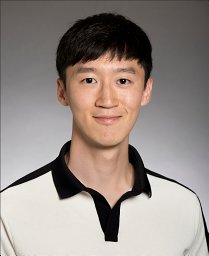 Beomjo Park合作论文数Department of Statistics &Carnegie Mellon University Pittsburgh Pennsylvania;Department of Statistics & Data Science, Carnegie Mellon University1
 F Vialatte合作论文数ESPCI Paris PSL Univ1
 Jaeseung Jeong合作论文数Department of Bio and Brain Engineering, College of Engineering, Korea Advanced Institute of Science and Technology1
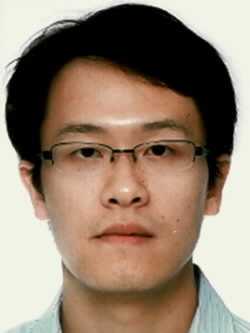 Rui Tan合作论文数School of Computer Science and Engineering, College of Engineering, Nanyang Technological University1Kerrie Mengersen合作论文数1
 Berthold-Georg (Berge) Englert合作论文数Department of Physics, Faculty of Science, National University of Singapore;Centre for Quantum Technologies, National University of Singapore1
 Christopher Drovandi合作论文数School of Mathematical Sciences, Queensland University of Technology1Michael E. Evans合作论文数1Shiyan Xu合作论文数1
 Taeryon Choi合作论文数Department of Statistics, College of Political Science & Economics, Korea University1
 Charles-Francois Vincent Latchoumane合作论文数Dept of Bio and Brain Engineering, KAIST1
 Andrzej Cichocki合作论文数Peraton Labs;Systems Research Institute Polish Academy of Sciences1Per A. Hallgren合作论文数Keyflow AB, Chalmers University of Technology1




