Neutron Brillouin scattering (NBS) is an inelastic neutron scattering near the forward direction. This technique is effective for observing coherent excitations in non-single-crystal samples, such as ferromagnetic spin waves in powder samples and acoustic phonons in liquids and polycrystals. Such excitations can be observed by accessing the energy-momentum space around the zero momentum. Although the principle of NBS is not new, the recent progress of intense pulsed neutron sources provides opportunities to realize the experimental conditions for NBS more conveniently by utilizing neutrons with higher energies and higher resolutions. The aim of this review article is to provide a brief description of the state-of-the-art inelastic neutron spectrometer, High Resolution Chopper Spectrometer (HRC), installed at J-PARC (Japan Proton Accelerator Research Complex), as well as the most recent results produced by HRC. The aim of NBS is to become a promising experimental method combined with intense pulsed neutrons for a wide range of scientific studies.
Magnetic excitations in the metallic antiferromagnet Fe0.5Mn0.5 were investigated using the inelastic neutron scattering technique at low temperatures well below the antiferromagnetic transition temperatures (T-N). The observed peak positions in low energies well sit on the antiferromagnetic dispersion relation reported in the early study. However, the peak positions in higher energies shift to higher energies than that of the antiferromagnetic spin wave dispersion relation. This behavior is the same as one of the behaviors suggesting that the spin waves merge with the continuum of the individual particle-hole excitations at higher energies in Fe0.7Mn0.3.
In order to apply the He neutron spin filter (NSF) to experiments at an intense pulsed neutron experimental facility such as the J-PARC, it is important to make the system stable, useful and easy to setup and operate, because the system is located inside a radiation shield for high energy gamma ray and neutrons. In this study, we have developed compact laser optics with a volume holographic grating (VHG) element for a spin-exchange optical pumping (SEOP) system, and composed an in-situ SEOP He-NSF. The details of the setup and its performance are reported.
We present a detailed Small Angle Neutron Scattering (SANS) and Neutron Spin Echo Spectroscopy (NSE) study of the structural and dynamical aspects of the helimagnetic transition in Fe$_{1-x}$Co$_x$Si with $x$ = 0.30. In contrast to the sharp transition observed in the archetype chiral magnet MnSi, the transition in Fe$_{1-x}$Co$_x$Si is gradual and long-range helimagnetic ordering coexists with short-range correlations over a wide temperature range. The dynamics are more complex than in MnSi and involve a stretched exponential relaxation with long relaxation times which persists even under magnetic field. These results in conjunction with an analysis of the hierarchy of the relevant length scales show that the helimagnetic transition in Fe$_{1-x}$Co$_x$Si differs substantially from the transition in MnSi and question the validity of a universal scheme for the helimagnetic transition in chiral magnets.
The collective spin-wave excitations in the antiferromagnetic state of gamma-Fe0.7Mn0.3 were investigated using the inelastic neutron-scattering technique. The spin excitations remain isotropic up to high excitation energy, h omega = 78 meV. The excitations gradually become broad and damped above 40 meV. The damping parameter gamma reaches 110(16) meV at h omega = 78 meV, which is much larger than that for other metallic compounds, e.g., CaFe2As2 (24 meV), La2-2x Sr1+2x Mn2O7 (52-72 meV), and Mn90Cu10 (88 meV). In addition, the spin-wave dispersion shows a deviation from the relation (h omega)(2) = c(2)q(2) + Delta(2) above 40 meV. The group velocity above this energy increases to 470(40) meV angstrom, which is higher than that at the low energies, c = 226(5) meV angstrom. These results could suggest that the spin-wave excitations mergewith the continuum of the individual particle-hole excitations at 40 meV.
We present a comprehensive Small Angle Neutron Scattering (SANS) and Neutron Spin Echo Spectroscopy (NSE) study of the structural and dynamical aspects of the helimagnetic transition in Fe_1-xCo_xSi with x = 0.30. In contrast to the sharp transition observed in the archetype chiral magnet MnSi, the transition in Fe_1-xCo_xSi is gradual and long-range helimagnetic ordering coexists with short-range correlations over a wide temperature range. The dynamics are more complex than in MnSi and involve long relaxation times with a stretched exponential relaxation which persists even under magnetic field. These results in conjunction with an analysis of the hierarchy of the relevant length scales show that the helimagnetic transition in Fe_1-xCo_xSi differs substantially from the transition in MnSi and question the validity of a universal approach to the helimagnetic transition in chiral magnets.
Magnetic excitations in a polycrystalline sample of the metallic ferromagnet SrRuO3 were observed by neutron Brillouin scattering, i.e., inelastic neutron scattering near the forward direction, on the High Resolution Chopper Spectrometer (HRC) installed at MLF J-PARC. While the observed spin wave dispersion is well described by the quadratic momentum dependence, the temperature dependence of the spin wave gap shows a nonmonotonous behavior, which can be related to that of the anomalous Hall conductivity. Weyl fermions that emerge at band crossings in momentum space caused by the spin-orbit interaction act as magnetic monopoles of the Berry curvature and contribute to a variety of novel transport phenomena such as anomalous Hall effect. The present result shows that the fictitious magnetic field produced by the Berry phase is an observable in inelastic neutron scattering and that the spin dynamics directly reflects the crucial role of Weyl fermions in the metallic ferromagnet.
Weyl fermions that emerge at band crossings in momentum space caused by the spin-orbit interaction act as magnetic monopoles of the Berry curvature and contribute to a variety of novel transport phenomena such as anomalous Hall effect and magnetoresistance. However, their roles in other physical properties remain mostly unexplored. Here, we provide evidence by neutron Brillouin scattering that the spin dynamics of the metallic ferromagnet SrRuO3 in the very low energy range of milli-electron volts is closely relevant to Weyl fermions near Fermi energy. Although the observed spin wave dispersion is well described by the quadratic momentum dependence, the temperature dependence of the spin wave gap shows a nonmonotonous behaviour, which can be related to that of the anomalous Hall conductivity. This shows that the spin dynamics directly reflects the crucial role of Weyl fermions in the metallic ferromagnet.
Small angle neutron scattering measurements on a bulk single crystal of the doped chiral magnet Fe_1-xCo_xSi with x=0.3 reveal a pronounced effect of the magnetic history and cooling rates on the magnetic phase diagram. The extracted phase diagrams are qualitatively different for zero and field cooling and reveal a metastable skyrmion lattice phase outside the A-phase for the latter case. These thermodynamically metastable skyrmion lattice correlations coexist with the conical phase and can be enhanced by increasing the cooling rate. They appear in a wide region of the phase diagram at temperatures below the A-phase but also at fields considerably smaller or higher than the fields required to stabilize the A-phase.
We present a systematic study of the ac susceptibility of the chiral magnet Fe_1-xCo_xSi with x = 0.30 covering four orders of magnitude in frequencies from 0.1 Hz to 1 kHz, with particular emphasis to the pronounced history dependence. Characteristic relaxation times ranging from a few milliseconds to tens of seconds are observed around the skyrmion lattice A-phase, the helical-to-conical transition and in a region above T_C. The distribution of relaxation frequencies around the A-phase is broad, asymmetric and originates from multiple coexisting relaxation processes. The pronounced dependence of the magnetic phase diagram on the magnetic history and cooling rates as well as the asymmetric frequency dependence and slow dynamics suggest more complicated physical phenomena in Fe_0.7Co_0.3Si than in other chiral magnets.
We present a systematic study of the ac susceptibility of the chiral magnet Fe1-xCoxSi with x = 0.30 covering four orders of magnitude in frequencies from 0.1 Hz to 1 kHz, with particular emphasis to the pronounced history dependence. Characteristic relaxation times ranging from a few milliseconds to tens of seconds are observed around the skyrmion lattice A phase, the helical-to-conical transition and in a region above TC. The distribution of relaxation frequencies around the A phase is broad, asymmetric, and originates from multiple coexisting relaxation processes. The pronounced dependence of the magnetic phase diagram on the magnetic history and cooling rates as well as the asymmetric frequency dependence and slow dynamics suggest more complicated physical phenomena in Fe0.7Co0.3Si than in other chiral magnets.
Shinichi Itoh1, Tetsuya Yokoo1, Takatsugu Masuda2, Hideki Yoshizawa2, Minoru Soda2, Yoichi Ikeda2, Soshi Ibuka1, Daichi Kawana1, Taku J. Sato3, Yusuke Nambu3, Keitaro Kuwahara4, Shin-ichiro Yano5, Jun Akimitsu5, Yoshio Kaneko6, Yoshinori Tokura6,7, Masaki Fujita8, Masashi Hase9, Kazuaki Iwasa10, Haruhiro Hiraka1, Tatsuo Fukuda11, Kazuhiko Ikeuchi12, Koji Yoshida13 Toshio Yamaguchi13, Kanta Ono1, Yasuo Endoh1,6,8 1Institute of Materials Structure Science, High Energy Accelerator Research Organization, Tsukuba 305-0801, Japan 2The Institute for Solid State Physics, The University of Tokyo, Tokai 319-1106, Japan 3Institute of Multidisciplinary Research for Advanced Materials, Tohoku University, Sendai 980-8577, Japan 4Institute of Applied Beam Science, Ibaraki University, Mito 310-8512, Japan 5Department of Physics and Mathematics, Aoyama Gakuin University, Sagamihara 252-5258, Japan 6RIKEN Center for Emergent Matter of Science, Wako 351-0198, Japan 7Department of Applied Physics, The University of Tokyo, Tokyo 113-8656, Japan 8Institute for Materials Research, Tohoku University, Sendai 980-8577, Japan 9National Institute for Materials Science, Tsukuba 305-0047, Japan 10Department of Physics, Tohoku University, Sendai 980-8578, Japan 11Quantum Beam Science Center, Japan Atomic Energy Agency, Sayo 679-5148, Japan 12Comprehensive Research Organization for Science and Society, Tokai 319-1106, Japan 13Department of Chemistry, Fukuoka University, Fukuoka 814-0180, Japan
Vでは空間次元・スピン量子効果,互いに磁気相互作用を及ぼし合い,特に複雑な結晶構造や空間対称性に絡んだ特異な現象を中性子散乱研究によって解明することに重点を置いているので,このような主題の理解を助ける目的で,中性子磁気散乱が如何にスピンダイナミクス研究に役立つかを概説する。簡単に中性子散乱断面積を理論的に導き,その量がスピン動特性を表す波数ベクトルに依存する磁化率(動的磁化率)と直接対応するので非常に重要な量であることを示す。終わりに中性子散乱実験の原理を示して序を閉じる。
Inelastic neutron scattering experiments on an intermetallic compound, MnP, were performed by using a chopper spectrometer as well as triple axis spectrometers. Spin waves were observed in the ferromagnetic phase in the entire Brillouin zone along the a*- and b*-axes. The observed dispersion relations of spin waves were well described by an isotropic Heisenberg interaction adding a single ion anisotropy with two sub-lattices.
We improved the High Resolution Chopper Spectrometer (HRC), which is installed at MLF in J-PARC, in order to perform neutron Brillouin scattering (NBS) experiments, and successfully demonstrated a feasibility of this method. Gapless spin-wave excitations were observed in La0.8Sr0.2MnO3, which were in good agreement with previous results using single crystals, on the other hand, a large energy gap in the ferromagnetic spin waves was found in SrRuO3. Spin-wave peaks in a permanent magnet Nd2Fe14B were on the dispersion curve determined previously using a single crystal. Excitations, so-called fast sound, in liquid D2O were in a good agreement with previous inelastic neutron scattering experiments and the dispersion curve were extended to the lower Q region.
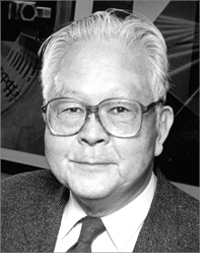 Gen Shirane (白根元)合作论文数Brookhaven National Laboratory102
 Robert Birgeneau合作论文数Department of Physics, University of California98
 Kazuhiro Yamada合作论文数95
 Marc A. Kastner合作论文数Department of Physics, Massachusetts Institute of Technology67Haruhiro Hiraka合作论文数46K. Hirota合作论文数46S. Hosoya合作论文数37
 Masatoshi Arai合作论文数European Spallation Source33Yoshikazu Ishikawa合作论文数29Y. Hidaka合作论文数28
 T Shinjo合作论文数Kyoto University;the International Institute for Advanced Studies28Jun'Ichiro Mizuki合作论文数28
 Setsuko Tajima合作论文数Department of Physics, Graduate School of Science, Osaka University27S. Wakimoto合作论文数24Kenji Nakajima合作论文数J PARC Ctr, Mat & Life Sci Div, Tokai, Ibaraki 3191195, Japan24
 Kazuhisa Kakurai合作论文数Research Center for Neutron Science and Technology, Comprehensive Research Organization for Science and Society24Kazuma Hirota (廣田和馬)合作论文数Department of Earth Space Science, Graduate School of Scienece, Osaka University23
 Youichi Murakami (村上陽一)合作论文数Murakami Research Group, School of Engineering, Tokyo Institute of Technology23Kazuyoshi Yamada (山田和芳)合作论文数Institute for Materials Research, Tohoku University23T. R. Thurston合作论文数22
 Hideki Yoshizawa (吉沢英樹)合作论文数Neutron Science Laboratory, University of Tokyo22
 Sadamichi Maekawa合作论文数Institute for Materials Research, Tohoku University22shinichi itoh合作论文数20Tetsuya Yokoo合作论文数20Masaaki Matsuda合作论文数Advanced Science Research Center;Japan Atomic Energy Research Institute;Advanced Science Research Center, Japan Atomic Energy Research Institute20
 Yutaka Moritomo合作论文数Department of Applied Physics, Nagoya University;Faculty of Pure and Applied Sciences, University of Tsukuba19Nobuyoshi Hosoito合作论文数19
 Martin Greven合作论文数Center for Quantum Materials, School of Physics and Astronomy, University of Minnesota18
 Yoshinori Tokura (十倉好紀)合作论文数Tokura Laboratory, Department of Applied Physics, University of Tokyo;National Institute of Advanced Industrial Science and Technology;RIKEN Center for Emergent Matter Science17Hiroyuki Kimura合作论文数17T. Murakami合作论文数15
 Robert Mcqueeney合作论文数Los Alamos National Laboratory15
 Young Soo Lee合作论文数Massachusetts Institute of Technology15
 Takeshi Egami合作论文数Department of Materials Science and Engineering, Tickle College of Engineering, The University of Tennessee, Knoxville;Department of Physics and Astronomy, The University of Tennessee, Knoxville;Oak Ridge National Laboratory15
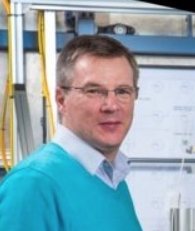 Christopher Frost合作论文数Rutherford Appleton Laboratory, ISIS14koichi yamada合作论文数13
 Bertrand Roessli合作论文数PSI Center for Neutron and Muon Sciences, Laboratory for Neutron Scattering and Imaging13
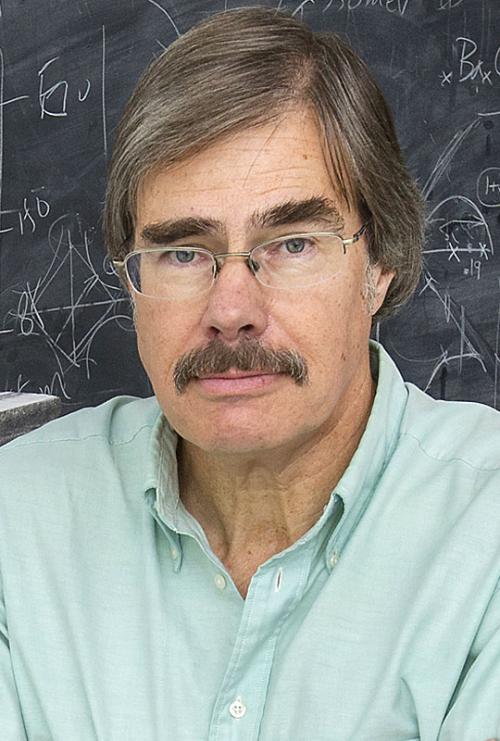 John Tranquada合作论文数Condensed Matter Physics and Materials Science Department, Brookhaven National Laboratory;Department of Materials Science & Engineering, Stony Brook University13
 Stephen M Bennington合作论文数Rutherford Appleton Laboratory, Chilton, Didcot, Oxon OX11 0QX, UK13hirofumi fujioka合作论文数12
 Hiroyuki Nojiri合作论文数International Collaboration Center, Institute for Materials Research, Tohoku University12
 Peter M. Gehring合作论文数Center for Neutron Research, National Institute of Standards and Technolgoy12Tetsuro Komatsubara合作论文数12T. Masui合作论文数11T. Kamiyama合作论文数11
 Sumio Ishihara (石原純夫)合作论文数Department of Physics, Graduate School of Science, Tohoku University11Mohana Yethiraj合作论文数Snowbird Mountain School11Y Noda合作论文数10




