We develop a theory of quantum spin Hall insulators with arbitrary spin J. Our analysis demonstrates that such systems support J+12 pairs of helical edge modes protected by nontrivial mirror Chern numbers. We establish that the corresponding edge theory is described by a generalized Dirac fermion with higher-order dispersion. These modes produce unique transport responses that are non-linear with voltage. An in-plane magnetic field opens a mass gap in the edge spectrum, and magnetic domain walls host (J+12)-fold degenerate bound states characterized by nontrivial winding numbers. Our results extend quantum spin Hall physics to higher-spin systems and suggest possible realizations in ultracold atomic gases.
Recent experiments have demonstrated that measurements of the entropy change associated with the addition of electrons to semiconductor- and graphene-based quantum dots accurately quantify the spin and orbital degeneracy of the states into which they are added. However, measuring more exotic entropies requires probing the entropy change of an entire system in response to an added particle. Here, we demonstrate that Maxwell relation-based measurements probe not only the entropy change associated with the added electron but also that of the surrounding system as it responds to that electron. Using a pair of capacitively coupled GaAs quantum dots, we show that charge measurements on one dot reveal entropy changes associated with the entire two-dot system, both at weak dot–reservoir coupling where microstate counting applies and at stronger coupling where numerical renormalization group calculations are required.
Measurement perturbs a quantum system by coupling it to external degrees of freedom, but detector backaction depends on the physical mechanism of measurement itself. In solid-state devices, detectors driven far from equilibrium to enable faster measurements produce backaction that can often be understood as classical noise. However, a strong measurement can also induce backaction from quantum many-body correlations in the detector that are intrinsic to the measurement, even without shot noise. Here, we probe this near-equilibrium backaction through the effect of a quantum-dot charge sensor on tunnelling between a second quantum dot and its reservoirs. The measurement realizes the Anderson Orthogonality Catastrophe (AOC): electrons in the detector leads reorganize in response to an abrupt change in local scattering potential, suppressing resonant tunnelling while enabling inelastic processes that exchange energy with the detector. Changing the detector energy level tunes the AOC backaction from negligible to dominant in the tunnelling dynamics. More broadly, these results establish detector-induced many-body correlations as a controllable influence on quantum dynamics.
We report a well-resolved 0.7 conductance anomaly at G = 0.7×(2e^2/h) in bilayer graphene/WSe_2 quantum point contacts. Proximity-enhanced spin-orbit coupling splits the four-fold ground state of bilayer graphene into well-separated spin-valley locked Kramers doublets. The anomaly emerges between these opposite spin-valley states. Despite fundamentally different band structure and wavefunction characteristics, the temperature and bias phenomenology closely mirror GaAs systems. In contrast, the parallel magnetic field response differs significantly, confirming the central role of valley degrees of freedom. This opens new pathways to study valley-exchange correlation physics in regimes inaccessible to conventional semiconductors.
Temperate phages that incorporate into their bacterial hosts' genomes often encode defense systems that protect their hosts from superinfection by unrelated phages. Yet the evolutionary value of such defenses to the phage remains unclear. We present a minimal theoretical framework to quantify the selective advantage of a prophage-borne defense system in competition between temperate phages infecting the same bacterial host. The model reveals regimes in which a "defensive phage" can invade and persist despite growth costs, regimes of bistability, and others in which all phage types coexist due to a rock-paper-scissors-like dynamic between defensive, non-defensive, and defense-loss variants. Because defense systems can be non-transitive, true rock-paper-scissors relations can lead to persistent oscillations. These results identify simple conditions under which phage-encoded defense systems are evolutionarily stable, providing testable predictions for the prevalence and maintenance of these systems in natural microbial communities.
The Kondo singlet—a many-body state formed by entanglement between a localized spin and the Fermi sea—has been studied extensively through its transport signatures in quantum dots. Here we report a thermodynamic measurement of the entropy suppression associated with the formation of the Kondo singlet, using temperature-dependent charge sensing and a Maxwell relation to track the suppression of spin entropy as the first electron is added to a strongly-coupled GaAs quantum dot. Plotting dN/dT against the simultaneously measured occupation N reveals an asymmetric lineshape with its peak shifted to N>1/2—a hallmark of Kondo screening—that weakens with increasing temperature and is qualitatively reproduced by numerical renormalization group (NRG) calculations, with a small but persistent offset to lower occupation relative to the theory. An independent measurement of conductance versus occupation on the same device provides a test of these quantities through the mixed-valence crossover and matches NRG within experimental uncertainty.
Competing lipid kinases and phosphatases are critical for organizing cellular membranes, but whether a minimal system can autonomously organize proteins and lipids into dynamic spatiotemporal patterns is unknown. Here, we report the in vitro reconstitution of the Legionella phosphatidylinositol (PI) 3-kinase MavQ and PI 3-phosphatase SidP. Together with their lipid substrates, PI and PI 3-phosphate (PI3P), these enzymes form a minimal self-organizing system that generates ATP-dependent spatiotemporal patterns, including traveling waves, on model membranes. These behaviors arise from MavQ's cooperative membrane binding, SidP's phosphatase activity, and the continual interconversion and redistribution of PI and PI3P within a conserved membrane pool. A reaction-diffusion model reproduces the observed dynamics and predicts that lipid conservation prevents patterns from propagating across membrane discontinuities, which we verify experimentally. Together, these findings establish enzymatic modification of membrane lipids as a distinct molecular strategy for biological pattern formation.
Charge detection offers a powerful probe of mesoscopic structures based on quantum dots, but it also invariably results in measurement back-action (MBA). If strong, MBA can be detrimental to the physical properties being probed. In this work, we focus on the effects of MBA on an Anderson impurity model in which the impurity is coupled electrostatically to a detector. Introducing a novel non-perturbative method, we explore the interplay of coherent dynamics, strong correlations and non-equilibrium conditions. The effects of MBA can be seen most clearly in the temperature derivative of occupation. In the non-equilibrium case, we identify this as arising due to an energy flow from the detector to the impurity.
We propose schemes for unambiguous direct observation of Anderson orthogonality catastrophe (AOC) effects in a quantum dot coupled to a charge detector, and to estimate the strength of the AOC exponent α. We show that certain easy-to-measure observables have a robust dependence on α in the non-equilibrium regimes of source-drain voltage bias or thermal imbalance. Our results are obtained using a rate equation formalism in which the AOC effects on tunnel rates are incorporated in an exact manner.
The interacting resonant level model (IRLM) is the simplest quantum impurity model to display strongly correlated effects in mesoscopic systems, which triggered its extensive theoretical study. However, to date, there have not been any realizations of the model with controllable interaction parameter, and thus the detailed predictions could not be confirmed. Here we use a recently developed approach to Anderson orthogonality catastrophe physics, using a charge detector coupled to a quantum dot (QD) system, to devise a simple experimental system which could display IRLM behavior and detail its predictions. At the same time, the mapping to IRLM allows us to determine the interaction parameter of the charge detector using simple experimental probes.
We present an analytical formulation of the thermodynamics, free energy and entropy, of any generic Bogoliubov de Genes model which develops exceptional point (EP) bifurcations in its complex spectrum when coupled to reservoirs. We apply our formalism to a non-Hermitian Josephson junction where, despite recent claims, the supercurrent does not exhibit any divergences at EPs. The entropy, on the contrary, shows a universal jump of 1/2log 2 which can be linked to the emergence of Majorana zero modes (MZMs) at EPs. Our method allows us to obtain precise analytical boundaries for the temperatures at which such Majorana entropy steps appear. We propose a generalized Maxwell relation linking supercurrents and entropy which could pave the way towards the direct experimental observation of such steps in e.g. quantum-dot based minimal Kitaev chains.
We use charge sensing to detect entropy changes in a double quantum dot defined by electrostatic gating of a GaAs/AlGaAs heterostructure. This system can be tuned to be two separate systems, like two independent, artificial atoms, or a single coherent system, like a molecule. We study entropy changes in both regimes due to changes in the occupation of the system. First we recover the single-dot result for each dot, that the occupation of the dot by a single electron corresponds to an increase in the entropy of k_Blog 2. Next we examine two different charge transitions in the "molecular" regime, and how it reveals itself in terms of the measured entropy. We also uncover a realization of Pauli blockade that clutters the entropy signal. By applying a rate equation model, we demonstrate the effect's nonequilibrium origins and exclude it from the analysis of the system's entropy. Understanding these experiments in this simplest coupled system enables the study of the entropy in other, more complicated coupled quantum systems, such as ones with topological or highly entangled ground states.
Superconductor–semiconductor hybrid systems play a crucial role in realizing nanoscale quantum devices, including hybrid qubits, Majorana bound states, and Kitaev chains. For such hybrid devices, subgap states play a prominent role in their operation. In this paper, we study these subgap states via Coulomb and tunneling spectroscopy through a superconducting island defined in a semiconductor nanowire fully coated by a superconductor. We systematically explore regimes ranging from an almost decoupled island to the open configuration. In the weak-coupling regime, the experimental observations are very similar in the absence of a magnetic field and when one flux quantum pierces the superconducting shell. Conversely, in the strong-coupling regime, significant distinctions emerge between the two cases. We attribute this distinct behavior to the existence of subgap states at one flux quantum, which become observable only for sufficiently strong coupling to the leads. We support our interpretation using a simple model to describe transport through the island. Our study highlights the importance of studying a broad range of tunnel couplings for understanding the rich physics of hybrid devices.
Bacteria have evolved many defenses against invading viruses (phage). Despite the many bacterial defenses and phage counterdefenses, in most environments, bacteria and phage coexist, with neither driving the other to extinction. How is coexistence realized in the context of the bacteria/phage arms race, and how are immune repertoire sizes determined in conditions of coexistence? Here we develop a simple mathematical model to consider the evolutionary and ecological dynamics of competing bacteria and phage with different immune/counterimmune repertoires. We find an ecologically stable fixed point exhibiting coexistence, in agreement with the experimental observation that each individual bacterium typically carries multiple defense systems, though fewer than the maximum number possible. However, in simulations, the populations typically remain dynamic, exhibiting chaotic fluctuations around this fixed point. These dynamics enable coexistence even when phage (predator) strains outnumber bacteria (prey) strains. We obtain quantitative predictions for the mean, amplitude, and timescale of these dynamics. Our results provide a framework for understanding the evolutionary and ecological dynamics of the bacteria/phage arms race and demonstrate how bacteria/phage coexistence can stably arise from the coevolution of bacterial defense systems and phage counterdefense systems.
The Anderson overlap catastrophe (AOC) is a many-body effect arising as a result of a shakeup of a Fermi sea due to an abrupt change of a local potential, leading to a power-law dependence of the density of states on energy. Here we demonstrate that a standard quantum-dot detector can be employed as a highly tunable probe of the AOC, where the power law can be continuously modified by a gate voltage. We show that signatures of the AOC have already appeared in previous experiments, and give explicit predictions allowing to tune and pinpoint their nonperturbative aspects.
The physics of two-dimensional electron gas (2DEG) in the presence of a perpendicular magnetic field, disordered potential, and spin-orbit coupling (SOC) is very rich. It touches upon numerous fundamental concepts such as Anderson localization, the integer quantum Hall effect, and random matrix ensembles (Gaussian, unitary, and symplectic). At strong magnetic field the system is extensively studied. It is characterized by isolated Landau levels wherein the energy is linear with the magnetic field and the corresponding wave functions are extended, while between two Landau levels, the corresponding wave functions are localized. In most cases, for strong magnetic field, pertinent calculations are based on the projection of a single Landau level. The first topic to be discussed below is the Anderson localization at weak magnetic field and strong, albeit uniform SOC. In fact, the physics at weak magnetic field seems to be even richer than that at strong magnetic field. Indeed, projection on a single Landau level is not justified, since the energy distance between adjacent levels compares with the strength of disorder and the SOC energy. The second topic to be discussed below is the Anderson localization in a strong magnetic field and with random SOC.
When phage infect their bacterial hosts, they may either lyse the cell and generate a burst of new phage, or lysogenize the bacterium, incorporating the phage genome into it. Phage lysis/lysogeny strategies are assumed to be highly optimized, with the optimal tradeoff depending on environmental conditions. However, in nature, phage of radically different lysis/lysogeny strategies coexist in the same environment, preying on the same bacteria. How can phage preying on the same bacteria coexist if one is more optimal than the other? Here, we address this conundrum within a modeling framework, simulating the population dynamics of communities of phage and their lysogens. We find that coexistence between phage of different lysis/lysogeny strategies is a natural outcome of chaotic population dynamics that arise within sufficiently diverse communities, which ensure no phage is able to absolutely dominate its competitors. Our results further suggest a bet-hedging mechanism at the level of the phage pan-genome, wherein obligate lytic (virulent) strains typically outcompete temperate strains, but also more readily fluctuate to extinction within a local community.
This corrects the article DOI: 10.1103/PhysRevLett.126.258102.
Environment-induced localization transitions (LT) occur when a small quantum system interacts with a bath of harmonic oscillators. At equilibrium, LTs are accompanied by an entropy change, signaling the loss of coherence. Despite extensive efforts, equilibrium LTs have yet to be observed. Here, we demonstrate that ongoing experiments on double quantum dots that measure entropy using a nearby quantum point contact realize the celebrated spin-boson model and allow to measure the entropy change of its LT. We find a Kosterlitz-Thouless flow diagram, leading to a universal jump in the spin-bath interaction, reflected in a discontinuity in the zero temperature QPC conductance.
It is desirable to relate entanglement of many-body systems to measurable observables. In systems with a conserved charge, it was recently shown that the number entanglement entropy (NEE)-i.e., the entropy change due to an unselective subsystem charge measurement-is an entanglement monotone. Here we derive finite-temperature equilibrium relations between Rényi moments of the NEE, and multipoint charge correlations. These relations are exemplified in quantum dot systems where the desired charge correlations can be measured via a nearby quantum point contact. In quantum dots recently realizing the multichannel Kondo effect we show that the NEE has a nontrivial universal temperature dependence which is now accessible using the proposed methods.
 Ned Wingreen合作论文数Department of Molecular Biology, Princeton University;Lewis-Sigler Institute for Integrative Genomics, Princeton University;Princeton Center for Theoretical Science, Princeton University66
 Amnon Aharony合作论文数Ben Gurion University;School of Physics and Astronomy, Tel Aviv University23
 A. Brooks Harris合作论文数Department of Physics and Astronomy, School of Arts & Sciences, University of Pennsylvania17
 Klaus Ensslin合作论文数Department of Physics, Eidgenössische Technische Hochschule Zürich14
 Thomas Ihn合作论文数Department of Physics, ETH Zurich13
 Eran Sela合作论文数Department of Physics and Astronomy;University of British Columbia;Department of Physics and Astronomy, University of British Columbia13
 Yshai Avishai合作论文数Department of Physics, Ben-Gurion University11
 Yaakov Kleeorin合作论文数Univ Paris10
 Amir Erez合作论文数University of Florida10
 Yonatan Dubi合作论文数Dept Chem, Ben Gurion Univ Negev9Benjamin G. Weiner合作论文数Dept Phys, Princeton Univ8Adler Joan合作论文数8
 Yuval Gefen合作论文数Department of Condensed Matter Physics, Faculty of Physics, Weizmann Institute of Science;Karlsruhe Institute of Technology;University of Cologne;Indian Institute of Science;Leipzig University;Harish-Chandra Research Institute8Y. Gefen合作论文数6
 Cheolhee Han合作论文数Raymond & Beverly Sackler Sch Phys & Astron, Tel Aviv Univ6
 Ora Entin-Wohlman合作论文数Center for Quantum Information Science & Technology, Ben-Gurion University of the Negev;School of Physics and Astronomy, Tel Aviv University6
 Raphael Blumenfeld合作论文数Cavendish Laboratory, University of Cambridge6
 Vadim Puller合作论文数Department of Physics;Ben-Gurion University of the Negev;Department of Physics, Ben-Gurion University of the Negev6
 Victor Sourjik合作论文数Department of Systems and Synthetic Microbiology, Max Planck Institute for Terrestrial Microbiology;Philipps-Universitat Marburg5Kenji Hirose合作论文数5
 Werner Wegscheider合作论文数Laboratory for Solid State Physics, Department of Physics, ETH Zurich5Jari M. Kinaret合作论文数5
 Andreas Dirk Wieck合作论文数Ruhr University Bochum5
 D. Reuter合作论文数Angewandte Festkörperphysik, Ruhr-Universität Bochum5imadiel ariel合作论文数4Samuel Moukouri合作论文数4
 Geoffrey C. Gardner合作论文数Birck Nanotechnol Ctr, Purdue Univ4
 Jaime G Lopez合作论文数Lewis-Sigler Institute for Integrative Genomics, Princeton University4
 Zhifan Zhou合作论文数Dept Phys, Ben Gurion Univ Negev4
 Saeed Fallahi合作论文数Dept Phys & Astron, Purdue Univ4N. Shtraus合作论文数4
 Yaojun Zhang合作论文数William H. Miller III Department of Physics & Astronomy, Krieger School of Arts and Sciences, Johns Hopkins University;Department of Biophysics, , Krieger School of Arts and Sciences, Johns Hopkins University4
 Joshua Alexander Folk合作论文数Department of Physics & Astronomy, Faculty of Science, The University of British Columbia4
 Christian Reichl合作论文数Department of Physics, ETH Zürich4
 Clifford Brangwynne合作论文数Department of Chemical and Biological Engineering, School of Engineering and Applied Science, Princeton University;Omenn-Darling Bioengineering Institute, School of Engineering and Applied Science, Princeton University;Department of Molecular Biology, Princeton University;Lewis-Sigler Institute for Integrative Genomics, Princeton University;Howard Hughes Medical Institute;Marine Biological Laboratory4
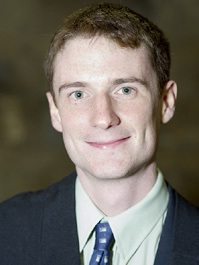 Gareth Conduit合作论文数University of Cambridge4
 Michael J. Manfra合作论文数Department of Physics and Astronomy, College of Science, Purdue University;Birck Nanotechnology Center, Purdue University;Microsoft4
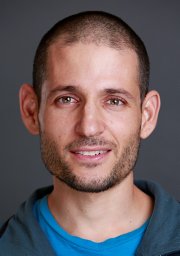 Yair Margalit合作论文数Quantum Source Labs Ltd4
 David C. Langreth合作论文数Department of Physics and Astronomy, Rutgers University4
 Patrick A. Lee合作论文数Department of Physics, Massachusetts Institute of Technology4
 Ron Folman合作论文数Department of Physics, Ben-Gurion University of the Negev4Dan Schifter合作论文数4
 Vladimir Jakovljevic合作论文数School of Medicine, University of Kragujevac4
 Andrew K. Mitchell合作论文数3S. J. Wind合作论文数3E.B. Foxman合作论文数3U Meirav合作论文数3Or Dobkowski合作论文数3
 Omer Amit合作论文数Dept Phys, Ben Gurion Univ Negev3




