Purpose Uncontrolled donation after death by circulatory criteria (uDCD) has the potential to alleviate some of the shortage of suitable lungs for transplantation. Non-Perfused Organ Donors (NPOD) differs from uDCD donors in that only lungs are obtained as no reperfusion is instituted after individuals suffer an unexpected sudden cardiac arrest. Family are approached rapidly by trained coordinators for consent to donate lungs. This study reviews our initial experience and challenges with NPOD donation. Methods Data were collected from donors and recipients involved in NPOD lung transplants between February 2016 and October 2018. We describe NPOD donor volumes, ischemia time, utilization rates, length of intensive care unit (ICU) and hospital stay, and survival. Results There were 101 referrals during this period. Of the 34 approached for donation, consent was obtained in 24 cases, and the lung transplant team evaluated 24 NPOD donors on site. Eleven donors were declined before retrieval because of medically unsuitable lungs, and 4 donors were declined after retrieval due to severe lung injury on site. Nine lungs underwent ex vivo lung perfusion in order to evaluate suitability for transplantation and eventually 3 were used for transplantation. Thus, the total utilization rate from consented donors was 12.5%. The mean warm ischemic time was 160 minutes (range: 106-175 minutes). The mean age of 3 recipients was 48 ± 2.5 years. The 30-day mortality was 0%. One patient bridged to transplantation on extracorporeal membrane oxygenation (ECMO) was kept on ECMO for 5 days after transplant. Median ICU stay was 20 days (range: 5-78 days). Median hospital stay was 47 days (range: 18-100 days). Two out of 3 patients are alive at a median of 716 days (range: 100-936 days) with good performance status and lung function. One patient that was on ECMO prior to transplantation died of multisystem organ failure 100 days after transplantation. Conclusion This study demonstrated the potential for NPOD lung donation. However, utilization rates are low. Therefore, improved strategies of lung preservation before retrieval are required to increase and select lungs that are utilizable for transplantation.
Purpose Extracorporeal membrane oxygenation, veno-venous configuration (VV-ECMO) is an effective intervention to improve gas exchange in patients with severe respiratory failure, refractory to conventional treatments, or as a bridge to lung transplantation. However, optimal mechanical ventilation (MV) strategies during VV-ECMO to minimize ventilator-induced lung injury are undetermined. While there is general consensus in minimizing tidal ventilation, the potential benefit of high positive end-expiratory pressure (PEEP) strategies in optimizing cardiopulmonary interaction and reducing the severity of lung injury remains unclear.We hypothesize that PEEP-induced alveolar recruitment will reduce lung injury during VV-ECMO for ARDS, in comparison to atelectatic lungs. Methods Yorkshire pigs weresedated, paralyzed, mechanically ventilated,and cannulated for VV-ECMO support. Lung injury was done by two serial bronchoscopic instillations of gastric juice to achieve a P/F ratio < 100 mmHg. ECMO blood flow and sweep gas were then titrated to achieve normal gas exchange . The animals were randomized to receive MV with PEEP 20 cmH2O(HP group, n=4) or 5 cmH2O(LP group, n=5). Driving pressure was reduced to 5 cmH2O, respiratory rate to 10/min, and FiO2 to 50%.Lung and cardiac function were monitored for 5 hours, and sample were collected for tissue wet-to-dry ratio (W/D) measurements from dependent and non-dependent areas of the lung. Cytokines IL6, IL8, TNFα, I1RA and RAGE will also be measured in the lung. Results During VV-ECMO, gas exchange and hemodynamic parameters remained stable and comparable in the two groups, despite the very low tidal volume delivered (HP 54 ml ±; LP 41 ml ±11). Lung volume was higher in the HP compared with the LP group, and remained unchanged during the 5 hours of VV-ECMO support. At the end of the 5 hours of ECMO support, in the dependent lung areas the W/D was significantly higher in the HP compared to LP group (HP 11.1, 95% CI: 10.5-11.7; LP 9.2, 95% CI: 8.2-10.3); in the non-dependent areas the W/D was significantly higher in the LP compared to HP group (LP 6.3, 95% CI: 5.6-6.9; HP 5.3, 95% CI: 4.9-5.8). Conclusion VV-ECMO for severe acute respiratory failure MV with very low tidal volume and LP reduces regional lung edema in the dependent areas, while HP reduces edema.More studies are required to characterize the mechanisms of these findings.
The Toronto protocol for normothermic ex vivo lung perfusion (EVLP) has been successfully applied experimentally and clinically as a method for donor lung assessment and treatment of injured lungs. However, the current protocol is reliable only up to 12 hrs and this limits potential advances in therapeutic and reconditioning strategies. We have noted that the composition of Steen solution changes over time during extended EVLP. Loss of glucose and accumulation of electrolytes are prominent features. We thus sought to determine whether a Continuous Replacement (CR) or a modified feed (MF) strategy could be used to improve the stability of normothermic EVLP to reliably preserve lung integrity for an extended perfusion time (24 hrs).
About 40% of controlled donation after cardiac death (cDCD) are declined because death does not occur in a suitable time after withdrawal of life support. Improved strategies to preserve lungs may enable mobilization of the recovery team after death occurs to recover the lungs in all cDCDs independent of the interval. Prone positioning in ARDS patients has been shown to provide a more homogeneous distribution of alveolar distending pressure and improved outcomes. We hypothesized prone positioning during warm ischemia time (WIT) could decrease atelectasis and homogeneously distribute alveolar inflation leading to improved function during ex vivo lung perfusion (EVLP).
The primary aim of our study was to create a clinically relevant, reproducible model of severe ARDS requiring extracorporeal membrane oxygenation (ECMO). Secondly, we sought to use this model as a platform to evaluate a bronchoscopic intervention that involved saline lavage and surfactant replacement therapy (SRT).
To date, reliable cold static lung preservation (CSP) strategies are limited to 12h as longer times have been associated with impaired graft function. Even though lungs are stored inflated with O2, this poor performance is possibly related to poor oxygen availability and transfer at low temperatures, accumulation of reactive oxygen species, and cellular death. HEMO2Life® is an O2 therapeutic, which consists of the extracellular O2 carrier of the marine invertebrate Arenicola marina known as Hemarina-M101 (M101). M101 has potent anti-oxidative properties and each molecule can carry up to 156 O2 molecules. The purpose of this study was to investigate the use of M101 during extended CSP.
Hepatitis C (HCV) is a prevalent disease in potential donors. Due to a high risk of transmission for the recipient, HCV+ donors are not offered for lung transplantation. Although the effect of EVLP into bacterial infection in donor lungs has been studied, the impact into chronic virus diseases is unknown. The aim of this study was to investigate the effect of EVLP-associated treatments into HCV virus loads.
About 40% of controlled donation after cardiac death (cDCD) donors do not arrest in a suitable time after withdrawal of life support. As a result, many centers do not use cDCD. An attractive option is to mobilize the recovery team only after cardiac arrest (CA) occurs. To achieve that, improved strategies of lung preservation after CA are required. The aims of this study were to determine the maximum time for lung viability after CA and to examine the cytoprotective effect of carbon monoxide (CO) in this setting.
The advancement of ex vivo lung perfusion (EVLP) beyond organ assessment to organ repair is an important and challenging step. The application of enhanced EVLP techniques combined with cell-based therapy could result in the potential for improved rehabilitation and repair of injured donor lungs prior to transplantation.
About 30-40% of controlled DCD (cDCD) donors do not arrest in a suitable time for organ donation. Due to that, many centers do not practice cDCD due to logistical and cost concerns. One possibility would be to mobilize the recovery team after a cardiac arrest actually occurs. In order to achieve that, strategies to preserve the lungs in situ after asystole should be feasible and optimized. The purpose of this study is to determine the better strategy for in situ lung grafts preservation after cessation of circulation. In a pig model of DCD for lung and liver donation, liver grafts were removed immediately for liver transplantation after cardiac arrest induced by potassium injection. After asystole, the in situ lung preservation strategy was divided in 3 groups during 2 hours of warm ischemic time (WIT): control (hands off, deflated), ventilation (Pressure control ventilation, FiO2 50%, PEEP 5 cmH2O, PC 20 cmH2O above PEEP, RR 10/minute), and inflation (FiO2 50%, airway pressure 25 cmH2O). After the WIT, the lungs were flushed with Perfadex, explanted and preserved at 4°C for 6 hours, followed by 12 hours of EVLP in all groups. Physiological lung function was assessed every hour during EVLP. Ventilation and inflation groups tended to have a better compliance after WIT than control cases (p= 0.0738, Figure 1A). During EVLP, Inflation group tended to have a higher delta P/F ratio (Figure 1B), a lower peak inspiratory pressure (Figure 1C), and higher dynamic compliance (Figure 1D) compared with other two groups. Lung static inflation seems to be a better mode of in situ lung preservation compared to ventilation or deflation after cessation of circulation. These results still need to be confirmed using a pig transplantation model.
 Shaf Keshavjee合作论文数Department of Surgery, Temerty Faculty of Medicine, University of Toronto;Institute of Biomedical Engineering, Faculty of Applied Science & Engineering, University of Toronto;Toronto General Hospital Research Institute;Cancer Clinical Research Unit, Princess Margaret Cancer Centre;Latner Thoracic Research Laboratories;SickKids Research Institute12
 Marcelo Cypel合作论文数Department of Surgery, Temerty Faculty of Medicine, University of Toronto;Toronto General Hospital Research Institute, University Health Network;Department of Surgery, Toronto General Hospital;Department of Surgery, Mount Sinai Hospital;Department of Surgery, Hospital for Sick Children12
 Mingyao Liu合作论文数Department of Physiology, Temerty Faculty of Medicine, University of Toronto;Department of Surgery, Medicine and Physiology, University of Toronto;Institute of Medical Science, University of Toronto;Toronto General Hospital Research Institute;Latner Thoracic Surgery Research Laboratories, University Health Network10
 M. Galasso合作论文数8
 Thomas Waddell合作论文数Division of Thoracic Surgery, Temerty Faculty of Medicine, University of Toronto;Division of Thoracic Surgery, University Health Network8
 Ashhad Ali合作论文数7
 Manyin Chen合作论文数7Anajara Gazzalle合作论文数Latner Thoracic Research Laboratories, Toronto General Hospital Research Institute, University Health Network, University of Toronto, Toronto, Ontario, Canada.5
 T. Robert Qaqish合作论文数Univ Hlth Network, Univ Toronto5d nakajima合作论文数4
 Mauricio Pipkin合作论文数4C. Summers合作论文数Div Thorac Surg, Univ Toronto4
 Lorenzo Del Sorbo合作论文数Toronto General Hospital, University Health Network;Mount Sinai Hospital4Tatsuaki Watanabe合作论文数4Akihiro Ohsumi合作论文数4L. Caldarone合作论文数3T. Kanou合作论文数3Y. Zhang合作论文数3M. Takahashi合作论文数3Khaled Ramadan合作论文数Univ Hlth Network, Toronto Gen Res Inst, Latner Thorac Surg Res Labs, Toronto, ON M5G 2C4, Canada3H. Gokhale合作论文数2
 R. V. Ribeiro合作论文数2M. Meineri合作论文数2E. Paradiso合作论文数2H. Chan合作论文数2Y. Taniguchi合作论文数2
 Eddy Fan合作论文数Interdepartmental Division of Critical Care Medicine, Department of Medicine, Faculty of Medicine, University of Toronto;Institute of Health Policy, Management and Evaluation, University of Toronto;Mount Sinai Hospital;University Health Network2
 Arthur Slutsky合作论文数Keenan Research Centre for Biomedical Science, St. Michael’s Hospital;Departments of Medicine, Biomedical Engineering and Surgery, University of Toronto2
 Dong-Jhy Hwang (黃東治)合作论文数National Taiwan Sport University2R. P. Ribeiro合作论文数1
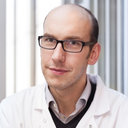 Pierre Mordant合作论文数1M. B. Gomes合作论文数1K. Boonstra合作论文数1R. Ribeiro合作论文数1A. Pierre合作论文数1H. Cheung合作论文数1rafael silva coutinho合作论文数1Andrew Healey合作论文数1R. Lam合作论文数1G. Zehong合作论文数1B. Gomes合作论文数1
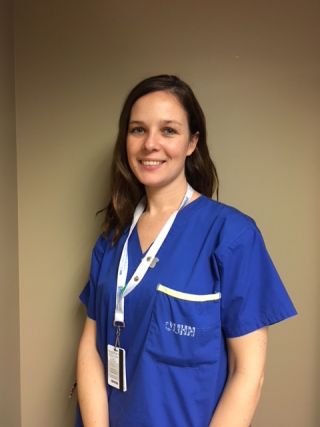 Laura Donahoe合作论文数Department of Surgery, Temerty Faculty of Medicine, University of Toronto1
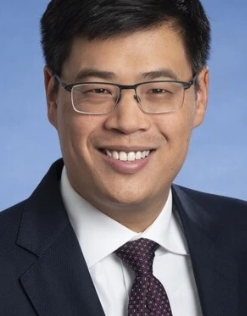 Jonathan Yeung合作论文数Division of Thoracic Surgery, Department of Surgery, Temerty Faculty of Medicine, University of Toronto;Toronto General Hospital Research Institute1Kazuhiro Yasufuku合作论文数Institute of Medical Science, Temerty Faculty of Medicine, University of Toronto1
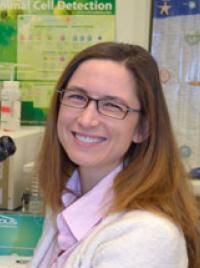 Tereza Martinu合作论文数Department of Immunology, Temerty Faculty of Medicine, University of Toronto1Stephen Juvet合作论文数Department of Immunology, Temerty Faculty of Medicine, University of Toronto1
 David M Putman合作论文数1
 John E. Davies合作论文数Institute of Biomedical Engineering, University of Toronto/Faculty of Dentistry, University of Toronto/Tissue Regeneration Therapeutics Inc.1




