Many shapes can be described very well in terms of an axis. Examples are the stick figure drawings of man and animals from ancient times. We would like to give a natural (intuitive) definition of axis for cylindrical shapes. For 2D shapes, the medial axis is a good candidate, though it is sensitive to perturbations. For 3D shapes, the medial scaffold is often complicated surfaces and does not match people's intuitions very well. In this paper, we give a new definition of axis for generalized cylinders. This approach uses a regression point of view, defining the axis as a minimization point of a global energy function. We prove the existence of a solution and give the equations of the minimization point and stability conditions. We also apply the definition to some real and artificial examples. Our goal is to produce natural (intuitive) shape descriptions for 2D and 3D shapes. We believe that is essential for building general object recognition systems. It would be also useful in shape classification and compression.
The recovery of geometric structure from noisy data poses difficult non-linear statistical estimation problems. This paper describes a novel, robust, low computational cost approach for finding the geometric structure of an axially symmetric pot from a small fragment of it (an unorganized set of 3D points). This problem is of great archaeological importance to the study of the hundreds and thousands of shards found at excavation sites. Our method is based on the following fact: for each point on the surface, the center of the sphere of principal curvature corresponding to the circles of revolution is on the symmetric axis. By finding the line which minimizes the weighted leastsquares distance to the estimated centers, we can find first the symmetric axis and then the profile curve. Because of the special properties of a surface of revolution, we can do this using only first derivatives, hence this method is robust to noisy data. We then use bootstrap methods to find confidence bounds for the axis and the profile curve. These confidence bounds are essential if the estimations are used for the assembly of the full pot from multiple sherds.
In many areas of computer vision, such as multiscale analysis and shape description, an image or surface is smoothed by a nonlinear parabolic partial differential equation to eliminate noise and to reveal the large global features. An ideal flow, or smoothing process, should not create new features. In this paper we describe in detail the effect of a number of flows on surfaces on the parabolic curves, the ridge curves, and umbilic points. In particular we look at the mean curvature flow and the two principal curvature flows. Our calculations show that two principal curvature flows never create parabolic and ridge curves of the same type as the flow, but no flow is found capable of simultaneously smoothing out all features. In fact, we find that the principal curvature flows in some cases create a highly degenerate type of umbilic. We illustrate the effect of these flows by an example of a 3-D face evolving under principal curvature flows.
A heretofore unsolved problem of great archaeological importance is the automatic assembly of pots made on a wheel from the hundreds (or thousands) of sherds found at an excavation site. An approach is presented to the automatic estimation of mathematical models of such pots from 3D measurements of sherds. A Bayesian approach is formulated beginning with a description of the complete set of geometric parameters that determine the distribution of the sherd measurement data. Matching of fragments and aligning them geometrically into configurations is based on matching break-curves (curves on a pot surface separating fragments), estimated axis and profile curve pairs for individual fragments and configurations of fragments, and a number of features of groups of break-curves. Pot assembly is a bottom-up maximum likelihood performance-based search. Experiments are illustrated on pots which were broken for the purpose, and on sherds from an archaeological dig located in Petra, Jordan. The performance measure can also be an aposteriori probability, and many other types of information can be included, e.g., pot wall thickness, surface color, patterns on the surface, etc. This can also be viewed as the problem of learning a geometric object from an unorganized set of free-form fragments of the object and of clutter, or as a problem of perceptual grouping.
A heretofore unsolved problem of great archaeological importance is the automatic assembly of pots made on a wheel from the hundreds (or thousands) of sherds found at an excavation site. An approach is presented to the automatic estimation of mathematical models of such pots from 3D measurements of sherds. The overall approach is formulated and described and some detail is provided on the elements of the procedure. The end result is a representation suitable for comparisons, geometric feature extraction, visualization and digital archiving. Matching of fragments and aligning them geometrically is based on matching break-curves (curves on a pot surface separating fragments), estimated axes and profile curves for individual fragments and groups of matched fragments, and a number of features of groups of break-curves. Pot assembly is a bottom-up maximum likelihood performance-based search. In our case, associated with subassemblies of fragments is a loglikelihood which is a sum of energy functions. Experiments are illustrated on pots which were broken for the purpose, and on sherds from an archaeological dig located in Petra, Jordan. The addressed problem and solution can be considered as problems in "geometric learning" and in "perceptual grouping," where subgroups of pot fragments at a site location are to be assembled into individual virtual pots and other fragments are to be discarded as clutter.
 David Mumford合作论文数Division of Applied Mathematics, Brown University4
 Jill Baker合作论文数2Kongbin Kang合作论文数Brown University2
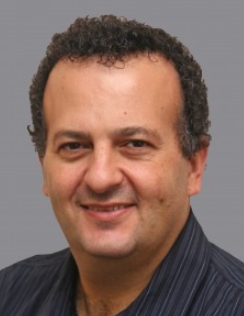 Benjamin Kimia合作论文数School of Engineering, Brown University;Laboratory for Engineering Man/Machine Systems, Brown University2
 Andrew R. Willis合作论文数University of North Carolina – Charlotte Electrical and Computer Engineering Dept2
 David H. Laidlaw合作论文数Visualization Research Lab, Department of Computer Science, Brown University2Weixin Kong合作论文数Laboratory for Engineering Man-Machine Systems (LEMS)2Xavier Orriols合作论文数2
 Dongjin Han合作论文数Division of Engineering, Brown University2
 Senem Velipasalar合作论文数Department of Electrical Engineering and Computer Science, College of Engineering and Computer Science, Syracuse University2
 David Cooper合作论文数Division of Engineering, School of Engineering, Brown University2
 Stuart Andrews合作论文数Machine Learning Laboratory, Department of Computer Science, The Fu Foundation School of Engineering And Applied Science, Columbia University2Ms Joukowsky合作论文数1
 Kathryn Leonard合作论文数Occident Coll Los Angeles1
 Shantanu H. Joshi合作论文数Computational and Systems Biology, College of Life Sciences, University of California, Los Angeles1
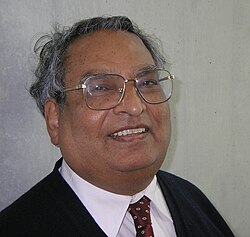 Kanti Mardia合作论文数School of Mathematics, Faculty of Engineering and Physical Sciences, University of Leeds1
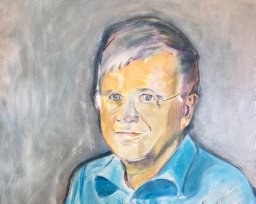 Peter W. Michor合作论文数Erwin Schrodinger;International Institute of Mathematical Physics;International Institute of Mathematical Physics1
 Stefano Soatto合作论文数Department of Computer Science, Samueli School of Electrical & Computer Engineering, University of California, Los Angeles;Amazon Web Services1
 Ulf Grenander合作论文数Brown University1Xavier Descombes合作论文数1
 Weihong Guo (郭卫红)合作论文数School of Materials Science and Engineering, East China University of Science and Technology1
 Peter Giblin合作论文数Department of Mathematical Sciences, University of Liverpool1
 Polina Golland合作论文数Department of Electrical Engineering and Computer Science, Massachusetts Institute of Technology;Computer Science & Artificial Intelligence Laboratory, Massachusetts Institute of Technology;Institute for Medical Engineering & Science, Massachusetts Institute of Technology1Andrea Mennucci合作论文数Scuola Normale Superiore1
 Anuj Srivastava合作论文数Department of Statistics, College of Arts and Sciences, Florida State University;Department of Data Science, College of Arts and Sciences, Florida State University1
 Ken Stephenson合作论文数Department of Math, College of Arts and Sciences, University of Tennessee1
 Anthony Joseph Yezzi合作论文数Lab of Computational Computer Vision, School of Electrical and Computer Engineering, College of Engineering, Georgia Institute of Technology1David M. Kaziska合作论文数1Frederic F. Leymarie合作论文数Div. of Eng., SHAPE Lab., Brown University1
 Namrata Vaswani合作论文数Department of Electrical and Computer Engineering, College of Engineering, Iowa State University1Nkem-Amin Khumbah合作论文数1
 John T. Kent合作论文数1
 Eileen L. Vote合作论文数1Martha S. Joukowsky合作论文数1Eitan Sharon合作论文数Videosurf Inc1
 Mario Micheli合作论文数Brown University1
 Vic Patrangenaru合作论文数Department of Mathematics and Statistics;Texas Tech University;Department of Mathematics and Statistics, Texas Tech University1Kenneth Nordstrom合作论文数1Conglin Lu合作论文数University of North Carolina, Chapel Hill1
 David Groisser合作论文数1
 Matt Feiszli合作论文数Meta1Frederic Fol Leymarie合作论文数Brown University, Div. of Eng., SHAPE Lab., Box D, 182-4 Hope St., Providence, RI 02912, U.S.A1Eileen Vote合作论文数1




