Accurately extracting plant point clouds from complex agricultural environments is essential for high-throughput phenotyping in smart farming. However, existing methods face significant challenges when processing large-scale agricultural point clouds owing to high noise levels, dense spatial distribution, and blurred structural boundaries between plant and non-plant regions. To address these issues, this study proposes PlaneSegNet, a voxel-based semantic segmentation network that incorporates an innovative plane attention module. This module aggregates projection features from the XZ and YZ planes, enhancing the model's ability to detect vertical geometric variations and thereby improving segmentation performance in boundary regions. Extensive experiments across representative agricultural scenarios at multiple scales, including open-field populations, greenhouse cultivation environments, and large-scale rural landscapes, demonstrate that PlaneSegNet significantly outperforms traditional geometry-based approaches and deep-learning models in plant and non-plant separation. By directly generating high-quality plant-only point clouds, PlaneSegNet significantly reduces reliance on manual pre-processing, offering a practical and generalisable solution for automated plant extraction across a wide range of agricultural applications. The dataset and source code used in this study are publicly available at https://github.com/yangxin6/PlaneSegNet.
Three-dimensional point clouds have become a cornerstone of single-plant phenotyping, with deep learning serving as the main driver of high-throughput trait analysis. However, repeated downsampling operations in U-shaped and pyramidal architectures have been shown to oversmooth features and erode fine-grained details in 3D single-plant point clouds. To address this, the present study proposes SMFCA-Net, a frequency-aware framework integrating a Multi-Frequency Fourier Cross-Attention (MFCA) module into the sparse U-Net bottleneck. The MFCA bottleneck, a combination of spectral partitioning and cross-band attention, has been shown to capture both long-range contextual dependencies and local structures. This achieves a better balance between global and local information. The MFCA module comprises a three-stage pipeline: The first stage is frequency decomposition (FD), which uses a 3D fast Fourier transform (3D FFT) to separate features into low-, mid-, and high-frequency bands. The second is frequency-aware cross-attention (CA), which facilitates cross-band interactions anchored on mid-frequency semantics. The third and final stage is cross-frequency adaptive fusion (AF), which aggregates the enhanced bands using learnable weights. Extensive experimentation on a range of crops and acquisition scenarios has demonstrated consistent improvements in single-plant classification, semantic segmentation, and instance segmentation. This highlights the effectiveness of SMFCA-Net for high-throughput phenotyping. The source code can be accessed at the following URL: https: //github.com/yangxin6/SMFCA.git.
Accurate automated segmentation of bone fractures from computed tomography (CT) requires large amounts of annotated data to train deep learning models. However, obtaining such annotations presents unique challenges, as the process demands expert knowledge to identify diverse fracture patterns, assess severity, and account for individual anatomical variations. This makes the annotation process highly time-consuming and expensive. Although semi-supervised learning methods can utilize unlabeled data, existing approaches often struggle with the complexity and variability of fracture morphologies, as well as limited generalizability across datasets. To address these challenges, we propose an effective training strategy based on masked autoencoder (MAE) for accurate bone fracture segmentation in CT. The proposed method combines MAE-based anatomical structure learning from unlabeled data with cross-scale cascaded attention (CSCA)-enhanced fine-tuning that focuses on fracture-specific detail preservation. The method is evaluated on two CT datasets: 180 tibial plateau fractures (TPF) and 103 hip fractures (HF). It outperforms representative semi-supervised baselines, achieving high segmentation accuracy with only 20 annotated cases and demonstrating strong cross-site generalization. These results demonstrate that the proposed training strategy effectively improves the efficiency and accuracy of bone fracture segmentation while maintaining strong generalizability across anatomically distinct datasets. This makes the method well-suited for real-world clinical deployment, particularly in data-scarce or resource-constrained environments. The code is publicly available at https://github.com/yuepeiyan/ GeneralizableFractureSeg.
Three-dimensional phenotyping technology is paramount in the field of peanut breeding and cultivation. The intricate topological structure of plants substantially complicates the development of effective peanut phenotyping technologies. In this study, we present the development of a point-cloud-based pipeline for threedimensional phenotypic analysis of peanut plants. An efficient multi-view image acquisition system and threedimensional reconstruction techniques were employed to generate point clouds of peanut plants. A dataset comprising 188 labelled samples of peanut point clouds was constructed for the development of semantic and leaf-instance segmentation models based on the transformer architecture. The segmentation accuracy of these models surpassed that of the conventional general segmentation techniques for plant point clouds. Based on the results of the segmentation, 11 three-dimensional phenotypic traits were automatically calculated at both the plant and leaf scales. Among these, five phenotypic traits, including plant height and leaf length, exhibited a mean absolute percentage error (MAPE) of less than 0.12 compared to the measured values. In addition, the Jensen-Shannon divergence (JS divergence) between the probability distributions of the three leaf phenotypic traits and their corresponding measured values was below 0.1. The three-dimensional phenotypic analysis pipeline developed in this study exhibited satisfactory generalisation capabilities, thereby offering an efficacious and expeditious high-throughput phenotyping analysis instrument for the intelligent breeding and cultivation of peanuts.
Landmark detection is central to many medical applications, such as identifying critical structures for treatment planning or defining control points for biometric measurements. However, manual annotation is labor-intensive and requires expert anatomical knowledge. While deep learning shows promise in automating this task, fair evaluation and interpretation of methods in a broader context are hindered by limited public benchmarking, inconsistent baseline implementations, and non-standardized experimentation. To overcome these pitfalls, we present nnLandmark, a self-configuring framework for 3D landmark detection that combines tailored heatmap generation, loss design, inference logic, and a robust set of hyperparameters for heatmap regression, while reusing components from nnU-Net's underlying self-configuration and training engine. nnLandmark achieves state-of-the-art performance across five public and one private dataset, benchmarked against three recently published methods. Its out-of-the-box usability enables training strong landmark detection models on new datasets without expert knowledge or dataset-specific hyperparameter tuning. Beyond accuracy, nnLandmark provides both a strong, common baseline and a flexible, standardized environment for developing and evaluating new methodological contributions. It further streamlines evaluation across multiple datasets by offering data conversion utilities for current public benchmarks. Together, these properties position nnLandmark as a central tool for advancing 3D medical landmark detection through systematic, transparent benchmarking, enabling to genuinely measure methodological progress. The code is available on GitHub: https://github.com/MIC-DKFZ/nnLandmark
Advanced phenotyping techniques are required in the breeding and management of maize, which is crucial for global food security. Traditional in situ three-dimensional (3D) field phenotyping entails labour-intensive data acquisition. Light detection and ranging technology offers high-resolution maize canopy point clouds under outdoor field conditions, establishing a technical foundation for automated phenotypic trait extraction. However, accurately segmenting individual plants from dense and structurally complex canopy point clouds for single-plant trait analysis is challenging. To address this challenge, we propose a novel framework named Paired-Attention Central Axis Aggregation Network (PACANet) for 3D point cloud-based plant segmentation. Firstly, a 3D paired-attention backbone network is introduced to enhance point-wise feature representations by integrating spatial and channel information, thereby enabling effective learning of high-dimensional point cloud features. Secondly, a projection-based central axis aggregation strategy is incorporated to guide instance separation by projecting plant point clouds onto their respective central axis skeletons, which improves the spatial coherence of segmentation. Additionally, a simulation-based point cloud generation approach is proposed to reduce reliance on large-scale manual annotations, facilitating model training in scenarios with limited real-world population data. Comprehensive experimental evaluations across multiple datasets demonstrate that PACANet consistently outperforms existing plant population segmentation methods. Notably, when trained solely on simulated data, PACANet achieves a state-of-the-art average precision of 0.9246. Finally, based on the segmentation results, phenotypic traits at both the individual plant and organ levels are analyzed under various planting densities, including the field-level distributions of plant height, plant width, leaf base angle and leaf inclination angle, all of which exhibit strong consistency with the validation data. These results highlight the potential of PACANet as a robust and scalable solution for high-throughput phenotyping in smart breeding and precision agriculture. This study provides a new tool for smart breeding and precision agriculture, and the source code and data are available at https://github.com/yangxin6/3D-PACA-Network.git.
The efficacy of three-dimensional (3D) point clouds in studying crop morphological structures is based on their direct and accurate data presentation ability. With deep-learning integration, organ segmentation from point clouds could serve as the basis for tremendous advancements in organ-level phenotyping. However, despite the potential, the acquisition of a sufficient number of annotated plant point clouds for practical model training remains a major hurdle. To help overcome this limitation, we constructed a 3D point-cloud dataset specifically for maize stem-leaf segmentation encompassing 428 maize plants ranging from 2 to 12 leaves. We also developed a point cloud enhancement strategy that uses highly controllable deformations to improve the morphological diversity of the training set significantly, while preserving the local geometric features of organs. Our dataset supports the generation of abundant training data from a limited number of labelled data, and we also provide a segmentation framework based on the augmented data to validate the efficiency of our enhancement technique. Two labelled data items were randomly chosen from our plant dataset based on every leaf number, yielding 22 labelled data items total, to produce several deformed point clouds for training the PointNet++ semantic segmentation model, as well as the hierarchical aggregation for the 3D instant segmentation (HAIS) model. These models were tested on 406 datasets, where the PointNet++ model secured a 91.93 % mean intersection-over-union (mIoU) in semantic segmentation and the HAIS model obtained an 89.57 % mean average precision (mAP) in instance segmentation. Following post-processing, an instance segmentation result of 93.74 % mAP was achieved with the HAIS model. These findings demonstrate that our method allows for the efficient training of organ segmentation models with minimal labelled data input in a reduced timeframe. Moreover, it offers an effective tool for point-cloud parsing in maize phenotyping research.
Affective brain-computer interface based on electroencephalography (EEG) is an important branch in the field of affective computing. However, the individual differences in EEG emotional data and the noisy labeling problem in the subjective feedback seriously limit the effectiveness and generalizability of existing models. To tackle these two critical issues, we propose a novel transfer learning framework with Prototypical Representation based Pairwise Learning (PR-PL). The discriminative and generalized EEG features are learned for emotion revealing across individuals and the emotion recognition task is formulated as pairwise learning for improving the model tolerance to the noisy labels. More specifically, a prototypical learning is developed to encode the inherent emotion-related semantic structure of EEG data and align the individuals' EEG features to a shared common feature space under consideration of the feature separability of both source and target domains. Based on the aligned feature representations, pairwise learning with an adaptive pseudo labeling method is introduced to encode the proximity relationships among samples and alleviate the label noises effect on modeling. Extensive results on two benchmark databases (SEED and SEED-IV) under four different cross-validation evaluation protocols validate the model reliability and stability across subjects and sessions. Compared to the literature, the average enhancement of emotion recognition across four different evaluation protocols is 2.04% (SEED) and 2.58% (SEED-IV).
Cell segmentation is a critical step for quantitative single-cell analysis in microscopy images. Existing cell segmentation methods are often tailored to specific modalities or require manual interventions to specify hyper-parameters in different experimental settings. Here, we present a multi-modality cell segmentation benchmark, comprising over 1500 labeled images derived from more than 50 diverse biological experiments. The top participants developed a Transformer-based deep-learning algorithm that not only exceeds existing methods but can also be applied to diverse microscopy images across imaging platforms and tissue types without manual parameter adjustments. This benchmark and the improved algorithm offer promising avenues for more accurate and versatile cell analysis in microscopy imaging.
Deep learning has shown great potential to automate abdominal organ segmentation and quantification. However, most existing algorithms rely on expert annotations and do not have comprehensive evaluations in real-world multinational settings. To address these limitations, we organised the FLARE 2022 challenge to benchmark fast, low- resource, and accurate abdominal organ segmentation algorithms. We first constructed an intercontinental abdomen CT dataset from more than 50 clinical research groups. We then independently validated that deep learning algorithms achieved a median dice similarity coefficient (DSC) of 900% (IQR 874-913%) by use of 50 labelled images and 2000 unlabelled images, which can substantially reduce manual annotation costs. The best-performing algorithms successfully generalised to holdout external validation sets, achieving a median DSC of 894% (852-913%), 900% (843-930%), and 885% (809-919%) on North American, European, and Asian cohorts, respectively. These algorithms show the potential to use unlabelled data to boost performance and alleviate annotation shortages for modern artificial intelligence models.
In the past two decades, machine learning (ML) has been extensively adopted in protein-targeted small molecule (SM) discovery. Once trained, ML models could exert their predicting abilities on large volumes of molecules within a short time. However, applying ML approaches to discover RNA-targeted SMs is still in its early stages. This is primarily because of the intrinsic structural instability of RNA molecules that impede the structure-based screening or designing of RNA-targeted SMs. Recently, with more studies revealing RNA structures and a growing number of RNA-targeted ligands being identified, it resulted in an increased interest in the field of drugging RNA. Undeniably, intracellular RNA is much more abundant than protein and, if successfully targeted, will be a major alternative target for therapeutics. Therefore, in this context, as well as under the premise of having RNA-related research data, ML-based methods can get involved in improving the speed of traditional experimental processes.
The 3D point cloud data are used to analyze plant morphological structure. Organ segmentation of a single plant can be directly used to determine the accuracy and reliability of organ-level phenotypic estimation in a point-cloud study. However, it is difficult to achieve a high-precision, automatic, and fast plant point cloud segmentation. Besides, a few methods can easily integrate the global structural features and local morphological features of point clouds relatively at a reduced cost. In this paper, a distance field-based segmentation pipeline (DFSP) which could code the global spatial structure and local connection of a plant was developed to realize rapid organ location and segmentation. The terminal point clouds of different plant organs were first extracted via DFSP during the stem-leaf segmentation, followed by the identification of the low-end point cloud of maize stem based on the local geometric features. The regional growth was then combined to obtain a stem point cloud. Finally, the instance segmentation of the leaf point cloud was realized using DFSP. The segmentation method was tested on 420 maize and compared with the manually obtained ground truth. Notably, DFSP had an average processing time of 1.52 s for about 15,000 points of maize plant data. The mean precision, recall, and micro F1 score of the DFSP segmentation algorithm were 0.905, 0.899, and 0.902, respectively. These findings suggest that DFSP can accurately, rapidly, and automatically achieve maize stem-leaf segmentation tasks and could be effective in maize phenotype research. The source code can be found at https://github.com/syau-miao/DFSP.git.
Quantitative organ assessment is an essential step in automated abdominal disease diagnosis and treatment planning. Artificial intelligence (AI) has shown great potential to automatize this process. However, most existing AI algorithms rely on many expert annotations and lack a comprehensive evaluation of accuracy and efficiency in real-world multinational settings. To overcome these limitations, we organized the FLARE 2022 Challenge, the largest abdominal organ analysis challenge to date, to benchmark fast, low-resource, accurate, annotation-efficient, and generalized AI algorithms. We constructed an intercontinental and multinational dataset from more than 50 medical groups, including Computed Tomography (CT) scans with different races, diseases, phases, and manufacturers. We independently validated that a set of AI algorithms achieved a median Dice Similarity Coefficient (DSC) of 90.0\% by using 50 labeled scans and 2000 unlabeled scans, which can significantly reduce annotation requirements. The best-performing algorithms successfully generalized to holdout external validation sets, achieving a median DSC of 89.5\%, 90.9\%, and 88.3\% on North American, European, and Asian cohorts, respectively. They also enabled automatic extraction of key organ biology features, which was labor-intensive with traditional manual measurements. This opens the potential to use unlabeled data to boost performance and alleviate annotation shortages for modern AI models.
The swarm intelligent algorithms (SIs) are effective and widely used, while the balance between exploitation and exploration directly affects the accuracy and efficiency of algorithms. To cope with this issue, a backbone whale optimization algorithm based on cross-stage evolution (BWOACS) is proposed. BWOACS is mainly composed of three parts: (1) adopts the density peak clustering (DPC) method to actively divide the population into several sub-populations, generates the backbone representatives (BR) during backbone construction stage; (2) determines the deviation placement (DP) by constructing the co-evolution operators (CE), the search space expansion operators (SE) and the guided transfer operators (GT) during bionic evolution strategy stage; (3) realises the bionic optimisation through DP during backbone representatives guiding co-evolution stage. To verify the accuracy and performance of BWOACS, we compare BWOACS with other variants on 9 IEEE CEC 2017 benchmark problems. Experimental results indicate that BWOACS has better accuracy and convergence speed than other algorithms.
Most of the existing multi-objective optimization algorithms try to evenly distribute all solutions in the objective space. But for the irregular Pareto front(PF), it is difficult to find the real PF. Aiming at the multi-objective optimization problem with complex PF, a multi-objective evolutionary algorithm for adaptive fitting dominant hyperplane (MOEA_DH) is developed. Before each iteration, non-dominated sorting is applied on all candidate solutions. Solutions in the first front are used to fit a hyperplane in the objective space, which is called the current dominant hyperplane(DH). DH reflects the evolution trend of the current generation of non-dominanted solutions and guides the rapid convergence of dominanted solutions. A new partial ordering relation determined by front number and crowding distance on DH is set. When solving CF benchmark problems from multi-objective optimization in IEEE Congress on Evolutionary Computation 2019, the experiments validate our advantages to get the PF with better convergence and diversity.
Affective brain-computer interfaces based on electroencephalography (EEG) is an important branch in the field of affective computing. However, individual differences and noisy labels seriously limit the effectiveness and generalizability of EEG-based emotion recognition models. In this paper, we propose a novel transfer learning framework with Prototypical Representation based Pairwise Learning (PR-PL) to learn discriminative and generalized prototypical representations for emotion revealing across individuals and formulate emotion recognition as pairwise learning for alleviating the reliance on precise label information. Extensive experiments are conducted on two benchmark databases under four cross-validation evaluation protocols (cross-subject cross-session, cross-subject within-session, within-subject cross-session, and within-subject within-session). The experimental results demonstrate the superiority of the proposed PR-PL against the state-of-the-arts under all four evaluation protocols, which shows the effectiveness and generalizability of PR-PL in dealing with the ambiguity of EEG responses in affective studies. The source code is available at https://github.com/KAZABANA/PR-PL.
Follicle size is closely related to ovarian function and is an important biomarker in transvaginal ultrasound examinations for assessing follicular maturity during an assisted reproduction cycle. However, manual measurement is time consuming and subject to high inter- and intra- observer variability. Based on the deep learning model CR-Unet described in our previous study, the aim of our present study was to investigate further the feasibility of using this model in clinical practice by validating its performance in reducing the inter- and intra-observer variability of follicle diameter measurement. This study also investigated whether follicular area is a better biomarker than diameter in assessing follicular maturity. Data on 106 ovaries and 230 follicles collected from 80 cases of single follicular cycles and 26 cases of multiple follicular cycles constituted the validation set. Intra-observer variability was 0.973 and 0.982 for the senior sonographer and junior sonographer in single follicular cycles and 0.979 (0.971, 0.985) and 0.920 (0.892, 0.943) in multiple follicular cycles, respectively, while CR-Unet had no intra-group variation. Bland–Altman plot analysis indicated that the 95% limits of agreement between senior sonographer and CR-Unet (–2.1 to 1.1 mm, –2.02 to 0.75 mm) were smaller than those between senior sonographer and junior sonographer (–1.51 to 1.15 mm, –2.1 to 1.56 mm) in single and multiple follicular cycles. The average operating times of diameter measurement taken by the junior sonographer, senior sonographer and CR-Unet were 7.54 ± 1.8, 4.87 ± 0.84 and 1.66 ± 0.76 s, respectively (p < 0.001). Correlation analysis indicated that both manual and automated follicular area correlated better with follicular volume than diameter. The deep learning algorithm and the new biomarker of follicular area hold potential for clinical application of ultrasonic follicular monitoring.
In this paper, we propose a new pipeline to perform accurate spinal curvature estimation. The framework, named as Seg4Reg, contains two deep neural networks focusing on segmentation and regression, respectively. Based on the results generated by the segmentation model, the regression network directly predicts the cobb angles from segmentation masks. To alleviate the domain shift problem appeared between training and testing sets, we also conduct a domain adaptation module into network structures. Finally, by ensembling the predictions of different models, our method achieves 21.71 SMAPE in the testing set.
Segmentation of cardiac images, particularly late gadolinium-enhanced magnetic resonance imaging (LGE-MRI) widely used for visualizing diseased cardiac structures, is a crucial first step for clinical diagnosis and treatment. However, direct segmentation of LGE-MRIs is challenging due to its attenuated contrast. Since most clinical studies have relied on manual and labor-intensive approaches, automatic methods are of high interest, particularly optimized machine learning approaches. To address this, we organized the "2018 Left Atrium Segmentation Challenge" using 154 3D LGE-MRIs, currently the world's largest cardiac LGE-MRI dataset, and associated labels of the left atrium segmented by three medical experts, ultimately attracting the participation of 27 international teams. In this paper, extensive analysis of the submitted algorithms using technical and biological metrics was performed by undergoing subgroup analysis and conducting hyper-parameter analysis, offering an overall picture of the major design choices of convolutional neural networks (CNNs) and practical considerations for achieving state-of-the-art left atrium segmentation. Results show the top method achieved a dice score of 93.2% and a mean surface to a surface distance of 0.7 mm, significantly outperforming prior state-of-the-art. Particularly, our analysis demonstrated that double, sequentially used CNNs, in which a first CNN is used for automatic region-of-interest localization and a subsequent CNN is used for refined regional segmentation, achieved far superior results than traditional methods and pipelines containing single CNNs. This large-scale benchmarking study makes a significant step towards much-improved segmentation methods for cardiac LGE-MRIs, and will serve as an important benchmark for evaluating and comparing the future works in the field.
Hepatic echinococcosis (HE) is a serious parasitic disease. Because of its high efficiency and no side effects, ultrasound is the preferred method for the diagnosis of HE. However, HE mainly occurs in remote pastoral areas, where the economy is underdeveloped, medical conditions are backward, and ultrasound specialists are inadequate. Therefore, it is difficult for patients to receive timely and effective diagnosis and treatment. To address this issue, we propose a remote intelligent assisted diagnosis system for HE. Our contributions are twofold. First, we propose a novel hybrid detection network based on neural architecture search (NAS) for the intelligent assisted diagnosis of HE. Second, we propose a tele-operated robotic ultrasound system for the remote diagnosis of HE to mitigate the shortage of professional sonographers in remote areas. The experiments demonstrate that our hybrid detection network obtains mAP of 74.9% on a dataset of 2258 ultrasound images from 1628 patients. The efficacy of the proposed tele-operated robotic ultrasound system is verified in a remote clinical application trial of 90 HE patients with an accuracy of 86.7%. This framework provides an accurate and automatic remote intelligent assisted diagnostic tool for HE screening and has a good clinical application prospect.
 Pheng Ann Heng (王平安)合作论文数Department of Computer Science and Engineering, The Chinese University of Hong Kong23
 Dong Ni (倪东)合作论文数School of Artificial Intelligence, Shenzhen University17
 Lequan Yu (于乐全)合作论文数Department of Statistics & Actuarial Science, Faculty of Science, The University of Hong Kong;Medical AI Lab, The University of Hong Kong13
 Cheng Bian (边成)合作论文数Bytedance9
 Teng Miao (苗腾)合作论文数6
 Harry Qin (秦璟)合作论文数Centre for Smart Health, School of Nursing, The Hong Kong Polytechnic University;Photonics Research Institute, The Hong Kong Polytechnic University6
 Yi Wang (王毅)合作论文数School of Biomedical Engineering, Shenzhen University Medical School5
 Xu Wang (王旭)合作论文数College of Computer Science and Software Engineering, Shenzhen University5
 Tongyu Xu (许童羽)合作论文数沈阳农业大学信息与电气工程学院5
 Haoran Dou合作论文数National-Regional Key Technology Engineering Laboratory for Medical Ultrasound, School of Biomedical Engineering, Health Science Center, Shenzhen University, Shenzhen, China4ShengLi Li (李胜利)合作论文数4
 Yefeng Zheng (郑冶枫)合作论文数Medical Artificial Intelligence Laboratory, School of Engineering, Westlake University4
 Jane Z. Liang (梁臻)合作论文数School of Biomedical Engineering, Shenzhen University Medical School3
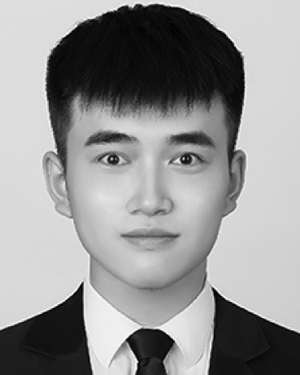 Song Gu合作论文数3
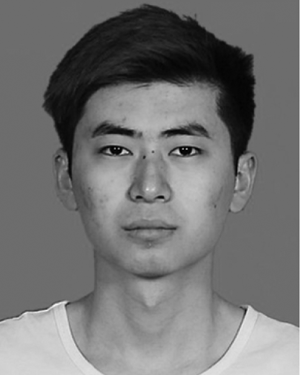 Cheng Ge合作论文数3
 Bo Wang (王波)合作论文数Department of Laboratory Medicine & Pathobiology, Temerty Faculty of Medicine, University of Toronto;Vector Institute;Peter Munk Cardiac Centre, University Health Network;Techna Institute, University Health Network;Toronto General Hospital Research Institute3Na Wang (王娜)合作论文数College of Electronics and Information Engineering, Shenzhen University3
 Tianfu Wang (汪天富)合作论文数Department of medicine, Shenzhen University3Yuanke Pan合作论文数2Dengqiang Jia合作论文数2
 Mingze Sun (孙铭泽)合作论文数Shenzhen International Graduate School, Tsinghua University2
 Reza Nezafat合作论文数Beth Israel Deaconess Medical Center;Department of Medicine, Harvard Medical School2Zhu Qiongjie合作论文数2
 Hao Chen (陳浩)合作论文数Department of Computer Science and Engineering, School of Engineering, The Hong Kong University of Science and Technology;Division of Life Science, School of Science, The Hong Kong University of Science and Technology;Department of Chemical and Biological Engineering, School of Engineering, The Hong Kong University of Science and Technology2Dong Guoqiang合作论文数2
 Weixin Si (司伟鑫)合作论文数University of Chinese Academy of Sciences;Shenzhen Institutes of Advanced Technology, Chinese Academy of Sciences2
 Li Zhang (张力)合作论文数School of Biomedical Engineering, Shenzhen University Medical School2
 Limin Wang (王利民)合作论文数Multimedia Computing Group, State Key Laboratory for Novel Software Technology, Department of Computer Science and Technology, Nanjing University2Tao Yang合作论文数2
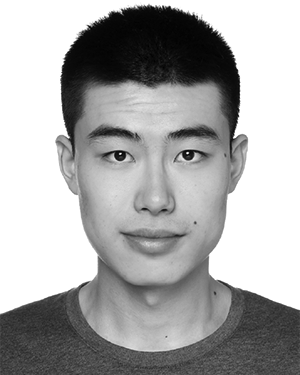 Yao Zhang合作论文数Shanghai Key Laboratory of Data Science, School of Computer Science, Fudan University2
 Rushuang Zhou合作论文数Guangdong Provincial Key Laboratory of Biomedical Measurements and Ultrasound Imaging2Shoujin Huang合作论文数2
 Adamo Young合作论文数Vector Inst2Ziyan Huang合作论文数Institute of Medical Robotics, Shanghai Jiao Tong University2
 Natalia Alves合作论文数Phys Dept, Univ Coimbra2Manuel Wiesenfarth合作论文数2
 Jinghui Fang合作论文数Experimental Center of Liwan Hospital, Department of Ultrasound Medicine, Laboratory of Ultrasound Medicine and Artificial Intelligence, The Third Affiliated Hospital of Guangzhou Medical University, Guangzhou, China2Linling Li合作论文数Shenzhen Univ, Sch Biomed Engn, Hlth Sci Ctr, Shenzhen, Peoples R China2
 Guodong Zeng合作论文数Univ Bern, Inst Surg Technol & Biomech, Bern, Switzerland2
 Haoming Li合作论文数Guangdong Provincial Key Laboratory of Biomedical Measurements and Ultrasound Imaging, School of Biomedical Engineering, Health Science Center, Medical UltraSound Image Computing (MUSIC) Lab, National-Regional Key Technology Engineering Laboratory for Medical Ultrasound, Shenzhen University, Shenzhen, China2
 Lingyun Wu合作论文数SenseTime2
 Zhu Chao合作论文数2
 Fabian Isensee合作论文数German Canc Res Ctr, Med Image Comp, Heidelberg, Germany2
 Xiaowen Liang合作论文数Diamantina Institute, Faculty of Medicine, The University of Queensland2YunCheng Zhou (周云成)合作论文数2Yining Dong (董一凝)合作论文数2
 Jun Ma (马骏)合作论文数Department of Nuclear Science and Engineering, School of Nuclear Science and Technology, University of Science and Technology of China2
 Bram De Wilde合作论文数Laboratoire de Génétique et Biologie des Cancers, L'Institut National de la Santé et de la Recherche Médicale U830;Gudrun Schleiermacher, Institut Curie;Assistance Publique-Hôpitaux de Paris, Hôpital Universitaire Robert Debré;Sorbonne Paris-Cité, Université Diderot Paris 7;Laboratoire de Recherche Translationnelle, Centre Léon-Bérard;University of Gothenburg, Sahlgrenska University Hospital;Ingrid Øra, Lund University;Uppsala University, Uppsala University;Astrid Lindgren Children's Hospital, Karolinska Institute;Linköping University Hospital;Center for Medical Genetics, Ghent University Hospital;Linköping University Hospital, Ghent University Hospital2
 Shujun Wang Emma合作论文数Department of Biomedical Engineering, Faculty of Engineering, The Hong Kong Polytechnic University;Research Institute for Smart Ageing, The Hong Kong Polytechnic University;Research Institute for Artificial Intelligence of Things, The Hong Kong Polytechnic University2




