The adult human breast comprises an intricate network of epithelial ducts and lobules that are embedded in connective and adipose tissue. While previous studies have mainly focused on the breast epithelial system, many of the non-epithelial cell types remain understudied. Here, we constructed a comprehensive Human Breast Cell Atlas (HBCA) at single-cell and spatial resolution. Our single-cell transcriptomics data profiled 535,941 cells from 62 women, and 120,024 nuclei from 20 women, identifying 11 major cell types and 53 cell states. These data revealed abundant pericyte, endothelial and immune cell populations, and highly diverse luminal epithelial cell states. Our spatial mapping using three technologies revealed an unexpectedly rich ecosystem of tissue-resident immune cells in the ducts and lobules, as well as distinct molecular differences between ductal and lobular regions. Collectively, these data provide an unprecedented reference of adult normal breast tissue for studying mammary biology and disease states such as breast cancer.
Women with germline BRCA1 mutations (BRCA1+/mut) have increased risk for hereditary breast cancer. Cancer initiation in BRCA1+/mut is associated with premalignant changes in breast epithelium; however, the role of the epithelium-associated stromal niche during BRCA1-driven tumor initiation remains unclear. Here we show that the premalignant stromal niche promotes epithelial proliferation and mutant BRCA1-driven tumorigenesis in trans. Using single-cell RNA sequencing analysis of human preneoplastic BRCA1+/mut and noncarrier breast tissues, we show distinct changes in epithelial homeostasis including increased proliferation and expansion of basal-luminal intermediate progenitor cells. Additionally, BRCA1+/mut stromal cells show increased expression of pro-proliferative paracrine signals. In particular, we identify pre-cancer-associated fibroblasts (pre-CAFs) that produce protumorigenic factors including matrix metalloproteinase 3 (MMP3), which promotes BRCA1-driven tumorigenesis in vivo. Together, our findings demonstrate that precancerous stroma in BRCA1+/mut may elevate breast cancer risk through the promotion of epithelial proliferation and an accumulation of luminal progenitor cells with altered differentiation.
Recent advances in single-cell transposase-accessible chromatin using a sequencing assay (scATAC-seq) allow cellular heterogeneity dissection and regulatory landscape reconstruction with an unprecedented resolution. However, compared to bulk-sequencing, its ultra-high missingness remarkably reduces usable reads in each cell type, resulting in broader, fuzzier peak boundary definitions and limiting our ability to pinpoint functional regions and interpret variant impacts precisely. We propose a weakly supervised learning method, scEpiLock, to directly identify core functional regions from coarse peak labels and quantify variant impacts in a cell-type-specific manner. First, scEpiLock uses a multi-label classifier to predict chromatin accessibility via a deep convolutional neural network. Then, its weakly supervised object detection module further refines the peak boundary definition using gradient-weighted class activation mapping (Grad-CAM). Finally, scEpiLock provides cell-type-specific variant impacts within a given peak region. We applied scEpiLock to various scATAC-seq datasets and found that it achieves an area under receiver operating characteristic curve (AUC) of ~0.9 and an area under precision recall (AUPR) above 0.7. Besides, scEpiLock's object detection condenses coarse peaks to only ⅓ of their original size while still reporting higher conservation scores. In addition, we applied scEpiLock on brain scATAC-seq data and reported several genome-wide association studies (GWAS) variants disrupting regulatory elements around known risk genes for Alzheimer's disease, demonstrating its potential to provide cell-type-specific biological insights in disease studies.
Mapping chromatin insulator loops is crucial to investigating genome evolution, elucidating critical biological functions, and ultimately quantifying variant impact in diseases. However, chromatin conformation profiling assays are usually expensive, time-consuming, and may report fuzzy insulator annotations with low resolution. Therefore, we propose a weakly supervised deep learning method, InsuLock, to address these challenges. Specifically, InsuLock first utilizes a Siamese neural network to predict the existence of insulators within a given region (up to 2000 bp). Then, it uses an object detection module for precise insulator boundary localization via gradient-weighted class activation mapping (~40 bp resolution). Finally, it quantifies variant impacts by comparing the insulator score differences between the wild-type and mutant alleles. We applied InsuLock on various bulk and single-cell datasets for performance testing and benchmarking. We showed that it outperformed existing methods with an AUROC of ~0.96 and condensed insulator annotations to ~2.5% of their original size while still demonstrating higher conservation scores and better motif enrichments. Finally, we utilized InsuLock to make cell-type-specific variant impacts from brain scATAC-seq data and identified a schizophrenia GWAS variant disrupting an insulator loop proximal to a known risk gene, indicating a possible new mechanism of action for the disease.
SummaryWomen with germline mutations in BRCA1 (BRCA1+/mut) have increased risk for developing hereditary breast cancer1, 2. Cancer initiation in BRCA1+/mut is associated with pre-malignant changes in the breast epithelium including altered differentiation3–5, proliferative stress6 and genomic instability7. However, the role of the epithelium- associated stromal niche during BRCA1-driven tumor initiation remains unclear. Here, we show that the pre-malignant stromal niche promotes epithelial proliferation and BRCA1- driven cancer initiation in trans. Using single-cell RNAseq (scRNAseq) analysis of human pre-neoplastic BRCA1+/mut and control breast tissues, we show that stromal cells provide numerous pro-proliferative paracrine signals inducing epithelial proliferation. We identify a subpopulation of pre-cancer associated fibroblasts (pre-CAFs) that produces copious amounts of pro-tumorigenic factors including matrix metalloproteinase 3 (MMP3)8, 9, and promotes BRCA1-driven tumorigenesis in vivo. Our gene-signature analysis and mathematical modeling of epithelial differentiation reveals that stromal-induced proliferation leads to the accumulation of luminal progenitor cells with altered differentiation, and thus contributes to increased breast cancer risk in BRCA1+/mut. Our results demonstrate how alterations in cell-cell communication can induce imbalances in epithelial homeostasis ultimately leading to cancer initiation. We anticipate our results to form the foundation for novel disease monitoring and therapeutic strategies to improve patient management in hereditary breast cancer. For example, pre-CAF specific proteins may serve as biomarkers for pre-cancerous disease initiation to inform whether radical bilateral mastectomy is needed. In addition, MMP inhibitors could be re-indicated for primary cancer prevention treatment in women with high-risk BRCA1 mutations.
The mammary epithelial cell (MEC) system is a bilayered ductal epithelium of luminal and basal cells, maintained by a lineage of stem and progenitor populations. Here, we used integrated single-cell transcriptomics and chromatin accessibility analysis to reconstruct the cell types of the mouse MEC system and their underlying gene regulatory features in an unbiased manner. We define differentiation states within the secretory type of luminal cells, which forms a continuous spectrum of general luminal progenitor and lactation-committed progenitor cells, By integrating single-cell transcriptomics and chromatin accessibility landscapes, we identify cis- and trans-regulatory elements that are differentially activated in the specific epithelial cell types and our newly defined luminal differentiation states. Our work provides a resource to reveal cis/trans-regulatory elements associated with MEC identity and differentiation that will serve as a reference to determine how the chromatin accessibility landscape changes during breast cancer.
Our knowledge of transcriptional heterogeneities in epithelial stem and progenitor cell compartments is limited. Epidermal basal cells sustain cutaneous tissue maintenance and drive wound healing. Previous studies have probed basal cell heterogeneity in stem and progenitor potential, but a comprehensive dissection of basal cell dynamics during differentiation is lacking. Using single-cell RNA sequencing coupled with RNAScope and fluorescence lifetime imaging, we identify three non-proliferative and one proliferative basal cell state in homeostatic skin that differ in metabolic preference and become spatially partitioned during wound re-epithelialization. Pseudotemporal trajectory and RNA velocity analyses predict a quasi-linear differentiation hierarchy where basal cells progress from Col17a1(Hi)/Trp63(Hi) state to early-response state, proliferate at the juncture of these two states, or become growth arrested before differentiating into spinous cells. Wound healing induces plasticity manifested by dynamic basal-spinous interconversions at multiple basal transcriptional states. Our study provides a systematic view of epidermal cellular dynamics, supporting a revised "hierarchical-lineage" model of homeostasis.
 Kai Kessenbrock合作论文数Department of Anatomy and Biomedical Sciences Program, University of California6
 Quy H. Nguyen合作论文数5Justice Williams合作论文数3Erin Lin合作论文数3Ritesh Parajuli合作论文数3
 Maren Pein合作论文数HI STEM gGmbH, Heidelberg Inst Stem Cell Technol & Expt Med, Heidelberg, Germany3Nicholas Pervolarakis合作论文数Univ Calif Irvine, Dept Biol Chem, Irvine, CA 92697 USA3
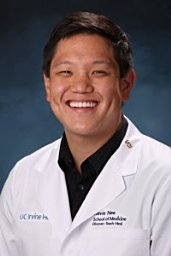 Nee Kevin合作论文数Department of Molecular, Cell and Developmental Biology, University of California Los Angeles3
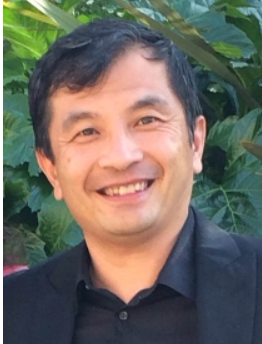 Qing Nie合作论文数Department of Mathematics and Developmental & Cell Biology, University of California, Irvine;Department of Biomedical Engineering, University of California, Irvine3
 Robert Edwards合作论文数Weill Institute for Neurosciences, University of California, San Francisco;School of Medicine, University of California, San Francisco3Keerti Boyapati合作论文数2Kushal Rajiv Dave合作论文数2Christian Calderon合作论文数2Anush Markaryan合作论文数2Shushrruth Sai Srinivasan合作论文数2Sundus F Shalabi合作论文数2Grace Hernandez合作论文数Department of Biological Chemistry, University of California2Maha Rauf合作论文数2
 Dennis Ma合作论文数2
 Jacob Insua-Rodriguez合作论文数HI STEM gGmbH, Heidelberg Inst Stem Cell Technol & Expt Med, Heidelberg, Germany2
 Jing Zhang合作论文数Univ Calif Irvine, Dept Comp Sci, Irvine, CA 92617 USA2
 Peijie Zhou (周沛劼)合作论文数Center for Quantitative Biology, Academy for Advanced Interdisciplinary Studies, Peking University;Center for Machine Learning Research, Academy for Advanced Interdisciplinary Studies, Peking University2
 Mark A Labarge合作论文数2City of Hope2
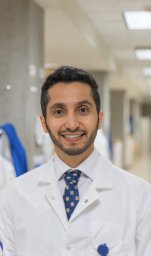 Alshetaiwi Hamad S合作论文数Department of Anatomy and Physiology, Kansas State University2
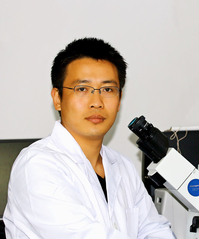 Peng Sun (孙朋)合作论文数College of Physical Education and Health of East China Normal University2Xing Dai合作论文数2Tatyana Lev合作论文数1Jessica Montalvan合作论文数1Morgan Dragan合作论文数1Nadya Nikulina合作论文数1Huma Javaid合作论文数1Remy Vu合作论文数1Ahyeon Hwang合作论文数1
 Anna K Casasent合作论文数Baylor Coll Med, Huffington Ctr Aging1Chandandeep Nagi合作论文数1Kerrigan Blake合作论文数Univ Calif Irvine, Ctr Complex Biol Syst, Irvine, CA 92697 USA1Emi Sei合作论文数1Guadalupe Gutierrez合作论文数Univ Calif Irvine, Dept Biol Chem, Irvine, CA 92697 USA1Aatish Thennavan合作论文数Univ N Carolina, Lineberger Comprehens Canc Ctr, Chapel Hill, NC 27515 USA1Siyuan He (何思源)合作论文数1Mediget Teshome合作论文数1
 Hui Chen合作论文数Univ Texas MD Anderson Canc Ctr, Houston, TX 77030 USA1Siwei Xu合作论文数1
 Tapsi Kumar合作论文数Graduate School of Biomedical Sciences, University of Texas1
 Daniel Haensel合作论文数Univ Calif Irvine, Sch Med, Dept Biol Chem, D250 Med Sci 1, Irvine, CA 92697 USA1Zixuan Cang合作论文数Michigan State Univ, Dept Math, E Lansing, MI 48824 USA1
 Adam L. MacLean合作论文数Mathematical Institute, University of Oxford;Mathematical Institute, University of Oxford1Bai Shanshan合作论文数1
 Bossem Ben Cheikh合作论文数1




