The performance of flow matching and diffusion models can be greatly improved at inference time using reward adaptation algorithms, yet efficiency remains a major limitation. While several algorithms were proposed, we demonstrate that a common bottleneck is the *sampling* method these algorithms rely on: many algorithms require to sample Markov transitions via SDE sampling, which is significantly less efficient and often less performant than ODE sampling. To remove this bottleneck, we introduce GLASS Flows, a new sampling paradigm that simulates a ''flow matching model within a flow matching model'' to sample Markov transitions. As we show in this work, this ''inner'' flow matching model can be retrieved from any pre-trained model without any re-training, effectively combining the efficiency of ODEs with the stochastic evolution of SDEs. On large-scale text-to-image models, we show that GLASS Flows eliminate the trade-off between stochastic evolution and efficiency. GLASS Flows improve state-of-the-art performance in text-to-image generation, making it a simple, drop-in solution for inference-time scaling of flow and diffusion models.
The performance of flow matching and diffusion models can be greatly improved at inference time using reward alignment algorithms, yet efficiency remains a major limitation. While several algorithms were proposed, we demonstrate that a common bottleneck is the sampling method these algorithms rely on: many algorithms require to sample Markov transitions via SDE sampling, which is significantly less efficient and often less performant than ODE sampling. To remove this bottleneck, we introduce GLASS Flows, a new sampling paradigm that simulates a "flow matching model within a flow matching model" to sample Markov transitions. As we show in this work, this "inner" flow matching model can be retrieved from a pre-trained model without any re-training, combining the efficiency of ODEs with the stochastic evolution of SDEs. On large-scale text-to-image models, we show that GLASS Flows eliminate the trade-off between stochastic evolution and efficiency. Combined with Feynman-Kac Steering, GLASS Flows improve state-of-the-art performance in text-to-image generation, making it a simple, drop-in solution for inference-time scaling of flow and diffusion models.
Autoregressive language models accumulate errors due to their fixed, irrevocable left-to-right token generation. To address this, we propose a new sampling method called Resample-Previous-Tokens (RPT). RPT mitigates error accumulation by iteratively revisiting and potentially replacing tokens in a window of previously generated text. This method can be integrated into existing autoregressive models, preserving their next-token-prediction quality and speed. Fine-tuning a pretrained 8B parameter model with RPT for only 100B resulted in ~10% relative improvements on reasoning and coding benchmarks compared to the standard sampling.
We introduce Generator Matching, a modality-agnostic framework for generative modeling using arbitrary Markov processes. Generators characterize the infinitesimal evolution of a Markov process, which we leverage for generative modeling in a similar vein to flow matching: we construct conditional generators which generate single data points, then learn to approximate the marginal generator which generates the full data distribution. We show that Generator Matching unifies various generative modeling methods, including diffusion models, flow matching and discrete diffusion models. Furthermore, it expands the design space to new and unexplored Markov processes such as jump processes. Finally, Generator Matching enables the construction of superpositions of Markov generative models and enables the construction of multimodal models in a rigorous manner. We empirically validate our method on image and multimodal generation, e.g. showing that superposition with a jump process improves performance.
Autoregressive next token prediction language models offer powerful capabilities but face significant challenges in practical deployment due to the high computational and memory costs of inference, particularly during the decoding stage. We introduce Set Block Decoding (SBD), a simple and flexible paradigm that accelerates generation by integrating standard next token prediction (NTP) and masked token prediction (MATP) within a single architecture. SBD allows the model to sample multiple, not necessarily consecutive, future tokens in parallel, a key distinction from previous acceleration methods. This flexibility allows the use of advanced solvers from the discrete diffusion literature, offering significant speedups without sacrificing accuracy. SBD requires no architectural changes or extra training hyperparameters, maintains compatibility with exact KV-caching, and can be implemented by fine-tuning existing next token prediction models. By fine-tuning Llama-3.1 8B and Qwen-3 8B, we demonstrate that SBD enables a 3-5x reduction in the number of forward passes required for generation while achieving same performance as equivalent NTP training.
The design space of discrete-space diffusion or flow generative models are significantly less well-understood than their continuous-space counterparts, with many works focusing only on a simple masked construction.In this work, we aim to take a holistic approach to the construction of discrete generative models based on continuous-time Markov chains, and for the first time, allow the use of arbitrary discrete probability paths, or colloquially, corruption processes. Through the lens of optimizing the symmetric kinetic energy, we propose velocity formulas that can be applied to any given probability path, completely decoupling the probability and velocity, and giving the user the freedom to specify any desirable probability path based on expert knowledge specific to the data domain. Furthermore, we find that a special construction of mixture probability paths optimizes the symmetric kinetic energy for the discrete case.We empirically validate the usefulness of this new design space across multiple modalities: text generation, inorganic material generation, and image generation. We find that we can outperform the mask construction even in text with kinetic-optimal mixture paths, while we can make use of domain-specific constructions of the probability path over the visual domain.
Inorganic crystals are periodic, highly-symmetric arrangements of atoms in three-dimensional space. Their structures are constrained by the symmetry operations of a crystallographic space group and restricted to lie in specific affine subspaces known as Wyckoff positions. The frequency an atom appears in the crystal and its rough positioning are determined by its Wyckoff position. Most generative models that predict atomic coordinates overlook these symmetry constraints, leading to unrealistically high populations of proposed crystals exhibiting limited symmetry. We introduce Space Group Conditional Flow Matching, a novel generative framework that samples significantly closer to the target population of highly-symmetric, stable crystals. We achieve this by conditioning the entire generation process on a given space group and set of Wyckoff positions; specifically, we define a conditionally symmetric noise base distribution and a group-conditioned, equivariant, parametric vector field that restricts the motion of atoms to their initial Wyckoff position. Our form of group-conditioned equivariance is achieved using an efficient reformulation of group averaging tailored for symmetric crystals. Importantly, it reduces the computational overhead of symmetrization to a negligible level. We achieve state of the art results on crystal structure prediction and de novo generation benchmarks. We also perform relevant ablations.
Diffusion and flow matching models have significantly advanced media generation, yet their design space is well-explored, somewhat limiting further improvements. Concurrently, autoregressive (AR) models, particularly those generating continuous tokens, have emerged as a promising direction for unifying text and media generation. This paper introduces Transition Matching (TM), a novel discrete-time, continuous-state generative paradigm that unifies and advances both diffusion/flow models and continuous AR generation. TM decomposes complex generation tasks into simpler Markov transitions, allowing for expressive non-deterministic probability transition kernels and arbitrary non-continuous supervision processes, thereby unlocking new flexible design avenues. We explore these choices through three TM variants: (i) Difference Transition Matching (DTM), which generalizes flow matching to discrete-time by directly learning transition probabilities, yielding state-of-the-art image quality and text adherence as well as improved sampling efficiency. (ii) Autoregressive Transition Matching (ARTM) and (iii) Full History Transition Matching (FHTM) are partially and fully causal models, respectively, that generalize continuous AR methods. They achieve continuous causal AR generation quality comparable to non-causal approaches and potentially enable seamless integration with existing AR text generation techniques. Notably, FHTM is the first fully causal model to match or surpass the performance of flow-based methods on text-to-image task in continuous domains. We demonstrate these contributions through a rigorous large-scale comparison of TM variants and relevant baselines, maintaining a fixed architecture, training data, and hyperparameters.
Diffusion or flow-based models are powerful generative paradigms that are notoriously hard to sample as samples are defined as solutions to high-dimensional Ordinary or Stochastic Differential Equations (ODEs/SDEs) which require a large Number of Function Evaluations (NFE) to approximate well. Existing methods to alleviate the costly sampling process include model distillation and designing dedicated ODE solvers. However, distillation is costly to train and sometimes can deteriorate quality, while dedicated solvers still require relatively large NFE to produce high quality samples. In this paper we introduce ``Bespoke solvers'', a novel framework for constructing custom ODE solvers tailored to the ODE of a given pre-trained flow model. Our approach optimizes an order consistent and parameter-efficient solver (e.g., with 80 learnable parameters), is trained for roughly 1\% of the GPU time required for training the pre-trained model, and significantly improves approximation and generation quality compared to dedicated solvers. For example, a Bespoke solver for a CIFAR10 model produces samples with Fréchet Inception Distance (FID) of 2.73 with 10 NFE, and gets to 1\% of the Ground Truth (GT) FID (2.59) for this model with only 20 NFE. On the more challenging ImageNet-64$\times$64, Bespoke samples at 2.2 FID with 10 NFE, and gets within 2\% of GT FID (1.71) with 20 NFE.
We propose Riemannian Flow Matching (RFM), a simple yet powerful framework for training continuous normalizing flows on manifolds. Existing methods for generative modeling on manifolds either require expensive simulation, are inherently unable to scale to high dimensions, or use approximations for limiting quantities that result in biased training objectives. Riemannian Flow Matching bypasses these limitations and offers several advantages over previous approaches: it is simulation-free on simple geometries, does not require divergence computation, and computes its target vector field in closed-form. The key ingredient behind RFM is the construction of a relatively simple premetric for defining target vector fields, which encompasses the existing Euclidean case. To extend to general geometries, we rely on the use of spectral decompositions to efficiently compute premetrics on the fly. Our method achieves state-of-the-art performance on many real-world non-Euclidean datasets, and we demonstrate tractable training on general geometries, including triangular meshes with highly non-trivial curvature and boundaries.
This paper introduces Bespoke Non-Stationary (BNS) Solvers, a solver distillation approach to improve sample efficiency of Diffusion and Flow models. BNS solvers are based on a family of non-stationary solvers that provably subsumes existing numerical ODE solvers and consequently demonstrate considerable improvement in sample approximation (PSNR) over these baselines. Compared to model distillation, BNS solvers benefit from a tiny parameter space ($<$200 parameters), fast optimization (two orders of magnitude faster), maintain diversity of samples, and in contrast to previous solver distillation approaches nearly close the gap from standard distillation methods such as Progressive Distillation in the low-medium NFE regime. For example, BNS solver achieves 45 PSNR / 1.76 FID using 16 NFE in class-conditional ImageNet-64. We experimented with BNS solvers for conditional image generation, text-to-image generation, and text-2-audio generation showing significant improvement in sample approximation (PSNR) in all.
Modern distribution matching algorithms for training diffusion or flow models directly prescribe the time evolution of the marginal distributions between two boundary distributions. In this work, we consider a generalized distribution matching setup, where these marginals are only implicitly described as a solution to some task-specific objective function. The problem setup, known as the Generalized Schrödinger Bridge (GSB), appears prevalently in many scientific areas both within and without machine learning. We propose Generalized Schödinger Bridge Matching (GSBM), a new matching algorithm inspired by recent advances, generalizing them beyond kinetic energy minimization and to account for nonlinear state costs. We show that such a generalization can be cast as solving conditional stochastic optimal control, for which efficient variational approximations can be used, and further debiased with the aid of path integral theory. Compared to prior methods for solving GSB problems, our GSBM algorithm always preserves a feasible transport map between the boundary distributions throughout training, thereby enabling stable convergence and significantly improved scalability. We empirically validate our claims on an extensive suite of experimental setups, including crowd navigation, opinion depolarization, LiDAR manifolds, and image domain transfer. Our work brings new algorithmic opportunities for training diffusion models enhanced with task-specific optimality structures.
Current diffusion or flow-based generative models for 3D shapes divide to two: distilling pre-trained 2D image diffusion models, and training directly on 3D shapes. When training a diffusion or flow models on 3D shapes a crucial design choice is the shape representation. An effective shape representation needs to adhere three design principles: it should allow an efficient conversion of large 3D datasets to the representation form; it should provide a good tradeoff of approximation power versus number of parameters; and it should have a simple tensorial form that is compatible with existing powerful neural architectures. While standard 3D shape representations such as volumetric grids and point clouds do not adhere to all these principles simultaneously, we advocate in this paper a new representation that does. We introduce Mosaic-SDF (M-SDF): a simple 3D shape representation that approximates the Signed Distance Function (SDF) of a given shape by using a set of local grids spread near the shape's boundary. The M-SDF representation is fast to compute for each shape individually making it readily parallelizable; it is parameter efficient as it only covers the space around the shape's boundary; and it has a simple matrix form, compatible with Transformer-based architectures. We demonstrate the efficacy of the M-SDF representation by using it to train a 3D generative flow model including class-conditioned generation with the 3D Warehouse dataset, and text-to-3D generation using a dataset of about 600k caption-shape pairs.
Flow Matching (FM) is a recent framework for generative modeling that has achieved state-of-the-art performance across various domains, including image, video, audio, speech, and biological structures. This guide offers a comprehensive and self-contained review of FM, covering its mathematical foundations, design choices, and extensions. By also providing a PyTorch package featuring relevant examples (e.g., image and text generation), this work aims to serve as a resource for both novice and experienced researchers interested in understanding, applying and further developing FM.
Despite Flow Matching and diffusion models having emerged as powerful generative paradigms for continuous variables such as images and videos, their application to high-dimensional discrete data, such as language, is still limited. In this work, we present Discrete Flow Matching, a novel discrete flow paradigm designed specifically for generating discrete data. Discrete Flow Matching offers several key contributions: (i) it works with a general family of probability paths interpolating between source and target distributions; (ii) it allows for a generic formula for sampling from these probability paths using learned posteriors such as the probability denoiser ($x$-prediction) and noise-prediction ($\epsilon$-prediction); (iii) practically, focusing on specific probability paths defined with different schedulers improves generative perplexity compared to previous discrete diffusion and flow models; and (iv) by scaling Discrete Flow Matching models up to 1.7B parameters, we reach 6.7% Pass@1 and 13.4% Pass@10 on HumanEval and 6.7% Pass@1 and 20.6% Pass@10 on 1-shot MBPP coding benchmarks. Our approach is capable of generating high-quality discrete data in a non-autoregressive fashion, significantly closing the gap between autoregressive models and discrete flow models.
Taming the generation outcome of state of the art Diffusion and Flow-Matching (FM) models without having to re-train a task-specific model unlocks a powerful tool for solving inverse problems, conditional generation, and controlled generation in general. In this work we introduce D-Flow, a simple framework for controlling the generation process by differentiating through the flow, optimizing for the source (noise) point. We motivate this framework by our key observation stating that for Diffusion/FM models trained with Gaussian probability paths, differentiating through the generation process projects gradient on the data manifold, implicitly injecting the prior into the optimization process. We validate our framework on linear and non-linear controlled generation problems including: image and audio inverse problems and conditional molecule generation reaching state of the art performance across all.
In recent years, algorithms and neural architectures based on the Weisfeiler--Leman algorithm, a well-known heuristic for the graph isomorphism problem, have emerged as a powerful tool for machine learning with graphs and relational data. Here, we give a comprehensive overview of the algorithm's use in a machine-learning setting, focusing on the supervised regime. We discuss the theoretical background, show how to use it for supervised graph and node representation learning, discuss recent extensions, and outline the algorithm's connection to (permutation-)equivariant neural architectures. Moreover, we give an overview of current applications and future directions to stimulate further research.
Recent advances in text-to-image generation with diffusion models present transformative capabilities in image quality. However, user controllability of the generated image, and fast adaptation to new tasks still remains an open challenge, currently mostly addressed by costly and long re-training and fine-tuning or ad-hoc adaptations to specific image generation tasks. In this work, we present MultiDiffusion, a unified framework that enables versatile and controllable image generation, using a pre-trained text-to-image diffusion model, without any further training or finetuning. At the center of our approach is a new generation process, based on an optimization task that binds together multiple diffusion generation processes with a shared set of parameters or constraints. We show that MultiDiffusion can be readily applied to generate high quality and diverse images that adhere to user-provided controls, such as desired aspect ratio (e.g., panorama), and spatial guiding signals, ranging from tight segmentation masks to bounding boxes. Project webpage: https://multidiffusion.github.io
Classifier-free guidance is a key component for enhancing the performance of conditional generative models across diverse tasks. While it has previously demonstrated remarkable improvements for the sample quality, it has only been exclusively employed for diffusion models. In this paper, we integrate classifier-free guidance into Flow Matching (FM) models, an alternative simulation-free approach that trains Continuous Normalizing Flows (CNFs) based on regressing vector fields. We explore the usage of \emph{Guided Flows} for a variety of downstream applications. We show that Guided Flows significantly improves the sample quality in conditional image generation and zero-shot text-to-speech synthesis, boasting state-of-the-art performance. Notably, we are the first to apply flow models for plan generation in the offline reinforcement learning setting, showcasing a 10x speedup in computation compared to diffusion models while maintaining comparable performance.
Recent successful generative models are trained by fitting a neural network to an a-priori defined tractable probability density path taking noise to training examples. In this paper we investigate the space of Gaussian probability paths, which includes diffusion paths as an instance, and look for an optimal member in some useful sense. In particular, minimizing the Kinetic Energy (KE) of a path is known to make particles' trajectories simple, hence easier to sample, and empirically improve performance in terms of likelihood of unseen data and sample generation quality. We investigate Kinetic Optimal (KO) Gaussian paths and offer the following observations: (i) We show the KE takes a simplified form on the space of Gaussian paths, where the data is incorporated only through a single, one dimensional scalar function, called the \emph{data separation function}. (ii) We characterize the KO solutions with a one dimensional ODE. (iii) We approximate data-dependent KO paths by approximating the data separation function and minimizing the KE. (iv) We prove that the data separation function converges to $1$ in the general case of arbitrary normalized dataset consisting of $n$ samples in $d$ dimension as $n/\sqrt{d}\rightarrow 0$. A consequence of this result is that the Conditional Optimal Transport (Cond-OT) path becomes \emph{kinetic optimal} as $n/\sqrt{d}\rightarrow 0$. We further support this theory with empirical experiments on ImageNet.
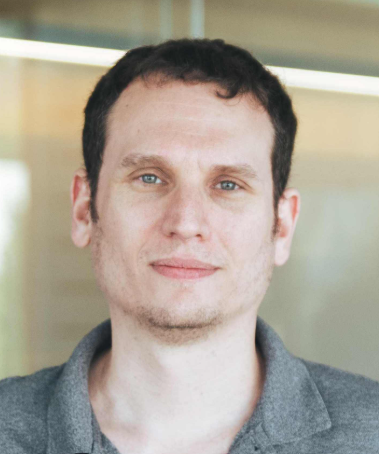 Haggai Maron合作论文数Faculty of Electrical and Computer Engineering, Technion;NVIDIA19
 Ricky Tian Qi Chen合作论文数Facebook AI Research16
 Daniel Cohen-Or合作论文数School of Computer Science, Tel Aviv University13
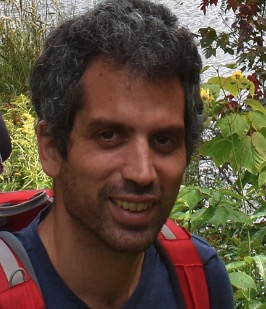 Matan Atzmon合作论文数Toronto AI Lab, NVIDIA12
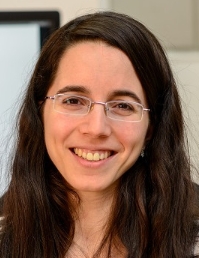 Heli Ben-Hamu合作论文数Meta12
 David Levin合作论文数Department of Applied Mathematics, School of Mathematical Sciences, Tel Aviv University11
 Neta Shaul合作论文数Weizmann Institute of Science10
 Thomas Funkhouser合作论文数Google DeepMind;Department of Computer Science, School of Engineering and Applied Science, Princeton University9
 Nadav Dym合作论文数Faculty of Mathematics, Technion - Israel Institute of Technology8
 Noam Aigerman合作论文数Department of Computer Science and Operations Research, Faculty of Arts and Science, Université de Montréal;Mila8
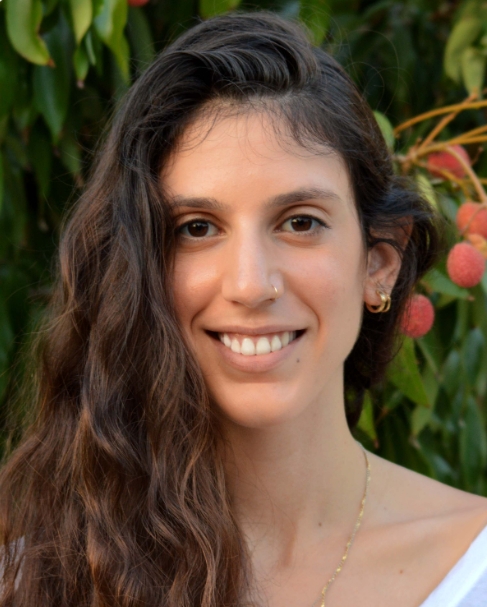 Lior Yariv合作论文数Department of Computer Science and Applied Mathematics, Weizmann Institute of Science8
 Ronen Basri合作论文数Department of Computer Science and Applied Mathematics, Weizmann Institute of Science;Toyota Technological Institute at Chicago8
 Ingrid Daubechies合作论文数Department of Mathematics, Trinity College of Arts & Sciences, Duke University;Department of Electrical and Computer Engineering, Pratt School of Engineering, Duke University8
 Brian Karrer合作论文数Facebook8
 Itai Gat合作论文数Meta Fundamental AI Research8
 Kovalsky, Shahar合作论文数Department of Mathematics, College of Arts and Sciences, The University of North Carolina at Chapel Hill7
 Uriel Singer合作论文数Meta6
 Nimrod Segol合作论文数Department of Computer Science and Applied Mathematics, Weizmann Institute of Science6
 Roi Poranne合作论文数Department of Computer Science, Faculty of Social Sciences, University of Haifa6
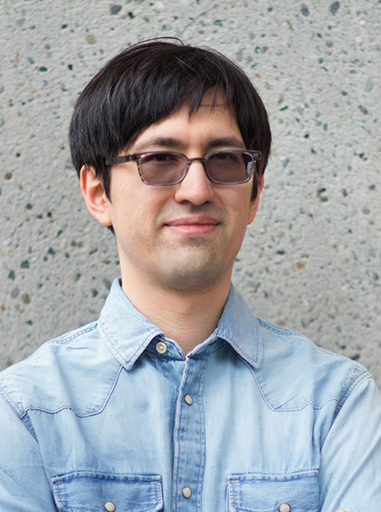 Vladimir (Vova) Kim合作论文数Adobe6
 Omri Puny合作论文数Department of Computer Science and Applied Mathematics, Weizmann Institute of Science6
 Matthew Le合作论文数Facebook AI Research5
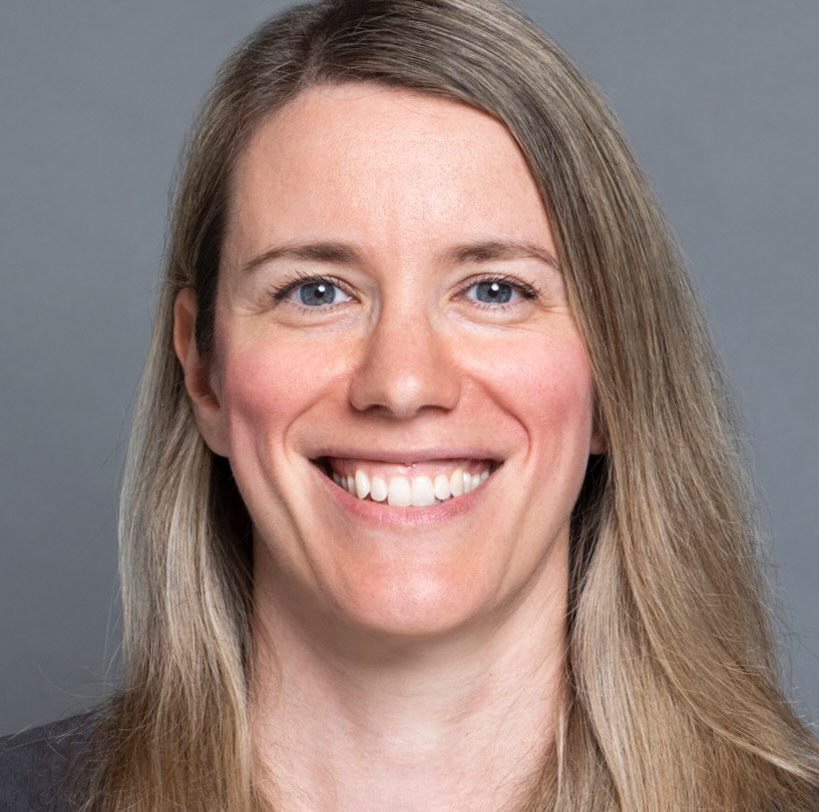 Olga Sorkine-Hornung合作论文数Department of Computer Science, ETH Zurich;Interactive Geometry Lab, Institute of Visual Computing, ETH Zurich5
 Maximilian Nickel合作论文数Meta AI5
 Meirav Galun合作论文数Department of Computer Science and Applied Mathematics, Weizmann Institute of Science;Faculty of Mathematics and Computer Science, Weizmann Institute of Science5
 Peter Holderrieth合作论文数4
 Itay Kezurer合作论文数4Douglas Martin Boyer合作论文数Department of Evolutionary Anthropology, Trinity College of Arts & Sciences, Duke University4
 Aditya Grover合作论文数Samueli School of Engineering, University of California, Los Angeles;Inception Labs4
 Hadar Serviansky合作论文数TomTom4
 Niv Haim合作论文数Weizmann Institute of Science;DART;School of Data Science YDATA;Primrose3
 Brandon Amos合作论文数Fundamental AI Research Group, Meta AI3
 Ali Thabet合作论文数Meta3
 Yoni Kasten合作论文数NVIDIA Research3
 Eilam Gross合作论文数Department of Particle Physics and Astrophysics, Faculty of Physics, Weizmann Institute of Science3
 Marton Havasi合作论文数FAIR, Meta3
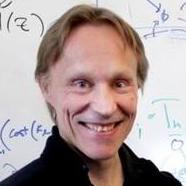 Tommi S. Jaakkola合作论文数Department of Electrical Engineering and Computer Science, Schwarzman College of Computing, Massachusetts Institute of Technology;Institute for Data, Systems, and Society, Massachusetts Institute of Technology3Jukka Jernvall合作论文数3
 Kyle Cranmer合作论文数Data Science Institute, University of Wisconsin-Madison;Department of Physics, University of Wisconsin-Madison3
 Albert Pumarola Peris合作论文数Meta3Jesus Puente合作论文数2Anna Shtengel合作论文数Weizmann Institute of Science2
 Gropp Amos合作论文数Weizmann Inst. of Science#TAB#2
 Dror Moran合作论文数Department of Computer Science and Applied Mathematics, Faculty of Mathematics and Computer Science, Weizmann Institute of Science2Yam Kushinsky合作论文数Weizmann Institute of Science#TAB#2
 Ofir Weber合作论文数Faculty of Engineering, Bar-Ilan University2
 Gabriel Synnaeve合作论文数Meta2Bunn Jonathan M合作论文数2
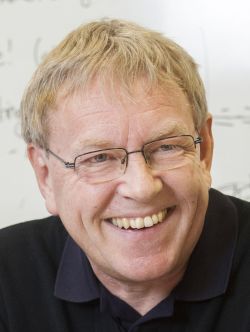 Hans-Peter Seidel合作论文数Computer Graphics Department, Max Planck Institute for Informatics2