The selective oxidative amination of alkenes, particularly dienes bearing multiple reactive sites and modes, represents an attractive approach for constructing nitrogen-containing motifs. However, precise control over regioselectivity (Markovnikov/ anti-Markovnikov and branched/linear), the amination sequence, and stereoselectivity remains challenging, especially for primary amines. Herein, we report a cooperative noncovalent interaction-directed strategy that leverages pi-pi stacking and hydrogen bonding to enable branch-selective allylic C-H amination of alkyl dienes with primary amines, facilitating subsequent aza-Wacker oxidation or a second allylic C-H amination. Divergent cyclization enables the streamlined synthesis of pyrrole, pyrrolidine, and tetrahydroindole scaffolds via dual C-H amination (>100 examples). Mechanistic and computational studies reveal that pi-pi stacking-induced orientation of the alkene chain, together with the interplay between the coordination and hydrogen-bonding properties of the anionic ligand, is critical for the efficiency and selectivity of the amination process.
Reported herein is a photoredox/cobaloxime dual-catalytic approach to execute tandem dehydrogenative azolation and aromatization of tetrahydronaphthalene for rapid construction of N-(β-naphthyl)azole architectures. This protocol highlights noble metal-free and external oxidants-free conditions, step- and atom-economy, and site-selectivity. A preliminary mechanistic study has uncovered that the transformation undergoes a N-centered radical mediated C-H/N-H cross-coupling followed by dehydrogenative aromatization of saturated naphthyl surrogates under visible light irradiation, and DFT calculations elucidate the site-selectivity.
The selective reduction of the unsaturated substrates in green solvent is highly desired yet however, remains a long-standing challenge. Especially the selective desulfurization of thioamides usually requires hazardous highly reactive reagents or transition metal catalysts in high-pressure conditions. Herein, a novel protocol of selective desulfurization of thioamides to amines with dimethylaminoborane (DMAB) without catalysts, operating in neat water under an open system, is presented. Notably, the selectivity of the reaction is effectively controlled with a simple Lewis acid additive through computational design. The combination of density functional theory and experimental mechanism studies reveals the important synergistic cooperation by DMAB and Lewis acid additive to facilitate the hydrogenative desulfurization process in an aqueous solution.
The green reductive transformation of thioamides is highly desired yet faces challenges in broad substrate scope and selectivity for C 00000000 00000000 00000000 00000000 11111111 00000000 11111111 00000000 00000000 00000000 S and C-N cleavage. Existing catalytic hydrogenation methods are still limited and require harsh reaction conditions. Here, computation-aided design discovered a catalyst-free protocol for thioamides' reductive desulfurization with ammonia borane (AB). The system uses dimethylamine-borane (DMAB) to directly reduce thioamides to amines under catalyst-free, practical, economical, green, and easy-to-handle conditions. It covers a broad scope for primary, secondary, and tertiary thioamides. The experimental and theoretical studies revealed a concerted double-hydrogen transfer mechanism for this catalyst-free system, in which DMAB was found to play an important self-catalytic role in the reaction. This practical and selective protocol provides an important example for designing catalyst-free reductive systems.
Scorpion-shaped hybrid double helicenes, consisting of a [5] or [6] carbohelicene and an aza[4]helicene, have been successfully constructed by orthogonal alkyne annulations via an aryl C-I bond and amido N-H bond from polyaromatic ring-fused iodoisocoumarins. In spite of the unexpected instability upon aerobic oxidation upon ambient visible light irradiation over several days, both ultraviolet-visible absorption and photoluminescence spectra along with density functional theory calculations of these helicenes have been studied, which rely heavily on the bent polyaromatic ring-fused quinolizinone conjugate skeleton. In addition, the Stokes shifts of hybrid double helicenes are generally larger than those of the structurally similar mono-carbohelicenes.
Palladium-catalyzed directed C − H functionalization/cyclization is an effective approach for synthesizing nitrogen heterocycles. Imine, known for its ease of installation/removal, has been extensively used in the C–H activation of aldehydes, ketones and alkylamines. Nevertheless, it been rarely explored in the C(sp 2 )–H activation of aryl amines because of the generation of a strained four-membered palladacycle. Herein, an imine directed palladium catalyzed C(sp 2 )–H functionalization of aryl amines assisted by vinylacetic acid has been established, providing access to a variety of γ-lactone fused tetrahydroquinolines under mild reaction conditions. The methodology demonstrates broad substrate scope and good functional group tolerance, representing notable advancement in organic synthesis. Mechanistic experiments were performed to clarify how the C(sp 2 )–H activation occurred, indicating the crucial role of vinylacetic acid. DFT calculations supported the observations, elucidating the strained four-membered ring C–H activation barrier was overcome via coordination and hydrogen bond interaction of vinylacetic acid.
α-Diazoesters belong to significantly important carbenoid precursors in synthetic chemistry, diazomethylation-based difunctionalization of alkenes is highly valuable but remain nontrivial. Herein, we reported a general and modular approach for the direct 1,2-hydroxyl-diazomethylation of alkenes through visible-light photoredox catalysis. This process exploits photocatalyzed strategy to convert alkenes to γ-hydroxyl-α-diazoesters using α-diazo iodonium salts as carbyne precursors, featuring wide substrate tolerance and broad late-stage diversifications. Mechanistic studies suggest that the formation of γ-carbocation-tethered α-diazoesters plays a crucial role in trapping H2O to allow for this transformation.
The palladium-catalyzed monoalkoxycarbonylation of 1,3-diynes provides a chemoselective method for the construction of synthetically useful conjugated enynes. Here, in silico unraveling the detailed mechanism of this reaction and the origin of chemoselectivity were conducted. It is shown that the alkoxycarbonylation reaction preferably proceeds by a NH-Pd pathway, which including three substeps: hydropalladation, CO migratory insertion and methanolysis. The effectiveness of the NH-Pd catalytic system is attributed to the alkynyl-palladium π-back-bonding interaction, C-H⋅⋅⋅π interaction in reactant moiety and d-pπ conjugation between the Pd center and alkenyl group. The hydropalladation step was identified as the rate- and chemoselectivity-determining step, and the first alkoxycarbonylation requires a much lower energy barrier in comparison with the second alkoxycarbonylation, in line with the experimental outcomes that the monoalkoxycarbonylation product was obtained in high yield. Distortion-interaction analysis indicates the more favorable monoalkoxycarbonylation (compared to double alkoxycarbonylation) is caused by steric effect.
Gold allenylidene species have been seldom exploited as reactive intermediates in synthetically versatile catalytic reactions. By employing alkynylbenziodoxoles as the substrates and bifunctional WangPhos as the metal ligand, this work demonstrated ready catalytic access to these intermediates of general substitution patterns and their electrophilic reactivities at the γ‐carbon center with a diverse range of nucleophiles. The reaction is driven by the reductive decomposition of the benziodoxole moiety and achieves the replacement of a propargylic proton with a N/O/C‐based nucleophile, hence realizing reactivity umpolung. Corroborated by DFT calculations, the reaction mechanism involves a mild propargylic deprotonation. In contrast to prior works employing a tertiary amine functionality, A barely BrØnsted‐basic amide group in WangPhos is surprisingly effective in deprotonation at the propargylic position under a gold‐ligand cooperation regime.
The quantitative Lewis acidity of N-heterocyclic iod(az)olium salts is helpful for their further application in organic chemistry. The acidity scales of different N-Heterocyclic iodonium salts (NHISs) in acetonitrile are investigated using Density functional theory (DFT) studies. There are a total of 121N-Heterocyclic iodonium salts that have been designed by combining N-heterocyclic and iodonium salt structures in this research. Theoretical calculations systematically established the P-31 NMR chemical shifts of NHISs, and the relative Lewis acidity scale was derived. The Lewis acidity trend is analyzed and explained by the natural population analysis (NPA) charges, molecular electrostatic potential, and the interaction between the iodonium center and the N-heterocyclic substituents. This study is expected to provide a practical quantitative theoretical scale for the understanding and design of hypervalent iodine(III) reagents with versatile Lewis acidity.
The mechanism of N -allylation of allylic alcohols via π-allylmetal is substrate-dependent, and is influenced by the combined effect of nucleophilicity and steric hindrance.
A novel and expedient cascade strategy has been demonstrated for the synthesis of fused benzo- aza - oxa -[5-6-5] tetracycles in high yields and diastereoselectivities (up to 20 : 1 dr ). The strategy was fulfilled through palladium-catalyzed oxidative convergent assembly of functionally divergent anilines and 3-butenoic acid with five chemical bonds constructed. Coupled with control experiments and deuterium labelled studies, DFT calculations were performed for the proposed mechanism. The utility of the illustrated strategy is emphasized by gram-scale syntheses, late-stage functionalization, and the transformation to a key core of natural products such as martinellic acid and seneciobipyrrolidine.
N-Heterocyclic boryl (NHB) is emerging as an important type of versatile ligand; however, its electronic and steric properties are far from well-known, which is the bottleneck for its rational design. Herein, theoretical evaluation of the scales in electronic and steric properties for various NHBs is presented with NHB-Ir(CO)(3) as the model complex. The calculated Tolman electronic parameters (TEP) reveal general trends about the influence of substitution, backbone saturation, ring size, and heteroatoms. The percent buried volume (%V-bur) of NHBs generally increases with the volume augmentation. The facilitating roles of the PIO-based Bond Index between NHB and the Ir center and the %V-bur on TEP were also analyzed. The systematic scales should be essential for the design, application, and mechanistic understanding of the NHB-based complexes or molecules.
Amines are prominent in natural products, pharmaceutical agents and agrochemicals. Moreover, they are synthetically valuable building blocks for the construction of complex organic molecules and functional materials. However, amines, especially aliphatic and aromatic amines with free N-H bonds, tend to coordinate with transition metals and deactivate the catalyst, posing a tremendous challenge to applying Lewis basic amines in the amination of olefins. Here we present an example of oxidative amination of simple olefins with various Lewis basic amines. The combination of a palladium catalyst, 2,6-dimethyl-1,4-benzoquinone and a phosphorous ligand leads to the efficient synthesis of alkyl and aryl allylamines. A series of allylamines were obtained with good yields and excellent regio- and stereoselectivities. Intramolecular amination to synthesize tetrahydropyrrole and piperidine derivatives was also realized. Mechanistic investigations reveal that the reaction undergoes allylic C(sp3)-H activation and subsequent functionalization.
Ammonia is the simplest molecule for the installation of nitrogen atom in organic compounds. It is abundantly available, economic and highly attractive from the point of atom economy for its use in organic synthesis, however, an highly challenging task for accessing the nitrogenous scaffolds through N−H activation of ammonia. With the advancement of synthetic procedures, scientific community continually developing excellent reactions employing ammonia as a source of nitrogen for various types of amination reactions and accomplishing the synthesis of nitrogenous compounds. This Review provides recent developments in amination reactions employing ammonia as a nitrogen source at a single platform.
The concept of Lewis acidic π* cooperation was proposed for innocent CO ligand in NHC–Mn catalyzed CO2 hydrogenation by systematic DFT studies.
Two nanosize lanthanide clusters Na3[Eu48O6(OH)84(tca)34(gly)12(H2O)22]2Htca6Cl6H2ONO3 (Eu48) and Na[Tb48O6(OH)84(fca)26(dmp)14(H2O)24]4HfcaNO38Cl (Tb48) have been isolated in presence of th...
A binary hybrid system comprising a hypervalent iodine(III) reagent and BF3•OEt2 Lewis acid was found to be effective for the diastereoselective α-acetoxylation of cyclic ketones. In this hybrid system, BF3•OEt2 Lewis acid allowed the activation of the hypervalent iodine(III) reagent and cyclic ketones for smooth α-acetoxylation reaction, achieving high diastereoselectivity. This hypervalent iodine-mediated α-acetoxylation of the cyclic ketone reaction plausibly undergoes an SN2 substitution mechanism via an α-C-bound hypervalent iodine intermediate. The diastereoselectivity of the reaction mainly originates from thermodynamic control.
Group VIB NHC-complexes as promising non-noble catalysts for CO2 hydrogenation benefiting by the weak electronegativity and low oxidation state.
The mechanism of glucose-to-fructose isomerization catalyzed by manganese chloride (MnCl2) and 1-methyl-3-(3-sulfobutyl)-imidazolium methylsulfonate ([C4SO3HMIM][CH3SO3]) in a 1-butyl-3-methylimidazolium chloride ([BMIM]Cl) ionic liquid (IL) was investigated computationally.
 Zhuofeng Ke (柯卓锋)合作论文数School of Materials Science and Engineering, Sun Yat-Sen University16
 Dongju Zhang (张冬菊)合作论文数School of Chemistry and Chemical Engineering, Shandong University8
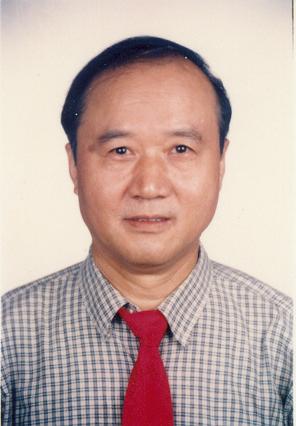 Chengbu Liu (刘成卜)合作论文数Center for optics Research and Engineering, Shandong University8
 Huanfeng Jiang (江焕峰)合作论文数State Key Laboratory of Pulp and Paper Engineering, South China University of Technology5
 Jiaqi Su合作论文数4
 Wanqing Wu (伍婉卿)合作论文数School of Chemistry and Chemical Engineering, South China University of Technology4Zhe Han合作论文数3Xueli Mu合作论文数2Xiangwen Tan合作论文数2
 Jiahao Liu合作论文数2Zhe Chen合作论文数Dept Chem & Biol Engn, Princeton Univ2Zongren Ye合作论文数Sun Yat Sen Univ, PCFM Lab, Sch Mat Sci & Engn, Guangzhou 510275, Peoples R China2Jiang Jingxing合作论文数2
 Peifeng Su (苏培峰)合作论文数College of Chemistry and Chemical Engineering, Xiamen University/https://pcss.xmu.edu.cn/info/1017/1902.htm2Lixing Shen合作论文数1
 Ekta Bala合作论文数1Yangbin Jin合作论文数1Yubang Liu合作论文数1Yongliang Wei合作论文数1Zhenjie Yang合作论文数1Hao-Jing Ding合作论文数1Jiahao Wu合作论文数1
 Honghu Liu (刘洪鹄)合作论文数University of Chinese Academy of Sciences;Institute of Soil and Water Conservation, Chinese Academy of Sciences and Ministry of Water Resources1Zheng Jinyu合作论文数1Cheng Huang合作论文数1Hongyan Bi合作论文数1Quan-Wen Li合作论文数1Ling-Zhi Zhan合作论文数1Weiping Xu合作论文数1Weiqin Zhu (朱伟钦)合作论文数1Hai-Hua Huang合作论文数Sun Yat Sen Univ, Sch Chem, MOE Key Lab Bioinorgan & Synthet Chem, Guangzhou 510275, Guangdong, Peoples R China1Zhongfeng Luo合作论文数1
 Chao Liu (超 劉)合作论文数Dept Mech & Ind Engn, Northeastern Univ1ZuoHui Cheng (程作慧)合作论文数1
 Sunewang Rixin Wang (汪日新)合作论文数School of Chemistry and Molecular Engineering, East China Normal University1
 Zhenhong Wei (魏振宏)合作论文数School of Chemistry and Chemical Engineering, Nanchang University1
 Sheng Tang (唐胜)合作论文数Multimedia Computing Group, Institute of Computing Technology, Chinese Academy of Sciences;University of Chinese Academy of Sciences1
 Praveen kumar Verma合作论文数Natural Plant Products Division, Council of Scientific and Industrial Research-Institute of Himalayan Bioresource Technology1Chen Kang合作论文数1Li Chunsheng合作论文数1Xie Haisheng合作论文数1
 Wei Zeng (曾伟)合作论文数School of Chemistry and Chemical Engineering, South China University of Technology1
 Liming Zhang合作论文数Department of Chemistry & Biochemistry, College of Letters and Science, University of California Santa Barbara1
 Meihui Yu (于美慧)合作论文数Research Center for Optical, Electrical, and Magnetic materials, School of Materials Science and Engineering, Nankai University1
 Jingjing Li (李晶晶)合作论文数College of Oceanography, Hohai University1Rongxiu Zhu (朱荣秀)合作论文数School of Chemistry and Chemical Engineering, Shandong University1
 Meng Li (李萌)合作论文数School of Design, South China University of Technology1
 Tiejun Wang (王铁军)合作论文数School of Chemical Engineering and Light Industry, Guangdong University of Technology1




