Video MLLMs often struggle with fine-grained spatio-temporal reasoning, sometimes generating correct answers based on irrelevant frames or objects. Although outputting spatio-temporal evidence during reasoning is a promising direction, existing RL frameworks typically rely on geometry-only (IoU) rewards, which can be sensitive to boundary perturbations and overlook semantic alignment. To address this, we propose Semantic Evidence Reward (SER), which reformulates spatio-temporal evidence grounding as a constrained verification task. Instead of computing pixel-level overlap, SER uses a referee VLM as a local checker to evaluate model-generated evidence claims across two dimensions: relevance and localization quality, combined with a temporal penalty. This design reduces the reliance on dense box annotations and enables training directly on standard video QA data. On the V-STAR benchmark, SER achieves 49.6
Tokenizer is a crucial component for both visual understanding and generation. To advance toward the ultimate goal of universal modeling, recent research has focused on developing a unified tokenizer. However, existing tokenizers face a significant performance trade-off between understanding and generation, stemming from the inherent conflict between high-level semantic abstraction and low-level pixel reconstruction. To tackle this challenge, we propose a generic and unified tokenizer, namely $\textbf{UniFlow}$, by flexibly adapting any visual encoder with a concise reconstruction decoder. Specifically, we introduce $\textit{layer-wise adaptive self-distillation}$ applied to the well-pretrained visual encoders, which enables UniFlow to simultaneously inherit the strong semantic features for visual understanding and flexibly adapt to model fine-grained details for visual generation. Moreover, we propose a lightweight $\textit{patch-wise pixel flow decoder}$, which efficiently achieves high-fidelity pixel reconstruction by modeling a conditional flow from the noisy state back to the patch-wise pixel domain. By leveraging the semantic features as visual conditions for the decoder, we effectively alleviate the training conflicts between understanding and generation. Furthermore, the patch-wise learning strategy simplifies the data distribution, thereby improving training efficiency. For instance, our 7B UniFlow-XL not only surpasses the 14B TokenFlow-XL by 6.05\% on average understanding benchmarks, but also achieves a competitive results in both visual reconstruction and generation, surpassing UniTok by 0.15 in rFID and 0.09 in gFID (without guidance), respectively.
Recent advances in video understanding have been driven by MLLMs. But these MLLMs are good at analyzing short videos, while suffering from difficulties in understanding videos with a longer context. To address this difficulty, several agent paradigms have recently been proposed, using MLLMs as agents for retrieving extra contextual knowledge in a long video. However, most existing agents ignore the key fact that a long video is composed with multiple shots, i.e., to answer the user question from a long video, it is critical to deeply understand its relevant shots like human. Without such insight, these agents often mistakenly find redundant even noisy temporal context, restricting their capacity for long video understanding. To fill this gap, we propose VideoChat-A1, a novel long video agent paradigm. Different from the previous works, our VideoChat-A1 can deeply think with long videos, via a distinct chain-of-shot reasoning paradigm. More specifically, it can progressively select the relevant shots of user question, and look into these shots in a coarse-to-fine partition. By multi-modal reasoning along the shot chain, VideoChat-A1 can effectively mimic step-by-step human thinking process, allowing the interactive discovery of preferable temporal context for thoughtful understanding in long videos. Extensive experiments show that, VideoChat-A1 achieves the state-of-the-art performance on the mainstream long video QA benchmarks, e.g., it achieves 77.0 on VideoMME(w/ subs) and 70.1 on EgoSchema, outperforming its strong baselines (e.g., InternVL2.5-8B and InternVideo2.5-8B), by up to 10.1% and 6.2%. Compared to leading closed-source GPT-4o and Gemini 1.5 Pro, VideoChat-A1 offers competitive accuracy, but only with 7% input frames and 12% inference time on average.
The rapid advancement of multimodal large language models has demonstrated impressive capabilities, yet nearly all operate in an offline paradigm, hindering real-time interactivity. Addressing this gap, we introduce the Real-tIme Video intERaction Bench (RIVER Bench), designed for evaluating online video comprehension. RIVER Bench introduces a novel framework comprising Retrospective Memory, Live-Perception, and Proactive Anticipation tasks, closely mimicking interactive dialogues rather than responding to entire videos at once. We conducted detailed annotations using videos from diverse sources and varying lengths, and precisely defined the real-time interactive format. Evaluations across various model categories reveal that while offline models perform well in single question-answering tasks, they struggle with real-time processing. Addressing the limitations of existing models in online video interaction, especially their deficiencies in long-term memory and future perception, we proposed a general improvement method that enables models to interact with users more flexibly in real time. We believe this work will significantly advance the development of real-time interactive video understanding models and inspire future research in this emerging field. The code and data will be released.
Vision-Language Navigation (VLN) approaches have currently followed two primary paradigms: the end-to-end Vision-Language Model (VLM) policy fine-tuned on navigation trajectories to directly predict actions, and the zero-shot modular pipeline integrating pre-trained Multimodal Large Language Model (MLLM) for training-free generalization to unseen environments. However, end-to-end methods struggle with long-horizon navigation and lack dynamic reasoning, whereas zero-shot methods are constrained by limited spatial grounding for reliable planning and also require substantial reasoning time. To bridge this gap, we introduce SEDualVLN, a spatially-enhanced dual-system VLN framework. System 1 is a VLM model enhanced with both global and local spatial awareness, used for action generation. System 2 integrates a general MLLM with a mapping module, wherein the MLLM plans waypoints by leveraging top-down views of the real-time 3D map alongside streams of rendered path images. Both systems leverage different forms of spatial enhancement to cultivate the agent's sense of direction in VLN tasks. Ultimately, they cooperate to complete the navigation task through a fast-slow coordinated approach. SEDualVLN achieves state-of-the-art performance on VLN-CE benchmarks, and further ablation studies demonstrate the effectiveness of each system and module.
Scientific discovery increasingly requires AI systems that can reason over scientific evidence of heterogeneous modalities, interact with scientific tools and environments, and sustain progress across long task horizons. We present Intern-S2-Preview, a series of scientific agentic foundation models designed to support multimodal scientific understanding, reasoning, generation, and long-horizon tasks. The training pipeline begins with scientific multimodal pre-training over rendered scientific documents, interleaved image-text data, and diverse scientific corpora. Starting from the pretrained checkpoint, we apply a unified post-training pipeline consisting of supervised fine-tuning, scalable multi-task reinforcement learning (RL), black- and white-box agentic RL, and on-policy distillation. This pipeline is supported by practical techniques that improve rollout and training stability and efficiency, including partial rollout with off-policy correction, adaptive length regularization, online speculative decoding, robust multi-task optimization, and trace-aware experience assembly for agentic tasks. At the architecture level, Intern-S2-Preview-397B extends time series modelling from efficient long-sequence understanding to numerical forecasting, while Memory Decoder is studied as a separate memory-augmented path for rapid scientific specialization without modifying the frozen 397B backbone. Evaluations across scientific, multimodal, agentic, and general-purpose benchmarks show that Intern-S2-Preview-397B achieves competitive or leading results in multiple settings. The time series modules improve scientific signal understanding and forecasting on SciTS, while the separate Intern-MemDec-4B extension improves the Biology-Instructions average score from 56.92 to 60.32 without modifying the frozen 397B backbone.
Long video understanding is essential for human-like intelligence, enabling coherent perception and reasoning over extended temporal contexts. While the emerging thinking-with-frames paradigm, which alternates between global temporal reasoning and local frame examination, has advanced the reasoning capabilities of video multi-modal large language models (MLLMs), it suffers from a significant efficiency bottleneck due to the progressively growing and redundant multi-modal context. To address this, we propose SpecTemp, a reinforcement learning-based Speculative Temporal reasoning framework that decouples temporal perception from reasoning via a cooperative dual-model design. In SpecTemp, a lightweight draft MLLM rapidly explores and proposes salient frames from densely sampled temporal regions, while a powerful target MLLM focuses on temporal reasoning and verifies the draft's proposals, iteratively refining its attention until convergence. This design mirrors the collaborative pathways of the human brain, balancing efficiency with accuracy. To support training, we construct the SpecTemp-80K dataset, featuring synchronized dual-level annotations for coarse evidence spans and fine-grained frame-level evidence. Experiments across multiple video understanding benchmarks demonstrate that SpecTemp not only maintains competitive accuracy but also significantly accelerates inference compared with existing thinking-with-frames methods.
Video event prediction (VEP) requires models to infer unobserved future states from partial video evidence. Existing video MLLMs usually verbalize intermediate future reasoning in text space: once visual evidence is verbalized, fine-grained motion, geometry, and interaction cues can be lost, leading to plausible but visually ungrounded hallucinations. We introduce Future-L1, an interleaved latent visual reasoning framework that lets an MLLM alternate between language tokens and continuous latent visual spans during autoregressive decoding. To train this capability, we construct Future-L1-50K by selecting examples where future visual hints help prediction and align latent states to future-frame embeddings, then further optimize sampled latent trajectories with LA-DAPO, a latent-aware RL objective with outcome-contrastive and temporal-diversity rewards. Future-L1 achieves new state-of-the-art results on both benchmarks: on FutureBench, it improves Qwen3-VL-8B from 61.0 to 85.4 and exceeds the previous best Video-CoE by 10.4 points; on TwiFF-Bench, it improves the average score from 2.44 to 3.04. These results suggest that future-oriented video reasoning benefits from preserving intermediate visual semantics in latent space rather than translating every reasoning step into text.
As Large Language Models (LLMs) increasingly act as global social actors, their hidden "value atlas" remains unexamined, risking the projection of a singular worldview onto a diverse population. We analyzed human values across 20 LLMs and 66 countries and territories using the World Values Survey as the benchmark. We found four systemic distortions. First, LLMs heavily favor Secular-rational and Self-expression orientations, frequently overshadowing traditional perspectives. Second, value representations shift radically between English and native-language prompts. Third, this facilitates "AI Orientalism," where non-Western cultures are paradoxically represented with higher fidelity via English, whereas Western values are best captured using native languages. Finally, a region's value alignment strongly correlates with colonial history, structurally codifying historical power dynamics into modern AI. Ultimately, these models do not merely reflect the world, but actively re-map it through a hegemonic value lens, necessitating the urgent need of pluralistic AI architectures to sustain world value diversity.
Reinforcement learning (RL) has emerged as a powerful paradigm for training Large Language Models (LLMs) as agents. However, conventional RL methods for long-horizon agentic tasks often struggle with sparse outcome rewards. Intuitively, this overlooks the rich environment dynamics information contained in rollout interaction trajectories. We argue that the interaction experience inherently serves as an implicit supervision signal, reveals the underlying transition mechanisms of the environment, and enables the agent to construct a more accurate internal model of the environment.. Therefore, in this work, we investigate how to leverage this additional signal to improve policy learning. Specifically, we propose EnvRL, a framework that incorporates environment dynamics learning into agentic RL via two auxiliary objectives: state prediction and inverse dynamics. By jointly optimizing with the primary RL objective, we encourage the agent to internalize environment dynamics from its own interaction experience. Extensive experiments on two long-horizon agentic benchmarks demonstrate that EnvRL achieves significant improvements on success-rates over RL-only baselines, e.g., when trained with GRPO, lifting Qwen-2.5-1.5B-Instruct from 72.8% to 77.4% on ALFWorld, and from 56.8% to 67.0% on WebShop.
Video temporal grounding (VTG) aims to locate precise segments in videos based on language queries, which is a fundamental challenge in video understanding. While recent Multimodal Large Language Models (MLLMs) have shown promise in tackling VTG through reinforcement learning (RL), they overlook the challenges arising from both the quality and difficulty of training samples. (1) Partially annotated samples. Many samples contain relevant segments beyond the annotated interval, introducing ambiguous supervision. (2) Hard-to-ground samples. Samples with poor zero-shot performance produce consistently low and indistinguishable rewards during RL training, exhibiting no clear preference among multiple outputs and thus hindering learning efficiency. To address these challenges, we propose VideoTG-R1, a novel curriculum RL framework with reflected boundary annotations, enabling data-efficient training. Specifically, we propose a Boundary Reflection Agent that utilizes MLLMs to predict query-relevant timestamps outside the annotated intervals, allowing us to identify and filter out partially annotated samples, thereby reducing ambiguity. Furthermore, we introduce a Difficulty Estimation Agent to assess the training difficulty of each sample and design a curriculum RL strategy that dynamically masks the videos of hard-to-ground samples according to the training steps, easing the training difficulty and providing clearer preference. Experiments on the VTG and grounded VideoQA tasks demonstrate the effectiveness of our method. Remarkably, with only 10
Accurate brain tumor segmentation is crucial for clinical diagnosis and treatment planning. However, tumor appearance varies significantly across scales and anatomical views, posing challenges for consistent feature representation. Existing approaches address these challenges using multi-scale and multi-view strategies. However, these often rely on computationally complex architectures and either treat scale and view information independently or apply uniform multi-view strategies across scales, which compromises both the representational capacity and computational efficiency. To address these limitations, we propose a lightweight scale–view co-awareness network (LSVCA-Net) that facilitates scale-conditioned modeling of scale–view interactions through scale-specific multi-view strategies, thereby enhancing feature discriminability under scale and view variations. Specifically, in the encoder, the multi-view local–global mixer (MV-LGM) adopts a parallel CNN–Mamba structure, where local and global branches employ distinct multi-view operations to jointly model scale-aware context and view-aware cues for effective cross-scale and cross-view feature interaction. In the decoder, the multi-view multi-stage fusion (MV-MSF) module integrates multi-level encoder features followed by multi-view refinement, allowing efficient and consistent feature reconstruction while avoiding computationally expensive progressive upsampling. Extensive experiments on MRI-based brain tumor datasets (BraTS 2020, BraTS 2023-MEN, and MSD Brain Tumor) demonstrate that LSVCA-Net achieves a favorable accuracy–efficiency trade-off with minimal parameter overhead (0.50 M), outperforming the existing lightweight approaches while remaining competitive with non-lightweight state-of-the-art methods. Cross-modal evaluation on CT-based datasets (FLARE 2021 and MSD Pancreas Tumor) further suggests the potential of our proposed network for generalisation across tasks and modalities. Code: https://github.com/zhangyongcode/LSVCA-Net.
We introduce Intern-S1-Pro, the first one-trillion-parameter scientific multimodal foundation model. Scaling to this unprecedented size, the model delivers a comprehensive enhancement across both general and scientific domains. Beyond stronger reasoning and image-text understanding capabilities, its intelligence is augmented with advanced agent capabilities. Simultaneously, its scientific expertise has been vastly expanded to master over 100 specialized tasks across critical science fields, including chemistry, materials, life sciences, and earth sciences. Achieving this massive scale is made possible by the robust infrastructure support of XTuner and LMDeploy, which facilitates highly efficient Reinforcement Learning (RL) training at the 1-trillion parameter level while ensuring strict precision consistency between training and inference. By seamlessly integrating these advancements, Intern-S1-Pro further fortifies the fusion of general and specialized intelligence, working as a Specializable Generalist, demonstrating its position in the top tier of open-source models for general capabilities, while outperforming proprietary models in the depth of specialized scientific tasks.
Multimodal large language models (MLLMs) are emerging as versatile foundations for mixed-modality retrieval. Yet, they often require heavy post-hoc training to convert them into contrastive encoders for retrieval. This work asks: \textit{Can off-the-shelf MLLMs serve as powerful retrievers without additional training?} We present \textbf{FreeRet}, a plug‑and‑play framework that turns any MLLM into a two‑stage retriever. FreeRet first derives semantically grounded embeddings directly from the model for fast candidate search, and then exploits its reasoning ability for precise reranking. The framework contributes three advances: bypassing lexical alignment layers to obtain semantically faithful embeddings, conditioning representation generation with explicit priors, and mitigating framing effect in reranking via neutral choice framing. On the MMEB and MMEB-V2 benchmarks spanning 46 datasets, FreeRet substantially outperforms models trained on millions of pairs. Beyond benchmarks, FreeRet is model-agnostic and scales seamlessly across MLLM families and sizes, preserves their generative abilities, supports arbitrary modality combinations, and unifies retrieval, reranking, and generation into end-to-end RAG within a single model. Our findings demonstrate that pretrained MLLMs, when carefully harnessed, can serve as strong retrieval engines without training, closing a critical gap in their role as generalists.
Video causal reasoning aims to achieve a high-level understanding of videos from a causal perspective. However, it exhibits limitations in its scope, primarily executed in a question-answering paradigm and focusing on brief video segments containing isolated events and basic causal relations, lacking comprehensive and structured causality analysis for videos with multiple interconnected events. To fill this gap, we introduce a new task and dataset, Multi-Event Causal Discovery (MECD). It aims to uncover the causal relations between events distributed chronologically across long videos. Given visual segments and textual descriptions of events, MECD identifies the causal associations between these events to derive a comprehensive and structured event-level video causal graph explaining why and how the result event occurred. To address the challenges of MECD, we devise a novel framework inspired by the Granger Causality method, incorporating an efficient mask-based event prediction model to perform an Event Granger Test. It estimates causality by comparing the predicted result event when premise events are masked versus unmasked. Furthermore, we integrate causal inference techniques such as front-door adjustment and counterfactual inference to mitigate challenges in MECD like causality confounding and illusory causality. Additionally, context chain reasoning is introduced to conduct more robust and generalized reasoning. Experiments validate the effectiveness of our framework in reasoning complete causal relations, outperforming GPT-4o and VideoChat2 by 5.77% and 2.70%, respectively. Further experiments demonstrate that causal relation graphs can also contribute to downstream video understanding tasks such as video question answering and video event prediction.
This chapter presents an innovative approach to video-language modeling, which enables video understanding across multiple modalities. The approach combines three key training strategies: masked video modeling, cross-modal contrastive learning, and next token prediction. The model architecture scales to 6B parameters and is trained with a progressive strategy. A distinguishing feature of this approach is its emphasis on spatiotemporal coherence, which is achieved through semantic video segmentation and multimodal caption generation that encompasses video, audio, and speech elements. This comprehensive framework demonstrates strong capabilities across diverse video understanding tasks, with particular strengths in videotext alignment and long-form video comprehension. The architecture enables sophisticated reasoning in video-centric dialog systems and shows robust performance in processing extended video sequences.
Text-to-Image generation has evolved from basic image synthesis into a frequently used core capability in professional creative workflows, where simple text-image alignment can no longer satisfy users' pressing demands for faithful real-world reconstruction and genuine creative expression. Existing benchmarks, however, remain anchored in these foundational criteria and do not yet capture the nuanced capabilities that matter in authentic artistic practice, making it difficult to reliably distinguish state-of-the-art T2I models. To address the gap, we introduce Qwen-Image-Bench, a creator-centric benchmark co-designed with professional artists and grounded in real-world creation scenarios. Qwen-Image-Bench enriches conventional evaluation with two application-driven dimensions: Real-world Fidelity and Creative Generation. Drawing on the staged reasoning inherent in professional artistic workflows, we organize these five pillars into a top-down hierarchical taxonomy that further decomposes into 23 second-level sub-capabilities and 56 third-level verifiable rubrics. To ensure broad coverage, we curate 1000 stratified prompts with each prompt jointly exercising more than four fine-grained facets across multiple pillars. We train a unified judge model Q-Judger based on Qwen3.6-27B, supervised by 80 professional annotators from global art academies under blind labeling and triple-review protocols, that scores every image across all 56 verifiable facets, producing fine-grained, rubric-grounded, and fully attributable diagnostics rather than a single opaque score. Empirically, Qwen-Image-Bench reliably distinguishes leading T2I models, achieving the greatest separation on the two application-driven dimensions of Real-world Fidelity and Creative Generation where existing benchmarks provide little insight, while also providing a trustworthy optimization signal for production-level T2I development.
Open-vocabulary Video Instance Segmentation addresses the challenging task of detecting, segmenting, and tracking objects in videos, including categories not encountered during training. However, existing approaches often overlook rich temporal cues from preceding frames, limiting their ability to leverage causal context for robust open-world generalization. To bridge this gap, we propose CPOVIS, a novel framework that introduces causal prompts—dynamically propagated visual and taxonomy prompts from historical frames—to enhance temporal reasoning and semantic consistency. Built upon a Mask2Former architecture with a CLIP backbone, CPOVIS integrates three core innovations: (1) PromptCLIP, which aligns cross-modal embeddings while preserving open-vocabulary capabilities; (2) a Visual Prompt Injector that propagates object-level features to maintain spatial-temporal coherence; and (3) a Taxonomy Prompt Infuser that leverages hierarchical semantic relationships to stabilize unseen category recognition. Furthermore, we introduce a contrastive learning strategy to disentangle object representations across frames and adapt the Segment Anything Model (SAM2) to boost open-vocabulary segmentation and tracking capacity in open-vocabulary video scenarios. Extensive experiments on seven challenging open- and closed-vocabulary video segmentation benchmarks demonstrate CPOVIS's state-of-the-art performance, outperforming existing methods by significant margins. Our findings highlight the critical role of causal prompt propagation in advancing video understanding in open-world scenarios.
Video Question Answering (VideoQA) aims to answer natural language questions based on the given video, with prior work primarily focusing on identifying the duration of relevant segments, referred to as explicit visual evidence. However, explicit visual evidence is not always directly available, particularly when questions target symbolic meanings or deeper intentions, leading to significant performance degradation. To fill this gap, we introduce a novel task and dataset, Implicit Video Question Answering (I-VQA), which focuses on answering questions in scenarios where explicit visual evidence is inaccessible. Given an implicit question and its corresponding video, I-VQA requires answering based on the contextual visual cues present within the video. To tackle I-VQA, we propose a novel reasoning framework, IRM (Implicit Reasoning Model), incorporating dual-stream modeling of contextual actions and intent clues as implicit reasoning chains. IRM comprises the Action-Intent Module (AIM) and the Visual Enhancement Module (VEM). AIM deduces and preserves question-related dual clues by generating clue candidates and performing relation deduction. VEM enhances contextual visual representation by leveraging key contextual clues. Extensive experiments validate the effectiveness of our IRM in I-VQA tasks, outperforming GPT-4o, OpenAI-o3, and fine-tuned VideoChat2 by 0.76 https://github.com/tychen-SJTU/Implicit-VideoQA .
Tourism and travel planning increasingly rely on digital assistance, yet existing multimodal AI systems often lack specialized knowledge and contextual understanding of urban environments. We present TraveLLaMA, a specialized multimodal language model designed for comprehensive travel assistance. Our work addresses the fundamental challenge of developing practical AI travel assistants through three key contributions: (1) TravelQA, a novel dataset of 265k question-answer pairs combining 160k text QA from authentic travel sources, 100k vision-language QA featuring maps and location imagery, and 5k expert-annotated Chain-of-Thought reasoning examples; (2) Travel-CoT, a structured reasoning framework that decomposes travel queries into spatial, temporal, and practical dimensions, improving answer accuracy by 10.8% while providing interpretable decision paths; and (3) an interactive agent system validated through extensive user studies. Through fine-tuning experiments on state-of-the-art vision-language models (LLaVA, Qwen-VL, Shikra), we achieve 6.2-9.4% base improvements, further enhanced by Travel-CoT reasoning. Our model demonstrates superior capabilities in contextual travel recommendations, map interpretation, and scene understanding while providing practical information such as operating hours and cultural insights. User studies with 500 participants show TraveLLaMA achieves a System Usability Scale score of 82.5, significantly outperforming general-purpose models and establishing new standards for multimodal travel assistance systems.
 Yu Qiao (乔宇)合作论文数Multimedia Laboratory, Shenzhen Institutes of Advanced Technology, Chinese Academy of Sciences;Shanghai AI Laboratory;Shenzhen University of Advanced Technology54
 Limin Wang (王利民)合作论文数Multimedia Computing Group, State Key Laboratory for Novel Software Technology, Department of Computer Science and Technology, Nanjing University48
 Yinan He合作论文数Shanghai Aritifcal Intelligence Laboratory35
 Yali Wang (王亚立)合作论文数University of Chinese Academy of Sciences;Shenzhen Institutes of Advanced Technology, Chinese Academy of Sciences31
 Jiashuo Yu合作论文数Shanghai Artificial Intelligence Laboratory17
 Kunchang Li (黎昆昌)合作论文数ByteDance Seed17
 Jiaya Jia (贾佳亚)合作论文数Department of Computer Science and Engineering, The Hong Kong University of Science and Technology11
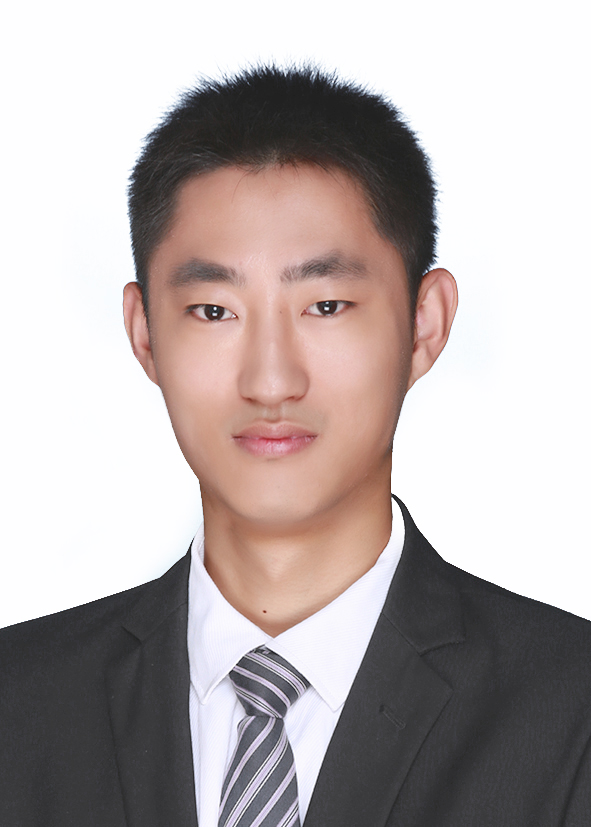 Lu Qi (亓鲁)合作论文数Insta360;Wuhan University11
 Yuexian Zou (邹月娴)合作论文数School of Electronic and Computer Engineering, Peking University;Advanced Data & Signal Processing Laboratory, Peking University11
 Kai Chen (陈恺)合作论文数10
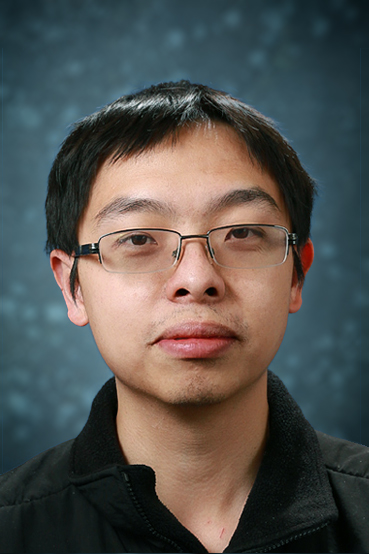 Dahua Lin (林達華)合作论文数Department of Information Engineering, The Chinese University of Hong Kong;Shanghai Artificial Intelligence Laboratory10
 Zun Wang合作论文数University of North Carolina, Chapel Hill9
 Yizhuo Li (李一卓)合作论文数The University of Hong Kong9
 Wenhai Wang (王文海)合作论文数Multimedia Laboratory, The Chinese University of Hong Kong9Lixin Gu合作论文数8Erfei Cui合作论文数7Haian Huang合作论文数7
 Zhe Chen (陈喆)合作论文数Department of Computer Science and Technology, Nanjing University;Shanghai AI Laboratory7
 Jifeng Dai (代季峰)合作论文数Department of Electronic Engineering, Tsinghua University7
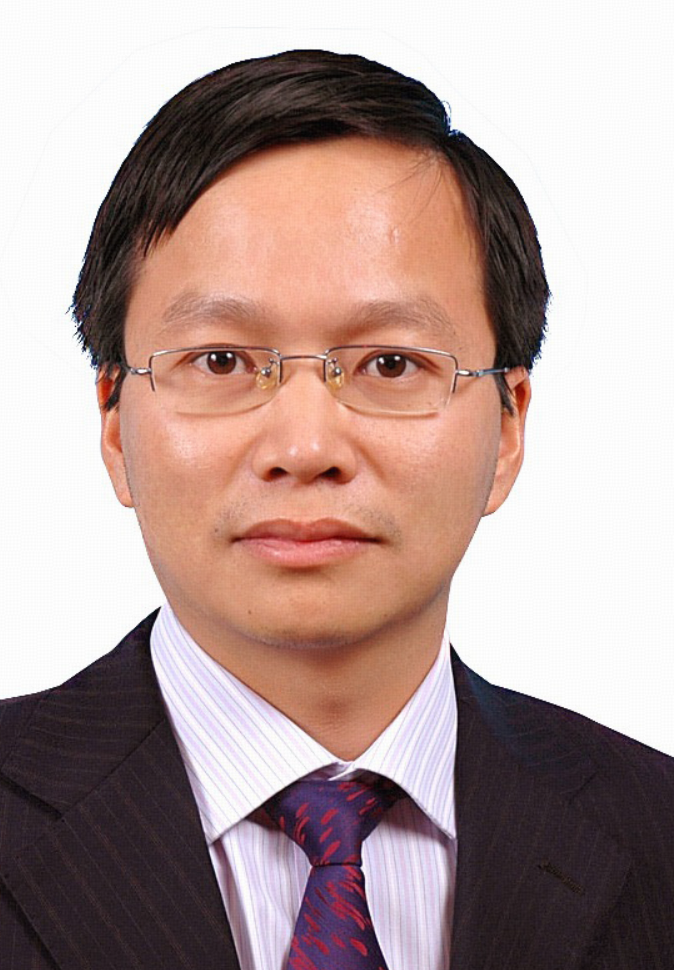 Dong Ni (倪东)合作论文数School of Artificial Intelligence, Shenzhen University7
 Jilan Xu合作论文数Fudan University7
 Hengshuang Zhao (赵恒爽)合作论文数Division of AI & Data Science, School of Computing and Data Science, The University of Hong Kong7
 Conghui He (何聪辉)合作论文数Shanghai AI Laboratory7Shenglong Ye合作论文数6Min Dou合作论文数6
 Weiyun Wang合作论文数6Xinhao Li合作论文数6
 Qingsong Zhao合作论文数Univ Chinese Acad Sci, Shenzhen Coll Adv Technol, Beijing, Peoples R China6
 Pheng Ann Heng (王平安)合作论文数Department of Computer Science and Engineering, The Chinese University of Hong Kong6Haomin Wang合作论文数5Haijun Lv合作论文数5
 Tong Lu (路通)合作论文数National Key Laboratory for Novel Software Technology, Department of Computer Science and Technology, Nanjing University5
 Gaowei Zhang (张高唯)合作论文数School of Artificial Intelligence, Beijing University of Posts and Telecommunications5Qipeng Guo合作论文数5
 Leanne Lai-Hang Chan (陳儷行)合作论文数Department of Electrical Engineering, College of Engineering, City University of Hong Kong5
 Ping Luo (羅平)合作论文数Department of Computer Science, School of Computing and Data Science, The University of Hong Kong5Xizhou Zhu合作论文数Shanghai AI Laboratory;Tsinghua University5
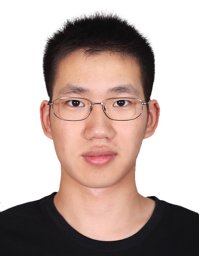 Xingcheng Zhang合作论文数Chinese Academy of Sciences, Chinese Academy of Sciences5
 Junting Pan (潘俊廷)合作论文数Multimedia Lab, The Chinese University of Hong Kong5
 Junjun He (何军军)合作论文数Shanghai AI Laboratory5
 Wenqi Shao (邵文琪)合作论文数Shanghai AI Lab5
 Wenwei Zhang (张文蔚)合作论文数School of Computer Science and Engineering, College of Engineering, Nanyang Technological University;Multimedia Laboratory, Nanyang Technological University5
 Rui Wang合作论文数Decilion5
 Bowen Zhou (周伯文)合作论文数Center for Collaborative & Conversational Intelligence, Department of Electronic Engineering, Tsinghua University5Botian Shi合作论文数Shanghai AI Laboratory5
 Cairong Zhao (赵才荣)合作论文数College of Electronics and Information Engineering, Tongji University;School of Computer Science and Technology, Tongji University;Visual and Intelligent Learning Laboratory, Tongji University5Pei Chu合作论文数4Zhangwei Gao合作论文数4




