Navigation signals are simultaneously affected by nonlinear distortion from the high-power amplifier (HPA) and linear distortion from the filter in the navigation signal transmission channel, which reduce the signal quality and degrade the performance in high-precision positioning services. To address the limitation of traditional compensation methods under nonlinear conditions, this proposes a joint compensation approach. The approach first employs an iterative piecewise optimization method to design a predistortion filter to enhance the compensation ability for linear distortion. Then a QR-decomposition recursive least squares parameter extraction algorithm is used to extract the actual HPA model and construct a lookup table, enabling adaptive compensation of nonlinear distortion. With S-curve bias (SCB) as the performance evaluation index, the results show that this method can significantly reduce the SCB and effectively compensate for the distortion. The findings indicate that the proposed method improves navigation signal quality and provides reliable support for high-precision positioning services.
To address the challenges of imbalanced positive-negative sample distributions and the scarcity of high-quality data in crack detection on the surface of sintered mineral materials in the iron and steel metallurgical industry, this paper proposes a deep-learning-based image generation method that integrates the WGAN and StyleGAN architectures. By combining the training stability of WGAN-GP with the multi-scale feature control capability of StyleGAN, the proposed method constructs a disentangled intermediate latent space $W$ and introduces a dynamic hybrid noise mechanism that integrates Gaussian noise and Perlin noise. This mechanism enables precise modeling of the complex textures and crack geometries present in sintered mineral surfaces. Experimental results demonstrate that the proposed model can stably generate high-quality virtual samples with a resolution of $800 \times 330$, achieving significantly better pixel-level clarity and texture realism compared with conventional GANbased models. The results further show that the proposed generative framework provides crucial long-tail data augmentation support for sinter crack defect classification, significantly improving the localization accuracy of detection algorithms such as YOLOv7 under complex industrial conditions. Moreover, the powerful feature simulation capability of the proposed method exhibits strong cross-domain extensibility, offering a general generative solution to the small-sample problem commonly encountered in industrial visual inspection tasks.
Multi-modal remote sensing images often exhibit complex and nonlinear radiation differences which significantly hinder the performance of traditional feature-based image registration methods such as Scale-Invariant Feature Transform (SIFT). In contrast, structural features—such as edges and contours—remain relatively consistent across modalities. To address this challenge, we propose a novel multi-modal image registration method, Cof-SIFT, which integrates a co-occurrence filter with SIFT. By replacing the traditional Gaussian filter with a co-occurrence filter, Cof-SIFT effectively suppresses texture variations while preserving structural information, thereby enhancing robustness to cross-modal differences. To further improve image registration accuracy, we introduce an extended approach, Cof-SIFT_HOG, which extracts Histogram of Oriented Gradients (HOG) features from the image gradient magnitude map of corresponding points and refines their positions based on HOG similarity. This refinement yields more precise alignment between the reference and image to be registered. We evaluated Cof-SIFT and Cof-SIFT_HOG on a diverse set of multi-modal remote sensing image pairs. The experimental results demonstrate that both methods outperform existing approaches, including SIFT, COFSM, SAR-SIFT, PSO-SIFT, and OS-SIFT, in terms of robustness and registration accuracy. Notably, Cof-SIFT_HOG achieves the highest overall performance, confirming the effectiveness of the proposed structural-preserving and corresponding point location refinement strategies in cross-modal registration tasks.
In deep learning water extraction, there exists the problem that convolutional neural network has poo & gcy; recognition effect on low-level semantic features, such as small lakes and small rivers. To solve this problem, a water extraction method based on Laplace edge enhancement is proposed. Synthetic Aperture Radar (SAR) data set is convolved with the pre-processed SAR data set, using the Laplacian operator to generate the Laplacian edge feature layer. Then the original image is fused with the generated edge feature layer to obtain the enhanced edge SAR data set. which makes the water edge clearer. On this basis. DeeplabV3+ and U-net semantic segmentation models are used for water extraction. The experiment shows that, compared with the unprocessed Deeplab V3+ and U-net models, the two models after Laplace operator processing have improved effect on water extraction in different regions. The U-net model after Laplace operator treatment has the best extraction effect on large water bodies, small lakes and small rivers.
Visual laryngoscope, as the most commonly used tracheal intubation tool in clinical practice, has a high intubation success rate and is quick to learn, but there are risks of over flexion of the neck, tooth loss, etc. The visual stylet helps to make up for these shortcomings. This study aimed to compare the effects of the visual stylet and visual laryngoscope on transoral single lumen tracheal intubation in non-difficult airways. The primary outcome was intubation time, and secondary outcomes included glottic exposure time, first success rates, hemodynamic indices, intubation-related complications. A total of 148 patients were included, with 75 in the visual stylet (VS) group and 73 in the visual laryngoscope (VL) group. The intubation time in the VS group was 35 (11) seconds, significantly shorter than the 41 (9) seconds in the VL group (P < 0.001). Immediately post-intubation, the MAP in the VS group was 80 (20.5) mmHg, lower than 87 (23) mmHg in the VL group (P < 0.01). Intubation-related complications are also lower in VS group compared to VL group. Other outcomes don’t have significant difference. Our study has demonstrated that the visual stylet significantly reduces intubation time and provides more stable hemodynamics. For patients with limited mouth opening, shorter thyromental distance, or higher Cormack-Lehane grades, the visual stylet may potentially be a better choice compared to video laryngoscopy for tracheal intubation. Trial registration China Clinical Trial Registry (ChiCTR2100051812) (05/10/2021).
Terrain effects cause significant deviations to the surface reflectance of remote sensing data, especially in the scenario of large solar zenith angle and significant surface heterogeneity. The traditional terrain correction methods frequently fall short in fully compensating for the scattering effects induced by uneven terrain. To address the inadequacy of terrain correction methods in instances of intense surface scattering, the SS-Minnaert model, a terrain correction approach that accounts for solar zenith angle and surface heterogeneity, is developed in response to a detailed analysis of terrain-induced errors in vegetated regions. The model's accuracy is validated using reflectance simulations from the three-dimensional discrete anisotropic radiative transfer (DART) model. The results indicate that the SS-Minnaert model reduces RMSE by 0.036 to 0.092 in the green, red, and near-infrared bands for solar zenith angles greater than 40 degrees, and by 0.004 to 0.031 for angles less than 40 degrees. Further quantitative analysis demonstrates the SS-Minnaert model's superior performance in terrain correction over mainstream models at solar zenith angles beyond 40 degrees. For solar zenith angles below 40 degrees, the SS-Minnaert model exhibits comparable topographic correction proficiency to established VECA and Teillet models in the near-infrared band. In the red and green bands, the performance is even better. In summary, the SS-Minnaert model markedly enhances the Minnaert model by integrating the dual influences of solar zenith angle and surface heterogeneity, demonstrating a terrain correction effect superior across multiple bands, particularly at high solar zenith angles where the improvement is notably significant.
Nonideal radio-frequency (RF) emission channels directly affect navigation signal quality. In particular, the deviation in the pseudo-range caused by differences among the RF channels of multiple satellites can decrease user positioning accuracy. Previous studies have mainly focused on designing pre-distortion filters to improve the performance of non-ideal RF channels in navigation signal generators. However, our findings indicate that using a pre-distortion filter alone results in limited improvement of the S-curve bias because the constant-envelope character is compromised, and the nonlinearity of the high-power amplifier (HPA) becomes more pronounced. More applications that require better accuracy require a smaller S-curve bias. This study proposes a method to compensate for the nonideal RF channel by using pre-distortion that considers both the nonlinear HPA and nonideal filter characteristics. The proposed method was validated through numerical analysis and simulations. The results show that the proposed method can reduce the S-curve bias across different receiver configurations. This study provides a reference for improving the quality of navigation signals, particularly in terms of the S-curve bias.
Underwater adsorption is the key function of underwater robot operation, in order to complete the underwater wall fixation, underwater object capture and other operations. The underwater adhesion mechanism based on vibration control has the advantage of using the liquid viscosity to pull the object surface at a certain distance and control the adhesion effect by frequency. A disc of 0.5mm thickness and 100mm diameter can accommodate the adhesion of different rough planes at 50Hz, a curved cup can be pulled and grabbed at a distance of 7mm at 100Hz, when 0.5mm thick silicone spacers were attached to the bottom of the drive disc, the loading mass of the disc adhesion was increased from 76g to 1056g at a vibration frequency of 150Hz. In short, the underwater vibration adhesion of rigid body is a new adhesion mechanism, which is expected to provide new ideas and applications in the field of underwater grasping.
For high-resolution images,the road situation is complex.And there are narrow roads or roads separated by buildings and shadows,leading to the problem of low extraction accuracy.In this paper,an improved model AP-LinkNet combining the atrous convolutional element and the parallel attention mechanism module is proposed,which can achieve higher detail extraction accuracy by expanding the receptive field and paying deep attention to road features in the downsampling coding process.The atrous convolution module expands the receptive field without changing the relationship between pixels on space.The parallel attention mechanism increases the attention to channel and spatial information during input image sampling.Combining the characteristics of the two mechanisms,the noise disturbance of complex road background is reduced and the overall accuracy is improved.The experimental results in this paper are compared with DeepLabV3+,U-Net,LinkNet and D-LinkNet.The F1 score and IOU on the DeepGlobe dataset are 80.69%and 78.65%,respectively.And the F1 score is 11.71%,5.24%,3.97%and 3.58%higher than the comparison models.The results show that the proposed model has higher accuracy and robustness,and has a good effect on extracting the narrow and complex road details from high-resolution images.
Soft grippers exhibit good adaptability, but their grasping performance is limited. Variable-stiffness technology has been applied to soft grippers to address this problem. Therefore, a variable bending stiffness module (VBSM) with electrostatic layer jamming based on a giant electrorheological fluid (ELJ-GERF) for soft robots is proposed in this study, which exhibits a faster response time and a wider range of stiffness variation. A VBSM prototype is fabricated, and a theoretical model is established. The stiffness is mainly affected by the electrode quantity, overlapping area of electrode plates, insulator and conductive layers' thickness, medium thickness and the exciting voltage. Direct current (DC) voltage experiments and alternating current (AC) voltage experiments were conducted on the test samples of filled with air (ELJ-AIR), silicone oil (ELJ-OIL), and ELJ-GERF. The experimental result show that stiffness-regulation of the VBSM can be achieved by adjusting the exciting voltage, and AC voltage being more suitable for regulating the stiffness of the VBSM than DC voltage. For AC voltage, the stiffness of ELJ-GERF increases to 53.5 times when a 4 kV voltage is applied. The stiffness variation range is about 2 to 3 times greater than that of ELJ-AIR or ELJ-OIL. Through the stiffness characterization experiment, the stiffness of the VBSM in this study is influenced by the viscosity of the GERF and the gap between the electrode plates. Through the capacitance test, the VBSM exhibits self-sensing ability. Finally, the VBSM is applied to a soft gripper, the vibration performance and variable stiffness performance in its application are verified.
HJ-1B Infrared Scanner (IRS) has accumulated long-term data, but there are no comparative studies on land surface temperature (LST) inversion algorithms for IRS data. This study compared the radiative transfer equation (RTE) and two generalized single-channel algorithms (GSC w and GSC wT ) for retrieving LST from IRS data. Firstly, the coefficients of the GSC w and the GSC wT algorithms were simulated using MODTRAN 5.2 and the TIGR atmospheric profiles. ERA5 atmospheric profiles were used for the RTE algorithm. Second, land surface emissivity was calculated using the ASTER global emissivity dataset and vegetation/snow cover products based on the vegetation cover method. Finally, the LST retrievals were evaluated using ground measurements of twelve sites during the Heihe Watershed Allied Telemetry Experimental Research (HiWATER) experiment from June 2012 to June 2014. The results showed that the accuracy of the RTE with bias (RMSE) of 0.74 K (2.47 K) is superior to the accuracy of the GSCwT with bias (RMSE) of -1.18 K (2.50 K), followed by the GSC w with bias (RMSE) of 1.60 K (2.77 K). The results can support the production of HJ-1B/IRS LST products.
This paper presents the performance analysis of CentiSpace low earth orbit (LEO) experiment satellites. Distinguishing them from other LEO navigation augmentation systems, the co-time and co-frequency (CCST) self-interference suppression technique is employed in CentiSpace to mitigate significant self-interference caused by augmentation signals. Consequently, CentiSpace exhibits the capability of receiving navigation signals from the Global Navigation Satellite System (GNSS) while simultaneously broadcasting augmentation signals within the same frequency bands, thus ensuring excellent compatibility for GNSS receivers. CentiSpace is a pioneering LEO navigation system to successfully complete in-orbit verification of this technique. Leveraging the on-board experiment data, this study analyzes the performance of space-borne GNSS receivers equipped with self-interference suppression and evaluates the quality of navigation augmentation signals. The results show that CentiSpace space-borne GNSS receivers are capable of covering more than 90% visible GNSS satellites and the precision of self-orbit determination is at the centimeter level. Furthermore, the quality of augmentation signals meets the requirements outlined in the BDS interface control documents. These findings underscore the potential of the CentiSpace LEO augmentation system for the establishment of global integrity monitoring and GNSS signal augmentation. Moreover, these results contribute to subsequent research on LEO augmentation techniques.
Land surface temperature (LST) is a fundamental variable of environmental monitoring and surface equilibrium. Although the HJ-1B infrared scanner (IRS) has accumulated many observations, further application of HJ-1B/IRS is limited by the lack of LST products. This study refined the ERA5 atmospheric profile database, instead of the widely used traditional TIGR atmospheric profile database, and simulated the coefficients of the generalized single-channel (GSCs) algorithms to improve LST retrieval. GSCs can be divided into the GSCw and GSCwT algorithms, depending on whether the input is atmospheric water vapor content (WVC) or in situ near-surface air temperature and WVC. Land surface emissivity (LSE) was obtained from the Advanced Spaceborne Thermal Emission and Reflection Radiometer (ASTER) Global Emissivity Dataset (GED) and vegetation/snow cover products. Then, the retrieved LSTs were evaluated using the LSTs from the RTE algorithm, TIGRw/TIGRwT profiles, and in situ near-surface air temperature from the HiWATER experiment in China from 2012 to 2014. The bias (root mean square error (RMSE)) values are displayed as ERA5wT < RTE < ERA5w < TIGRwT < TIGRw. The accuracy of ERA5wT, with a bias (RMSE) of 0.02 K (2.30 K), is higher than that of RTE, with a bias (RMSE) of 0.74 K (2.47 K). The accuracy of RTE is preferable to that of ERA5w, with a bias (RMSE) of 0.89 K (2.48 K), followed by TIGRwT, with a bias (RMSE) of −1.18 K (2.50 K), and then, TIGRw, with a bias (RMSE) of 1.60 K (2.77 K). In summary, the accuracy of LST obtained by GSC from the refined ERA5 atmospheric profiles is higher than that obtained from the TIGR profiles. The accuracy of LST obtained by GSCwT is greater than that obtained by GSCw. The accuracy of LST obtained using in situ near-surface air temperature is higher than that obtained using ERA5 air temperature. The accuracy of LSEASTER is slightly better than that of LSEMOD21. The aforementioned conclusions can provide scientific support to generate HJ-1B/IRS LST products.
In recent years, there has been significant growth in the global research and development of unmanned surface vehicles (USVs). In practical applications, the successful deployment and retrieval of USVs are essential for the efficient execution of their missions. This paper presents the design of an extendable Launch and Recovery System (L&R System) that allows a mother ship to launch and recover multiple USVs. The system's configuration has been optimized, and its performance has been rigorously validated. To minimize interference between the mother ship and the docking brackets during USV deployment, we conducted a hydrodynamic analysis based on the positioning of the docking brackets. We also developed an Attitude Control Mechanism (ACM) capable of transitioning the docking brackets through four primary deployment postures. This innovation significantly enhances the smooth retrieval of multiple USVs.
The classical core entropy for post critically finite (PCF) polynomials f with degree no less than two is defined to be the topological entropy of f restricted to its Hubbard tree. We fully generalize this notion by a new quantity, called the (general) core entropy, which is well defined whenever f has a connected Julia set. If f is PCF, the core entropy equals the classical version. If two polynomials f and g are J-equivalent then they share the same core entropy. If f is unicritical and has no irrationally neutral cycle, we can identify a compact subset of the unit circle invariant under the doubling map whose Hausdorff dimension equals the ratio of the core entropy to log(d). We also carefully analyze the function that sends every parameter c in the Mandelbrot set to the core entropy of the polynomial z^2+c.
The northern foothills of Yinshan Mountain are situated in northern China’s agricultural and pastoral ecotone, serving as a crucial ecological barrier. To comprehensively assess the impact of grassland resource restoration in this region since the initiation of the Grain-for-Green conversion project in 2000, this study analyzes the spatiotemporal characteristics of precipitation use efficiency (PUE) and investigates climate-driven factors during 2001–2021. The results showed that the grassland types at the north foot of Yinshan could be divided into four categories: warm-arid, warm subtropical semidesert (WSS), warm temperate-arid, warm temperate zonal semidesert (WZS), warm temperate-semiarid, warm temperate typical steppe (WTS), and warm temperate-subhumid forest steppe (WFT). The NPP of the four grassland species were 151.34 (WSS), 196.72 (WZS), 283.33 (WTS), and 118.06 gC·m−2 (WFT), and correspondingly, the PUE of the four grassland species were 0.66 (WSS), 0.66 (WZS), 0.80 (WTS), and 0.57 gC·m−2·mm−1 (WFT). From 2001 to 2021, PUE in grassland showed an overall upward trend, rising from 0.57 to 0.99 gC·m−2·mm−1. The trend analysis found that the vegetation ecological area of the northern foot of Yinshan became better, of which 54.36% was improved and 15.72% was degraded. It is worth pointing out that WSS had the highest degree of improvement, while WFT was in a degraded state. The climate driving force analysis shows that the regional contribution of precipitation is 19.57%, temperature is 28.33%, potential evapotranspiration is 13.65%, wind speed is 10.79%, and saturated vapor pressure is 27.66%.
This paper aims to solve the decentralized finite-time connective tracking control problem for p-normal form stochastic large-scale systems with output interconnections existing in both the drift and diffusion terms. By means of the stochastic system theory and a prescribed finite-time performance function (PFTPF), a novel design scheme is presented for the decentralized finite-time connective tracking controllers with an arbitrarily prescribed settling time. The connective stability problem of stochastic large-scale systems is investigated for the first time. In addition, a new solution for the decentralized tracking control problem of stochastic large-scale systems is presented via a novel mathematical treatment algorithm. The proposed controllers can ensure that the tracking errors converge to a predetermined region within an arbitrarily prescribed settling time and the controlled system is connectively bounded stable in probability. Three simulation examples are presented to exhibit the performance and the superiority of the new control strategy. (C) 2021 Elsevier Inc. All rights reserved.
In response to the coronavirus disease 2019 (COVID-19) outbreak in December 2019 in China, medical staff went to work across the country to combat widespread infection. When health workers are suddenly faced with such a serious event, it is important to assess their mental health in order to determine whether they can meet the challenge effectively. Herein, Symptom Checklist-90 (SCL-90) was used to assess the psychological problems of 382 front-line medical staff in Chongqing. The average SCL-90 score was low, and no specific mental health problems were found. With the exception of the phobic-anxiety factor, the scores were close to normal values. A single-factor analysis of variance showed that the SCL-90 scores of male and older staff were higher than those of female and younger staff, implying that they were at greater psychological risk. We found that both gender and age have a significant impact on mental health, and our findings suggest that more attention should be given to the mental health of male and older front-line medical staff.
The present work is focused on discussing standing acoustic wave-based particles separation in PMMA microfluidic channel at tilted angle. A theoretical model is developed to describe the interaction of the particles at different sizes under an acoustic pressure with tilted angles. Tilted angle, acoustic pressure, acoustic wavelength, flow velocity and buffer solution viscosity are as key parameters to be investigated. It is demonstrated that these parameters can affect the particle motion in microfluidic channel, which play the important roles in particle separation. It’s shown the vital criteria of the microfluidic chip design for specific applications.
柑橘黄龙病潜伏期长、尚无可用于大田的有效治疗药剂,快速、准确的早期检测是防控柑橘黄龙病的关键.PCR检测是目前柑橘黄龙病最常用的早期检测方法.为提高柑橘黄龙病PCR检测的准确性和检出率,本研究依据已测序的黄龙病菌全基因组序列对检测引物OI2c进行了改进(标记为OI2c-gj),将其与其他常用的7对PCR检测引物进行了特异性和灵敏度的筛选和比较.结果表明,8对黄龙病PCR检测引物中,特异性较好的引物为OI1/OI2c-gj、Las606/LSS、P400F/P400R、A2/J5、16SF/16SR、primer1/primer2;灵敏度较好的引物从高到低依次为:OI1/OI2c-gj=Las606/LSS>P400F/P400R=A2/J5>16SF/16SR>primer1/primer2.综合比较引物特异性和灵敏度,本研究改进的引物OI1/OI2c-gj以及Las606/LSS、P400F/P400R、A2/J5对柑橘黄龙病检测有较好的准确性和检出率,建议用于柑橘黄龙病的早期检测.
 Zhang Haitao合作论文数9
 Tiezhu Qiao (乔铁柱)合作论文数College Of Optoelectronics, Taiyuan University of Technology;College of Physics and Optoelectronic Engineering, Taiyuan University of Technology9
 Y. Pang合作论文数Department of Maritime and Transport Technology, Faculty of Mechanical, Maritime and Materials Engineering, Delft University of Technology6
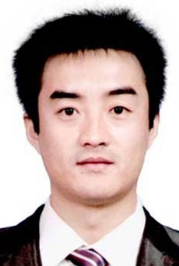 Dacheng Li (李大成)合作论文数College of Mining Engineering, Taiyuan University of Technology6
 Bo Zhang (张波)合作论文数Chongqing Institute of Microelectronics Industry Technology, University of Electronic Science and Technology of China6
 Lin Chen合作论文数5
 Hu Kai合作论文数5
 Qi Zhou (周琦)合作论文数School of Electronic Science and Engineering(National Exemplary School of Microelectronics), University of Electronic Science and Technology of China5
 Wanjun Chen (陈万军)合作论文数School of Electronic Science and Engineering(National Exemplary School of Microelectronics), University of Electronic Science and Technology of China5
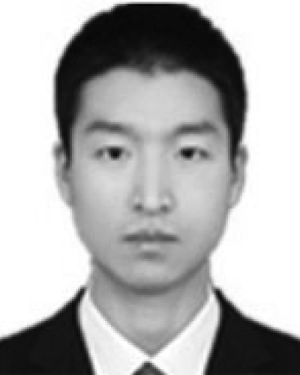 Ruopu Zhu合作论文数4Hongchen Pan合作论文数4Lei Jiang合作论文数4
 Huayan Pu (蒲华燕)合作论文数College of Mechanical and Vehicle Engineering, Chongqing University;Research Institute of USV Engineering, Shanghai University4
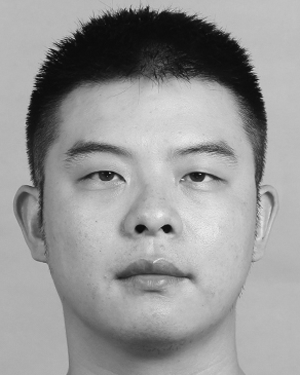 Liyang Zhu合作论文数3DaQuan Luo (罗大全)合作论文数3
 Shaorong Xie (谢少荣)合作论文数School of Future Technology, Shanghai University;School of Computer Engineering and Science, Shanghai University3
 Haiyan Che (车海彦)合作论文数中国热带农业科学院环境与植物保护研究所3
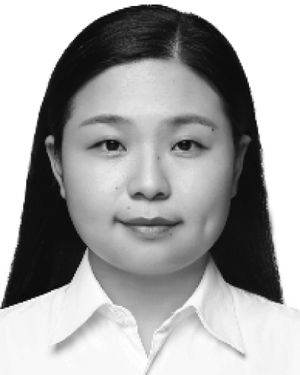 Yuanyuan Shi合作论文数3
 Jun Luo (罗均)合作论文数College of Mechanical and Transportation Engineering, Chongqing University3
 Juanfen Wang (王娟芬)合作论文数College of Optoelectronics, Taiyuan University of Technology3
 Lingzhen Yang (杨玲珍)合作论文数College of Physics and Optoelectronics, Taiyuan University of Technology3
 Dong Wei合作论文数3Xue-Ren Cao (曹学仁)合作论文数3Yihang Ran合作论文数3Hui Jia合作论文数2Guoqin Zhang合作论文数2Zongwei Zhang合作论文数2
 Chengcheng Hou合作论文数2feiren lu (吕飞仁)合作论文数2Huang Linxiao (黄霖霄)合作论文数2Zhang Jinping合作论文数2Zhang Ling合作论文数2Min Wang合作论文数2
 Jiheng Ding合作论文数2Jianxiang Cui合作论文数2Guopeng Yang合作论文数2Jianjun Yang合作论文数2Zhaopeng Xu合作论文数2Danyang Li (李丹阳)合作论文数2
 Yuan Gao合作论文数2
 Xiaomao Li合作论文数Shanghai Univ, Sch Mechatron Engn & Automat, Shanghai, Peoples R China2
 Hong Tao合作论文数State Key Lab Elect Thin Films & Integrated Devic, Univ Elect Sci & Technol China2
 Yi Sun合作论文数Shanghai Univ, Sch Mechatron Engn & Automat, Shanghai 200444, Peoples R China2
 Aiqin Liu (刘爱勤)合作论文数中国热带农业科学院香料饮料研究所2
 Xiaojun Yan (闫晓军)合作论文数School of Energy and Power Engineering, Beihang University2
 Xiaoyan Xiong (熊晓燕)合作论文数College of Robotics Science and Engineering, Taiyuan University of Technology2Wenchuan Jia (贾文川)合作论文数School of Mechatronic Engineering and Automation, Shanghai University2
 Zhipeng Zhou合作论文数Southeast University, Southeast Univ2
 Xiaoyong Zhang (张小勇)合作论文数School of Energy and Power Engineering, Beihang University2




