The main purpose of this study is to apply a computationally efficient uncertainty quantification approach, Non-Intrusive Polynomial Chaos (NIPC) based stochastic expansions, to robust aerospace analysis and design under mixed (aleatory and epistemic) uncertainties and demonstrate this technique on model problems and robust aerodynamic optimization. The proposed optimization approach utilizes stochastic response surfaces obtained with NIPC methods to approximate the objective function and the constraints in the optimization formulation. The objective function includes the stochastic measures which are minimized simultaneously to ensure the robustness of the final design to both aleatory and epistemic uncertainties. For model problems with mixed uncertainties, Quadrature-Based and Point-Collocation NIPC methods were used to create the response surfaces used in the optimization process. For the robust airfoil optimization under aleatory (Mach number) and epistemic (turbulence model) uncertainties, a combined PointCollocation NIPC approach was utilized to create the response surfaces used as the surrogates in the optimization process. Two stochastic optimization formulations were studied: optimization under pure aleatory uncertainty and optimization under mixed uncertainty. As shown in this work for various problems, the NIPC method is computationally more efficient than Monte Carlo methods for moderate number of uncertain variables and can give highly accurate estimation of various metrics used in robust design optimization under mixed uncertainties. This study also introduces a new adaptive sampling approach to refine the Point-Collocation NIPC method for further improvement of the computational efficiency. Two numerical problems demonstrated that the adaptive approach can produce the same accuracy level of the response surface obtained with oversampling ratio of 2 using less function evaluations.
The flow, heat and mass transfer performance under different nozzle arrays in the dual-contact-flow absorption tower has been studied, together with the interrelation between the probability dense function (PDF) and the flow, heat and mass transfer characteristics. The experimental results show that, for the same nozzle array, both the heat and mass transfer coefficients (h and hm) increase with the gas velocity increasing at first; However, both coefficients (h and hm) start to decrease due to the reduction of the liquid-gas contact time after approaching a certain extent. Moreover, with the increase of liquid injection rate νp0, the two coefficients (h and hm) decrease, while the total heat and mass transfer values rise. In addition, the mass transfer coefficient decrease with the increase of nozzle number. In the absorption tower, the leading role gradually transfers to gas phase from liquid phase with the increase of gas velocity. The flow regimes’ transition process can be explained as follows: the liquid column flow type, the liquid screen flow type, the convergent liquid screen flow type, and the gasping flow type. Moreover, the increase of gas velocity has effects on the probability dense function (PDF). With the flow regimes’ transition, change of PDF performs as follows: the number of the PDF peaks increases from one to a larger quantity and finally decreases to a single one after that; the average pressure drop ΔPmean increases as well as the peak-peak spacing δpeak. However, the pressure drop distribution range lΔP first increases and then decreases.
When designing mechanical assemblies, assembly tolerance design is an important issue which must be seriously considered by designers. Assembly tolerances reflect functional requirements of assembling, which can be used to control assembling qualities and production costs. This paper proposes a new method for designing assembly tolerance networks of mechanical assemblies. The method establishes the assembly structure treemodel of an assembly based on its product structure tree model. On this basis, assembly information model and assembly relation model are set up based on polychromatic sets (PS) theory. According to the two models, the systems of location relation equations and interference relation equations are established. Then, using methods of topologically related surfaces (TTRS) theory and variational geometric constraints (VGC) theory, three VGC reasoning matrices are constructed. According to corresponding relations between VGCs and assembly tolerance types, the reasoning matrices of tolerance types are also established by using contour matrices of PS. Finally, an exemplary product is used to construct its assembly tolerance networks and meanwhile to verify the feasibility and effectiveness of the proposed method.
When designing a mechanical product, how to determine its assembly tolerance specifications (ATS) and tolerance zone types (TZT) is a complex design problem, in which designers need to consider comprehensively the functional requirement, geometric feature, tolerance principle, and so on. Therefore, it has high requirements for designers. Meanwhile, the design and development of a complex assembly need to be done jointly by designers. This will cause difficulties for the overall coordination of tolerance design, which affects the quality and efficiency of product development. In order to reduce the uncertainty of ATS and TZT design, and to adapt to the requirements of digital design, a new reasoning algorithm for the automatic generation of ATS and TZT is presented. Polychromatic sets theory (PST) can provide a more formal approach to describe research objects and the relationships among them. Based on PST, this method establishes reasoning relation matrices to represent the relations among research objects, such as assembly feature, assembly constraint type, datum reference frame and tolerance zone type. Therefore, it can use a unified formal mathematical model to describe the whole reasoning process from assembly to ATS and TZT. This method realizes the systematization and computerization of ATS and TZT design, which can help designers to achieve the coordination and coherence of tolerance design. This method facilitates knowledge management and improves reasoning quality and efficiency. ATSs and TZTs generated by this method meet the functional requirements of product and are in accord with the tolerance standards in ISO/ASME. Furthermore, the method only requires a little geometric information and is consistent with the designers' way of thinking, which shows good applicability for the practical design of ATS and TZT. Finally, the reasoning steps of ATSs and TZTs are demonstrated by means of an example.
To solve the problem of anticorrosion design in early stage of manufacture, a formal method of anticorrosion design was proposed, and a formal model of conceptual design of anticorrosive materials was established by using hierarchical structure, individual color sets and unified color sets. Basing on the reasoning matrices which were established by using polychromatic sets theory, a formal reasoning method was proposed to realize the formal reasoning from the functional requirements to the selection of final scheme. This formal method of conceptual design for anticorrosion based on the polychromatic sets can make the design process of anticorrosion standardized, and facilitate the formal description of the reasoning process and its expression and operation in computer. The method made some useful explorationfor the CAPP integration design of anticorrosion.
In computer-aided tolerance design (CAT), integrated design of dimensional and geometric tolerances is still one of the research hotspots. Polychromatic sets theory (PST) is a new mathematic tool, which is especially suitable for formal hierarchical structure models. Based on PST, in this article, a new hierarchical representation model for tolerance synthesis is presented to realise integrated design of dimensional and geometric tolerances. According to the inference relations between unified and individual colours of PST, the synthesis matrices of variational geometric constraints (VGC) are established in the VGC tier of the model, and the synthesis matrices of tolerance types are established in the tolerance type tier of the model. On this basis, the synthesis processes from the feature tier to the VGC tier and from the VGC tier to the tolerance type tier can be realised. VGCs, which are achieved by the synthesis matrices of VGCs, can be combined together to establish a well-constrained VGC network (VGCN). Tolerance types, which are achieved by the synthesis matrices of tolerance types, can be added to the well-constrained VGCN to construct a well-constrained tolerance network. An application example is given in the article to illustrate the synthesis steps.
Product tolerance is one of the important factors which affect the quality and cost of product. However, influenced by many complicated factors, there are still many problems which need to be resolved compared with other research works in CAD field. How to determine tolerances of product effectively is still a big problem. Based on exponent model of tolerance-cost, the relationships between tolerance and other characteristics influencing processing cost are studied in this paper. A relational model of tolerance-cost is come up with based on the above relationships. And then, internal relation between tolerance and lifetime is discussed. Meanwhile, along with the lifetime converted into the cost, the compensated relational model of tolerance-lifetime is presented. Finally, the method on the decision of tolerance grade is analyzed. This paper realizes the organic combination of tolerance, lifetime and cost, and effectively decides how to generate tolerance grades.
With the rapid development of electrical industry, the traditional design method of circuit breakers can not meet the requirement. In this paper, in order to accelerate the design period of medium voltage circuit breakers and improve the overall performance of them, an intelligent design and simulation platform has been developed. The software consists of four main modules: Module of evaluation and prototype selection, parameterized modeling module, simulation module, optimization module and output module. The three-dimensional models of some medium voltage circuit breakers have been parameterized with Pro/Engineer software and a library of the product models has been built. In module of evaluation and prototype selection, in the basis of fuzzy evaluation algorithm, a required circuit breaker model is selected from the built library according to design requirement. In the parameterized modeling module, the 3D model of them can be modified and reused. In the simulation module, through developing interface software connecting with ANSYS and ADAMS, electrical simulation, magnetic simulation, stress simulation and kinematic simulation of the medium voltage circuit breakers can be done in background. In the optimization module, the overall optimization of circuit breakers is done using the typical optimization algorithm. By the methods of modular design, the reuse of product models and design knowledge has been realized in the software.
This paper presents a new framework for the assembly planning of aircraft which integrates assembly sequence planning (ASP) with CAPP on the basis of the standardized mathematical model of polychromatic sets. This paper fulfills three main tasks including the selection of location mode and assembly equipments, assembly sequence planning, and assembly process planning based on a unified model, which may bring forward a new development direction in the assembly planning of aircraft.
Design of assembly tolerance and sequence of a product is one of the important factors which affect product quality and cost. However, it is influenced by many complicated factors, so there are still a lot of problems which need to be resolved compared with other research works in CAD field. By means of the product prototype in CAD system as well as the establishment of hierarchical assembly structure tree model, this paper uses the related reasoning rules to solve the assembly sequences of the product. Then on this basis, automatic generation of assembly tolerance types and construction of assembly tolerance network are realized based on the variational geometric constraints theory and polychromatic sets theory. Finally, an example is given to verify the feasibility and effectiveness of the proposed method. This paper realizes the organic combination of assembly sequence and tolerance design, effectively reduces the difficulty and complexity of assembly tolerance generation, and simplifies programming realization.
According to the milling characteristics of ball-end milling cutter, a mechanics model of milling force was established. Using empirical formula, the feed rate optimization of NC code for machining free-form surface was realized under constraint of nearly constant cutting force, so as to decrease the fluctuation of cutting force. Thus, the machining quality and efficiency of part were im-proved and the service life of cutting tool was prolonged. Moreover, tool breaking, stab injuries of workpiece caused by tool breaking and other phenomena can be avoided. Finally, a prototype system under constraint of nearly constant cutting force was set up and an example was given to verify the ef-fectiveness of the method.
Based on the previous researches and according to the milling characteristics of ball-end milling cutter, the cutting force model is established. Using empirical formula, the feed rate of NC codes of machining free-form surface is optimized under constraint of nearly constant cutting force, and so as to decrease the fluctuation of cutting force. Thus, the machining quality and efficiency of part are improved and the service life of cutting tool is prolonged. This paper develops a prototype system under constraint of nearly constant cutting force. And an example is given to verify the effectiveness of the method. This paper lays a good foundation for the development of software module of cutting parameter optimization related to free-form surface machining.
On the basis of study of variational geometric constraints, a kind of hierarchical representation model of tolerance information reasoning is presented. Using the polychromatic sets, the feature tier and variational geometric constraint tier of this model are described. Then, using the reasoning relation matrix between unified colours and individual colours of the polychromatic sets, the reasoning of the feature tier and variational geometric constraint tier is realized, and the method and process of the reasoning are presented. Finally, its using in the generation of tolerance network for assembly is introduced.
The tolerance plays an important role in the selection of manufacturing processes and assembly strategies. In order to achieve the requirements for tolerance representation, tolerance validation, tolerance analysis and tolerance inspection in computer, the appropriate tolerance representation model must be firstly built. This paper presents a hierarchical tolerance representation model based on feature which combines the different types of tolerance with the corresponding geometric entities and metric relations. The hierarchical rock-bottom frame based on the features of this hierarchical tolerance representation model is proposed as the carrier of the tolerance. The hierarchical structure of the rock-bottom frame and the relations between the tiers are discussed. For the purpose of programming to realize the hierarchical rock-bottom frame in computer, polychromatic sets are used to represent the hierarchical structure and the relations between the tiers. In the end, an example is given to verify the correctness of the techniques and approaches proposed in this paper.
 Zongbin Li (李宗斌)合作论文数10
 Jun Hong (洪军)合作论文数School of Mechanical Engineering, Xi'an Jiaotong University4
 Yunlong Li (李云龙)合作论文数Western China Institute of Quality Science and Technology, Xi'an Jiaotong University3Jikong Wang合作论文数2
 Jianmin Gao (高建民)合作论文数School of Mechanical Engineering, Xi'an Jiaotong University;Western China Institute of Quality Science And Technology, Xi'an Jiaotong University2Yafei Zhang合作论文数1Yingjie Zhang合作论文数1
 Pengfei Zhao合作论文数1Lei SHI (石磊)合作论文数1
 Shanshan Zhao合作论文数School of Engineering, University of the West of England1Weiguang Yuan合作论文数1
 Weiqi Li合作论文数1Peng Chen合作论文数1Bo Zhang合作论文数1
 Liping Zhao (赵丽萍)合作论文数School of Mechanical Engineering, Xi'an Jiaotong University1Song Wang合作论文数1Francesco Villecco合作论文数1
 Li Xu合作论文数Department of Information Technology & Decision Sciences, Strome College of Business, Old Dominion University1
 Jie Wu (仵杰)合作论文数西安石油大学电子工程学院1
 Guogang Zhang (张国钢)合作论文数School of Electrical Engineering, Xi'an Jiaotong University1
 Lei Shi合作论文数Dalian University of Technology Dalian University of Technology Dalian Univ of Technol1
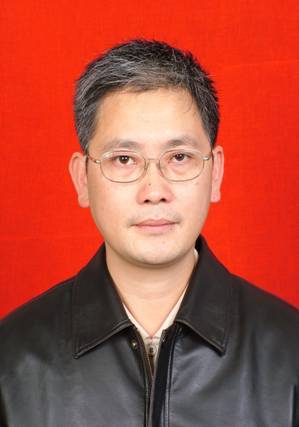 Xiaoyang Yuan (袁小阳)合作论文数School of Mechanical Engineering, Xi'an Jiaotong University1
 Shien Hui (惠世恩)合作论文数School of Energy and Power Engineering, Xi'an Jiaotong University1Enfu Liu (刘恩福)合作论文数1
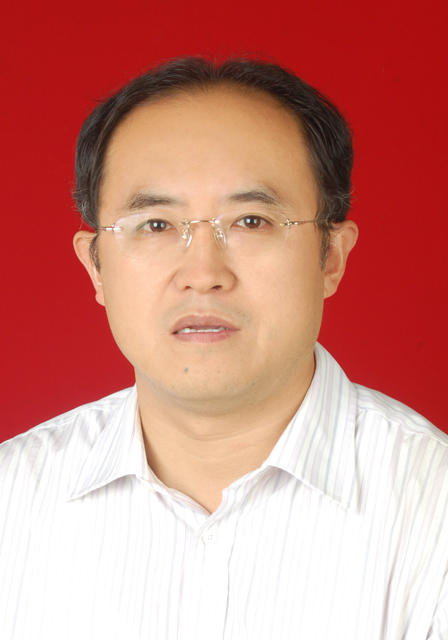 Qinxin Zhao (赵钦新)合作论文数School of Energy and Power Engineering, Xi'an Jiaotong University1
 Qulan Zhou (周屈兰)合作论文数School of Energy and Power Engineering, Xi'an Jiaotong University1




