In recent years, recommender systems have advanced rapidly, where embedding learning for users and items plays a critical role. A standard method learns a unique embedding vector for each user and item. However, such a method has two important limitations in real-world applications: 1) it is hard to learn embeddings that generalize well for users and items with rare interactions; and 2) it may incur unbearably high memory costs when the number of users and items scales up. Existing approaches either can only address one of the limitations or have flawed overall performances. In this paper, we propose Clustered Embedding Learning (CEL) as an integrated solution to these two problems. CEL is a plug-and-play embedding learning framework that can be combined with any differentiable feature interaction model. It is capable of achieving improved performance, especially for cold users and items, with reduced memory cost. CEL enables automatic and dynamic clustering of users and items in a top-down fashion, where clustered entities could jointly learn a shared embedding. The accelerated version of CEL has an optimal time complexity, which supports efficient online updates. Theoretically, we prove the identifiability and the existence of a unique optimal number of clusters for CEL in the context of nonnegative matrix factorization. Empirically, we validate the effectiveness of CEL on three public datasets and one business dataset, showing its consistently superior performance against current state-of-the-art methods. In particular, when incorporating CEL into the business model, it brings an improvement of \(+0.6\% \) in AUC, which translates into a significant revenue gain; meanwhile, the size of the embedding table gets 2650 times smaller. Additionally, we demonstrate that, if there is enough memory, learning a personalized embedding for each user and item around their clustering centers is feasible and can further boost the performance.
The reward model (RM) that represents human preferences plays a crucial role in optimizing the outputs of large language models (LLMs), e.g., through reinforcement learning from human feedback (RLHF) or rejection sampling. However, a long challenge for RM is its uncertain reliability, i.e., LLM outputs with higher rewards may not align with actual human preferences. Currently, there is a lack of a convincing metric to quantify the reliability of RMs. To bridge this gap, we propose the Reliable at η (RETA) metric, which directly measures the reliability of an RM by evaluating the average quality (scored by an oracle) of the top η quantile responses assessed by an RM. On top of RETA, we present an integrated benchmarking pipeline that allows anyone to evaluate their own RM without incurring additional Oracle labeling costs. Extensive experimental studies demonstrate the superior stability of RETA metric, providing solid evaluations of the reliability of various publicly available and proprietary RMs. When dealing with an unreliable RM, we can use the RETA metric to identify the optimal quantile from which to select the responses.
Image restoration, encompassing tasks such as deblurring, denoising, and super-resolution, remains a pivotal area in computer vision. However, efficiently addressing the spatially varying artifacts of various low-quality images with local adaptiveness and handling their degradations at different scales poses significant challenges. To efficiently tackle these issues, we propose the novel \textit{Efficient Cascaded Multiscale Adaptive} (ECMA) Network. ECMA employs Local Adaptive Module, LAM, which dynamically adjusts convolution kernels across local image regions to efficiently handle varying artifacts. Thus, LAM addresses the local adaptiveness challenge more efficiently than costlier mechanisms like self-attention, due to its less computationally intensive convolutions. To construct a basic ECMA block, three cascading LAMs with convolution kernels from large to small sizes are employed to capture features at different scales. This cascaded multiscale learning effectively handles degradations at different scales, critical for diverse image restoration tasks. Finally, ECMA blocks are stacked in a U-Net architecture to build ECMA networks, which efficiently achieve both local adaptiveness and multiscale processing. Experiments show ECMA's high performance and efficiency, achieving comparable or superior restoration performance to state-of-the-art methods while reducing computational costs by 1.2$\times$ to 9.7$\times$ across various image restoration tasks, e.g., image deblurring, denoising and super-resolution. Our code and models will be released.
Modern e-commerce platforms rely heavily on modeling diverse user feedback to provide personalized services. Consequently, multi-task learning has become an integral part of their ranking systems. However, existing multi-task learning methods encounter two main challenges: some lack explicit modeling of task relationships, resulting in inferior performance, while others have limited applicability due to being computationally intensive, having scalability issues, or relying on strong assumptions. To address these limitations and better fit our real-world scenario, pre-rank in Shopee Search, we introduce in this paper ResFlow, a lightweight multi-task learning framework that enables efficient cross-task information sharing via residual connections between corresponding layers of task networks. Extensive experiments on datasets from various scenarios and modalities demonstrate its superior performance and adaptability over state-of-the-art methods. The online A/B tests in Shopee Search showcase its practical value in large-scale industrial applications, evidenced by a 1.29% increase in OPU (order-per-user) without additional system latency. ResFlow is now fully deployed in the pre-rank module of Shopee Search. To facilitate efficient online deployment, we propose a novel offline metric Weighted Recall@K, which aligns well with our online metric OPU, addressing the longstanding online-offline metric misalignment issue. Besides, we propose to fuse scores from the multiple tasks additively when ranking items, which outperforms traditional multiplicative fusion.
Since the development of artificial intelligence technology, E-Commerce has gradually become one of the world's largest commercial markets. Within this domain, sales events, which are based on sociological mechanisms, play a significant role. E-Commerce platforms frequently offer sales and promotions to encourage users to purchase items, leading to significant changes in live environments. Learning-To-Rank (LTR) is a crucial component of E-Commerce search and recommendations, and substantial efforts have been devoted to this area. However, existing methods often assume an independent and identically distributed data setting, which does not account for the evolving distribution of online systems beyond online finetuning strategies. This limitation can lead to inaccurate predictions of user behaviors during sales events, resulting in significant loss of revenue. In addition, models must readjust themselves once sales have concluded in order to eliminate any effects caused by the sales events, leading to further regret. To address these limitations, we introduce a long-term E-Commerce search data set specifically designed to incubate LTR algorithms during such sales events, with the objective of advancing the capabilities of E-Commerce search engines. Our investigation focuses on typical industry practices and aims to identify potential solutions to address these challenges.
The training process of a machine learning (ML) model may be subject to adversarial attacks from an attacker who attempts to undermine the test performance of the ML model by perturbing the training minibatches, and thus needs to be protected by a defender. Such a problem setting is referred to as training-time adversarial ML. We formulate it as a two-player game and propose a principled Recursive Reasoning-based Training-Time adversarial ML (R2T2) framework to model this game. R2T2 models the reasoning process between the attacker and the defender and captures their bounded reasoning capabilities (due to bounded computational resources) through the recursive reasoning formalism. In particular, we associate a deeper level of recursive reasoning with the use of a higher-order gradient to derive the attack (defense) strategy, which naturally improves its performance while requiring greater computational resources. Interestingly, our R2T2 framework encompasses a variety of existing adversarial ML methods which correspond to attackers (defenders) with different recursive reasoning capabilities. We show how an R2T2 attacker (defender) can utilize our proposed nested projected gradient descent-based method to approximate the optimal attack (defense) strategy at an arbitrary level of reasoning. R2T2 can empirically achieve state-of-the-art attack and defense performances on benchmark image datasets.
In self-supervised learning, multi-granular features are heavily desired though rarely investigated, as different downstream tasks (e.g., general and fine-grained classification) often require different or multi-granular features, e.g.~fine- or coarse-grained one or their mixture. In this work, for the first time, we propose an effective MUlti-Granular Self-supervised learning (Mugs) framework to explicitly learn multi-granular visual features. Mugs has three complementary granular supervisions: 1) an instance discrimination supervision (IDS), 2) a novel local-group discrimination supervision (LGDS), and 3) a group discrimination supervision (GDS). IDS distinguishes different instances to learn instance-level fine-grained features. LGDS aggregates features of an image and its neighbors into a local-group feature, and pulls local-group features from different crops of the same image together and push them away for others. It provides complementary instance supervision to IDS via an extra alignment on local neighbors, and scatters different local-groups separately to increase discriminability. Accordingly, it helps learn high-level fine-grained features at a local-group level. Finally, to prevent similar local-groups from being scattered randomly or far away, GDS brings similar samples close and thus pulls similar local-groups together, capturing coarse-grained features at a (semantic) group level. Consequently, Mugs can capture three granular features that often enjoy higher generality on diverse downstream tasks over single-granular features, e.g.~instance-level fine-grained features in contrastive learning. By only pretraining on ImageNet-1K, Mugs sets new SoTA linear probing accuracy 82.1$\%$ on ImageNet-1K and improves previous SoTA by $1.1\%$. It also surpasses SoTAs on other tasks, e.g. transfer learning, detection and segmentation.
In this work, we present an efficient and powerful building block for video action recognition, dubbed Glance and Combine Module (GCM). In order to obtain a broader perspective of the video features, GCM introduces an extra glancing operation with a larger receptive field over both the spatial and temporal dimensions, and combines features with different receptive fields for further processing. We show in our ablation studies that the proposed GCM is much more efficient than other forms of 3D spatio-temporal convolutional blocks. We build a series of GCM networks by stacking GCM repeatedly, and train them from scratch on the target datasets directly. On the Kinetics-400 dataset which focuses more on appearance rather than action, our GCM networks can achieve similar accuracy as others without pre -training on ImageNet. For the more action-centric recognition datasets such as Something-Something (V1 & V2) and Multi-Moments in Time, the GCM networks achieve state-of-the-art performance with less than two thirds the computational complexity of other models. With only 19.2 GFLOPs of computation, our GCMNet15 can obtain 63.9% top-1 classification accuracy on Something-Something-V2 validation set under single-crop testing. On the fine-grained action recognition dataset FineGym, we beat the previous state-of-the-art accuracy achieved with 2-stream methods by more than 6% using only RGB input. (C) 2022 Elsevier Ltd. All rights reserved.
In recent years, recommender systems have advanced rapidly, where embedding learning for users and items plays a critical role. A standard method learns a unique embedding vector for each user and item. However, such a method has two important limitations in real-world applications: 1) it is hard to learn embeddings that generalize well for users and items with rare interactions; and 2) it may incur unbearably high memory costs when the number of users and items scales up. Existing approaches either can only address one of the limitations or have flawed overall performances. In this paper, we propose Clustered Embedding Learning (CEL) as an integrated solution to these two problems. CEL is a plug-and-play embedding learning framework that can be combined with any differentiable feature interaction model. It is capable of achieving improved performance, especially for cold users and items, with reduced memory cost. CEL enables automatic and dynamic clustering of users and items in a top-down fashion, where clustered entities jointly learn a shared embedding. The accelerated version of CEL has an optimal time complexity, which supports efficient online updates. Theoretically, we prove the identifiability and the existence of a unique optimal number of clusters for CEL in the context of nonnegative matrix factorization. Empirically, we validate the effectiveness of CEL on three public datasets and one business dataset, showing its consistently superior performance against current state-of-the-art methods. In particular, when incorporating CEL into the business model, it brings an improvement of in AUC, which translates into a significant revenue gain; meanwhile, the size of the embedding table gets 2650 times smaller.1
Transformers have shown great potential in computer vision tasks. A common belief is their attention-based token mixer module contributes most to their competence. However, recent works show the attention-based module in transformers can be replaced by spatial MLPs and the resulted models still perform quite well. Based on this observation, we hypothesize that the general architecture of the transformers, instead of the specific token mixer module, is more essential to the model's performance. To verify this, we deliberately replace the attention module in transformers with an embarrassingly simple spatial pooling operator to conduct only basic token mixing. Surprisingly, we observe that the derived model, termed as PoolFormer, achieves competitive performance on multiple computer vision tasks. For example, on ImageNet-1K, PoolFormer achieves 82.1 % top-1 accuracy, surpassing well-tuned vision transformer/MLP-like baselines DeiT-B/ResMLP-B24 by 0.3%/1.1% accuracy with 35%/52% fewer parameters and 49%/61% fewer MACs. The effectiveness of Pool-Former verifies our hypothesis and urges us to initiate the concept of “MetaFormer”, a general architecture abstracted from transformers without specifying the token mixer. Based on the extensive experiments, we argue that MetaFormer is the key player in achieving superior results for recent transformer and MLP-like models on vision tasks. This work calls for more future research dedicated to improving MetaFormer instead of focusing on the token mixer modules. Additionally, our proposed PoolFormer could serve as a starting baseline for future MetaFormer architecture design.
Bayesian optimization (BO) has become popular for sequential optimization of black-box functions. When BO is used to optimize a target function, we often have access to previous evaluations of potentially related functions. This begs the question as to whether we can leverage these previous experiences to accelerate the current BO task through meta-learning (meta-BO), while ensuring robustness against potentially harmful dissimilar tasks that could sabotage the convergence of BO. This paper introduces two scalable and provably robust meta-BO algorithms: robust meta-Gaussian process-upper confidence bound (RM-GP-UCB) and RM-GP-Thompson sampling (RM-GP-TS). We prove that both algorithms are asymptotically no-regret even when some or all previous tasks are dissimilar to the current task, and show that RM-GP-UCB enjoys a better theoretical robustness than RM-GP-TS. We also exploit the theoretical guarantees to optimize the weights assigned to individual previous tasks through regret minimization via online learning, which diminishes the impact of dissimilar tasks and hence further enhances the robustness. Empirical evaluations show that (a) RM-GP-UCB performs effectively and consistently across various applications, and (b) RM-GP-TS, despite being less robust than RM-GP-UCB both in theory and in practice, performs competitively in some scenarios with less dissimilar tasks and is more computationally efficient.
Recently, neural architecture search (NAS) has been applied to automate the design of neural networks in real-world applications. A large number of algorithms have been developed to improve the search cost or the performance of the final selected architectures in NAS. Unfortunately, these NAS algorithms aim to select only one single well-performing architecture from their search spaces and thus have overlooked the capability of neural network ensemble (i.e., an ensemble of neural networks with diverse architectures) in achieving improved performance over a single final selected architecture. To this end, we introduce a novel neural ensemble search algorithm, called neural ensemble search via Bayesian sampling (NESBS), to effectively and efficiently select well-performing neural network ensembles from a NAS search space. In our extensive experiments, NESBS algorithm is shown to be able to achieve improved performance over state-of-the-art NAS algorithms while incurring a comparable search cost, thus indicating the superior performance of our NESBS algorithm over these NAS algorithms in practice.
This paper addresses the problem of active task selection which involves selecting the most informative tasks for meta-learning. We propose a novel active task selection criterion based on the mutual information between latent task vectors. Unfortunately, such a criterion scales poorly in the number of candidate tasks when optimized. To resolve this issue, we exploit the submodularity property of our new criterion for devising the first active task selection algorithm for meta-learning with a near-optimal performance guarantee. To further improve our efficiency, we propose an online variant of the Stein variational gradient descent to perform fast belief updates of the meta-parameters via maintaining a set of forward (and backward) particles when learning (or unlearning) from each selected task. We empirically demonstrate the performance of our proposed algorithm on real-world datasets.
Recent studies show that Transformer has strong capability of building long-range dependencies, yet is incompetent in capturing high frequencies that predominantly convey local information. To tackle this issue, we present a novel and general-purpose Inception Transformer, or iFormer for short, that effectively learns comprehensive features with both high- and low-frequency information in visual data. Specifically, we design an Inception mixer to explicitly graft the advantages of convolution and max-pooling for capturing the high-frequency information to Transformers. Different from recent hybrid frameworks, the Inception mixer brings greater efficiency through a channel splitting mechanism to adopt parallel convolution/max-pooling path and self-attention path as high- and low-frequency mixers, while having the flexibility to model discriminative information scattered within a wide frequency range. Considering that bottom layers play more roles in capturing high-frequency details while top layers more in modeling low-frequency global information, we further introduce a frequency ramp structure, i.e. gradually decreasing the dimensions fed to the high-frequency mixer and increasing those to the low-frequency mixer, which can effectively trade-off high- and low-frequency components across different layers. We benchmark the iFormer on a series of vision tasks, and showcase that it achieves impressive performance on image classification, COCO detection and ADE20K segmentation. For example, our iFormer-S hits the top-1 accuracy of 83.4% on ImageNet-1K, much higher than DeiT-S by 3.6%, and even slightly better than much bigger model Swin-B (83.3%) with only 1/4 parameters and 1/3 FLOPs. Code and models will be released at https://github.com/sail-sg/iFormer.
in which μ̃i(x) and σ̃i(x) are obtained by replacing each noisy output of the meta-observations yi,j in the calculation of μi(x) and σi(x) (2) by the (hypothetically available) noisy target function output observation at the corresponding input xi,j . Eq. (8) will serve as the bridge to connect the acquisition function of RM-GP-UCB (2) with the target function f in the subsequent theoretical analysis, which will be demonstrated in Appendix A.2. To simplify exposition, we omit the superscript in our notation to represent the acquisition function (2), i.e., we use ζt to denote the acquisition function of RM-GP-UCB instead of ζ UCB t . The next lemma shows that the difference between ζt(x) (2) and ζ̃t(x) (8) is bounded ∀x ∈ D, whose proof is given in Appendix A.1. Lemma 3. Let δ ∈ (0, 1). Suppose the RM-GP-UCB algorithm is run with parameters νt ∈ [0, 1] ∀t ≥ 1, and ωi ≥ 0 for i = 1, . . . ,M and ∑ i=1,...,M ωi = 1. Then with probability of ≥ 1− δ/4, ∣∣∣ζt(x)− ζ̃t(x)∣∣∣ ≤ νtα ∀x ∈ D
Recently, Neural Architecture Search (NAS) has been widely applied to automate the design of deep neural networks. Various NAS algorithms have been proposed to reduce the search cost and improve the generalization performance of those final selected architectures. However, these NAS algorithms aim to select only a single neural architecture from the search spaces and thus have overlooked the capability of other candidate architectures in helping improve the performance of their final selected architecture. To this end, we present two novel sampling algorithms under our Neural Ensemble Search via Sampling (NESS) framework that can effectively and efficiently select a well-performing ensemble of neural architectures from NAS search space. Compared with state-of-the-art NAS algorithms and other well-known ensemble search baselines, our NESS algorithms are shown to be able to achieve improved performance in both classification and adversarial defense tasks on various benchmark datasets while incurring a comparable search cost to these NAS algorithms.
This paper presents a novel implicit process-based meta-learning (IPML) algorithm that, in contrast to existing works, explicitly represents each task as a continuous latent vector and models its probabilistic belief within the highly expressive IP framework. Unfortunately, meta-training in IPML is computationally challenging due to its need to perform intractable exact IP inference in task adaptation. To resolve this, we propose a novel expectation-maximization algorithm based on the stochastic gradient Hamiltonian Monte Carlo sampling method to perform meta-training. Our delicate design of the neural network architecture for meta-training in IPML allows competitive meta-learning performance to be achieved. Unlike existing works, IPML offers the benefits of being amenable to the characterization of a principled distance measure between tasks using the maximum mean discrepancy, active task selection without needing the assumption of known task contexts, and synthetic task generation by modeling task-dependent input distributions. Empirical evaluation on benchmark datasets shows that IPML outperforms existing Bayesian meta-learning algorithms. We have also empirically demonstrated on an e-commerce company's real-world dataset that IPML outperforms the baselines and identifies outliers tasks which can potentially degrade meta-testing performance.
Video-based human pose estimation in crowed scenes is a challenging problem due to occlusion, motion blur, scale variation and viewpoint change, etc. Prior approaches always fail to deal with this problem because of (1) lacking of usage of temporal information; (2) lacking of training data in crowded scenes. In this paper, we focus on improving human pose estimation in videos of crowded scenes from the perspectives of exploiting temporal context and collecting new data. In particular, we first follow the top-down strategy to detect persons and perform single-person pose estimation for each frame. Then, we refine the frame-based pose estimation with temporal contexts deriving from the optical-flow. Specifically, for one frame, we forward the historical poses from the previous frames and backward the future poses from the subsequent frames to current frame, leading to stable and accurate human pose estimation in videos. In addition, we mine new data of similar scenes to HIE dataset from the Internet for improving the diversity of training set. In this way, our model achieves best performance on 7 out of 13 videos and 56.33 average wAP on test dataset of HIE challenge.
We propose an ID Preserving Face Super-Resolution Generative Adversarial Networks (IP-FSRGAN) to reconstruct realistic super-resolution face images from low-resolution ones. Inspired by the success of generative adversarial networks (GAN), we introduce a novel ID preserving module to help the generator learn to infer the facial details and synthesize more realistic super-resolution faces. Our method produces satisfactory visual results and also quantitatively outperforms state-of-the-art super-resolution methods on the face datasets including CASIA-Webface, CelebA, and LFW datasets under the metrics of PSNR, SSIM, and cosine similarity. In addition, we propose a framework to apply IP-FSRGAN model to address the face verification task on low-resolution face images. The synthesized $4\times $ super-resolution faces achieve a verification accuracy of 97.6%, improved from 92.8% of low resolution faces. We also prove by experiments that the proposed IP-FSRGAN model demonstrates excellent robustness under different downsample scaling factors and extensibility to various face verification models.
 Kian Hsiang Low (劉謙雄)合作论文数Artificial Intelligence Institute, National University of Singapore;Department of Computer Science, School of Computing, National University of Singapore;AI Singapore8
 Zhongxiang Dai合作论文数Department of Computer Science, National University of Singapore7
 Shuicheng Yan (颜水成)合作论文数Department of Computer Science, School of Computing, National University of Singapore6
 Anxiang Zeng (曾安祥)合作论文数Alibaba5
 Guangda Huzhang合作论文数4Yabo NI (倪亚波)合作论文数4
 Haibin Yu合作论文数School of Computing Department , National University of Singapore4
 Ziyuan Huang (黄子渊)合作论文数Ant Group;Advanced Robotics Centre, National University of Singapore4
 Pan Zhou (周攀)合作论文数School of Computing and Information Systems, Singapore Management University4
 Han Yu (于涵)合作论文数College of Computing and Data Science, Nanyang Technological University4
 Jiashi Feng (冯佳时)合作论文数Tencent4Yupeng Chen合作论文数3Qingtao Yu合作论文数3Zhiming Zhou合作论文数3
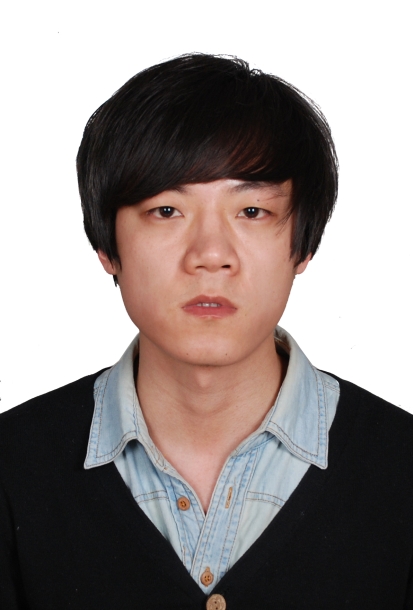 Xuecheng Nie (聂学成)合作论文数YiTu Technology3
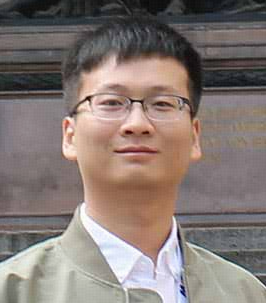 Chenyang Si (司晨阳)合作论文数Pattern Recognition Laboratory, School of Intelligence Science and Technology, Nanjing University (Suzhou Campus)3
 Weihao Yu (余伟浩)合作论文数ByteDance Seed3
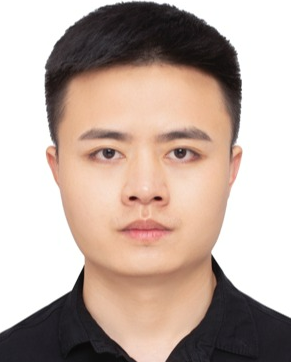 Li Yuan (袁粒)合作论文数School of Electrical and Computer Engineering, Shenzhen Graduate School, Peking University3
 Patrick Jaillet合作论文数Operations Research Center, Massachusetts Institute of Technology;Department of Electrical Engineering and Computer Science, Massachusetts Institute of Technology3Shizhuo Zhang合作论文数2Hui Sun合作论文数2Shuning Chang合作论文数Alibaba Group2
 Xinchao Wang合作论文数Department of Electrical and Computer Engineering, National University of Singapore2
 Yao Shu (舒瑶)合作论文数Hong Kong University of Science and Technology (Guangzhou)2
 XuLei Yang合作论文数Northeastern University, Northeastern Univ.2
 Teck-Khim Ng (黄德欽)合作论文数Department of Computer Science, School of Computing, National University of Singapore2Yawei Sun合作论文数1Guoliang Zhou合作论文数1Kun Wang合作论文数1Cong Fu合作论文数1Jingyi Li合作论文数1Heng-Yi Li合作论文数1Yawen Liu合作论文数1
 (Romy) Mi Luo合作论文数University of Texas at Austin1Jiahua Wu合作论文数1Chen Liang合作论文数1Shuning Chang合作论文数National University of Singapore1
 Cen Chen (陈岑)合作论文数School of Data Science and Engineering, East China Normal University1
 Jie Ding (丁洁)合作论文数College of Future Information Technology, Fudan University;Research Center of Smart Networks and Systems, Electronic Engineering Department, School of Information Science and Engineering, Fudan University1
 Jianfu Zhang (张健夫)合作论文数Department of Computer Science and Engineering, School of Computer Science, Shanghai Jiao Tong University;Qing Yuan Research Institute, Shanghai Jiao Tong University1
 Tao Wang (王韬)合作论文数Institue of Data Science, National University of Singapore1
 Marcelo H. Ang Jr.合作论文数Centre for Intelligent Products and Manufacturing Systems, Department of Mechanical Engineering, College of Design and Engineering, National University of Singapore;Centre for Management of Science and Technology, Faculty of Engineering, National University of Singapore1
 Francis Tay Eng Hock合作论文数Department of Mechanical Engineering, College of Design and Engineering, National University of Singapore;Centre of Intelligent Products and Manufacturing Systems, National University of Singapore1
 Teck Khim Ng合作论文数Department of Computer Science, School of Computing, National University of Singapore1




