Interactive world models aim to simulate environment dynamics under real-time user actions. However, their action vocabulary is largely confined to navigation: most actions correspond to motion (e.g., walk, turn, look around), while interaction with objects in the scene (e.g., pick up plates, open doors, or trigger physical responses) is either absent, restricted to game domains, or relegated to prompt-to-full-video scenarios. The resulting worlds are visually explorable but not truly actionable. In this work, we present ActWorld, an interactive world model that extends prior navigation-centric generators to support mid-rollout object interaction within a chunk-autoregressive framework. We argue that the navigation-interaction gap stems from two bottlenecks. First, a data bottleneck: the lack of human-object interaction data with accurate, dense labels. Second, a memory bottleneck: recency-biased history compression in existing world models discards the event-transition frames that causally determine subsequent object states, leading to an action-forgetting pathology. On the data side, we construct a 100K interaction video dataset, each annotated with per-chunk captions via chain-of-thought reasoning. On the model side, we introduce a hierarchical action-aware memory design that routes history compression by interaction importance, complemented by a persistent memory bank that maintains event-update and object-identity tokens across long rollouts. Experiments show that ActWorld supports both flexible navigation and rich object interaction within a single model, substantially improving interaction fidelity over navigation-only baselines without sacrificing viewpoint control. Project page is available at https://interactwm.github.io/ActWorld.
We introduce FSVideo, a fast speed transformer-based image-to-video (I2V) diffusion framework. We build our framework on the following key components: 1.) a new video autoencoder with highly-compressed latent space (64×64×4 spatial-temporal downsampling ratio), achieving competitive reconstruction quality; 2.) a diffusion transformer (DIT) architecture with a new layer memory design to enhance inter-layer information flow and context reuse within DIT, and 3.) a multi-resolution generation strategy via a few-step DIT upsampler to increase video fidelity. Our final model, which contains a 14B DIT base model and a 14B DIT upsampler, achieves competitive performance against other popular open-source models, while being an order of magnitude faster. We discuss our model design as well as training strategies in this report.
We tackle the task of any-reference video generation, which aims to synthesize videos conditioned on arbitrary types and combinations of reference subjects, together with textual prompts. This task faces persistent challenges, including identity inconsistency, entanglement among multiple reference subjects, and copy-paste artifacts. To address these issues, we introduce MAGREF, a unified and effective framework for any-reference video generation. Our approach incorporates masked guidance and a subject disentanglement mechanism, enabling flexible synthesis conditioned on diverse reference images and textual prompts. Specifically, masked guidance employs a region-aware masking mechanism combined with pixel-wise channel concatenation to preserve appearance features of multiple subjects along the channel dimension. This design preserves identity consistency and maintains the capabilities of the pre-trained backbone, without requiring any architectural changes. To mitigate subject confusion, we introduce a subject disentanglement mechanism which injects the semantic values of each subject derived from the text condition into its corresponding visual region. Additionally, we establish a four-stage data pipeline to construct diverse training pairs, effectively alleviating copy-paste artifacts. Extensive experiments on a comprehensive benchmark demonstrate that MAGREF consistently outperforms existing state-of-the-art approaches, paving the way for scalable, controllable, and high-fidelity any-reference video synthesis. The code and video demos are available in the supplementary materials.
With a strong alignment between the training and test distributions, object relation as a context prior facilitates object detection. Yet, it turns into a harmful but inevitable training set bias upon test distributions that shift differently across space and time. Nevertheless, the existing detectors cannot incorporate deployment context prior during the test phase without parameter update. Such kind of capability requires the model to explicitly learn disentangled representations with respect to context prior. To achieve this, we introduce an additional graph input to the detector, where the graph represents the deployment context prior, and its edge values represent object relations. Then, the detector behavior is trained to bound to the graph with a modified training objective. As a result, during the test phase, any suitable deployment context prior can be injected into the detector via graph edits, hence “re-biasing” the detector towards the given prior at run-time without parameter update. Even if the deployment prior is unknown, the detector can self-rebias using deployment prior approximated using its own predictions. Comprehensive experimental results on the COCO dataset, as well as cross-dataset testing on the Objects365 dataset, demonstrate the effectiveness of the run-time re-biasable detector.
Instruction-based video editing aims to modify an input video according to a natural-language instruction while preserving content fidelity and temporal coherence. However, existing diffusion-based approaches are often trained on paired data of simple editing operations, which fundamentally limits their ability to generalize to diverse and complex, real-world instructions. To address this generalization gap, we propose VIVA, a scalable framework for instruction-based video editing that leverages VLM-guided encoding and reward optimization. First, we introduce a VLM-based instructor that encodes the textual instruction, the first frame of the source video, and an optional reference image into visually-grounded instruction representations, providing fine-grained spatial and semantic context for the diffusion transformer backbone. Second, we propose a post-training stage, Edit-GRPO, which adapts Group Relative Policy Optimization to the domain of video editing, directly optimizing the model for instruction-faithful, content-preserving, and aesthetically pleasing edits using relative rewards. Furthermore, we propose a data construction pipeline designed to synthetically generate diverse, high-fidelity paired video–instruction data of basic editing operations. Extensive experiments show that VIVA achieves superior instruction following, generalization, and editing quality over state-of-the-art methods.
Dexterous grasping aims to produce diverse grasping postures with a high grasping success rate. Regression-based methods that directly predict grasping parameters given the object may achieve a high success rate but often lack diversity. Generation-based methods that generate grasping postures conditioned on the object can often produce diverse grasping, but they are insufficient for high grasping success due to lack of discriminative information. To mitigate, we introduce a unified diffusion-based dexterous grasp generation model, dubbed the name UGG, which operates within the object point cloud and hand parameter spaces. Our all-transformer architecture unifies the information from the object, the hand, and the contacts, introducing a novel representation of contact points for improved contact modeling. The flexibility and quality of our model enable the integration of a lightweight discriminator, benefiting from simulated discriminative data, which pushes for a high success rate while preserving high diversity. Beyond grasp generation, our model can also generate objects based on hand information, offering valuable insights into object design and studying how the generative model perceives objects. Our model achieves state-of-the-art dexterous grasping on the large-scale DexGraspNet dataset while facilitating human-centric object design, marking a significant advancement in dexterous grasping research. Our project page is https://jiaxin-lu.github.io/ugg/ .
In this paper, we explore a novel model reusing task tailored for graph neural networks (GNNs), termed as "deep graph reprogramming". We strive to reprogram a pre-trained GNN, without amending raw node features nor model parameters, to handle a bunch of cross-level downstream tasks in various domains. To this end, we propose an innovative Data Reprogramming paradigm alongside a Model Reprogramming paradigm. The former one aims to address the challenge of diversified graph feature dimensions for various tasks on the input side, while the latter alleviates the dilemma of fixed per-task-per-model behavior on the model side. For data reprogramming, we specifically devise an elaborated Meta-FeatPadding method to deal with heterogeneous input dimensions, and also develop a transductive Edge-Slimming as well as an inductive Meta-GraPadding approach for diverse homogenous samples. Meanwhile, for model reprogramming, we propose a novel task-adaptive Reprogrammable-Aggregator, to endow the frozen model with larger expressive capacities in handling cross-domain tasks. Experiments on fourteen datasets across node/graph classification/regression, 3D object recognition, and distributed action recognition, demonstrate that the proposed methods yield gratifying results, on par with those by re-training from scratch.
To assess the quality of our generation and to compare it with HVITA [1] method, we conducted an experiment on Amazon Mechanical Turk where 172 human workers evaluated the visual quality of object insertion in images. A total of 512 randomly selected images were annotated by 5 different workers. Within each annotation, we send the worker a randomly selected quadruplet: original image, masked object image, generated image by our method and generated image by the baseline method. We asked the worker to tell which among the two generated images is a better representative of original image and which of the two generated objects better fits the scene. Across the 2560 annotations, 68.43% annotators selected our generated image as a better representation of the ground truth and 72.76% selected our generated object as a better fit to the scene.
Summary (cid:62) We provide in this document supporting materials that cannot fit into the manuscript due to the page limit, including more details of the method pre-analysis, more implementation details of the proposed approaches
State-of-the-art parametric and non-parametric style transfer approaches are prone to either distorted local style patterns due to global statistics alignment, or unpleasing artifacts resulting from patch mismatching. In this paper, we study a novel semi-parametric neural style transfer framework that alleviates the deficiency of both parametric and non-parametric stylization. The core idea of our approach is to establish accurate and fine-grained content-style correspondences using graph neural networks (GNNs). To this end, we develop an elaborated GNN model with content and style local patches as the graph vertices. The style transfer procedure is then modeled as the attention-based heterogeneous message passing between the style and content nodes in a learnable manner, leading to adaptive many-to-one style-content correlations at the local patch level. In addition, an elaborated deformable graph convolutional operation is introduced for cross-scale style-content matching. Experimental results demonstrate that the proposed semi-parametric image stylization approach yields encouraging results on the challenging style patterns, preserving both global appearance and exquisite details. Furthermore, by controlling the number of edges at the inference stage, the proposed method also triggers novel functionalities like diversified patch-based stylization with a single model.
We provide in this documents supporting materials that cannot fit into the manuscript due to page limit. For our empirical validations, we include in this document: – Two newly-added ablation studies, including the results with the proposed local patch-based manipulation (LPM) module and those without LPM. We also validate the effectiveness of the proposed GNN-based approach by developing two possible semi-parametric solutions and demonstrate here the corresponding comparative results; – Additional results of the Five ablation studies in the main paper, including more results of heterogeneous neighborhood aggregation schemes, different distance metrics, various content and style patch sizes, distinct patch division schemes, and the designed intra-domain connections; – Additional results of the novel functionality, including flexible diversified arbitrary stylization and multi-style amalgamation with a single model. For our proposed approach, we provide here: – More architecture details of each module; – More detailed explanations of the proposed heterogeneous content-style and content-content message passing.
Recent years have witnessed substantial efforts devoted to ensuring algorithmic fairness for machine learning (ML), spanning from formalizing fairness metrics to designing fairness-enhancing methods. These efforts lead to numerous possible choices in terms of fairness definitions and fairness-enhancing algorithms. However, finding the best fairness configuration (including both fairness definition and fairness-enhancing algorithms) for a specific ML task is extremely challenging in practice. The large design space of fairness configurations combined with the tremendous cost required for fairness deployment poses a major obstacle to this endeavor. This raises an important issue: can we enable automated fairness configurations for a new ML task on a potentially unseen dataset? To this point, we design Auto-Fair, a system that provides recommendations of fairness configurations by ranking all fairness configuration candidates based on their evaluations on prior ML tasks. At the core of Auto-Fair lies a meta-learning model that ranks all fairness configuration candidates by utilizing: (1) a set of meta-features that are derived from both datasets and fairness configurations that were used in prior evaluations; and (2) the knowledge accumulated from previous evaluations of fairness configurations on related ML tasks and datasets. The experimental results on 350 different fairness configurations and 1,500 data samples demonstrate the effectiveness of Auto-Fair.
Catastrophic forgetting refers to the tendency that a neural network ``forgets'' the previous learned knowledge upon learning new tasks. Prior methods have been focused on overcoming this problem on convolutional neural networks (CNNs), where the input samples like images lie in a grid domain, but have largely overlooked graph neural networks (GNNs) that handle non-grid data. In this paper, we propose a novel scheme dedicated to overcoming catastrophic forgetting problem and hence strengthen continual learning in GNNs. At the heart of our approach is a generic module, termed as topology-aware weight preserving (TWP), applicable to arbitrary form of GNNs in a plug-and-play fashion. Unlike the main stream of CNN-based continual learning methods that rely on solely slowing down the updates of parameters important to the downstream task, TWP explicitly explores the local structures of the input graph, and attempts to stabilize the parameters playing pivotal roles in the topological aggregation. We evaluate TWP on different GNN backbones over several datasets, and demonstrate that it yields performances superior to the state of the art. Code is publicly available at https://github.com/hhliu79/TWP.
In this paper, we study a novel meta aggregation scheme towards binarizing graph neural networks (GNNs). We begin by developing a vanilla 1-bit GNN framework that binarizes both the GNN parameters and the graph features. Despite the lightweight architecture, we observed that this vanilla framework suffered from insufficient discriminative power in distinguishing graph topologies, leading to a dramatic drop in performance. This discovery motivates us to devise meta aggregators to improve the expressive power of vanilla binarized GNNs, of which the aggregation schemes can be adaptively changed in a learnable manner based on the binarized features. Towards this end, we propose two dedicated forms of meta neighborhood aggregators, an exclusive meta aggregator termed as Greedy Gumbel Neighborhood Aggregator (GNA), and a diffused meta aggregator termed as Adaptable Hybrid Neighborhood Aggregator (ANA). GNA learns to exclusively pick one single optimal aggregator from a pool of candidates, while ANA learns a hybrid aggregation behavior to simultaneously retain the benefits of several individual aggregators. Furthermore, the proposed meta aggregators may readily serve as a generic plugin module into existing full-precision GNNs. Experiments across various domains demonstrate that the proposed method yields results superior to the state of the art.
Multi-person pose estimation and tracking serve as crucial steps for video understanding. Most state-of-the-art approaches rely on first estimating poses in each frame and only then implementing data association and refinement. Despite the promising results achieved, such a strategy is inevitably prone to missed detections especially in heavily-cluttered scenes, since this tracking-by-detection paradigm is, by nature, largely dependent on visual evidences that are absent in the case of occlusion. In this paper, we propose a novel online approach to learning the pose dynamics, which are independent of pose detections in current fame, and hence may serve as a robust estimation even in challenging scenarios including occlusion. Specifically, we derive this prediction of dynamics through a graph neural network~(GNN) that explicitly accounts for both spatial-temporal and visual information. It takes as input the historical pose tracklets and directly predicts the corresponding poses in the following frame for each tracklet. The predicted poses will then be aggregated with the detected poses, if any, at the same frame so as to produce the final pose, potentially recovering the occluded joints missed by the estimator. Experiments on PoseTrack 2017 and PoseTrack 2018 datasets demonstrate that the proposed method achieves results superior to the state of the art on both human pose estimation and tracking tasks.
State-of-the-art video super-resolution (VSR) methods focus on exploiting inter- and intra-frame correlations to estimate high-resolution (HR) video frames from low-resolution (LR) ones. In this paper, we study VSR from an exotic perspective, by explicitly looking into the role of temporal frequency of video frames. Through experiments, we observe that a higher frequency, and hence a smaller pixel displacement between consecutive frames, tends to de-liver favorable super-resolved results. This discovery motivates us to introduce Event Cameras, a novel sensing de-vice that responds instantly to pixel intensity changes and produces up to millions of asynchronous events per second, to facilitate VSR. To this end, we propose an Event-based VSR framework (E-VSR), of which the key component is an asynchronous interpolation (EAI) module that reconstructs a high-frequency (HF) video stream with uniform and tiny pixel displacements between neighboring frames from an event stream. The derived HF video stream is then encoded into a VSR module to recover the desired HR videos. Furthermore, an LR bi-directional interpolation loss and an HR self-supervision loss are also introduced to respectively regulate the EAI and VSR modules. Experiments on both real-world and synthetic datasets demonstrate that the proposed approach yields results superior to the state of the art.
What scene elements, if any, are indispensable for recognizing a scene? We strive to answer this question through the lens of an exotic learning scheme. Our goal is to identify a collection of such pivotal elements, which we term as Scene Essence, to be those that would alter scene recognition if taken out from the scene. To this end, we devise a novel approach that learns to partition the scene objects into two groups, essential ones and minor ones, under the supervision that if only the essential ones are kept while the minor ones are erased in the input image, a scene recognizer would preserve its original prediction. Specifically, we introduce a learnable graph neural network (GNN) for labelling scene objects, based on which the minor ones are wiped off by an off-the-shelf image inpainter. The features of the inpainted image derived in this way, together with those learned from the GNN with the minor-object nodes pruned, are expected to fool the scene discriminator. Both subjective and objective evaluations on Places365, SUN397, and MIT67 datasets demonstrate that, the learned Scene Essence yields a visually plausible image that convincingly retains the original scene category.
In this paper, we study a novel knowledge transfer task in the domain of graph neural networks (GNNs). We strive to train a multi-talented student GNN, without accessing human annotations, that “amalgamates” knowledge from a couple of teacher GNNs with heterogeneous architectures and handling distinct tasks. The student derived in this way is expected to integrate the expertise from both teachers while maintaining a compact architecture. To this end, we propose an innovative approach to train a slimmable GNN that enables learning from teachers with varying feature dimensions. Meanwhile, to explicitly align topological semantics between the student and teachers, we introduce a topological attribution map (TAM) to highlight the structural saliency in a graph, based on which the student imitates the teachers’ ways of aggregating information from neighbors. Experiments on seven datasets across various tasks, including multi-label classification and joint segmentation-classification, demonstrate that the learned student, with a lightweight architecture, achieves gratifying results on par with and sometimes even superior to those of the teachers in their specializations. Our code is publicly available at https://github.com/ycjing/AmalgamateGNN.PyTorch.
In this paper, we investigate a new visual restoration task, termed as hallucinating visual instances in total absentia (HVITA). Unlike conventional image inpainting task that works on images with only part of a visual instance missing, HVITA concerns scenarios where an object is completely absent from the scene. This seemingly minor difference in fact makes the HVITA a much challenging task, as the restoration algorithm would have to not only infer the category of the object in total absentia, but also hallucinate an object of which the appearance is consistent with the background. Towards solving HVITA, we propose an end-to-end deep approach that explicitly looks into the global semantics within the image. Specifically, we transform the input image to a semantic graph, wherein each node corresponds to a detected object in the scene. We then adopt a Graph Convolutional Network on top of the scene graph to estimate the category of the missing object in the masked region, and finally introduce a Generative Adversarial Module to carry out the hallucination. Experiments on COCO, Visual Genome and NYU Depth v2 datasets demonstrate that the proposed approach yields truly encouraging and visually plausible results.
We propose a dense indirect visual odometry method taking as input externally estimated optical flow fields instead of hand-crafted feature correspondences. We define our problem as a probabilistic model and develop a generalized-EM formulation for the joint inference of camera motion, pixel depth, and motion-track confidence. Contrary to traditional methods assuming Gaussian-distributed observation errors, we supervise our inference framework under an (empirically validated) adaptive log-logistic distribution model. Moreover, the log-logistic residual model generalizes well to different state-of-the-art optical flow methods, making our approach modular and agnostic to the choice of optical flow estimators. Our method achieved top-ranking results on both TUM RGB-D and KITTI odometry benchmarks. Our open-sourced implementation is inherently GPU-friendly with only linear computational and storage growth.
 Xinchao Wang合作论文数Department of Electrical and Computer Engineering, National University of Singapore18
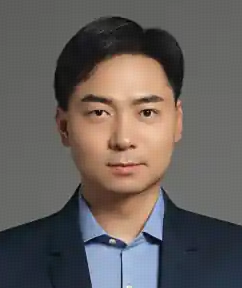 Dacheng Tao (陶大程)合作论文数College of Computing & Data Science, Nanyang Technological University;Lee Kong Chian School of Medicine, Nanyang Technological University;DaXiao Robot12
 Mingli Song (宋明黎)合作论文数College of Computer Science and Technology, Zhejiang University;Hangzhou City University9
 Yongcheng Jing合作论文数College of Computing and Data Science, Nanyang Technological University7
 Jiayan Qiu合作论文数College of Computing and Mathematical Science, University of Leicester6
 Angtian Wang合作论文数Johns Hopkins University4
 Fukun Bi合作论文数North China University of Technology3
 Haoxiang Li合作论文数Pixocial Technology3
 Gang Hua (华刚)合作论文数Amazon3
 Chongyang Ma (马重阳)合作论文数ByteDance3
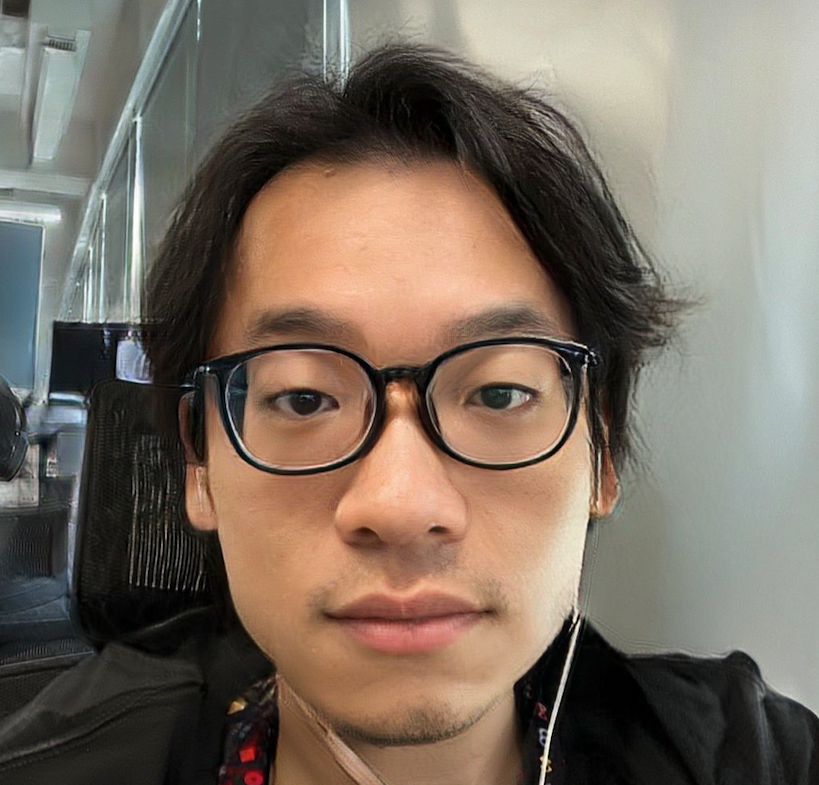 Haibin Huang (黄海斌)合作论文数ByteDance2
 Hao Kang合作论文数ByteDance2
 Bo Liu合作论文数ByteDance2
 Yibing Zhan (詹忆冰)合作论文数JD Explore Academy2Yufan Deng合作论文数Peking University Shenzhen Graduate School1Li Ju合作论文数1Chongbin Yuan合作论文数1Yanying Li合作论文数1
 Shenghai Yuan合作论文数Center for Advanced Robotics Technology and Innovation, Nanyang Technological University1
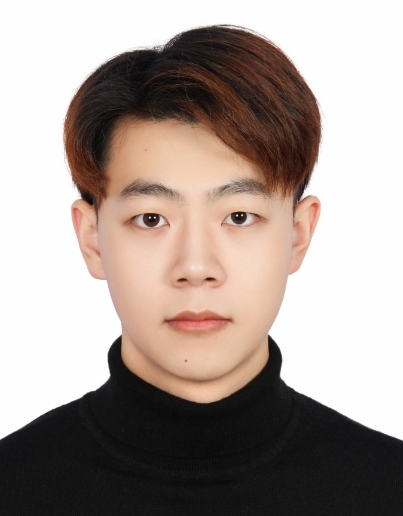 Xiaoyan Cong (丛箫言)合作论文数Brown University1
 Jiaxin Lu (陆嘉馨)合作论文数Department of Computer Science, The University of Texas at Austin;Adobe1
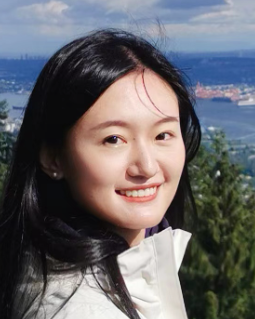 Yuxin Zhang (张宇欣)合作论文数Kuaishou Technology;ByteDance1
 Yizhi Song合作论文数Computer Graphics and Visualization Laboratory, Department of Computer Science, Purdue University1Huihui Liu合作论文数1
 Haotian Yang合作论文数1Yining Mao合作论文数1Fuqiang Liu合作论文数1
 Joe (Zhou) Ren (任洲)合作论文数Amazon Web Services1
 Nathan Jacobs合作论文数Department of Computer Science and Engineering, McKelvey School of Engineering, Washington University in St. Louis;Multimodal Vision Research Laboratory, Washington University in St. Louis;Division of Computational and Data Sciences, Washington University;AI for Health Institute, Washington University;Taylor Geospatial Institute;Center for the Environment, Washington University;Multidomain Vision Research, LLC1
 Xiaohui Shen合作论文数ByteDance;TikTok1
 Chunluan Zhou (周春銮)合作论文数Wormpex AI Research1
 Liming Jiang (蒋李鸣)合作论文数ByteDance1
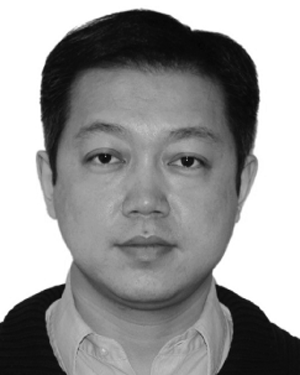 Xun Guo合作论文数MediaTek(Beijing) Inc., MediaTek, Inc.1
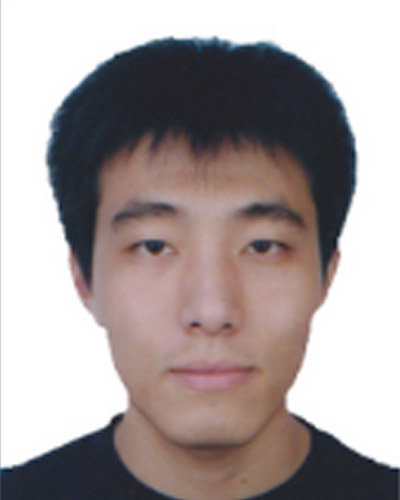 Yizhuang Xie (谢宜壮)合作论文数School of Information and Electronics, Beijing Institute of Technology1
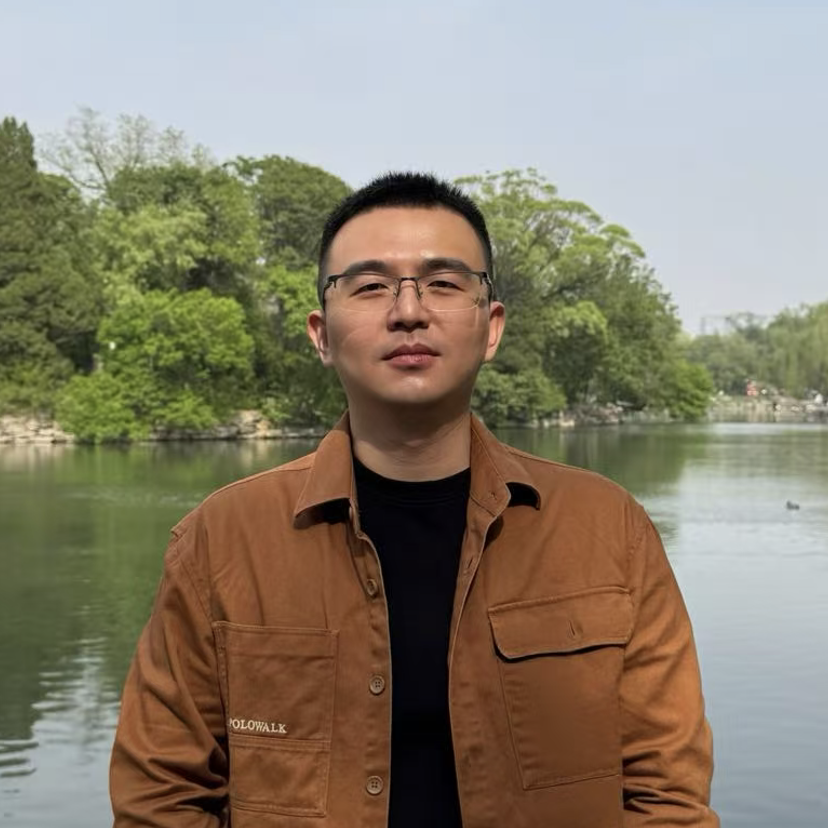 Xiao Yang合作论文数Canva1
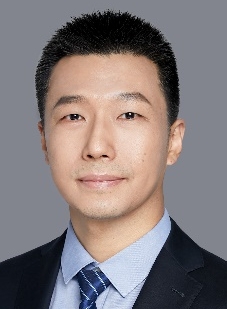 Liang Chen (陈亮)合作论文数School of Information and Electronics, Beijing Institute of Technology1
 Chenwei Deng (邓宸伟)合作论文数School of Information and Electronics, Beijing Institute of Technology1
 Vishal Patel合作论文数Department of Electrical and Computer Engineering, Whiting School of Engineering, Johns Hopkins University;Vision and Image Understanding Lab, Johns Hopkins University1
 Hao Shi (师皓)合作论文数School of Information and Electronics, Beijing Institute of Technology1
 Haipei Sun合作论文数Meta1
 Yin Zhuang (庄胤)合作论文数School of Information and Electronics, Beijing Institute of Technology1
 Mo Zhou (周默)合作论文数Department of Electrical and Computer Engineering, Whiting School of Engineering, Johns Hopkins University1
 Xin Lu合作论文数Adobe Research1
 Enrique Dunn合作论文数Department of Computer Science, Charles V. Schaefer, Jr. School of Engineering and Science, Stevens Institute of Technology1
 Qixing Huang合作论文数1
 Junsong Yuan (袁浚菘)合作论文数Visual Computing Lab, Department of Computer Science and Engineering, School of Engineering and Applied Sciences, University at Buffalo1
 Xing Mei合作论文数TikTok, Bytedance1
 Wendy Hui Wang合作论文数Department of Computer Science, Stevens Institute of Technology;Charles V. Schaefer, Jr. School of Engineering and Science, Stevens Institute of Technology1




