Current Vision-Language-Action (VLA) paradigms in end-to-end autonomous driving rely on offline training from static datasets, leaving them vulnerable to distribution shift. Recent post-training methods use takeover data to mitigate this by augmenting the dataset with high-quality expert takeover samples, yet they suffer from two key limitations: supervision restricted to the period after the takeover moments leads to policies with limited safety margins, and passive preference optimization lacks active exploration for optimal performance. In this paper, we propose TakeVLA, a novel VLA post-training framework that overcomes these shortcomings through two complementary innovations. First, we introduce pre-takeover language supervision, which allows the VLA to learn from mistakes proactively. By explicitly teaching the model about what to do in error-prone situations, we cultivate a precautionary mindset that anticipates hazards early and substantially enlarges safety margins. Second, we propose Scenario Dreaming, a reinforcement fine-tuning paradigm that operates in reconstruceted takeover scenarios, encouraging active exploration beyond mere preference fitting. Experiments on the Bench2Drive benchmark demonstrate that TakeVLA achieves state-of-the-art closed-loop performance, surpassing the strong VLA baseline SimLingo by 4.93 in driving score, with an enhanced safety margin as evidenced by an 11.76
Latent World Models enhance scene representation through temporal self-supervised learning, presenting a perception annotation-free paradigm for end-to-end autonomous driving. However, the reconstruction-oriented representation learning tangles perception with planning tasks, leading to suboptimal optimization for planning. To address this challenge, we propose WorldRFT, a planning-oriented latent world model framework that aligns scene representation learning with planning via a hierarchical planning decomposition and local-aware interactive refinement mechanism, augmented by reinforcement learning fine-tuning (RFT) to enhance safety-critical policy performance. Specifically, WorldRFT integrates a vision-geometry foundation model to improve 3D spatial awareness, employs hierarchical planning task decomposition to guide representation optimization, and utilizes local-aware iterative refinement to derive a planning-oriented driving policy. Furthermore, we introduce Group Relative Policy Optimization (GRPO), which applies trajectory Gaussianization and collision-aware rewards to fine-tune the driving policy, yielding systematic improvements in safety. WorldRFT achieves state-of-the-art (SOTA) performance on both open-loop nuScenes and closed-loop NavSim benchmarks. On nuScenes, it reduces collision rates by 83% (0.30% -> 0.05%). On NavSim, using camera-only sensors input, it attains competitive performance with the LiDAR-based SOTA method DiffusionDrive (87.8 vs. 88.1 PDMS).
End-to-end autonomous driving policies based on Imitation Learning (IL) often struggle in closed-loop execution due to the misalignment between inadequate open-loop training objectives and real driving requirements. While Reinforcement Learning (RL) offers a solution by directly optimizing driving goals via reward signals, the rendering-based training environments introduce the rendering gap and are inefficient due to high computational costs. To overcome these challenges, we present a novel Pseudo-simulation-based RL method for closed-loop end to-end autonomous driving, PerlAD. Based on offline datasets, PerlAD constructs a pseudo-simulation that operates in vector space, enabling efficient, rendering-free trial-and-error training. To bridge the gap between static datasets and dynamic closed loop environments, PerlAD introduces a prediction world model that generates reactive agent trajectories conditioned on the ego vehicle's plan. Furthermore, to facilitate efficient planning, PerlAD utilizes a hierarchical decoupled planner that combines IL for lateral path generation and RL for longitudinal speed optimization. Comprehensive experimental results demonstrate that PerlAD achieves state-of-the-art performance on the Bench2Drive benchmark, surpassing the previous E2E RL method by 10.29% in Driving Score without requiring expensive online interactions. Additional evaluations on the DOS benchmark further confirm its reliability in handling safety-critical occlusion scenarios.
Existing end-to-end autonomous driving methods typically rely on imitation learning (IL) but face a key challenge: the misalignment between open-loop training and closed-loop deployment. This misalignment often triggers driver-initiated takeovers and system disengagements during closed-loop execution. How to leverage those expert takeover data from disengagement scenarios and effectively expand the IL policy's capability presents a valuable yet unexplored challenge. In this paper, we propose TakeAD, a novel preference-based post-optimization framework that fine-tunes the pre-trained IL policy with this disengagement data to enhance the closed-loop driving performance. First, we design an efficient expert takeover data collection pipeline inspired by human takeover mechanisms in real-world autonomous driving systems. Then, this post-optimization framework integrates iterative Dataset Aggregation (DAgger) for imitation learning with Direct Preference Optimization (DPO) for preference alignment. The DAgger stage equips the policy with fundamental capabilities to handle disengagement states through direct imitation of expert interventions. Subsequently, the DPO stage refines the policy's behavior to better align with expert preferences in disengagement scenarios. Through multiple iterations, the policy progressively learns recovery strategies for disengagement states, thereby mitigating the open-loop gap. Experiments on the closed-loop Bench2Drive benchmark demonstrate our method's effectiveness compared with pure IL methods, with comprehensive ablations confirming the contribution of each component.
End-to-end (E2E) autonomous driving systems, which map sensory inputs directly to vehicle planning, have garnered attention for harnessing the potential of data-driven methodologies in motion planning. However, current methods face two limitations that undermine their safety performance in closed-loop driving tasks. First, the predominant imitation learning (IL) paradigm overlooks long-term safety beyond predefined planning horizons, potentially guiding the ego vehicle into hazardous states. Second, the lack of reliable online evaluation mechanisms limits real-time responses to safety risks. To overcome these challenges, we propose SoAD, a safety-oriented E2E framework that integrates long-term safety awareness into planning. SoAD is distinguished by a reinforcement learning (RL)-based value estimation module to quantify the safety of planned trajectories, and a vector world model (VWM) to generate interaction-aware future rollouts. During training, the system benefits from value-guided fine-tuning (VFT) that optimizes the planning distribution to favor safer trajectories. In closed-loop deployment, a planning rescoring (PRS) mechanism is designed to perform reliable online evaluation by combining ego-conditional predictions from the VWM with corresponding safety value estimates. Experimental results on the Bench2Drive closed-loop benchmark demonstrate the state-of-the-art (SoTA) performance of SoAD, achieving a 66.40% improvement in driving score (DS) compared to the vectorized scene representation for efficient autonomous driving (VAD) baseline, while zero-shot evaluation on the driving in occlusion simulation (DOS) benchmark further highlights its strong generalization ability.
Achieving fully autonomous driving systems requires learning rational decisions in a wide span of scenarios, including safety-critical and out-of-distribution ones. However, such cases are underrepresented in real-world corpus collected by human experts. To complement for the lack of data diversity, we introduce a novel and scalable simulation framework capable of synthesizing these crucial massive unseen states upon existing driving logs. Our pipeline utilizes advanced neural rendering with a reactive environment to generate high-fidelity multi-view observations controlled by ego trajectory perturbations. Furthermore, we develop a pseudo-expert trajectory generation mechanism to provide feasible action supervision for these newly simulated states to provide action supervision.Upon the synthesized data, we find that a simple co-training strategy on both real-world and simulated samples can lead to significant improvements in both robustness and generalization for various planning methods on challenging real-world benchmarks, up to +6.8 EPDMS on navhard and +2.9 on navtest. More importantly, such policy improvement scales smoothly by increasing simulation data only, even without extra real-world data streaming in. We further reveal crucial findings of such a sim-real paradigm, includingthe design of pseudo-experts and the scaling properties for different policy architectures. Simulation data and code would be released.
Due to the powerful vision-language reasoning and generalization abilities, multimodal large language models (MLLMs) have garnered significant attention in the field of end-to-end (E2E) autonomous driving. However, their application to closed-loop systems remains underexplored, and current MLLM-based methods have not shown clear superiority to mainstream E2E imitation learning approaches. In this work, we propose ReasonPlan, a novel MLLM fine-tuning framework designed for closed-loop driving through holistic reasoning with a self-supervised Next Scene Prediction task and supervised Decision Chain-of-Thought process. This dual mechanism encourages the model to align visual representations with actionable driving context, while promoting interpretable and causally grounded decision making. We curate a planning-oriented decision reasoning dataset, namely PDR, comprising 210k diverse and high-quality samples. Our method outperforms the mainstream E2E imitation learning method by a large margin of 16.44% L2 and 16.1 driving score on Bench2Drive benchmark. Furthermore, ReasonPlan demonstrates strong zero-shot generalization on unseen DOS benchmark, highlighting its adaptability in handling zero-shot corner cases. Code and dataset will be found in https://github.com/Liuxueyi/ReasonPlan.
Current autonomous driving systems often favor end-to-end frameworks, which take sensor inputs like images and learn to map them into trajectory space via neural networks. Previous work has demonstrated that models can achieve better planning performance when provided with a prior distribution of possible trajectories. However, these approaches often overlook two critical aspects: 1) The appropriate trajectory prior can vary significantly across different driving scenarios. 2) Their trajectory evaluation mechanism lacks policy-driven refinement, remaining constrained by the limitations of one-stage supervised training. To address these issues, we explore improvements in two key areas. For problem 1, we employ MoE to apply different trajectory priors tailored to different scenarios. For problem 2, we utilize Reinforcement Learning to fine-tune the trajectory scoring mechanism. Additionally, we integrate models with different perception backbones to enhance perceptual features. Our integrated model achieved a score of 51.08 on the navsim ICCV benchmark, securing third place.
End-to-end autonomous driving directly generates planning trajectories from raw sensor data, yet it typically relies on costly perception supervision to extract scene information. A critical research challenge arises: constructing an informative driving world model to enable perception annotation-free, end-to-end planning via self-supervised learning. In this paper, we present World4Drive, an end-to-end autonomous driving framework that employs vision foundation models to build latent world models for generating and evaluating multi-modal planning trajectories. Specifically, World4Drive first extracts scene features, including driving intention and world latent representations enriched with spatial-semantic priors provided by vision foundation models. It then generates multi-modal planning trajectories based on current scene features and driving intentions and predicts multiple intention-driven future states within the latent space. Finally, it introduces a world model selector module to evaluate and select the best trajectory. We achieve perception annotation-free, end-to-end planning through self-supervised alignment between actual future observations and predicted observations reconstructed from the latent space. World4Drive achieves state-of-the-art performance without manual perception annotations on both the open-loop nuScenes and closed-loop NavSim benchmarks, demonstrating an 18.1% relative reduction in L2 error, 46.7
Learning an efficient and safe driving strategy in a traffic-heavy intersection scenario and generalizing it to different intersections remains a challenging task for autonomous driving. This is because there are differences in the structure of roads at different intersections, and autonomous vehicles need to generalize the strategies they have learned in the training environments. This requires the autonomous vehicle to capture not only the interactions between agents but also the relationships between agents and the map effectively. To address this challenge, we present a technique that integrates the information of high-definition (HD) maps and traffic participants into vector representations, called lane graph vectorization (LGV). In order to construct a driving policy for intersection navigation, we incorporate LGV into the twin-delayed deep deterministic policy gradient (TD3) algorithm with prioritized experience replay (PER). To train and validate the proposed algorithm, we construct a gym environment for intersection navigation within the high-fidelity CARLA simulator, integrating dense interactive traffic flow and various generalization test intersection scenarios. Experimental results demonstrate the effectiveness of LGV for intersection navigation tasks and outperform the state-of-the-art in our proposed scenarios.
It is still a challenging topic to make reactive driving behaviors in complex urban environments as road users' intentions are unknown. Model-based reinforcement learning (MBRL) offers great potential to learn a reactive policy by constructing a world model that can provide informative states and imagination training. However, a critical limitation in relevant research lies in the scene-level reconstruction representation learning, which may overlook key interactive vehicles and hardly model the interactive features among vehicles and their long-term intentions. Therefore, this paper presents a novel MBRL method with a predictive individual world model (PIWM) for autonomous driving. PIWM describes the driving environment from an individual-level perspective and captures vehicles' interactive relations and their intentions via trajectory prediction task. Meanwhile, a behavior policy is learned jointly with PIWM. It is trained in PIWM's imagination and effectively navigates in the urban driving scenes leveraging intention-aware latent states. The proposed method is trained and evaluated on simulation environments built upon real-world challenging interactive scenarios. Compared with popular model-free and state-of-the-art model-based reinforcement learning methods, experimental results show that the proposed method achieves the best performance in terms of safety and efficiency.
Multi-task intersection navigation including the unprotected turning left, turning right, and going straight in dense traffic is still a challenging task for autonomous driving. For the human driver, the negotiation skill with other interactive vehicles is the key to guarantee safety and efficiency. However, it is hard to balance the safety and efficiency of the autonomous vehicle for multi-task intersection navigation. In this paper, we formulate a multi-task safe reinforcement learning with social attention to improve the safety and efficiency when interacting with other traffic participants. Specifically, the social attention module is used to focus on the states of negotiation vehicles. In addition, a safety layer is added to the multi-task reinforcement learning framework to guarantee safe negotiation. We compare the experiments in the simulator SUMO with abundant traffic flows and CARLA with high-fidelity vehicle models, which both show that the proposed algorithm can improve safety with consistent traffic efficiency for multi-task intersection navigation.
Making human-like decisions for autonomous driving in interactive scenarios is crucial and difficult, requiring the self-driving vehicle to reason about the reactions of interactive vehicles to its behavior. To handle this challenge, we provide an integrated prediction and planning (PnP) decision-making approach. A reactive trajectory prediction model is developed to predict the future states of other actors in order to account for the interactive nature of the behaviors. Then, n -step temporal-difference search is used to make a tactical decision and plan the tracking trajectory for the self-driving vehicle by combining the value estimation network with the reactive prediction model. The proposed PnP method is evaluated using the CARLA simulator, and the results demonstrate that PnP obtains superior performance compared to popular model-free and model-based reinforcement learning baselines.
There are significant challenges in migrating Transformer to point clouds, despite the success of Transformer in the visual domain. This paper presents a novel point cloud Transformer, a parallel design of MLP and Transformer with a one-way bridge. This framework solves the problem that a pure Transformer can deteriorate local feature details. It effectively combines the global receptive field of the Transformer with the traditional local receptive field of MLP while ensuring to the maximum extent possible that local features are not destroyed and can interact with global features. Experiments show that our method achieves comparable levels with existing methods for smaller number of parameters, achieving 93.9% accuracy on ModelNet40 and 85.1% accuracy on the hardest setting of ScanObjectNN. We also migrated the traditional MLP approach to our framework. This has made effective improvements (3.1% and 2.0% for DGCNN and CurveNet, respectively, on the ScanObjectNN dataset)and demonstrated the overall performance of the framework. The code are available at: https://github.com/le-cheng/PointMLP-Former.git.
Realistic and diverse simulation scenarios with reactive and feasible agent behaviors can be used for validation and verification of self-driving system performance without relying on expensive and time-consuming real-world testing. Existing simulators rely on heuristic-based behavior models for background vehicles, which cannot capture the complex interactive behaviors in real-world scenarios. Meanwhile, existing learning-based methods are typical insufficient, yielding behaviors of traffic participants that frequently collide or drive off the road especially for a long horizon. To address this issue, we propose TrajGen, a two-stage trajectory generation framework, which can capture more realistic and diverse behaviors directly from human demonstration. In particular, TrajGen consists of the multi-modal trajectory prediction stage and the reinforcement learning based trajectory modification stage. In the first stage, we propose a novel auxiliary RouteLoss for the trajectory prediction model to generate multi-modal diverse trajectories in the drivable area. In the second stage, reinforcement learning is used to track the predicted trajectories while avoiding collisions, which can improve the reactivity and feasibility of generated trajectories. In addition, we develop a simulator I-Sim that can provide support for data-driven agent behavior simulation and train reinforcement learning models in parallel based on naturalistic driving data. The vehicle model in I-Sim can guarantee that the generated trajectories by TrajGen satisfy vehicle kinematic constraints. Finally, we give comprehensive metrics to evaluate generated trajectories for simulation scenarios, which shows that TrajGen outperforms either trajectory prediction or inverse reinforcement learning in terms of fidelity, reactivity, feasibility, and diversity.
Since traditional reinforcement learning (RL) approaches need active online interaction with the environment, previous works are mainly investigated in the simulation environment rather than the real world environment, especially for safety-critical applications. Offline RL has recently emerged as a promising data-driven learning paradigm to learn a policy from offline dataset directly. It seems that offline RL is well suited for autonomous driving, as it is feasible to collect offline naturalized driving dataset. However, it remains unclear how to deploy offline RL with real world driving dataset only including observation data, and whether current offline RL algorithms work well to learn a driving policy than imitation learning? In this paper, we provide an offline RL benchmark for autonomous driving including the dataset, baselines, and a data driven simulator 1 1 Code: https://github.com/weiaiF/offiineRL-INTERACTION. First, we summarize and introduce the popular offline RL baseline methods. Then, we construct an offline RL dataset for the car following task based on the real world driving dataset INTERACTION. A data driven simulator is applied to obtain augmented data and test the driving policy. Further, we deploy four popular offline algorithms and analyze their performances under different datasets including real world driving data and augmented data. Finally, related conclusions and discussions are given to analyze the critical challenge for offline RL in autonomous driving.
Recently, some learning-based methods such as reinforcement learning and imitation learning have been used to address the control problem for autonomous driving. Note that reinforcement learning has strong reliance on the simulation environment and requires a handcraft design of the reward function. Considering different factors in autonomous driving, a general evaluation method is still being explored. The purpose of imitation learning is to learn the control policy through human demonstrations. It is meaningful to compare the control performances of current main imitation learning methods based on the provided dataset. In this paper, we compare three typical imitation learning algorithms: Behavior cloning, Dataset Aggregation (DAgger) and Information maximizing Generative Adversarial Imitation Learning (InfoGAIL) in the The Open Racing Car Simulator (TORCS) and Car Learning to Act (CARLA) simulators, respectively. The performance of algorithms is evaluated on lane-keeping task in racing and urban environment. The experiment results show DAgger performs best in simple lane keeping problem, and InfoGAIL has the unique advantage of distinguishing different driving styles from expert demonstrations.
 Qichao Zhang (张启超)合作论文数University of Chinese Academy of Sciences;Institute of Automation, Chinese Academy of Sciences15
 Dongbin Zhao (赵冬斌)合作论文数Institute of Automation, Chinese Academy of Sciences;School of Artificial Intelligence, University of Chinese Academy of Sciences13
 Dawei Ding (丁大伟 )合作论文数School Of Automation And Electeical Engineering, University of Science and Technology Beijing8
 Yupeng Zheng合作论文数Institute for AI Industry Research, Tsinghua University7
 Xia, Z.合作论文数6
 Yuqi Liu合作论文数Shenyang Institute of Automation, Chinese Academy of Sciences3
 Long Chen (陈龙)合作论文数University of Chinese Academy of Sciences;Institute of Automation, Chinese Academy of Sciences2
 Haochen Tian (田浩辰)合作论文数New Laboratory of Pattern Recognition, Institute of Automation, Chinese Academy of Sciences1
 XianPeng Lang合作论文数1Peng Jia合作论文数1Teng Zhang合作论文数1Zebin Xing合作论文数1Pengxuan Yang合作论文数1
 Haochen Liu (刘浩晨)合作论文数School of Mechanical and Aerospace Engineering, Nanyang Technological University1
 Jiazhi Yang (杨佳智)合作论文数Multimedia Laboratory, Chinese University of Hong Kong1
 Youtian Guo合作论文数1Yihang Qiu合作论文数1
 Yuhang Zheng (郑宇航)合作论文数School of Computing, National University of Singapore1Yifeng Pan合作论文数1
 Zhang Zhang (张彰)合作论文数University of Chinese Academy of Sciences;National Laboratory of Pattern Recognition, Institute of Automation, Chinese Academy of Sciences1Yunpeng Wang合作论文数1
 Pengfei Li合作论文数Institute for AI Industry Research, Tsinghua University;Institute of Intelligent Industry, Tsinghua University1
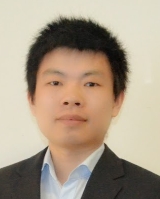 Guang Chen (陈广)合作论文数School of Automotive Studies, Tongji University1
 Liang Wang (王亮)合作论文数National Laboratory of Pattern Recognition, Institute of Automation, Chinese Academy of Sciences;School of Artificial Intelligence, University of Chinese Academy of Sciences1
 Cuijuan An (安翠娟)合作论文数School of Automation and Electeical Engineering, University of Science and Technology Beijing1
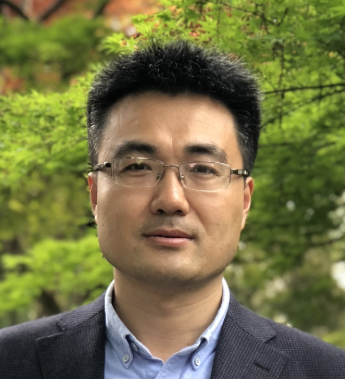 Zhong-Hua Pang (庞中华)合作论文数School of Electrical and Control Engineering, North China University of Technology1
 Hongyang Li (李弘扬)合作论文数Musketeers Foundation Institute of Data Science, The University of Hong Kong1
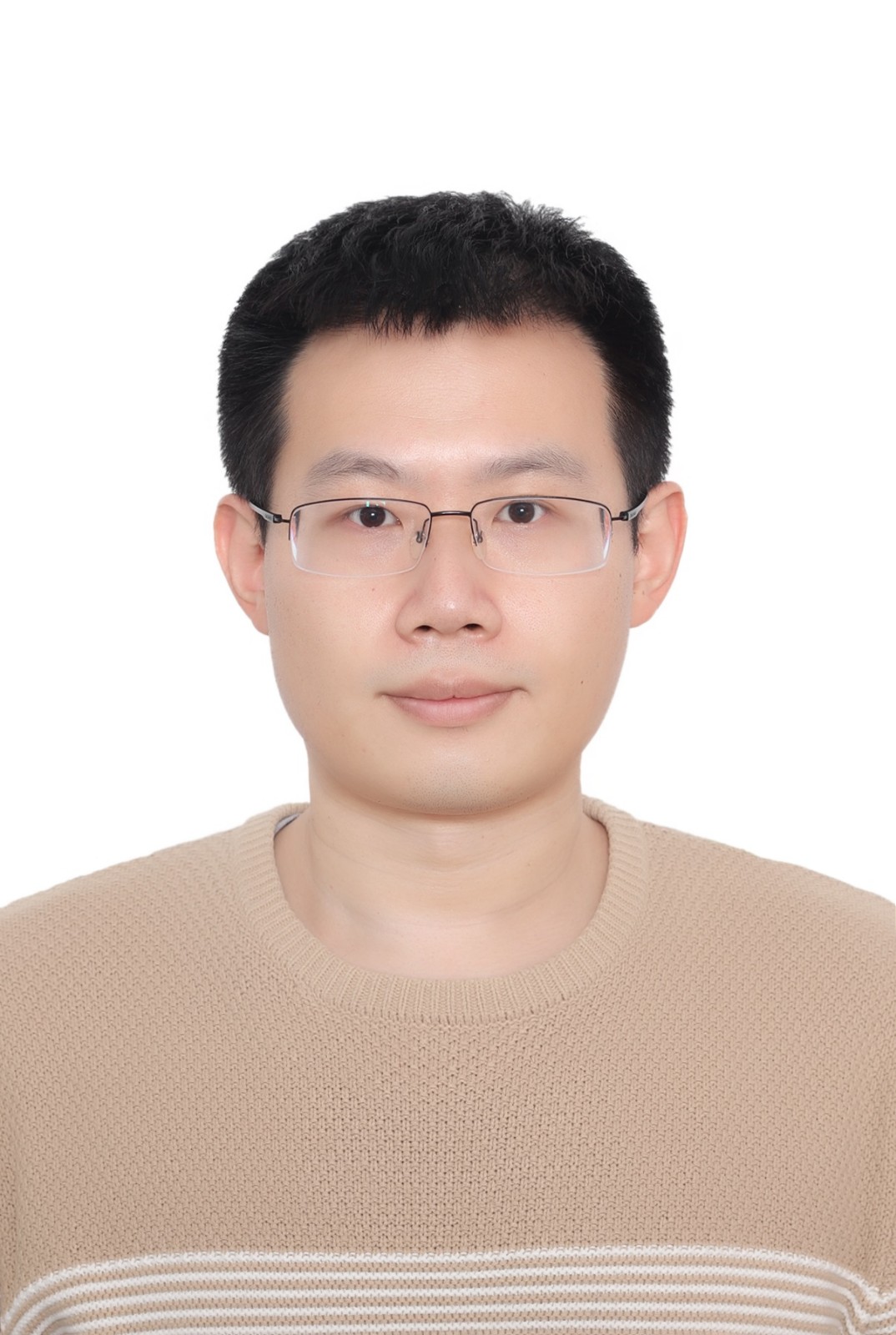 Lijun Wang (王立君)合作论文数School of Artificial Intelligence, Dalian University of Technology1
 Tianyu Li (李天羽)合作论文数OpenDriveLab, Shanghai AI Laboratory;School of Computer Science, Fudan University1
 Xiaoqing Ye (叶晓青)合作论文数Department of Computer Vision Technology, Baidu Inc1




