Many organizations have embraced the "Lakehouse" data management paradigm, which involves constructing structured data warehouses on top of open, unstructured data lakes. This approach stands in stark contrast to traditional, closed, relational databases and introduces challenges for performance and stability of distributed query processors. Firstly, in large-scale, open Lakehouses with uncurated data, high ingestion rates, external tables, or deeply nested schemas, it is often costly or wasteful to maintain perfect and up-to-date table and column statistics. Secondly, inherently imperfect cardinality estimates with conjunctive predicates, joins and user-defined functions can lead to bad query plans. Thirdly, for the sheer magnitude of data involved, strictly relying on static query plan decisions can result in performance and stability issues such as excessive data movement, substantial disk spillage, or high memory pressure. To address these challenges, this paper presents our design, implementation, evaluation and practice of the Adaptive Query Execution (AQE) framework, which exploits natural execution pipeline breakers in query plans to collect accurate statistics and re-optimize them at runtime for both performance and robustness. In the TPC-DS benchmark, the technique demonstrates up to 25x per query speedup. At Databricks, AQE has been successfully deployed in production for multiple years. It powers billions of queries and ETL jobs to process exabytes of data per day, through key enterprise products such as Databricks Runtime, Databricks SQL, and Delta Live Tables.
1 ETL and ELT are required to prepare comprehensive, clean, and correct derived data that can fuel successful analytics and ML. Based on our observations from thousands of customers processing data in the cloud at Databricks, the preparation of derived data typically involves a complex DAG of transformations, which are split into two activities: (a) Ingestion: At the sources of the DAG, raw data are fetched from streaming platforms, like Apache Kafka TM and Amazon Kinesis, and from cloud storage that stages incoming data. This data is typically in blob stores such as AWS S3. The majority of our customers store it in Delta Lake tables, the data format that enables transaction processing on data lakes [1,2]. (b) Downstream ELT: Multiple transformations clean, enrich, and aggregate the ingested data. The downstream ELT typically leads to many transformations, using popular frameworks such as DBT, or individual jobs that transform the data. In the former case, the transformations are typically in SQL as CREATE-TABLE-AS (CTAS) statements. In all cases, the underlying processing engine sees a series of seemingly independent SQL queries. Delta
SummaryTraditional relational database systems handle data by dividing their memory into sections such as a buffer cache and working memory, assigning a memory budget to each section to efficiently manage a limited amount of overall memory. They also assign memory budgets to memory‐intensive operators such as sorts and joins and control the allocation of memory to these operators; each memory‐intensive operator attempts to maximize its memory usage to reduce disk I/O cost. Implementing such memory‐intensive operators requires a careful design and application of appropriate algorithms that properly utilize memory. Today's Big Data management systems need the ability to handle large amounts of data similarly, as it is unrealistic to assume that truly big data will fit into memory. In this article, we share our memory management experiences in Apache AsterixDB, an open‐source Big Data management software platform that scales out horizontally on shared‐nothing commodity computing clusters. We describe the implementation of AsterixDB's memory‐intensive operators and their designs related to memory management. We also discuss memory management at the global (cluster) level. We conducted an experimental study using several synthetic and real datasets to explore the impact of this work. We believe that future Big Data management system builders can benefit from these experiences.
The past decade has witnessed increasing demands on data-driven business intelligence that led to the proliferation of data-intensive applications. A managed object-oriented programming language such as Java is often the developer’s choice for implementing such applications, due to its quick development cycle and rich suite of libraries and frameworks. While the use of such languages makes programming easier, their automated memory management comes at a cost. When the managed runtime meets large volumes of input data, memory bloat is significantly magnified and becomes a scalability-prohibiting bottleneck. This article first studies, analytically and empirically, the impact of bloat on the performance and scalability of large-scale, real-world data-intensive systems. To combat bloat, we design a novel compiler framework, called Facade, that can generate highly efficient data manipulation code by automatically transforming the data path of an existing data-intensive application. The key treatment is that in the generated code, the number of runtime heap objects created for data classes in each thread is (almost) statically bounded, leading to significantly reduced memory management cost and improved scalability. We have implemented Facade and used it to transform seven common applications on three real-world, already well-optimized data processing frameworks: GraphChi, Hyracks, and GPS. Our experimental results are very positive: the generated programs have (1) achieved a 3% to 48% execution time reduction and an up to 88× GC time reduction, (2) consumed up to 50% less memory, and (3) scaled to much larger datasets.
Due to the growing need to process large graph and network datasetscreated by modern applications, recent years have witnessed a surginginterest in developing big graph platforms. Tens of such big graphsystems have already been developed, but there lacks a systematic categorizationand comparison of these systems. This article provides atimely and comprehensive survey of existing big graph systems, andsummarizes their key ideas and technical contributions from variousaspects. In addition to the popular vertex-centric systems which espousea think-like-a-vertex paradigm for developing parallel graph applications,this survey also covers other programming and computationmodels, contrasts those against each other, and provides a vision forthe future research on big graph analytics platforms. This survey aimsto help readers get a systematic picture of the landscape of recent biggraph systems, focusing not just on the systems themselves, but alsoon the key innovations and design philosophies underlying them.
Large quantities of raw data are being generated by many different sources in different formats. Private and public sectors alike acclaim the valuable information and insights that can be mined from such data to better understand the dynamics of everyday life, such as traffic, worldwide logistics, and social behavior. For this reason, storing, managing, and analyzing "Big Data" at scale is getting a tremendous amount of attention, both in academia and industry. In this paper, we demonstrate the power of a parallel connection that we have built between Apache Spark and Apache AsterixDB (Incubating) to enable complex analytics such as machine learning and graph analysis on data drawn from large semi-structured data collections. The integration of these two systems allows researchers and data scientists to leverage AsterixDB capabilities, including fast ingestion and indexing of semi-structured data and efficient answering of geo-spatial and fuzzy text queries. Complex data analytics can then be performed on the resulting AsterixDB query output in order to obtain additional insights by leveraging the power of Spark's machine learning and graph libraries.
For big data, data quality problem is more serious. Big data cleaning system requires scalability and the abilityof handling mixed errors. Motivated by this, we develop Cleanix, a prototype system for cleaning relational Big Data. Cleanix takes data integrated from multiple data sources and cleans them on a shared-nothing machine cluster. The backend system is built on-top-of an extensible and flexible data-parallel substrate the Hyracks framework. Cleanix supports various data cleaning tasks such as abnormal value detection and correction, incomplete data filling, de-duplication, and conflict resolution. In this paper, we show the organization, data cleaning algorithms as well as the design of Cleanix.
For big data, data quality problem is more serious. Big data cleaning system requires scalability and the abilityof handling mixed errors. Motivated by this, we develop Cleanix, a prototype system for cleaning relational Big Data. Cleanix takes data integrated from multiple data sources and cleans them on a shared-nothing machine cluster. The backend system is built on-top-of an extensible and flexible data-parallel substrate the Hyracks framework. Cleanix supports various data cleaning tasks such as abnormal value detection and correction, incomplete data filling, de-duplication, and conflict resolution. In this paper, we show the organization, data cleaning algorithms as well as the design of Cleanix.
In recent years we have witnessed a surging interest in developing Big Graph processing systems. To date, tens of Big Graph systems have been proposed. This tutorial provides a timely and comprehensive review of existing Big Graph systems, and summarizes their pros and cons from various perspectives. We start from the existing vertex-centric systems, which which a programmer thinks intuitively like a vertex when developing parallel graph algorithms. We then introduce systems that adopt other computation paradigms and execution settings. The topics covered in this tutorial include programming models and algorithm design, computation models, communication mechanisms, out-of-core support, fault tolerance, dynamic graph support, and so on. We also highlight future research opportunities on Big Graph analytics.
Flash memory solid state drives (SSDs) have increasingly been advocated and adopted as a means of speeding up and scaling up data-driven applications. SSDs are becoming more widely available as an option in the cloud. However, when an application considers SSDs in the cloud, the best option for the application may not be immediate, among a number of choices for placing SSDs in the layers of the cloud. Although there have been many studies on SSDs, they often concern a specific setting, and how different SSD options in the cloud compare with each other is less well understood. In this paper, we describe how Google Fusion Tables (GFT) used SSDs and what optimizations were implemented to scale up its in-memory processing, clearly showing opportunities and limitations of SSDs in the cloud with quantitative analyses. We first discuss various SSD placement strategies and compare them with low-level measurements, and propose SSD-placement guidelines for a variety of cloud data services. We then present internals of our column engine and optimizations to better use the performance characteristics of SSDs. We empirically demonstrate that the optimizations enable us to scale our application to much larger datasets while retaining the low-latency and simple query processing architecture.
A number of high-level query languages, such as Hive, Pig, Flume, and Jaql, have been developed in recent years to increase analyst productivity when processing and analyzing very large datasets. The implementation of each of these languages includes a complete, data model-dependent query compiler, yet each involves a number of similar optimizations. In this work, we describe a new query compiler architecture that separates language-specific and data model-dependent aspects from a more general query compiler backend that can generate executable data-parallel programs for shared-nothing clusters and can be used to develop multiple languages with different data models. We have built such a data modelagnostic query compiler substrate, called Algebricks, and have used it to implement three different query languages — HiveQL, AQL, and XQuery — to validate the efficacy of this approach. Experiments show that all three query languages benefit from the parallelization and optimization that Algebricks provides and thus have good parallel speedup and scaleup characteristics for large datasets.
The past decade has witnessed the increasing demands on data-driven business intelligence that led to the proliferation of data-intensive applications. A managed object-oriented programming language such as Java is often the developer's choice for implementing such applications, due to its quick development cycle and rich community resource. While the use of such languages makes programming easier, their automated memory management comes at a cost. When the managed runtime meets Big Data, this cost is significantly magnified and becomes a scalability-prohibiting bottleneck. This paper presents a novel compiler framework, called Facade, that can generate highly-efficient data manipulation code by automatically transforming the data path of an existing Big Data application. The key treatment is that in the generated code, the number of runtime heap objects created for data types in each thread is (almost) statically bounded, leading to significantly reduced memory management cost and improved scalability. We have implemented Facade and used it to transform 7 common applications on 3 real-world, already well-optimized Big Data frameworks: GraphChi, Hyracks, and GPS. Our experimental results are very positive: the generated programs have (1) achieved a 3%--48% execution time reduction and an up to 88X GC reduction; (2) consumed up to 50% less memory, and (3) scaled to much larger datasets.
A number of high-level query languages, such as Hive, Pig, Flume, and Jaql, have been developed in recent years to increase analyst productivity when processing and analyzing very large datasets. The implementation of each of these languages includes a complete, data model-dependent query compiler, yet each involves a number of similar optimizations. In this work, we describe a new query compiler architecture that separates language-specific and data model-dependent aspects from a more general query compiler backend that can generate executable data-parallel programs for shared-nothing clusters and can be used to develop multiple languages with different data models. We have built such a data model-agnostic query compiler substrate, called Algebricks, and have used it to implement three different query languages --- HiveQL, AQL, and XQuery --- to validate the efficacy of this approach. Experiments show that all three query languages benefit from the parallelization and optimization that Algebricks provides and thus have good parallel speedup and scaleup characteristics for large datasets.
The past decade has witnessed the increasing demands on data-driven business intelligence that led to the proliferation of data-intensive applications. A managed object-oriented programming language such as Java is often the developer's choice for implementing such applications, due to its quick development cycle and rich community resource. While the use of such languages makes programming easier, their automated memory management comes at a cost. When the managed runtime meets Big Data, this cost is significantly magnified and becomes a scalability-prohibiting bottleneck. This paper presents a novel compiler framework, called Facade, that can generate highly-efficient data manipulation code by automatically transforming the data path of an existing Big Data application. The key treatment is that in the generated code, the number of runtime heap objects created for data types in each thread is (almost) statically bounded, leading to significantly reduced memory management cost and improved scalability. We have implemented Facade and used it to transform 7 common applications on 3 real-world, already well-optimized Big Data frameworks: GraphChi, Hyracks, and GPS. Our experimental results are very positive: the generated programs have (1) achieved a 3%--48% execution time reduction and an up to 88X GC reduction; (2) consumed up to 50% less memory, and (3) scaled to much larger datasets.
Maximal cliques are important substructures in graph analysis. Many algorithms for computing maximal cliques have been proposed in the literature, however, most of them are sequential algorithms that cannot scale due to the high complexity of the problem, while existing parallel algorithms for computing maximal cliques are mostly immature and especially suffer from skewed workload. In this paper, we first propose a distributed algorithm built on a share-nothing architecture for computing the set of maximal cliques. We effectively address the problem of skewed workload distribution due to high-degree vertices, which also leads to drastically reduced worst-case time complexity for computing maximal cliques in common real-world graphs. Then, we also devise algorithms to support efficient update maintenance of the set of maximal cliques when the underlying graph is updated. We verify the efficiency of our algorithms for computing and updating the set of maximal cliques with a range of real-world graphs from different application domains.
In this demo, we present Cleanix, a prototype system for cleaning relational Big Data. Cleanix takes data integrated from multiple data sources and cleans them on a shared-nothing machine cluster. The backend system is built on-top-of an extensible and flexible data-parallel substrate - the Hyracks framework. Cleanix supports various data cleaning tasks such as abnormal value detection and correction, incomplete data filling, de-duplication, and conflict resolution. We demonstrate that Cleanix is a practical tool that supports effective and efficient data cleaning at the large scale.
There is a growing need for distributed graph processing systems that are capable of gracefully scaling to very large graph datasets. Unfortunately, this challenge has not been easily met due to the intense memory pressure imposed by process-centric, message passing designs that many graph processing systems follow. Pregelix is a new open source distributed graph processing system that is based on an iterative dataflow design that is better tuned to handle both in-memory and out-of-core workloads. As such, Pregelix offers improved performance characteristics and scaling properties over current open source systems (e.g., we have seen up to 15X speedup compared to Apache Giraph and up to 35X speedup compared to distributed GraphLab), and more effective use of available machine resources to support Big(ger) Graph Analytics.
There is a growing need for distributed graph processing systems that are capable of gracefully scaling to very large graph datasets. Unfortunately, this challenge has not been easily met due to the intense memory pressure imposed by process-centric, message passing designs that many graph processing systems follow. Pregelix is a new open source distributed graph processing system that is based on an iterative dataflow design that is better tuned to handle both in-memory and out-of-core workloads. As such, Pregelix offers improved performance characteristics and scaling properties over current open source systems (e.g., we have seen up to 15X speedup compared to Apache Giraph and up to 35X speedup compared to distributed GraphLab), and more effective use of available machine resources to support Big(ger) Graph Analytics.
 Michael J. Carey合作论文数Couchbase, Inc.;Department of Computer Science, Donald Bren School of Information and Computer Sciences, University of California, Irvine12
 Vinayak Borkar合作论文数11Jun Li合作论文数6
 Ada Waichee Fu (傅慰慈)合作论文数Department of Computer Science and Engineering, Faculty of Engineering, The Chinese University of Hong Kong6
 Jian Lv (吕建)合作论文数Department of Computer Science and Technology, Nanjing University;State Key Laboratory for Novel Software Technology, Nanjing University6
 Shaxun Chen合作论文数Dept. of Computer Science, Nanjing Universiy6
 Xianping Tao (陶先平)合作论文数School of Computer Science, Nanjing University;Institute of Computer Software, Nanjing University6
 Wolfgang Lehner合作论文数Institute of Systems Architecture, Technische Universitat Dresden;Faculty of Computer Science, Technische Universitat Dresden5
 Amarnath Gupta合作论文数San Diego Supercomputer Center, University of California San Diego5
 Tyson Condie合作论文数Department of Computer Science, Samueil School of Engineering, University of California, Los Angeles5
 Pouria Pirzadeh合作论文数Department of Computer Science, University of California Irvine5Ben He合作论文数4
 Luc Bouganim合作论文数INRIA Rocquencourt4
 Michael Ernst合作论文数Paul G. Allen School of Computer Science & Engineering, University of Washington4
 Paolo Terenziani合作论文数Computer Science Institute, Dipartimento di Scienze e Innovazione Tecnologica, Universita del Piemonte Orientale "Amedeo Avogadro"4
 Ippokratis Pandis合作论文数Amazon Web Services4
 Bill Howe合作论文数Information School, University of Washington4
 Jignesh M. Patel合作论文数Computer Science Department, School of Computer Science, Carnegie Mellon University;DataChat Inc.4
 Volker Markl合作论文数Berlin Institute for the Foundations of Learning and Data, Technische Universität Berlin;Intelligent Analytics for Massive Data Research Department, German Research Center for Artificial Intelligence4Till Westmann合作论文数4Danzhou Liu合作论文数Symantec Corporation, USA4
 Nicola Onose合作论文数4Alexander Behm合作论文数4
 Sandeep Tata合作论文数Google4Olga Vechtomova合作论文数3
 Mingda Li (李明达)合作论文数Research Center for Social Computing and Information Retrieval, Harbin Institute of Technology3
 Khanh Nguyen合作论文数Google3
 Kian-Lee Tan (陈建利)合作论文数Department of Computer Science, School of Computing, National University of Singapore3
 Hongzhi Wang (王宏志)合作论文数Department of Computer Science and Technology, School of Computer Science and Technology, Faculty of Computing, Harbin Institute of Technology3
 Vassilis J. Tsotras合作论文数Department of Computer Science and Engineering, Bourns College of Engineering, University of California, Riverside;Data Science Center, University of California, Riverside3
 Jia-Cheng Zhang (张家成)合作论文数School of Software, Tsinghua University3
 Hong Gao (高宏)合作论文数National Pilot School of Software, Harbin Institute of Technology;School of Computer Science and Technology, Harbin Institute of Technology3
 Thomas Neumann合作论文数School of Computation, Information and Technology, Technical University of Munich;Institut für Informatik, Fakultät für Informatik, Technical University of Munich3Jianzhong Li (李建中)合作论文数3
 Chen Li合作论文数Department of Computer Science, University of California, Irvine3
 Magdalena Balazinska合作论文数UW Reality Lab, Paul G. Allen School of Computer Science & Engineering, University of Washington3
 Harry Xu合作论文数Computer Science Department, Samueli School of Engineering, University of California, Los Angeles;BreezeML3
 Kai Wang合作论文数Zoox3
 Sattam Alsubaiee合作论文数3
 James Cheng合作论文数Department of Computer Science and Engineering, Chinese University of Hong Kong3
 Lei Chen (陳雷)合作论文数Department of Computer Science and Engineering, School of Engineering, The Hong Kong University of Science and Technology;Huawei Noah's Ark Lab3
 Raghu Ramakrishnan合作论文数Microsoft3
 Joshua Rosen合作论文数UC Berkeley3Rafael Romero合作论文数3
 Neoklis Polyzotis合作论文数Databricks3
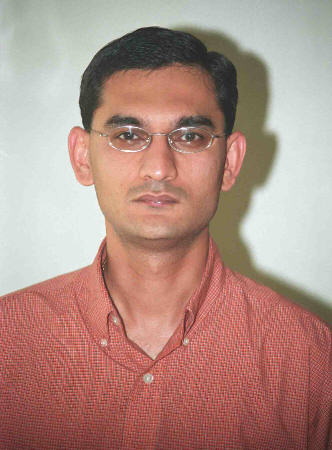 Chintan Patel合作论文数ITE 322
UMBC, CSEE Department3
Chintan Patel合作论文数ITE 322
UMBC, CSEE Department3 Raymond Chi-Wing Wong (黃智榮)合作论文数Department of Computer Science & Engineering, School of Engineering, The Hong Kong University of Science and Technology3
 Da Yan (严达)合作论文数Department of Computer Science, Luddy School of Informatics, Computing, and Engineering, Indiana University Bloomington3
 Markus Weimer合作论文数Microsoft3




