A pressing challenge in spatially resolved transcriptomics (SRT) is to benchmark the computational methods. A widely-used approach involves utilizing simulated data. However, biases exist in terms of the currently available simulated SRT data, which seriously affects the accuracy of method evaluation and validation. Herein, we present scCube (https://github.com/ZJUFanLab/scCube), a Python package for independent, reproducible, and technology-diverse simulation of SRT data. scCube not only enables the preservation of spatial expression patterns of genes in reference-based simulations, but also generates simulated data with different spatial variability (covering the spatial pattern type, the resolution, the spot arrangement, the targeted gene type, and the tissue slice dimension, etc.) in reference-free simulations. We comprehensively benchmark scCube with existing single-cell or SRT simulators, and demonstrate the utility of scCube in benchmarking spot deconvolution, gene imputation, and resolution enhancement methods in detail through three applications. Unbiasedly benchmarking SRT computational methods remains a pressing challenge. Here, authors develop scCube, a simulation framework enabling scalable, reproducible, and unbiased generation of simulated SRT data, allowing researchers to benchmark and evaluate different methods.
Spatial omics technologies have become powerful methods to provide valuable insights into cells and tissues within a complex context, significantly enhancing our understanding of the intricate and multifaceted biological system. With an increasing focus on spatial heterogeneity, there is a growing need for unbiased, spatially resolved omics technologies. Laser capture microdissection (LCM) is a cutting-edge method for acquiring spatial information that can quickly collect regions of interest (ROIs) from heterogeneous tissues, with resolutions ranging from single cells to cell populations. Thus, LCM has been widely used for studying the cellular and molecular mechanisms of diseases. This review focuses on the differences among four types of commonly used LCM technologies and their applications in omics and disease research. Key attributes of application cases are also highlighted, such as throughput and spatial resolution. In addition, we comprehensively discuss the existing challenges and the great potential of LCM in biomedical research, disease diagnosis, and targeted therapy from the perspective of high-throughput, multi-omics, and single-cell resolution.
Tissues are highly complicated with spatial heterogeneity in gene expression. However, the cutting-edge single-cell RNA-seq technology eliminates the spatial information of individual cells, which contributes to the characterization of cell identities. Herein, we propose single-cell spatial position associated co-embeddings (scSpace), an integrative method to identify spatially variable cell subpopulations by reconstructing cells onto a pseudo-space with spatial transcriptome references (Visium, STARmap, Slide-seq, etc.). We benchmark scSpace with both simulated and biological datasets, and demonstrate that scSpace can accurately and robustly identify spatially variated cell subpopulations. When employed to reconstruct the spatial architectures of complex tissue such as the brain cortex, the small intestinal villus, the liver lobule, the kidney, the embryonic heart, and others, scSpace shows promising performance on revealing the pairwise cellular spatial association within single-cell data. The application of scSpace in melanoma and COVID-19 exhibits a broad prospect in the discovery of spatial therapeutic markers.
Uncovering the tissue molecular architecture at single-cell resolution could help better understand organisms’ biological and pathological processes. However, bulk RNA-seq can only measure gene expression in cell mixtures, without revealing the transcriptional heterogeneity and spatial patterns of single cells. Herein, we introduce Bulk2Space ( https://github.com/ZJUFanLab/bulk2space ), a deep learning framework-based spatial deconvolution algorithm that can simultaneously disclose the spatial and cellular heterogeneity of bulk RNA-seq data using existing single-cell and spatial transcriptomics references. The use of bulk transcriptomics to validate Bulk2Space unveils, in particular, the spatial variance of immune cells in different tumor regions, the molecular and spatial heterogeneity of tissues during inflammation-induced tumorigenesis, and spatial patterns of novel genes in different cell types. Moreover, Bulk2Space is utilized to perform spatial deconvolution analysis on bulk transcriptome data from two different mouse brain regions derived from our in-house developed sequencing approach termed Spatial-seq. We have not only reconstructed the hierarchical structure of the mouse isocortex but also further annotated cell types that were not identified by original methods in the mouse hypothalamus.
 Jingyang Qian合作论文数4Jie Liao合作论文数4
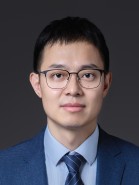 Xiaohui Fan (范骁辉)合作论文数College of Pharmaceutical Sciences, Zhejiang University;Zhejiang Chinese Medical University4
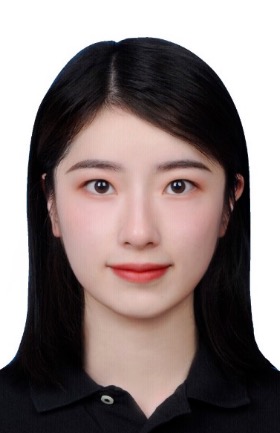 Yin Fang (方尹)合作论文数College of Computer Science and Technology, Zhejiang University3
 Xin Shao合作论文数Zhejiang Univ, Coll Pharmaceut Sci, Pharmaceut Informat Inst, Hangzhou 310058, Peoples R China3Wenbo Guo (郭文博)合作论文数Department of Automation, Tsinghua University3
 Zhuo Chen合作论文数2Hudong Bao合作论文数2Junyun Cheng合作论文数Zhejiang University2
 Penghui Yang合作论文数2Chengyu Li合作论文数1Anyao Li合作论文数1Lidan Zhu合作论文数1Jinlu Zhang合作论文数1
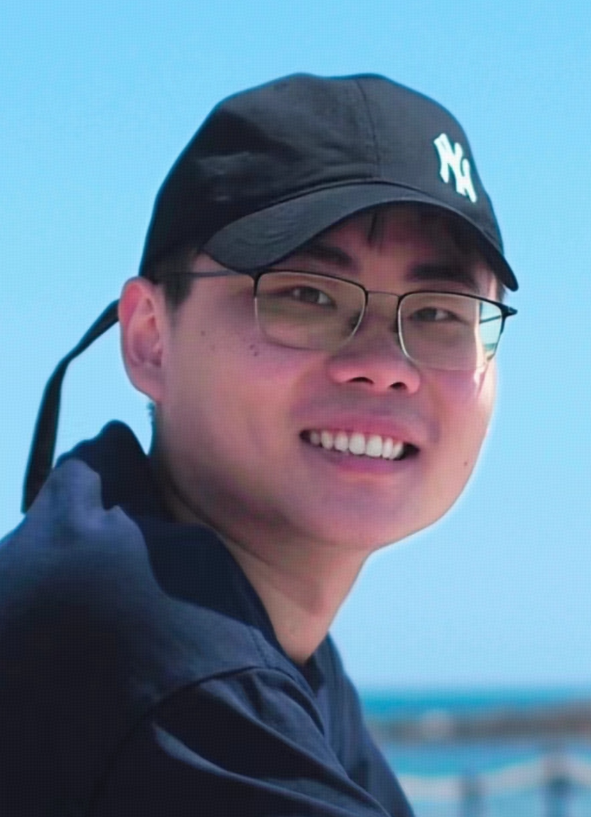 Xiang Zhuang (庄祥)合作论文数College of Computer Science and Technology, Zhejiang University1Lingqi Yu合作论文数1Qian Chen合作论文数1
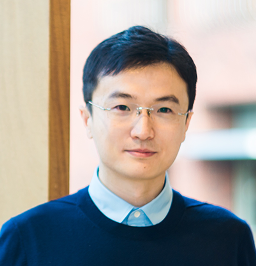 Bing Zhang (张兵)合作论文数School of Life Sciences, Westlake University1
 Ziqi Liu合作论文数AI Department, Ant Group1
 Shao Li (李梢)合作论文数Department of Automation, Tsinghua University;Institute of TCM-X, Beijing, Tsinghua University1
 Ying Chi (迟颖)合作论文数Zhejiang University-University of Edinburgh Institute, Zhejiang University1
 Ningyu Zhang (张宁豫)合作论文数College of Computer Science and Technology, Zhejiang University1
 Dan Wu (吴丹)合作论文数College of Biomedical Engineering and Instrument Science, Zhejiang University1Mingxiao Li (李明虓)合作论文数1
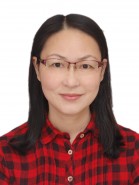 Haihong Yang (杨海红)合作论文数School of Economics, Zhejiang University1
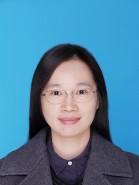 Xiaoyan Lu (陆晓燕)合作论文数Pharmaceutical Informatics Institute, College of Pharmaceutical Sciences, Zhejiang University1
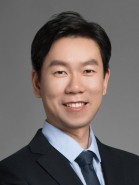 Huajun Chen (陈华钧)合作论文数College of Computer Science and Technology, Zhejiang University1
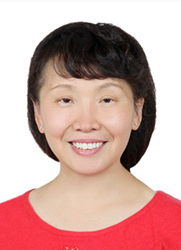 Yue Gao (高月)合作论文数Academy of Military Medical Sciences1
 Yiyu Cheng (程翼宇)合作论文数College of Pharmaceutical Science, Zhejiang University1




