Large language models (LLMs) have demonstrated a powerful ability to answer various queries as a general-purpose assistant. The continuous multi-modal large language models (MLLM) empower LLMs with the ability to perceive visual signals. The launch of GPT-4 (Generative Pre-trained Transformers) has generated significant interest in the research communities. GPT-4V(ison) has demonstrated significant power in both academia and industry fields, as a focal point in a new artificial intelligence generation. Though significant success was achieved by GPT-4V, exploring MLLMs in domain-specific analysis (e.g., marine analysis) that required domain-specific knowledge and expertise has gained less attention. In this study, we carry out the preliminary and comprehensive case study of utilizing GPT-4V for marine analysis. This report conducts a systematic evaluation of existing GPT-4V, assessing the performance of GPT-4V on marine research and also setting a new standard for future developments in MLLMs. The experimental results of GPT-4V show that the responses generated by GPT-4V are still far away from satisfying the domain-specific requirements of the marine professions. All images and prompts used in this study will be available at https://github.com/hkust-vgd/Marine_GPT-4V_Eval
Recent foundation models trained on a tremendous scale of data have shown great promise in a wide range of computer vision tasks and application domains. However, less attention has been paid to the marine realms, which in contrast cover the majority of our blue planet. The scarcity of labeled data is the most hindering issue, and marine photographs illustrate significantly different appearances and contents from general in-air images. Using existing foundation models for marine visual analysis does not yield satisfactory performance, due to not only the data distribution shift, but also the intrinsic limitations of the existing foundation models (e.g., lacking semantics, redundant mask generation, or restricted to image-level scene understanding). In this work, we emphasize both model and data approaches for understanding marine ecosystems. We introduce MarineInst, a foundation model for the analysis of the marine realms with instance visual description, which outputs instance masks and captions for marine object instances. To train MarineInst, we acquire MarineInst20M, the largest marine image dataset to date, which contains a wide spectrum of marine images with high-quality semantic instance masks constructed by a mixture of human-annotated instance masks and model-generated instance masks from our automatic procedure of binary instance filtering. To generate informative and detailed semantic instance captions, we use vision-language models to produce semantic richness with various granularities. Our model and dataset support a wide range of marine visual analysis tasks, from image-level scene understanding to regional mask-level instance understanding. More significantly, MarineInst exhibits strong generalization ability and flexibility to support a wide range of downstream tasks with state-of-the-art performance.
 Tuan-Anh Vu合作论文数2
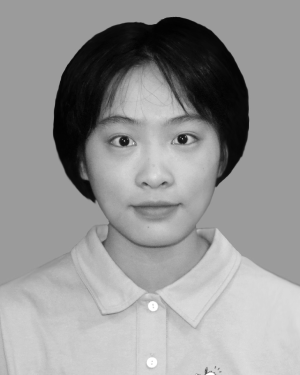 Huimin Zeng合作论文数Coll Elect Engn, Ocean Univ China2
 Sai-Kit Yeung (楊世傑)合作论文数Division of Integrative Systems and Design, Hong Kong University of Science and Technology;Department of Computer Science and Engineering, Hong Kong University of Science and Technology;Department of Ocean Science, Hong Kong University of Science and Technology2Yue Him Wong Tim合作论文数1
 Ziqiang Zheng (郑自强)合作论文数Department of Computer Science and Engineering, Hong Kong University of Science and Technology1
 Jipeng Zhang合作论文数School of Computer Science and Engineering, Hong Kong University of Science and Technology1
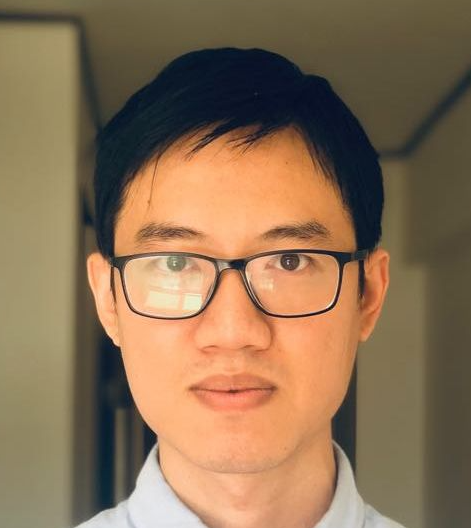 Binh-Son Hua合作论文数Trinity College Dublin, The University of Dublin1




