Automated instance segmentation of forest LiDAR point clouds is increasingly critical as forest monitoring moves toward scalable, detailed, 3D measurement. Yet, progress is constrained by label scarcity for tree instances; a single hectare can hold millions of points and hundreds of overlapping, complex crowns, making manual annotation from scratch with raw data laborious and error-prone. Annotations are often corrected from automatic pre-segmentations, but remain costly as these provide no interactive or AI-assisted refinement. Inspired by the promptable paradigm of foundation segmentation models, we propose SelectAnyTree, a promptable instance segmentation model that delineates any individual tree in a 3D forest point cloud from a few clicks. It introduces two key components: Click-to-query prompt encoder and Canopy Height Model (CHM)-guided first prompt. The former turns each click into a single content query, encoding its 3D position and positive/negative polarity together with a pooled local backbone feature. The latter provides treetops as a geometry- and ecologically guided first prompt without any user input. The resulting prompt query is then decoded into one tree mask by a state-space query decoder to efficiently capture long-range context in large-scale forest scenes with linear-time complexity. We evaluate SelectAnyTree in interactive and instance-level settings across seven diverse forest regions and an independent held-out test dataset, demonstrating strong generalization beyond the training domains. It segments a target tree to 78.2 Intersection over Union (IoU) from a single click, 24.8 points above the strongest promptable baseline, and reaches every accuracy target with the fewest clicks, while using far fewer parameters and less inference time than prior promptable models. The source code is available at https://github.com/thanhhff/SelectAnyTree.
We have been witnessing remarkable success led by the power of neural networks driven by a significant scale of training data in handling various computer vision tasks. However, less attention has been paid to monitoring the camouflaged animals, the masters of hiding themselves in the background. Robust and precise segmentation of camouflaged animals is challenging even for domain experts due to their similarity to the environment. Although several efforts have been made in camouflaged animal image segmentation, to the best of our knowledge, limited work exists on camouflaged animal video understanding (CAVU). Biologists often prefer videos for monitoring and understanding animal behaviors, as videos provide redundant information and temporal consistency. However, the scarcity of labeled video data significantly hinders progress in this area. To address these challenges, we present CamoVid60K, a diverse, large-scale, and accurately annotated video dataset of camouflaged animals. This dataset comprises 218 videos with 62,774 finely annotated frames, covering 70 animal categories, which surpasses all previous datasets in terms of the number of videos/frames and species included. CamoVid60K also offers more diverse downstream tasks in computer vision, such as camouflaged animal classification, detection, and task-specific segmentation (semantic, referring, motion),etc.We have benchmarked several state-of-the-art algorithms on the proposed CamoVid60K dataset, and the experimental results provide valuable insights for future research directions. Our dataset serves as a novel and challenging benchmark to stimulate the development of more powerful camouflaged animal video segmentation algorithms, with substantial room for further improvement.
Glass is a prevalent material among solid objects in everyday life, yet segmentation methods struggle to distinguish it from opaque materials due to its transparency and reflection. While it is known that human perception relies on boundary and reflective-object features to distinguish glass objects, the existing literature has not yet sufficiently captured both properties when handling transparent objects. Hence, we propose incorporating both of these powerful visual cues via the Boundary Feature Enhancement and Reflection Feature Enhancement modules in a mutually beneficial way. Our proposed framework, TransCues, is a pyramidal transformer encoder-decoder architecture to segment transparent objects. We empirically show that these two modules can be used together effectively, improving overall performance across various benchmark datasets, including glass object semantic segmentation, mirror object semantic segmentation, and generic segmentation datasets. Our method outperforms the state-of-the-art by a large margin, achieving +4.2
Modern video generators routinely fail at physical dynamics: objects float, trajectories violate gravity, contacts vanish. Standard denoising and flow-matching objectives fit visual data distributions but do not explicitly penalize such physical violations. Existing remedies can improve physical consistency, but typically add substantial inference or training cost. Candidate-selection methods generate and score multiple videos, while gradient-based world-model guidance repeatedly decodes and re-encodes intermediate estimates. Generator-internal refinement adds perturbation and re-denoising loops, whereas post-training requires curated data and additional optimization. We propose Off-Manifold Refinement (OMR), an inference-time method that instead injects world-model feedback directly into a single sampling trajectory. During scheduled middle ODE steps, we augment the generator velocity with the gradient of an adapter-space V-JEPA 2.1 surprise energy. This external correction can move the latent away from the uncorrected sampling trajectory and toward regions ranked as more physically plausible by the frozen predictor, after which the generator continues rendering from the corrected state. A small trained latent-to-embedding adapter keeps the gradient tractable at inference, and both the video generator and the world model remain frozen. On our fixed 400-prompt VideoPhy-2 detailed subset, OMR lifts the joint Semantic-Adherence-and-Physical-Commonsense metric from 47.0
Text-to-image diffusion techniques have shown exceptional capabilities in producing high-quality, dense visual predictions from open-vocabulary text. This indicates a strong correlation between visual and textual domains in open concepts and that diffusion-based text-to-image models can capture rich and diverse information for computer vision tasks. However, we found that those advantages do not hold for learning of features of camouflaged individuals because of the significant blending between their visual boundaries and their surroundings. In this paper, while leveraging the benefits of diffusion-based techniques and text-image models in open-vocabulary settings, we aim to address a challenging problem in computer vision: open-vocabulary camouflaged instance segmentation (OVCIS). Specifically, we propose a method built upon state-of-the-art diffusion empowered by open-vocabulary to learn multi-scale textual-visual features for camouflaged object representation learning. Such cross-domain representations are desirable in segmenting camouflaged objects where visual cues subtly distinguish the objects from the background, and in segmenting novel object classes which are not seen in training. To enable such powerful representations, we devise complementary modules to effectively fuse cross-domain features, and to engage relevant features towards respective foreground objects. We validate and compare our method with existing ones on several benchmark datasets of camouflaged and generic open-vocabulary instance segmentation. The experimental results confirm the advances of our method over existing ones. We believe that our proposed method would open a new avenue for handling camouflages such as computer vision-based surveillance systems, wildlife monitoring, and military reconnaissance.
Automatic understanding of dynamic 4D point clouds, the 3D-point sequences captured over time by depth sensors and LiDAR, is central to robotics and embodied perception. Yet annotating them densely is expensive, making self-supervised pretraining the natural route to transferable representations. Existing pretext tasks, however, are almost entirely intra-modal, and the few methods that transfer knowledge from 2D foundation models rely on a single global embedding per clip, discarding the rich per-patch semantics that these models compute. To address this gap, we propose Cross4D-JEPA, a teacher-student method that distills a frozen 2D foundation model, an image model DINOv2, or a video model V-JEPA 2, into a 4D point encoder. The proposed method combines (1) a dense cross-modal correspondence that maps every 3D point to the teacher patch feature it projects to, and (2) a per-point objective that trains the student to match these features in latent space with no masking, negatives, or decoder. We evaluate Cross4D-JEPA on four benchmarks, MSR-Action3D, DeformingThings4D, NTU-RGB+D 60, and HOI4D, against intra-modal and global cross-modal baselines. Experimental results show that, under a matched protocol, the proposed method consistently outperforms intra-modal and global cross-modal baselines across the four benchmarks and is competitive with heavier published 4D methods; further analysis attributes this gain primarily to the granularity of the correspondence rather than the teacher modality. Beyond recognition accuracy, the dense representation learned by Cross4D-JEPA transfers across domains, improves label efficiency, and improves full-label fine-tuning under the same training budget, while a 13x smaller encoder matches a heavyweight pooling backbone.
AI-based semantic and instance segmentation of terrestrial and drone LiDAR point clouds is emerging as a transformative approach for converting the complex 3D structure of forests into actionable information for forest monitoring and biodiversity assessment. However, forest LiDAR scenes remain highly challenging due to their large data volumes, irregular sampling density, overlapping and complex canopy structure, and geographic variability. Existing methods based on sparse convolutions or Transformers achieve promising results, but suffer from two key limitations: Quadratic complexity of attention scales poorly to large forest scenes, and Generic context modeling does not exploit forest structural priors, limiting tree separation in complex regions. To address these challenges, we propose ForestMamba, a structure-aware method that incorporates forest-specific priors into feature encoding, query generation, and query refinement, while replacing quadratic attention with linear-time state-space modeling. First, we introduce a sparse encoder with vertical-priority slab serialization that organizes sparse voxels into vertically coherent sequences for efficient long-range context modeling. Second, we propose a geometry-guided query initialization strategy based on an on-the-fly multi-scale Canopy Height Model (CHM), where canopy maxima provide ecologically meaningful query seeds, supplemented by Farthest Point Sampling (FPS) to cover understory trees. Third, we design a Mamba-based query decoder that combines local kNN voxel aggregation with a spatial dual-path Mamba for query refinement with linear computational complexity. Extensive experiments across seven forest regions demonstrate that ForestMamba consistently outperforms existing baselines in both segmentation tasks, while achieving 3 times faster inference and 2.3 times lower GPU memory than Transformer-based methods.
Recent Vision-Language Models (VLMs) have achieved remarkable success in visual understanding, driven by the growing availability of high-quality image-text pairs. However, the performance of VLMs often degrades in the video domain due to the essential need for temporal understanding and the scarcity of large-scale annotated video data. In this work, we focus on marine video understanding, which brings further challenges: first, it requires substantial domain expertise; and video VLMs usually struggle with localizing and interpreting critical information from marine videos, as the informative events are typically sparse, unpredictable, and unevenly distributed. To address these challenges, we carefully curate the first event-centric marine video understanding dataset called MarineEVT, which features 20K multi-task, video-level visual question-answering pairs spanning multiple dimensions of marine understanding and analysis. Meanwhile, based on MarineEVT, we decompose marine video understanding as an Event-centric Visual Tool-integrated Reasoning process EVT-R1 for short, where we leverage powerful visual tools to drive the model to localize and interpret critical information aligned with visual questions and human intent. To demonstrate its effectiveness, we compare EVT-R1 against 11 SOTA VLMs in different settings. EVT-R1 outperforms the top open-source and top commercial models by 5.22 and 11.09, respectively. MarineEVT and EVT-R1 lay the foundation for ecological discovery and marine education, fostering the development of VLMs capable of interpreting marine dynamics, reasoning about ecological interactions, and supporting sustainable ocean video understanding and analysis.
Referring image segmentation is a challenging task that involves generating pixel-wise segmentation masks based on natural language descriptions. The complexity of this task increases with the intricacy of the sentences provided. Existing methods have relied mostly on visual features to generate the segmentation masks while treating text features as supporting components. However, this under-utilization of text understanding limits the model's capability to fully comprehend the given expressions. In this work, we propose a novel framework that specifically emphasizes object and context comprehension inspired by human cognitive processes through Vision-Aware Text Features. Firstly, we introduce a CLIP Prior module to localize the main object of interest and embed the object heatmap into the query initialization process. Secondly, we propose a combination of two components: Contextual Multimodal Decoder and Meaning Consistency Constraint, to further enhance the coherent and consistent interpretation of language cues with the contextual understanding obtained from the image. Our method achieves significant performance improvements on three benchmark datasets RefCOCO, RefCOCO+ and G-Ref Project page: https://vatex.hkustvgd.com/
We study a general optimization problem in which coefficients in the objective are uncertain. We use capacities (lower probabilities) to model such uncertainty. Two popular criteria in imprecise probability, namely maximality and E-admissibility, are employed to compare solutions. We characterize non-dominated solutions with respect to these criteria in terms of well-known notions in multi-objective optimization. These characterizations are novel and make it possible to derive several interesting results. Specially, for convex problems, maximality and E-admissibility are equivalent for any capacities even though the set of associated acts is not convex, and in case of 2-monotone capacities, finding an arbitrary non-dominated solution and checking if a given solution is non-dominated are both tractable. For combinatorial problems, we show a general result: in case of 2-monotone capacities, if the deterministic version of the problem can be solved in polynomial time, checking E-admissibility can also be done in polynomial time. Lastly, for the matroid optimization problem, more refined results are also obtained thanks to these characterizations, namely the connectedness of E-admissible solutions and an outer approximation based on the greedy algorithm for non-dominated solutions with respect to maximality.
Many works within robust combinatorial optimisation consider interval-valued costs or constraints. While most of these works focus on finding a unique solution following a robust criteria such as minimax, a few consider the problem of characterising a set of possibly optimal solutions. This paper is situated within this line of work, and considers the problem of exactly enumerating the set of possibly optimal matroids under interval-valued costs. We show in particular that each solution in this set can be obtained through a polynomial procedure, and provide an efficient algorithm to achieve the enumeration.
Creating large-scale virtual urban scenes with variant styles is inherently challenging. To facilitate prototypes of virtual production and bypass the need for complex materials and lighting setups, we introduce the first vision-and-text-driven texture stylization system for large-scale urban scenes, StyleCity. Taking an image and text as references, StyleCity stylizes a 3D textured mesh of a large-scale urban scene in a semantics-aware fashion and generates a harmonic omnidirectional sky background. To achieve that, we propose to stylize a neural texture field by transferring 2D vision-and-text priors to 3D globally and locally. During 3D stylization, we progressively scale the planned training views of the input 3D scene at different levels in order to preserve high-quality scene content. We then optimize the scene style globally by adapting the scale of the style image with the scale of the training views. Moreover, we enhance local semantics consistency by the semantics-aware style loss which is crucial for photo-realistic stylization. Besides texture stylization, we further adopt a generative diffusion model to synthesize a style-consistent omnidirectional sky image, which offers a more immersive atmosphere and assists the semantic stylization process. The stylized neural texture field can be baked into an arbitrary-resolution texture, enabling seamless integration into conventional rendering pipelines and significantly easing the virtual production prototyping process. Extensive experiments demonstrate our stylized scenes' superiority in qualitative and quantitative performance and user preferences.
We study a general optimization problem with an uncertain linear objective. We address the uncertainty using two models: belief functions and, more generally, capacities. In the former model, we use the generalized minimax regret criterion introduced by Yager, while in the latter one, we extend this criterion, to find optimal solutions. This paper identifies some tractable cases for the resulting problem. Furthermore, when focal sets of the considered belief functions are Cartesian products of intervals, we develop a 2-approximation method that mirrors the well-known midpoint scenario method used for minimax regret optimization problems with interval data.
Although glass is a prevalent material in everyday life, most semantic segmentation methods struggle to distinguish it from opaque materials. We propose $\textbf{TransCues}$, a pyramidal transformer encoder-decoder architecture to segment transparent objects from a color image. To distinguish between glass and non-glass regions, our transformer architecture is based on two important visual cues that involve boundary and reflection feature learning, respectively. We implement this idea by introducing a Boundary Feature Enhancement (BFE) module paired with a boundary loss and a Reflection Feature Enhancement (RFE) module that decomposes reflections into foreground and background layers. We empirically show that these two modules can be used together effectively, leading to improved overall performance on various benchmark datasets. In addition to binary segmentation of glass and mirror objects, we further demonstrate that our method works well for generic semantic segmentation for both glass and non-glass labels. Our method outperforms the state-of-the-art methods by a large margin on diverse datasets, achieving $\textbf{+4.2}$\% mIoU on Trans10K-v2, $\textbf{+5.6}$\% mIoU on MSD, $\textbf{+10.1}$\% mIoU on RGBD-Mirror, $\textbf{+13.1}$\% mIoU on TROSD, and $\textbf{+8.3}$\% mIoU on Stanford2D3D, demonstrate the effectiveness and efficiency of our method.
Large language models (LLMs) have demonstrated a powerful ability to answer various queries as a general-purpose assistant. The continuous multi-modal large language models (MLLM) empower LLMs with the ability to perceive visual signals. The launch of GPT-4 (Generative Pre-trained Transformers) has generated significant interest in the research communities. GPT-4V(ison) has demonstrated significant power in both academia and industry fields, as a focal point in a new artificial intelligence generation. Though significant success was achieved by GPT-4V, exploring MLLMs in domain-specific analysis (e.g., marine analysis) that required domain-specific knowledge and expertise has gained less attention. In this study, we carry out the preliminary and comprehensive case study of utilizing GPT-4V for marine analysis. This report conducts a systematic evaluation of existing GPT-4V, assessing the performance of GPT-4V on marine research and also setting a new standard for future developments in MLLMs. The experimental results of GPT-4V show that the responses generated by GPT-4V are still far away from satisfying the domain-specific requirements of the marine professions. All images and prompts used in this study will be available at https://github.com/hkust-vgd/Marine_GPT-4V_Eval
Object reconstruction from 3D point clouds has been a long-standing research problem in computer vision and computer graphics, and achieved impressive progress. However, reconstruction from time-varying point clouds (a.k.a. 4D point clouds) is generally overlooked. In this paper, we propose a new network architecture, namely RFNet-4D++, that jointly reconstructs objects and their motion flows from 4D point clouds. The key insight is simultaneously performing both tasks via learning of spatial and temporal features from a sequence of point clouds can leverage individual tasks, leading to improved overall performance. To prove this ability, we design a temporal vector field learning module using an unsupervised learning approach for flow estimation task, leveraged by supervised learning of spatial structures for object reconstruction. Extensive experiments and analyses on benchmark datasets validated the effectiveness and efficiency of our method. As shown in experimental results, our method achieves state-of-the-art performance on both flow estimation and object reconstruction while performing much faster than existing methods in both training and inference. Our code and data are available at https://github.com/hkust-vgd/RFNet-4D
Vision-Large-Language-Models (Vision-LLMs) are increasingly being integrated into autonomous driving (AD) systems due to their advanced visual-language reasoning capabilities, targeting the perception, prediction, planning, and control mechanisms. However, Vision-LLMs have demonstrated susceptibilities against various types of adversarial attacks, which would compromise their reliability and safety. To further explore the risk in AD systems and the transferability of practical threats, we propose to leverage typographic attacks against AD systems relying on the decision-making capabilities of Vision-LLMs. Different from the few existing works developing general datasets of typographic attacks, this paper focuses on realistic traffic scenarios where these attacks can be deployed, on their potential effects on the decision-making autonomy, and on the practical ways in which these attacks can be physically presented. To achieve the above goals, we first propose a dataset-agnostic framework for automatically generating false answers that can mislead Vision-LLMs' reasoning. Then, we present a linguistic augmentation scheme that facilitates attacks at image-level and region-level reasoning, and we extend it with attack patterns against multiple reasoning tasks simultaneously. Based on these, we conduct a study on how these attacks can be realized in physical traffic scenarios. Through our empirical study, we evaluate the effectiveness, transferability, and realizability of typographic attacks in traffic scenes. Our findings demonstrate particular harmfulness of the typographic attacks against existing Vision-LLMs (e.g., LLaVA, Qwen-VL, VILA, and Imp), thereby raising community awareness of vulnerabilities when incorporating such models into AD systems. We will release our source code upon acceptance.
Recent foundation models trained on a tremendous scale of data have shown great promise in a wide range of computer vision tasks and application domains. However, less attention has been paid to the marine realms, which in contrast cover the majority of our blue planet. The scarcity of labeled data is the most hindering issue, and marine photographs illustrate significantly different appearances and contents from general in-air images. Using existing foundation models for marine visual analysis does not yield satisfactory performance, due to not only the data distribution shift, but also the intrinsic limitations of the existing foundation models (e.g., lacking semantics, redundant mask generation, or restricted to image-level scene understanding). In this work, we emphasize both model and data approaches for understanding marine ecosystems. We introduce MarineInst, a foundation model for the analysis of the marine realms with instance visual description, which outputs instance masks and captions for marine object instances. To train MarineInst, we acquire MarineInst20M, the largest marine image dataset to date, which contains a wide spectrum of marine images with high-quality semantic instance masks constructed by a mixture of human-annotated instance masks and model-generated instance masks from our automatic procedure of binary instance filtering. To generate informative and detailed semantic instance captions, we use vision-language models to produce semantic richness with various granularities. Our model and dataset support a wide range of marine visual analysis tasks, from image-level scene understanding to regional mask-level instance understanding. More significantly, MarineInst exhibits strong generalization ability and flexibility to support a wide range of downstream tasks with state-of-the-art performance.
Data augmentation is a powerful technique to enhance the performance of a deep learning task but has received less attention in 3D deep learning. It is well known that when 3D shapes are sparsely represented with low point density, the performance of the downstream tasks drops significantly. This work explores test-time augmentation (TTA) for 3D point clouds. We are inspired by the recent revolution of learning implicit representation and point cloud upsampling, which can produce high-quality 3D surface reconstruction and proximity-to-surface, respectively. Our idea is to leverage the implicit field reconstruction or point cloud upsampling techniques as a systematic way to augment point cloud data. Mainly, we test both strategies by sampling points from the reconstructed results and using the sampled point cloud as test-time augmented data. We show that both strategies are effective in improving accuracy. We observed that point cloud upsampling for test-time augmentation can lead to more significant performance improvement on downstream tasks such as object classification and segmentation on the ModelNet40, ShapeNet, ScanObjectNN, and SemanticKITTI datasets, especially for sparse point clouds.
The 2 nd Workshop on Maritime Computer Vision (MaCVi) 2024 addresses maritime computer vision for Unmanned Aerial Vehicles (UAV) and Unmanned Surface Vehicles (USV). Three challenges categories are considered: (i) UAV-based Maritime Object Tracking with Re-ideruification, (ii) USV-based Maritime Obstacle Segmentation and Detection, (iii) USV-based Maritime Boat Tracking. The USV-based Maritime Obstacle Segmentation and Detection features three sub-challenges, including a new embedded challenge addressing efficicent inference on real-world embedded devices. This report offers a comprehensive overview of the findings from the challenges. We provide both statistical and qualitative analyses, evaluating trends from over 195 submissions. All datasets, evaluation code, and the leaderboard are available to the public at https://macvi.org/workshop/macvi24.
 Sai-Kit Yeung (楊世傑)合作论文数Division of Integrative Systems and Design, Hong Kong University of Science and Technology;Department of Computer Science and Engineering, Hong Kong University of Science and Technology;Department of Ocean Science, Hong Kong University of Science and Technology19
 Binh-Son Hua合作论文数Trinity College Dublin, The University of Dublin11
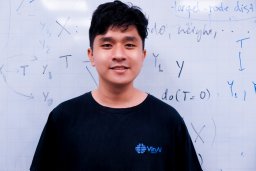 Hai Nguyen-Truong合作论文数Faculty of Information Technology, Vietnam National University7
 Ziqiang Zheng (郑自强)合作论文数Department of Computer Science and Engineering, Hong Kong University of Science and Technology6
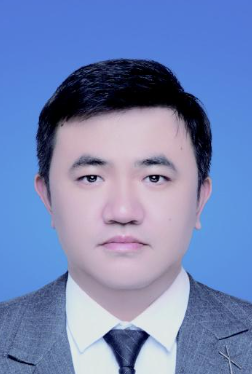 Qing Guo (郭青)合作论文数College of Computer Science, Nankai University6
 Sohaib Afifi合作论文数6
 Frédéric Pichon合作论文数6
 Eric Lefevre合作论文数Univ. Lille Nord of France6Tan-Sang Ha合作论文数4
 Ivor Tsang合作论文数Agency for Science, Technology and Research4
 Ka Chun Shum合作论文数Hong Kong University of Science and Technology3
 Lojze Žust合作论文数Visual Cognitive Systems Laboratory, Faculty of Computer and Information Science, University of Ljubljana;NAVER LABS Europe3
 Tuan-Viet Duong合作论文数3
 Luca Zedda合作论文数3
 Hsiang-Wei Huang合作论文数Department of Electrical and Computer Engineering, University of Washington3
 Benjamin Kiefer合作论文数3
 Cheng-Yen Yang合作论文数University of Washington3
 Andrea Loddo合作论文数Univ Cagliari, Dept Math & Comp Sci, Via Osped 72, I-09124 Cagliari, Italy3Yingshu Chen (陈英姝)合作论文数School of Mechanical Engineering, Hebei University of Technology3
 Lars Sommer合作论文数Fraunhofer IOSB3
 Cecilia Di Ruberto合作论文数Dept. of Mathematics and Comp. Science, University of Cagliari3
 Janez Pers合作论文数Faculty of Electrical Engineering;University of Ljubljana;Faculty of Electrical Engineering, University of Ljubljana3
 Matej Kristan合作论文数Department of Artificial Intelligence, Faculty of Computer and Information Science, University of Ljubljana;Visual Cognitive Systems Laboratory, Faculty of Computer and Information Science, University of Ljubljana3
 Jenq-Neng Hwang合作论文数Department of Electrical & Computer Engineering, University of Washington3Yiwei Chen合作论文数2Nhat Chung合作论文数2
 Synh Ha合作论文数2
 Hung Phan合作论文数2Yue Him Wong Tim合作论文数2Weitu Chong合作论文数2Matija Tersek合作论文数2Sheng-Yao Kuan合作论文数2Angel Bueno Rodriguez合作论文数2
 Jun Xie合作论文数2
 Yuan-Hao Ho合作论文数2Matej Fabijanic合作论文数2
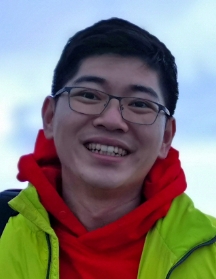 Huajian Huang (黄华健)合作论文数Division of Integrative Systems and Design, The Hong Kong University of Science and Technology2Kaer Huang合作论文数2
 Zhepeng Wang合作论文数2Martin Messmer合作论文数2Yannik Steiniger合作论文数2Borja Carrillo-Perez合作论文数German Aerosp Ctr DLR, Inst Protect Maritime Infrastruct2Øivind Næss合作论文数2
 Martin Weinmann合作论文数Inst Photogrammetry & Remote Sensing, Karlsruhe Inst Technol2
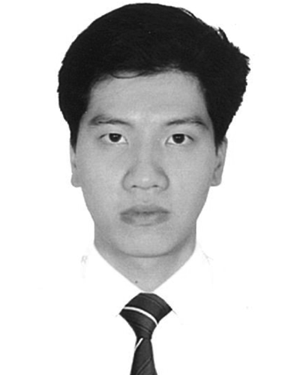 Quan-Dung Pham合作论文数2
 Prem Narayan Choubey合作论文数State Key Laboratory of Millimeter Waves, Southeast University2
 E-Ro Nguyen合作论文数University of Science, Viet Nam National University Ho Chi Minh City2Heng-Cheng Kuo合作论文数2
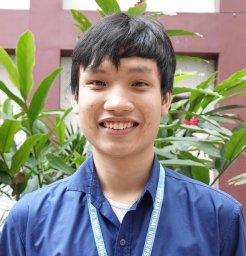 Nhat Minh Chung合作论文数Vietnam Natl Univ, Int Univ, Ho Chi Minh City, Vietnam2




