Remaining useful life (RUL) prediction is vital for the safety of engineering assets. In the real scenario, due to the lack of failure data and variable working conditions, the accuracy of predictive RUL is significantly compromised as models struggle to generalize across diverse operating environments. Existing solutions manage to shift the degradation information from the ideal laboratory environment to the complex real-world environment. However, they fail to consider the heterogeneity of operating machines under different working conditions. This ignorance of inherent properties will eventually hamper the accuracy of RUL prediction. Consequently, a novel Bayesian adversarial Fast Linear Attention with a Single Head (FLASH) Transformer with feature disentanglement model (BAFTFD) was proposed in this article to tackle with the problem. The proposed BAFTFD model can disentangle the private feature representations from the raw data, preserving the shared feature representation for the prediction. The adversarial training method is also exploited to facilitate the transfer of degradation knowledge. Besides, the feature extractor is equipped with the effective FLASH Transformer model to retain the most informative degradation features for model training, improving the efficiency of feature extraction. Moreover, considering the impact of insufficient training data, inherent data noise on the trustworthiness of the predictive results, the Bayesian DL method is adopted to quantify the prediction uncertainties, ensuring the reliability of maintenance decisions. Two commercial turbofan datasets are leveraged to validate the designed model.
Background:Fruit freshness detection by computer vision is essential for many agricultural applications, e.g., automatic harvesting and supply chain monitoring. This paper proposes to use the multi-task learning (MTL) paradigm to build a deep convolutional neural work for fruit freshness detection. Results:We design an MTL model that optimizes the freshness detection (T1) and fruit type classification (T2) tasks in parallel. The model uses a shared CNN (convolutional neural network) subnet and two FC (fully connected) task heads. The shared CNN acts as a feature extraction module and feeds the two task heads with common semantic features. Based on an open fruit image dataset, we conducted a comparative study of MTL and single-task learning (STL) paradigms. The STL models use the same CNN subnet with only one specific task head. In the MTL scenario, the T1 and T2 mean accuracies on the test set are 93.24% and 88.66%, respectively. Meanwhile, for STL, the two accuracies are 92.50% and 87.22%. Statistical tests report significant differences between MTL and STL on T1 and T2 test accuracies. We further investigated the extracted feature vectors (semantic embeddings) from the two STL models. The vectors have an averaged 0.7 cosine similarity on the entire dataset, with most values lying in the 0.6-0.8 range. This indicates a between-task correlation and justifies the effectiveness of the proposed MTL approach. Conclusion:This study proves that MTL exploits the mutual correlation between two or more relevant tasks and can maximally share their underlying feature extraction process. we envision this approach to be extended to other domains that involve multiple interconnected tasks.
•We published an open-source Python package with 31 kernel types and conducted a comparative study of these kernels for spectroscopic analytical tasks.•This study gives an empirical kernel selection guideline for spectroscopic profiling data analysts.•Each kernel has its unique strength in extracting different kinds of information from the spectroscopic profiling data.
Compressed Sensing(CS) provides a new method for signal sensing and transmission, but existing research mainly focuses on images, e.g., MRI (magnetic resonance imaging). To support compressed sensing for spectroscopic profiling data (e.g., mass spectra, Raman spectra, infrared, etc.), we developed an open-sourced python package cs1 (1 stands for “one-dimensional spectroscopic data”). The package covers the main aspects of the CS pipeline, including sensing and reconstruction, non-adaptive and adaptive transform bases, CS-crypto mechanism, interactive GUI, etc. With this package, analytical chemists can quickly conduct CS-related studies on spectroscopic profiling data.
Daodi medicinal material plays an important role in traditional Chinese medicine (TCM). This study researches and validates the NNRW (neural network with random weights) model on spectroscopic profiling data for geographical origin identification. NNRW is a special neural network model that does not require an iterative training process. It has been proved effective in various resource-limited data-driven applications. However, whether NNRW works for spectroscopic profiling data remains to be explored. In this study, the Raman and UV (ultraviolet) profiling data of 160 radix astragali samples from four geographic regions are trained and evaluated by four classification models, i.e., NNRW, MLP (multi-layer perceptron), SVM (support vector machine), and DTC (decision tree classifier). Their validation accuracies are 96.3%, 98.0%, 98.4%, and 92.8% respectively. The training/fitting times are 0.372 ms (milli-seconds), 57.9 ms, 2.033 ms, and 3.351 ms, respectively. This study shows that NNRW has a significant training time cut while keeping a high prediction accuracy, and it is a promising solution to resource-limited edge computing applications.
In data-driven discriminative tasks, classifiability analysis is an often-neglected and implicit step. It answers the fundamental question: does the dataset possess sufficient between-class differences? To measure the dataset's classifiability degree, we develop pyCLAMs (python package for CLassifiabilty Analysis Metrics). pyCLAMs has integrated existing classifiability complexity metrics (e.g., Fisher discriminant ratio, overlapping region volume, distribution topology) and extends more metrics/statistics, such as BER (Bayes error rate, irreducible error), ES (effect size), Person's r, Spearman's rho, Kendall's tau, IG (information gain, mutual information), ANOVA (Analysis of Variance), MANOVA (Multivariate ANOVA), MWW (Mann–Whitney–Wilcoxon test), KS (Kolmogorov–Smirnov test), etc. The current version of pyCLAMs supports 68 metrics. We recommend researchers use pyCLAMs for a precursory assessment for their classification tasks.
Spectroscopic profiling data used in analytical chemistry can be very high-dimensional. Dimensionality reduction (DR) is an effective way to handle the potential "curse of dimensionality" problem. Among the existing DR algorithms, many can be categorized as a matrix factorization (MF) problem, which decomposes the original data matrix X into the product of a low-dimensional matrix W and a dictionary matrix H. First, this paper provides a theoretical reformulation of relevant DR algorithms under a unified MF perspective, including PCA (principal component analysis), NMF (non-negative matrix factorization), LAE (linear autoencoder), RP (random projection), SRP (sparse random projection), VQ (vector quantization), AA (archetypical analysis), and ICA (independent component analysis). From this perspective, an open-sourced toolkit has been developed to integrate all of the above algorithms with a unified API. Second, we made a comparative study on MF-based DR algorithms. In a case study of TOF (time-of-flight) mass spectra, the eight algorithms extracted three components from the original 27,619 features. The results are compared by a set of DR quality metrics, e.g., reconstruction error, pairwise distance/ranking property, computational cost, local and global structure preservations, etc. Finally, based on the case study result, we summarized guidelines for DR algorithm selection. (1) For reconstruction quality, choose ICA. In the case study, ICA, PCA, and NMF have high reconstruction qualities (reconstruction error < 2%), ICA being the best. (2) To keep the pairwise topological structure, choose PCA. PCA best preserves the pairwise distance/ranking property. (3) For edge computing and IoT scenarios, choose RP or SRP if reconstruction is not required and the JL-lemma condition is met. The RP family has the best computational performance in the experiment, almost 10-100 times faster than its peers.
The compressed sensing (CS) theory requires the signal to be sparse under some transform. For most signals (e.g., speech and photos), the non-adaptive transform bases, such as discrete cosine transform (DCT), discrete Fourier transform (DFT), and Walsh-Hadamard transform (WHT), can meet this requirement and perform quite well. However, one limitation of these non-adaptive transforms is that we cannot leverage domain-specific knowledge to improve CS efficiency. This study presents a task-adaptive eigenvector-based projection (EBP) transform. The EBP basis has an equivalent effect of the principal component loading matrix and can generate a sparse representation in the latent space. In a Raman spectroscopic profiling case study, EBP demonstrates better performance than its non-adaptive counterparts. At the 1% CS sampling ratio (k), the reconstruction relative mean square errors of DCT, DFT, WHT and EBP are 0.33, 0.68, 0.32, and 0.00, respectively. At a fixed k, EBP achieves much better reconstruction quality than the non-adaptive counterparts. For specific domain tasks, EBP can significantly lower the CS sampling ratio and reduce the overall measurement cost.
Traditional Mobile Cloud Computing (MCC) has gradually turned to Mobile Edge Computing (MEC) to meet the needs of low-latency scenarios. However, due to the unpredictability of user behaviors, how to arrange edge servers in suitable locations and rationally allocate the computing resources is not easy. Besides, the workload between the servers maybe unbalanced, which could lead to a shrinkage of system utility and waste of energy. So we analyze the workloads in a large MEC system and use one day to represent a workload cycle rotation. Combining the idea of differential workload changes with the local greedy method, we propose a new Gradient algorithm under the constraint of given limited computing capacity. We conduct extensive simulations and compared it with the algorithm based on the average workload as the Weight and the Greedy algorithm, which shows that the Gradient algorithm can reach the maximum utility compared with Weight and Greedy methods.
Raman spectroscopy is widely used in discriminative tasks. It provides a wide-range physio-chemical fingerprint in a rapid and non-invasive way. The Raman spectrometry uses a sensor array to convert photon signals into digital spectroscopic data. This analog-to-digital process can benefit from the compressed sensing (CS) technique. The major benefits include less memory usage, shorter acquisition time, and more cost-efficient sensor. Traditional compressed sensing and reconstruction is a series of mathematical operations performed on the signal. Meanwhile, for discriminative tasks, both the signal and the categorical information are involved. For such scenarios, this paper proposes a method that uses both domain signal and categorical information to optimize CS hyper-parameters, including 1) the sampling ratio or the sensing matrix, 2) the basis matrix for the sparse transform, and 3) the regularization rate or shrinkage factor for L1-norm minimization. A case study of formula milk brand identification proves the proposed method can generate effective compressed sensing while preserving enough discriminative power in the reconstructed signal. Under the optimized hyper-parameters, a 100% classification accuracy is retained by only sampling 20% of the original signal.
 Haiyan Wang (王海燕)合作论文数9Yinsheng Zhang合作论文数8
 Xiaolin Qin (秦小麟)合作论文数College of Computer Science and Technology, Nanjing University of Aeronautics and Astronautics5Ruiqi Hou合作论文数3Dian Rong合作论文数2Ling Jin合作论文数2Xiao-feng NI (倪晓锋)合作论文数2
 Yaju Zhao合作论文数2Zhengyong Zhang (张正勇)合作论文数2
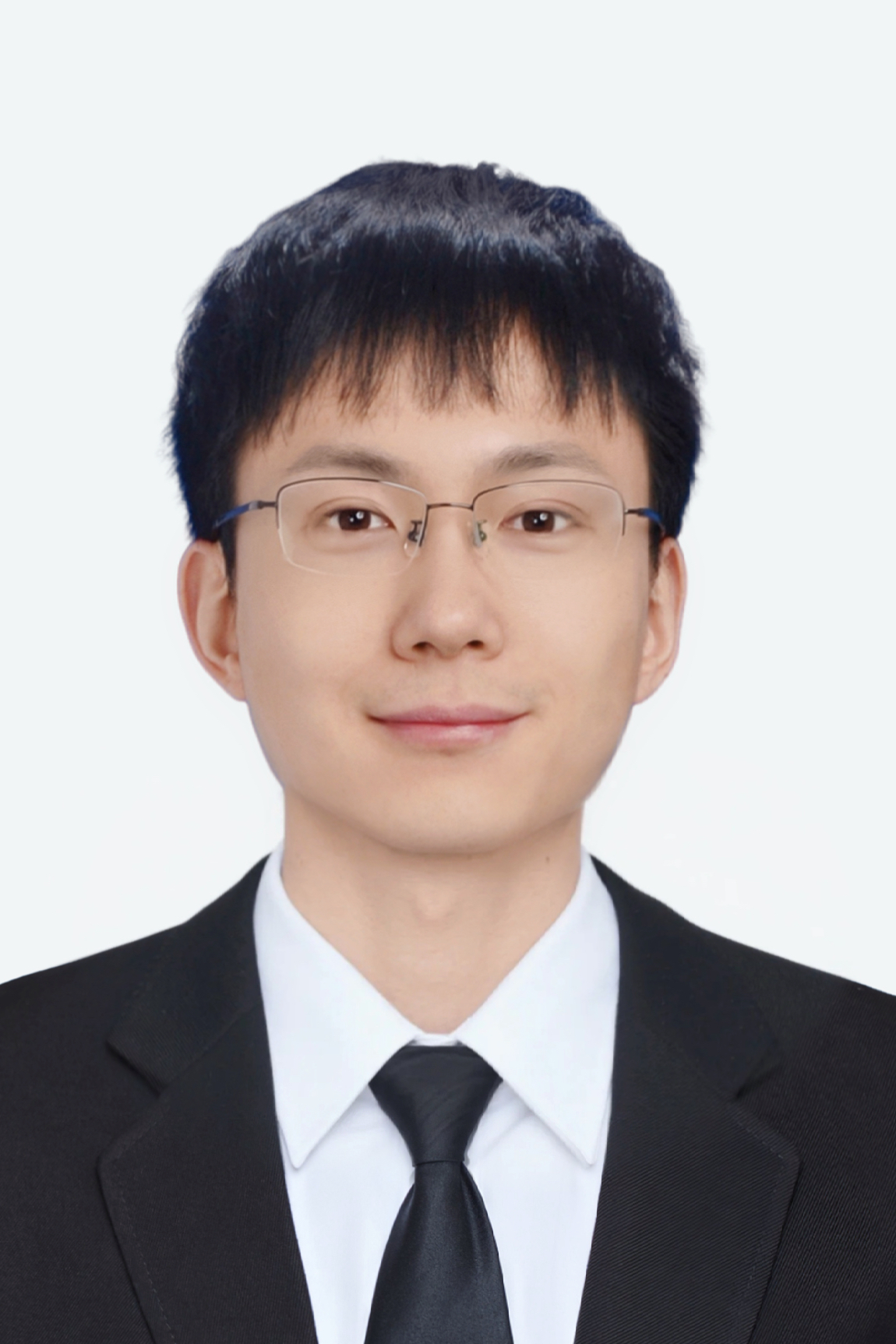 Te Han (韩特)合作论文数School of Management and Economics, Beijing Institute of Technology1Menglei Liu合作论文数1
 Xin Li合作论文数1
 Liangqi Wan合作论文数1Fangjie Guo合作论文数1
 Jianjun Qiu合作论文数1
 Xiulan Sun (孙秀兰)合作论文数School of Food Science and Technology, Jiangnan University1
 Xiao-Jun Wu (吴小俊)合作论文数School of Artificial Intelligence and Computer Science, Jiangnan University;Institute of Science and Technology, Jiangnan University1




