Regan Syrup has the effect of clearing heat, releasing exterior, benefiting pharynx and relieving cough, and previous phase Ⅱ clinical trial showed that the efficacy of Regan Syrup high-dose and low-dose groups was better than that of the placebo group, and there was no statistically significant difference in the safety between the three groups. The present study was conducted to further investigate the efficacy and safety of the recommended dose(20 mL) of Regan Syrup in the treatment of common cold(wind-heat syndrome). Patients who met the inclusion and exclusion criteria were selected and divided into the test group(Regan Syrup+Shufeng Jiedu Capsules placebo), positive drug group(Regan Syrup placebo+Shufeng Jiedu Capsules) and placebo group(Regan Syrup placebo+Shufeng Jiedu Capsules placebo) at a 1∶1∶1 using a block randomization method. The course of treatment was 3 days. A total of 119 subjects were included from six study centers, 39 in the test group, 40 in the positive drug group and 40 in the placebo group. The onset time of antipyretic effect was shorter in the test group than in the placebo group(P≤0.01) and the positive drug group, but the difference between the test group and the positive drug group was not significant. The test group was superior to the positive drug group in terms of fever resolution(P<0.05), and had a shorter onset time of fever resolution than the placebo group, but without obvious difference between the two groups. Compared to the positive drug group, the test group had shortened disappearance time of all symptoms(P≤0.000 1). In addition, the test group was better than the positive drug group and the placebo group in relieving symptoms of sore throat and fever(P<0.05), and in terms of clinical efficacy, the recovery rate of common cold(wind-heat syndrome) was improved in the test group compared to that in the placebo group(P<0.05). On the fourth day after treatment, the total TCM syndrome score in both test group and positive drug group was lower than that in the placebo group(P<0.05). There was no significant difference in the incidence of adverse events between three groups and none of them experienced any serious adverse events related to the study drug. The results indicated that Regan Syrup could shorten the onset time of antipyretic effect, reduce the time of fever resolution, alleviate the symptoms such as sore throat and fever caused by wind-heat cold, reduce the total score of Chinese medicine symptoms, and improve the clinical recovery rate with good safety.
Objective To evaluate the efficacy and safety of yinqiao qingre tablet in treating common cold with wind-heat type. Methods The randomized, double-blind, placebo, parallel control research were applied to this study. The eligible subjects were divided into a experimental group, a positive control group and a placebo control group. The test drug was yinqiao qingre tablet, positive control drug was yinqiao jiedu tablet, and simulation drugs were yinqiao qingre simulation tablet and yinqiao jiedu simulation tablet. The experimental group was given yinqiao qingre tablet and yinqiao jiedu simulation tablet, the positive control group was given yinqiao qingre simulation tablet and yinqiao jiedu tablet, and the placebo control group was given yinqiao qingre simulation tablet and yinqiao jiedu simulation tablet. The course of treatment for each group was 3 days. Before and after treatment, the disappearance rate of major symptoms, individual symptom scores, efficacy of TCM syndrome, change of temperature, used of antipyretic analgesics and safety were evaluated. Results The disappearance rate of major symptoms was 62.12% in experimental group, was the highest among three groups(P<0.01). After treatment, individual symptom scores of the three groups all descended(P<0.01). In experimental group, the individual symptom scores decreased the most, and the disappearance rate was the highest(P<0.01).The efficacy rate of TCM syndrome was 94.99%, TCM efficacy rate of experimental group was the highest among three groups(P<0.01). Temperature of three groups all descended. In experimental group, the beginning drop time was 8 hours and the returning normal time was 20 hours, experimental group was was shortest among three groups(P<0.01). The use rate of antipyretic analgesics was 0.28% in experimental group,and was the least among three groups(P<0.01). There were no serious adverse events and reactions in the three groups. Conclusion Yinqiao qingre tablet has satisfactory effects and safety on common cold with wind-heat type.
目的 观察银杏内酯注射液治疗缺血性脑卒中的疗效,并观察银杏内酯注射液在控制相关危险因素方面的治疗特点.方法 选择缺血性脑卒中患者3 036例进行非对照、开放式、多中心临床研究,在基础治疗上使用银杏内酯注射液10 mL/次,0.9%氯化钠注射液或5%葡萄糖注射液250 mL稀释,静脉滴注,每天1次,连续使用14d.采用美国国立卫生研究院卒中量表(NIHSS)观察神经功能缺损程度,采用改良Rankin量表观察患者日常生活能力状态(病残程度),评价临床疗效.并观察患者合并高血压病、糖尿病、高血脂症和高尿酸血症4种危险因素在神经功能、病残程度和临床疗效的差异.结果 银杏内酯注射液能明显改善患者的神经功能(P<0.01),减轻病残程度(P<0.01),临床总有效率为65.72%;其中不合并4种危险因素的脑卒中患者的临床治疗总有效率为71.9%;合并高脂血症、高尿酸血症、糖尿病脑卒中患者的临床治疗总有效率分别为74.74%、75.00%、70.05%,与不合并危险因素组临床有效率基本一致;合并高血压、3种疾病和4种疾病的临床疗效相对较差,有效率分别是63.36%、42.86%和59.42%,与其他组比较有显著性差异(P<0.01).结论 银杏内酯注射液治疗缺血性脑卒中具有较好疗效,其在控制缺血性脑卒中患者的危险因素上具有良好的治疗特点.
Background Postinfectious cough (PIC) is a common condition that affects millions of people worldwide every year. There is Western medicine for this condition but the treatment effect is often incomplete. Traditional Chinese medicine (TCM) has been increasingly prescribed for patients with PIC. Preliminary trials on Qing-Feng-Gan-Ke-Granules (QFGKG) conveyed promising results in treating PIC. This protocol describes an ongoing phase III randomized controlled clinical trial, designed according to a novel methodology of “one study, one primary outcome”, with the objective of evaluating the efficacy and safety of QFGKG in patients suffering from PIC. Methods/Design This is a multicenter, phase III, randomized, double-blind, parallel-group, placebo-controlled clinical trial, comprising two simultaneously conducted study parts, part A and part B, intending to investigate two primary outcomes, i.e. time to cough resolution and cough symptom score, respectively. A total of 480 patients, aged 18 to 65 years, who complain of an ongoing persistent cough that has been lasting ≥3 weeks, will be recruited from six participating sites and then randomized to receive QFGKG 12.0 g twice daily or placebo 12.0 g twice daily. Each part will enroll 240 patients, with 180 patients being allocated to the QFGKG group and 60 to the placebo group. Discussion Although traditional Chinese medicine is a structured intervention that has shown some promise in treating persistent cough, existing unconvincing evidence has noted limitations. This is a rare well-designed and rigorously-controlled, randomized, double-blind trial to evaluate the effects and safety of a Chinese herbal medicine in patients with postinfectious cough, providing tangible benefits for clinical research. Results of this trial are inclined to be conjectured as more truthful by implementing separate study parts that specifically estimate exclusive primary outcome. It will not only provide robust clinical evidence on the efficacy and safety of QFGKG for postinfectious cough, but will also provide a critical piece of information on the availability and superiority of a novel methodology for future clinical trials. The current trial is ongoing with recruitment of the predetermined number of patients being in progress. Trial registration The two parts of this trial were separately registered with the Chinese Clinical Trial Registry: ChiCTR-TRC-13003278 (part A); and ChiCTR-TRC-13003337 (part B).
OBJECTIVE To assess the effect and safety of Jinhua Qinggan Granule (JHG) in treating influenza patients of wind-heat affecting Fei syndrome (WHAFS). METHODS Totally 136 influenza patients of WHAFS were randomized by stratification into 3 groups, the high dose JHG group (44 cases, 10 g each time), the low dose JHG group (45 cases, 5 g JHG + 5 g placebo each time), and the placebo control group (47 cases, 10 g placebo each time). All medication was administered three times daily for 5 days. The fever disappearance time, the fever disappearance rate, efficacy of TCM syndrome, the disappearance rate of main symptoms and physical signs of flu, the negative rate of virus nucleic acid in the pharyngeal secretion, and safety indicators were assessed. RESULTS The median fever disappearance time was 32.8 h (95% CI: 22.5-41.0 h) in the high dose JHG group, 26.0 h (95% CI: 14.5-36.5 h) in the low dose JHG group, 39.5 h (95% CI: 29.0-46.0 h) in the placebo control group. There was statistical difference in the median fever disappearance time between the low dose JHG group and the placebo control group (P = 0.011). Three days after treatment, the markedly effective rate of TCM symptoms in the low dose JHG group was 66.7%, higher than that of the placebo control group (38.3%), and its effective rate was superior to that of the high dose JHG group (P = 0.043). Five days after treatment, the recovery rate of the low dose JHG group (42.2%) was higher than that of the high dose JHG group (25.0%, P = 0.026) and that of the placebo control group (14.9%, P = 0.002). The markedly effective rate of the low dose JHG group (86.7%) was higher than that of the placebo control group (55.3%, P = 0.001). Similar effects were obtained in the low dose JHG group and the high dose JHG group, but slightly poor in partial indicators of the high dose JHG group. There was no statistical difference in adverse reaction among these three groups (P > 0.05). CONCLUSIONS JHG was effective and safe in treating influenza patients of WHAFS. Routinely low dose was the optimal dosage of JHG.
Cold,cold combined with dampness or excess cold were the common reasons of cough induced by exogenous pathogen in summer.Dispelling and promoting the circulation of QI was the main therapeutic principle and method in treating this kind of cough.This article illustrated the therapeutic mechanism and the experiences of cough induced by the exogenous pathogen in summer by modified prescription based on ancient prescription of Xing Su Powder.
Objective To discuss the curative effect of Xianling Gubao capsule in treating osteoporosis.Methods 83 patients with osteoporosis were randomly divided into two groups.Cases in the treatment group(n=41) were treated by Xianling Gubao capsule.And patients in the control group(n=42) received Gushukang.The course was six weeks in two groups.BMD of lumbar(L2~4) and collum femoris of patients,Ca,P and ALP in blood were detected before and after treatment for evaluation of effect.Results The total effective rate in treatment group(95.1%) was superior to that in control group(71.4%,P<0.05).BMD of lumbar after treatment was superior to that before treatment in treatment group(P<0.05).And BMD of lumbar in treatment group was superior to that in control group after treatment(P<0.05).There was no significant difference in calcium,phosphorus,and alkaline phosphatase between two groups after treatment,but the alkaline phosphatase in treatment group decreased significantly during treatment(P<0.05).Conclusion Xianling Gubao capsule is effective drug in treating osteoporosis.
脑卒中是致死率和致残率很高的疾病,是目前人类疾病三大死亡原因之一,重度致残率可达40%.随着人口的老龄化,脑卒中的问题将日益严重,社会和经济将不堪重负.寻求有效方法以降低其死亡率和重度致残率意义重大.20世纪90年代以来,溶栓治疗、卒中单元和卒中病房使缺血性卒中治疗模式发生了划时代的改变. 但这都有一个前提,即保证患者在溶栓时间窗内到医院并开始治疗.因此尽早识别脑卒中并使需要溶栓者在时间窗内得到最佳治疗已成为一个不仅是神经科、内科和急诊科,也是整个医疗系统和全社会的重要课题.
OBJECTIVE To evaluate the safety and efficacy of andrographolide drop-pill in treatment of acute upper respiratory tract infection with external wind-heat syndrome. METHODS A multicenter, randomized controlled trial was conducted. In phase I, 202 patients with acute upper respiratory tract infection were randomly divided into two groups: trial group (n=101) and control group (n=101). In phase II, 276 patients with acute upper respiratory tract infection were randomly divided into two groups: trial group (n=138) and control group (n=138). The patients in the trial group received andrographolide drop-pill, at a dose of 1.5 g, three times a day; the patients in the control group received andrographolide tablet, at a dose of 1.5 g, three times a day. The therapeutic courses in both groups were 3 days. Clinical symptoms, physical signs, adverse effects, blood, urine and stool tests, hepatorenal function and electrocardiogram were examined before and after the treatment. RESULTS After treatment in the phase I, the cure rates in the trial group and the control group were 44.55%, 42.57% (full analysis set, FAS) and 45.00%, 43.00% (per protocol set, PPS), and the total obvious rates were 94.06%, 94.06% (FAS) and 95.00%, 95.00% (PPS), respectively. There were no significant differences between the two groups (P>0.05). In the phase II, the cure rates in the trial group and the control group were 39.13%, 33.82% (FAS) and 38.69%, 33.58% (PPS), and the total obvious rates were 96.38%, 96.32% (FAS) and 96.36%, 96.27% (PPS), respectively. There were no significant differences between the two groups (P>0.05) too. No adverse effects were found in the trial. CONCLUSION Andrographolide drop-pill is effective and safe in the treatment of acute upper respiratory tract infection with external wind-heat syndrome.
1临床资料 患者赵某,男,43岁,主因发热10 d,热退后动则心悸、喘憋,于2003年5月27日下午3点30分由咸水沽医院转入海河医院五病区.
笔者受孙震寰所著《针灸心悟》"八种刺术”的启发,以散刺治疗婴儿胸锁乳突肌血肿36例,观察如下: 1 一般资料 36例中,男20例,女16例;年龄1个月~73天,其中电吸产7例,产钳产8例,剖腹产5例,臂位产9例(其中2例伴脐带绕颈),头位难产3例,头位顺产4例.36例中2例为早产儿.出生体重为2.2~4.5公斤.发现肿物日期为出生后13~22天.肿物大小为4cm×4cm×1.8cm~2.5cm×2cm×1.5cm.柔软者14例,中等硬度者13例,硬韧者9例;颈部活动受限者4例.
 Bing Mao (毛兵)合作论文数West China Hospital of Sichuan University2
 Qingquan Liu (刘清泉)合作论文数Beijing Hospital of Traditional Chinese Medicine, Capital Medical University2
 Baohe Wang (王保和)合作论文数天津中医药临床评价研究所;天津中医药大学第二附属医院2
 Ruiming Zhang (张瑞明)合作论文数West China Hospital of Sichuan University2
 HU Yimin (胡薏敏)合作论文数1CHEN Ye-yang (陈叶洋)合作论文数1qinhua fan (樊钦华)合作论文数1L. Wang合作论文数1zhitao tu (屠志涛)合作论文数1Wenquan SU (苏文全)合作论文数1Yu-ping YANG (杨玉萍)合作论文数1Yongxin TANG (唐永鑫)合作论文数1Chun HE (何纯)合作论文数1Hui DONG (董辉)合作论文数1Huiqin LI (李慧琴)合作论文数1XU Qiang (徐强)合作论文数1ZongMing Zhang (张宗铭)合作论文数1XuKai Wang (王旭凯)合作论文数1LiangJi Liu (刘良徛)合作论文数1Tan Wang (王檀)合作论文数1XinQiao Liu (刘新桥)合作论文数1KeHua Shi (石克华)合作论文数1NiNi Qu (曲妮妮)合作论文数1Nan Lv (吕楠)合作论文数1Jing Chang (常静)合作论文数1Ting Zhao (赵婷)合作论文数1
 Jing Zhao (赵静)合作论文数1
 Zhenqiang Guo (郭振强)合作论文数天津中医药大学第二附属医院康复医学科1
 Weiwei An (安伟伟)合作论文数Second Affiliated Hospital of Tianjin University of TCM1
 Yeqing Zhang (张业清)合作论文数南京中医药大学第三临床医学院(江苏省中西医结合医院)1
 Hongli Jiang (蒋红丽)合作论文数West China Hospital of Sichuan University1
 Hongyan Cai (蔡鸿彦)合作论文数吉林省中医药科学院1
 Baolin Wei (魏葆琳)合作论文数The Second Affiliated Hospital of Tianjin University of Traditional Chinese Medicine1
 Zengtao Sun (孙增涛)合作论文数Tianjin University of Traditional Chinese Medicine;The Second Affiliated Hospital of Tianjin University of Traditional Chinese Medicine1
 Guoqin Li (李国勤)合作论文数Guang'anmen Hospital, China Academy of Chinese Medical Sciences1
 Qing Miao (苗青)合作论文数Xiyuan Hospital of China Academy of Chinese Medical Sciences1
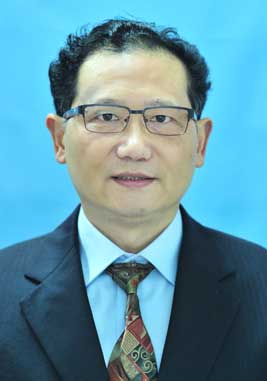 Zhibin Chen (陈志斌)合作论文数福建省中医药研究院1
 Bangjiang Fang (方邦江)合作论文数Longhua Hospital, Shanghai University of Traditional Chinese Medicine1
 Liangli Liu (刘良丽)合作论文数Guizhou University of Traditional Chinese Medicine1
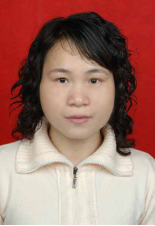 Yingchun He (何迎春)合作论文数Graduate School, Hunan University of Chinese Medicine;Medical school, Hunan University of Chinese Medicine1Liu Wei合作论文数1
 Ying Wang (王英)合作论文数1Zhuting Li (李竹庭)合作论文数1
 Huiqing Yuan (苑惠清)合作论文数北京中医医院呼吸科1
 Lishan Zhang (张立山)合作论文数Dongzhimen Hospital, Beijing University of Chinese Medicine1
 Tingqian Li (李廷谦)合作论文数West China Medical Center, Sichuan University1
 Yongyan Wang (王永炎)合作论文数Institute of Basic Research in Clinical Medicine, China Academy of Chinese Medical Sciences;China Central Institute for Culture and History1
 Jiangbin Li (厉将斌)合作论文数Dongzhimen Hospital, Beijing University of Chinese Medicine1
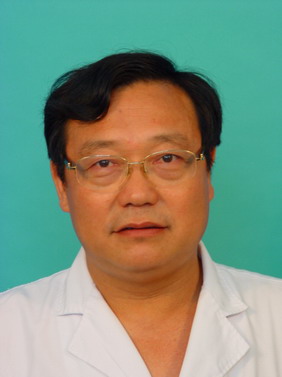 Xudong Xiong (熊旭东)合作论文数 Department of fever out-patient,the shuguang hospital of TCM ,China1




