Object detection in aerial images faces problems such as small and dense objects as well as occlusion. Existing methods usually adopt a fusion structure similar to a feature pyramid network (FPN-like), which introduces a small number of parameters but has a low detection accuracy. Therefore, to effectively balance the parameters of the model and the detection accuracy, this paper proposes a multi-scale feature fusion with knowledge distillation for object detection in aerial imagery (MFF-KD), which comprises a multi-scale feature fusion (MFF) network and channel and spatial attention knowledge distillation (CSAKD). First, we design a scale-aware feature fusion module (SAFFNet) in the MFF network, which is capable of reducing the model complexity while preserving more features of small objects. Secondly, we design an efficient multi-scale self-attention module (EMSA) that is integrated into the deep feature extraction process of the MFF network to capture continuous features of occluded objects. Finally, we propose a CSAKD knowledge distillation method, which enhances both foreground and effective background information in the student model, thereby improving the detection accuracy of the MFF network while controlling the growth of model parameters. We conducted extensive experiments on three publicly available aerial image datasets to validate the effectiveness of our method. The experimental results show that our method achieves good detection results on all three aerial image datasets. In addition, the parameter count of our method is 10.5M, and the real-time detection speed is 111 frames per second (FPS).
Real-time object detection in aerial images is challenging, primarily due to small and densely packed objects, accompanied by significant scale variations. Previous methods have addressed these issues by employing fusion structures similar to feature pyramid networks. However, these fusion structures overlook the complementary relationship between feature information from non-adjacent layers. To tackle this, we propose a global attention cross-layer feature fusion network (GACFNet). Firstly, we design a global attention cross-layer feature fusion (GACF) module, which obtains global information by fusing features at different scales, using the attention mechanism to highlight foreground information in the global feature map. Additionally, we connect the global attention feature map with other layers to establish correlations between non-adjacent layers. Secondly, a large-kernel separable pooling pyramid fusion (LKSPPF) module is proposed to capture a wider receptive field and enhance context information. Thirdly, to better preserve small object information in low-resolution feature maps, we improve the cross-stage partial fusion module (C2f) of the baseline using a deformable convolution technique (DCNv2). Finally, we design a hybrid regression function (NGIoU loss) to improve object localization and sample allocation in aerial images while accelerating model convergence. Extensive experiments were conducted on three publicly available aerial image datasets. The experimental results show that the method significantly improves the accuracy of object detection in aerial images. The average precision (AP50) of the three datasets reaches 52.7%, 81.8%, and 33.0%, respectively, while a real-time performance of 69.9 frames per second is achieved. The code will be available online https://github.com/JSJ515-Group/GACFNet/.
In recent years, Siamese-based trackers have achieved promising results in visual object tracking. However, the feature extraction capability of current popular Siamese-like networks is limited, making it difficult to fully distinguish the object from the background. Trackers are susceptible to drifting caused by factors such as occlusion, scale variation, and fast motion. In this paper, we propose a novel tracker, dubbed Siamese network with asymmetric target-aware and task-aware (SiamATA). The network is based on the asymmetric structure of the classification-regression branches, including the template classification branch, template regression branch, search region classification branch, and search region regression branch, to alleviate overfitting. Meanwhile, a target-aware attention module is introduced to learn powerful context information through spatial attention and selectively emphasize dependency channel features through channel attention, providing target-aware semantic features for each branch. In addition, we adopt the nonlocal pixel-wise correlation method to suppress the influence of similar object interference. Finally, we design a frequency domain task-aware attention module to explore the self-semantic information of classification and regression branches. Extensive experiments demonstrate the effectiveness of our tracker on six benchmarks: OTB100, UAV123, VOT2018, VOT2019, GOT-10K, and LaSOT.
In federated learning, resource-constrained clients face significant challenges in personalizing models when dealing with non-IID data, and plaintext communication leads to parameter privacy leakage. Previous methods have not achieved a good balance between local computational costs, model privacy, and parallel training, and they have not considered the scenario where the aggregation server is untrusted. To address these issues, we propose a privacy-preserving three-phase federated learning framework with dynamic aggregation weights under untrusted servers. We introduce a dynamic model aggregation weight method that updates aggregation weights from the historical models of different participants and the federated learning model. This method is suitable for non-IID data environments. Additionally, in the back model aggregation stage, we incorporated homomorphic encryption to protect the privacy of model parameters. This dynamic update of weights combined with privacy-preserving encryption satisfies the requirements of untrusted server settings, thereby reducing the risk of privacy breaches from server collusion. We conducted extensive experiments on seven datasets to validate our approach. The results show that our method achieves optimal model accuracy across multiple datasets and settings. It improves model performance compared to traditional methods. Our code is available at https://github.com/JSJ515-Group/FSL-DAHE .
Unsupervised domain adaptation (UDA) aims to extract domain-invariant features. Existing UDA methods mainly utilize a convolutional neural network (CNN) or vision transformer (ViT) as feature extractor, which align in the latent space that characterizes single view of the object and may lead to matching error—the distributions aligned in the CNN space may still be confused in the ViT space. To address this, we introduce global–local bi-alignment (GLBA) based on a hybrid structure Conformer, which enforces simultaneous alignment in both spaces, following the space-independent assumption: If two domains have the same distribution, their distributions in any latent space are aligned. The framework can be easily combined with previous UDA methods, essentially adding only an alignment loss without the need for elaborate structures or large numbers of parameters. Experiments demonstrate the effectiveness of GLBA and its state-of-the-art (SoTA) performance achieved with comparable parameter complexity. Code is available at https://github.com/JSJ515-Group/GLBA .
Distillation (OKD) has emerged as a powerful technique for model compression, eliminating the need for pre-trained teachers in traditional methods. While recent advancements in feature fusion have further improved OKD's capabilities, existing approaches solely focus on final-layer fusion, potentially hindering the effectiveness of the fused classifier. In this work, we propose a novel Auxiliary and Embedded Teacher (AET) approach to tackle these challenges. AET addresses the critical issues of feature fusion position selection and potential performance degradation after fusion. We introduce embedded teachers, formed by combining multiple mid-level sub-networks, to promote mutual learning among student networks. Additionally, auxiliary teachers provide enriched information and guide the fusion classifier, ultimately enhancing overall performance. Extensive evaluations on four benchmark datasets (CIFAR-10/100, CINIC-10, and ImageNet2012) demonstrate the superiority of the proposed AET approach. Code is available: https://github.com/JSJ515-Group/AET
Knowledge distillation is a technique that aims to distill the knowledge from a large well-trained teacher model to a lightweight student model. In recent years, multi-teacher knowledge distillation has received widespread attention, exploring diverse knowledge sources from multiple teachers to provide students with more comprehensive guidance. However, existing multi-teacher distillation methods usually use a single aggregation strategy, ignoring the disparities among different types of knowledge. In addition, they usually set the temperature to a fixed value, ignoring the effect of temperature on multi-teacher knowledge distillation. To address these issues, we propose adaptive temperature guided multi-teacher knowledge distillation (ATMKD), which uses adaptive temperature and diverse aggregation strategy to improve distillation performance. Specifically, we internally leverage dynamic and learnable temperature to adaptively control the difficulty level of multi-teacher knowledge. Externally, the diverse aggregation strategy is used to fuse rich knowledge from multiple teachers. Optimizing the teacher output at both internal and external levels can provide more comprehensive guidance for the student model and achieve better distillation performance. The extensive experiments with various teacher and student architectures on multiple benchmark datasets show that the proposed approach outperforms other knowledge distillation methods. The code is available at https://github.com/JSJ515-Group/ATMKD .
Weakly Supervised Semantic Segmentation is a crucial task in computer vision. However, existing methods that utilize Class Activation Maps (CAMs) with classification tasks can only identify a small part of the region. To address this limitation, we propose a novel Attention Activation Remodulation (AAR) scheme that leverages traditional CAMs and the remodulation branch to obtain weighted CAMs for recalibrated supervision. The AAR scheme re-arranges important features’ distribution from the channel and space perspectives, which regulates segmentation-oriented activation responses. In addition, we propose a Feature Pixel Extraction Module (FPEM) that utilizes contextual information to improve pixel prediction. Furthermore, the proposed scheme can be combined with other methods to improve overall performance. Extensive experiments on the PASCAL VOC 2012 dataset demonstrate the effectiveness of the AAR mechanism and FPEM module.
Marginal fisher analysis is an effective feature extraction algorithm for face recognition, but the algorithm is sensitive to the influence of the neighbourhood parameter setting, and does not have the function of feature selection. In order to solve the above problems, this paper proposes a parameter-free marginal discriminant analysis based on L-2,L-1-norm regularisation (PFMDA/L-2,L-1). The algorithm calculates the weights using the cosine distance between samples and dynamically determines neighbours of each data point so that it does not set any parameters. In order to enable both feature extraction and feature selection to proceed simultaneously, two optimisation models with the L-2,L-1-norm constraint are presented and then the complete solution for PFMDA/L-2,L-1 is given. The experimental results on the ORL, YaleB and AR face databases show that the proposed method is feasible and effective.
Despite Siamese-based trackers have achieved great success in recent years, researchers have focused more on the accuracy of trackers than their complexity, which leads to their inapplicability in some scenarios, and the real-time speed can be greatly limited. In this work, we propose a lightweight network method called SiamLight for object tracking. MobileNet-V3 is selected as the backbone network. The PG-corr module is added as the feature fusion module, a strategy that decomposes the template feature into spatial and channel kernels, reducing the matching regions and suppressing the effect of similar interference. In addition, we also add the CSM module, which carries out attention to the channel and spatial simultaneously. CSM module not only reduces the number of parameters but also ensures that it can be integrated into existing network architectures as a plug-and-play module. Finally, multiple separable convolution blocks are added to the classification and regression branches to meet our lightweight parameters and Flops requirements. The experiments on LaSOT, VOT2018, VOT2019, OTB100, and UAV123 benchmarks show that the method has fewer Flops and parameters than state-of-the-art trackers.
Model distillation is an effective way to let a less-parameterized student model learn the knowledge of a large teacher model. It requires a well-trained and high-performance model in advance, which limits the application of the deep model in some multimedia devices. However, the powerful teacher is not always available. Given this, some researchers propose a strategy of learning from each student model to replace the traditional teacher–student learning paradigm. Although this way has achieved good results recently, the simple mutual learning between student networks is easy to reach saturation earlier. In this work, we propose a smarter mutual learning method called Smarter Peer Learning (SPL) for online knowledge distillation, which puts forward a weight evaluation mechanism to build a virtual teacher and a novel online distillation framework. The ensemble teacher is constructed by combining the output of student networks through the calculated weight so that students will learn more from the better performance peers in the next stage of the learning. The experiments show that our SPL can train more efficient students than some existing advanced methods by applying various backbone networks to CIFAR-10, CIFAR-100, and Tiny-ImageNet datasets.
An improved SSD objection detection algorithm is proposed in this paper to address the low detection accuracy of small targets when applied to objection detection tasks. The ResNet50 network is used in the algorithm as the feature extraction network and a feature fusion module and an attention module are added to improve the detection capability of the model. Through the feature fusion module, a new feature layer with more discriminative ability than that with the original single feature layer is obtained to extract the details of the image more effectively. Through the attention module, the channels in the feature map are weighted to make the model focus more easily on the important information in the effective feature layer and suppress the attention to the useless information such as background. The experiments show that the algorithm has a mAP of 81.2% on the PASCAL VOC dataset, and the detection capability is improved compared to the traditional SSD algorithm.
Marginal Fisher analysis (MFA) maintains the nearest neighbor structure according to the class information of samples, so it achieves good recognition results for image recognition task. However, MFA needs to manually determine the number of nearest neighbor samples and simply sets the weight value of nearest neighbor samples to one. Furthermore, MFA only considers the local information and often encounters the small sample size problems while dealing with image recognition. Therefore, based on MFA and collaborative representation (CR), we introduce a new method, called a complete joint global and local collaborative marginal fisher analysis (CJGLCMFA). CJGLCMFA defines inter-class collaborative weighted matrix and intra-class collaborative weighted matrix based on CR and class label information, which is able to automatically construct the weighted matrices and avoid manually choosing nearest neighbors. In order to further enhance the algorithm, the objective function considers both local and global information of samples and then the complete solution for CJGLCMFA is given to solve the small sample size problem. Extensive experiments on some benchmark datasets show that CJGLCMFA is feasible and practicable, and the best recognition result of CJGLCMFA is 98.62%. Compared with other algorithms, the best improvement is 2.44% higher than the other best recognition results.
目前指纹识别技术具有很广泛的应用,但通常指纹图像含有混合噪声,而传统小波阈值去噪算法对含有混合噪声的图像去噪时,存在混合噪声去除不彻底的问题,为此提出了一种改进的自适应阈值和连续型低误差阈值函数的小波去噪算法.首先,算法对含有混合噪声的指纹图像进行一次中值滤波去噪.然后,设计了一种新的自适应阈值,小波分解层数越大新阈值就会越小,就能更好地体现噪声信号在进行小波分解时减小的特征.最后,设计了连续型低误差改进阈值函数,改进的函数是连续的,并且阈值达到极限时误差为0.改进后的算法使得估计的小波系数更加接近真实系数,重构后的图像更接近原始图像.实验结果表明,该算法对含有高斯噪声和椒盐噪声的指纹图像处理时,相比于其他算法,得到了更好的峰值信噪比和均方误差数值,去噪后的指纹图像纹理显示更加清晰.
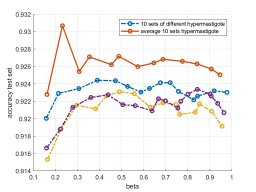
为了解决传统软、硬阈值算法去噪过程中出现的边缘模糊和视觉失真等问题,提出了一种新的小波去噪算法.首先,在阈值选择时,为了抑制信号长度对阈值选取的影响,把通用阈值和最大似然比按照一定比例结合,可根据图像的噪声构造出更加合理的阈值;然后,阈值函数里加入了调节系数β,使新的函数拥有更好的连续性和更低的误差.仿真实验表明,该算法是有效的,可行的,去噪后的图像相比于其他三种经典算法拥有更高的信噪比和更低的均方误差,能更好的去除图像中的噪声.
角点是用来表示图像的重要特征,角点检测经常是复杂图像计算的第一步,所以对角点检测准确性的要求非常高.因此,提出一种改进的SUSAN角点检测算法,在进行Canny边缘检测后,对检测到的边缘像素点进行SUSAN角点检测,再使用欧氏距离使检测的角点更加准确.实验证明,基于Canny边缘检测的SUSAN角点检测算法相比经典的Harris角点检测算法与SUSAN角点检测算法在准确率上有了明显的提升.
针对数字媒体技术专业在工程教育认证大环境下的专业评估问题,分析数字媒体技术专业人才培养和建设要素,提出具有数字媒体技术人才培养特色的专业培养建设方案,结合工程教育认证相关要求,给出相应的数字媒体技术专业评估综合评价指标体系.对数字媒体技术专业进行评估量化,为进行数字媒体技术专业评估提供借鉴和可操作性措施.
Constrained maximum variance mapping (CMVM) is one promising feature extraction technique for face recognition. However, CMVM suffers from the well-known small sample size (SSS) problem, where the number of samples is less than the dimension of samples. In this paper, a novel supervised feature extraction method, called two-dimensional orthogonal constrained maximum variance mapping (2DOCMVM), is proposed. The proposed 2DOCMVM can address the SSS problem since it preserves the original image matrix and then avoids the high-dimensional image vector. In order to further improve the performance of 2DOCMVM, the optimal orthogonal projection matrix is computed using Gram–Schmidt orthogonalization. Experiments on YALE database show that 2DOCMVM outperforms than CMVM and other orthogonal methods.
为了增强交通图像的清晰度和减少噪声对图像的影响,提出一种融合多尺度Retinex和非下采样Contourlet的图像增强算法,以提高图像的清晰度.首先采用NSCT按照不同频率对图像进行解析,会出现一个低频和多个高频分量;在低频率的分量上用多尺度Retinex的混合灰度函数进行增强;在高频上使用非线性增益函数进行自适应增强,从而提高图像的对比度.
为了充分利用样本的类别信息,提取出更加有效的分类特征,提出一种基于类内子空间学习的局部线性嵌入算法.该算法首先获取类内离散矩阵的子空间,然后采用类内子空间构成类间离散矩阵;为了进一步增强算法的性能,使用了结合最大边界准则与局部线性嵌入算法的目标函数.最后在人脸数据库上的实验结果表明,同其他算法相比,ISL/LLE算法具有更好的识别性能.
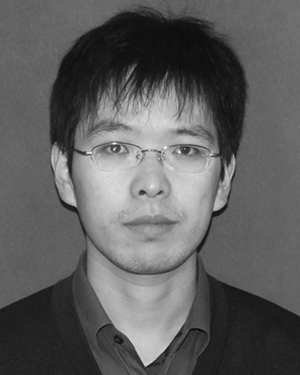 Xingzhu Liang合作论文数48
 Jingzhao Li (李敬兆)合作论文数安徽理工大学电气与信息工程学院12
 Guochang Gu合作论文数9Yurong Lin (林玉荣)合作论文数8
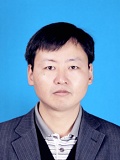 Guangyu Xu (许光宇)合作论文数安徽理工大学计算机科学与技术系8
 Jing Shen (沈晶)合作论文数College of Computer Science and Technology, Harbin Engineering University6
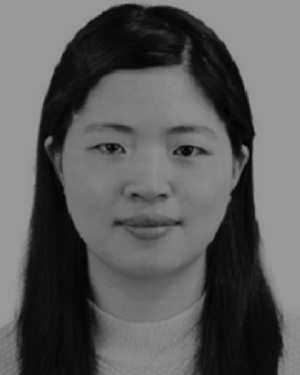 Huaping Zhou合作论文数3Feng-rui ZHU (朱逢锐)合作论文数3
 Haibo Liu (刘海波)合作论文数College of Computer Science and Technology, Harbin Engineering University3
 Xianjin Fang (方贤进)合作论文数安徽理工大学计算机科学与工程学院3
 Xinyun Yan合作论文数2Mengfan Li合作论文数2SUN Ranran (孙然然)合作论文数2
 Chenxing Xia (夏晨星)合作论文数School of Computer Science and Engineering, Anhui Unviersity of Science & Technology2Cheng-jin WANG (王程锦)合作论文数2Jingyi CHEN (陈静逸)合作论文数2
 Shunxiang Zhang (张顺香)合作论文数安徽理工大学计算机科学与工程学院2
 Qiang Wang (王强)合作论文数School of Astronautics, Harbin Institute of Technology;Department of Control Science and Engineering, Harbin Institute of Technology2
 Yongcun Guo (郭永存)合作论文数School of Mechanical Engineering,Anhui University of Science and Technology2H L Liu合作论文数1Zhiyuan Ren合作论文数1Lu Kui合作论文数1Chao XU (徐超)合作论文数1Hu, Gan (胡干)合作论文数1
 Chunjiong Zhang合作论文数Tongji Univ, Coll Elect & Informat Engn, Shanghai 201804, Peoples R China1SHI Wen-bing (石文兵)合作论文数1ShuZhi Su (苏树智)合作论文数1XiuYou Wang (王秀友)合作论文数1Yu Zhang (张玉)合作论文数1
 Qinhui Zhang (张钦辉)合作论文数College of Chemical Engineering, China University of Petroleum1XiHe Zhen (甄西合)合作论文数北京玻璃研究院1
 Jing Zhao (赵靖)合作论文数School of Software, Dalian University of Technology1
 Gao-Ming Yang合作论文数1




