Cloud services have been widely employed in IT industry and scientific research. By using Cloud services users can move computing tasks and data away from local computers to remote datacenters. By accessing Internet-based services over lightweight and mobile devices, users deploy diversified Cloud applications on powerful machines. The key drivers towards this paradigm for the scientific computing field include the substantial computing capacity, on-demand provisioning and cross-platform interoperability. To fully harness the Cloud services for scientific computing, however, we need to design an application-specific platform to help the users efficiently migrate their applications. In this, we propose a Cloud service platform for symbolic-numeric computation - SNC. SNC allows the Cloud users to describe tasks as symbolic expressions through C/C++, Python, Java APIs and SNC script. Just-In-Time (JIT) compilation through using LLVM/JVM is used to compile the user code to the machine code. We implemented the SNC design and tested a wide range of symbolic-numeric computation applications (including nonlinear minimization, Monte Carlo integration, finite element assembly and multibody dynamics) on several popular cloud platforms (including the Google Compute Engine, Amazon EC2, Microsoft Azure, Rackspace, HP Helion and VMWare vCloud). These results demonstrate that our approach can work across multiple cloud platforms, support different languages and significantly improve the performance of symbolic-numeric computation using cloud platforms. This offered a way to stimulate the need for using the cloud computing for the symbolic-numeric computation in the field of scientific research.
This paper explores the internal dynamical mechanisms of epileptic seizures through quantitative modeling based on full brain electroencephalogram (EEG) signals. Our goal is to provide seizure prediction and facilitate treatment for epileptic patients. Motivated by an earlier mathematical model with incorporated synaptic plasticity, we studied the nonlinear dynamics of inherited seizures through a differential equation model. First, driven by a set of clinical inherited electroencephalogram data recorded from a patient with diagnosed Glucose Transporter Deficiency, we developed a dynamic seizure model on a system of ordinary differential equations. The model was reduced in complexity after considering and removing redundancy of each EEG channel. Then we verified that the proposed model produces qualitatively relevant behavior which matches the basic experimental observations of inherited seizure, including synchronization index and frequency. Meanwhile, the rationality of the connectivity structure hypothesis in the modeling process was verified. Further, through varying the threshold condition and excitation strength of synaptic plasticity, we elucidated the effect of synaptic plasticity to our seizure model. Results suggest that synaptic plasticity has great effect on the duration of seizure activities, which support the plausibility of therapeutic interventions for seizure control.
The symbolic-numeric computation has been extensively developed in scientific computing for experimenting mathematics in numerical programs, like in optimization problems and finite element methods. Many software and libraries have been developed to support symbolic-numeric computation especially in the recent years. However, most of the implementations are cumbersome and inefficient for numerically evaluating symbolic expressions. The popular implementation chooses the way that generates C/C++/FORTRAN source codes for symbolic expressions and compiles the source files using the external compilers. The compiled machine codes are then linked back to the symbolic manipulation language environment. Thi sprocess suffers from slow compilation and significant overhead of external function calls. To address this problem, this paper presents a handy approach that provides fast numerical evaluation for symbolic expressions in Java. In our approach, Java bytecode is generated in memory for symbolic expressions and further Just-In-Time (JIT) compiled to machine codes onJava Virtual Machine (JVM) at runtime. We have developedSymJava (https://github.com/yuemingl/SymJava) to implement our approach and tested a range of benchmark problems. The results show that SymJava is 1~3 orders of magnitude faster than the existing implementations including Matlab, Mathematica, Sage, Theano and SymPy. Additionally, SymJava offers a human friendly programming style for symbolic expressions by overloading operators in Java. Our approach opens up a new avenue for the development of next generation symbolic-numeric software.
In this paper, a novel reconstruction method is presented for Near Infrared (NIR) 2-D imaging to recover optical absorption coefficients from laboratory phantom data. The main body of this work validates a new generation of highly efficient reconstruction algorithms called “Globally Convergent Method” (GCM) based upon actual measurements taken from brain-shape phantoms. It has been demonstrated in earlier studies using computer-simulated data that this type of reconstructions is stable for imaging complex distributions of optical absorption. The results in this paper demonstrate the excellent capability of GCM in working with experimental data measured from optical phantoms mimicking a rat brain with stroke.
A numerical method for an inverse problem for an elliptic equation with the running source at multiple positions is presented. This algorithm does not rely on a good first guess for the solution. The so-called "approximate global convergence" property of this method is shown here. The performance of the algorithm is verified on real data for Diffusion Optical Tomography. Direct applications are in near-infrared laser imaging technology for stroke detection in brains of small animals.
In our terminology “globally convergent numerical method” means a numerical method whose convergence to a good approximation for the correct solution is independent of the initial approximation. A new numerical imaging algorithm has been proposed to solve a coefficient inverse problem for an elliptic equation with the data generated by computer simulation. A convergence analysis shows that this method converges globally assuming the smallness of the asymptotic solution (the so-called tail function). A heuristic approach for approximating the “new tail function,” which is a crucial part (assuming the smallness of the tail function) of our problem, has been utilized and verified in numerical experiments, so has the global convergence. Numerical experiments in the 2D time-domain optical property reconstruction are presented.
Diffuse optical tomography (DOT) has been used by several groups to assess cerebral hemodynamics of cerebral ischemia in humans and animals. In this study, we combined DOT with an indocyanine green (ICG)-tracking method to achieve interleaved images of cerebral hemodynamics and blood flow index (BFI) using two middle cerebral artery occlusion (MCAO) rat models. To achieve volumetric images with high-spatial resolution, we first integrated a depth compensation algorithm (DCA) with a volumetric mesh-based rat head model to generate three-dimensional (3D) DOT on a rat brain atlas. Then, the experimental DOT data from two rat models were collected using interleaved strategy for cerebral hemodynamics and BFI during and after ischemic stroke, with and without a thrombolytic therapy for the embolic MCAO model. The acquired animal data were further analyzed using the integrated rat-atlas-guided DOT method to form time-evolving 3D images of both cerebral hemodynamics and BFI. In particular, we were able to show and identify therapeutic outcomes of a thrombolytic treatment applied to the embolism-induced ischemic model. This paper demonstrates that volumetric DOT is capable of providing high-quality, interleaved images of cerebral hemodynamics and blood perfusion in small animals during and after ischemic stroke, with excellent 3D visualization and quantifications.
Stroke, due to ischemia or hemorrhage, is the neurological deficit of cerebrovasculature and is the third leading cause of death in the United States. More than 80 percent of stroke patients are ischemic stroke due to blockage of artery in the brain by thrombosis or arterial embolism. Hence, development of an imaging technique to image or monitor the cerebral ischemia and effect of anti-stoke therapy is more than necessary. Near infrared (NIR) optical tomographic technique has a great potential to be utilized as a non-invasive image tool (due to its low cost and portability) to image the embedded abnormal tissue, such as a dysfunctional area caused by ischemia. Moreover, NIR tomographic techniques have been successively demonstrated in the studies of cerebro-vascular hemodynamics and brain injury. As compared to a fiber-based diffuse optical tomographic system, a CCD-camera-based system is more suitable for pre-clinical animal studies due to its simpler setup and lower cost. In this study, we have utilized the CCD-camera-based technique to image the embedded inclusions based on tissue-phantom experimental data. Then, we are able to obtain good reconstructed images by two recently developed algorithms: (1) depth compensation algorithm (DCA) and (2) globally convergent method (GCM). In this study, we will demonstrate the volumetric tomographic reconstructed results taken from tissue-phantom; the latter has a great potential to determine and monitor the effect of anti-stroke therapies.
In this paper, two modified propagators of parareal in time algorithm are presented and applied to the Princeton Ocean model (POM). The parareal algorithm was pioneered by Lions et (it. (C. R. Acad. Sci. Paris Ser I Math. 2001; 332:661-668) and later improved in a paper by Bill and Maday, (Proceedings ( of the Workshop) mi Domain Decomposition, Zurich, Switzerland, Lecture Notes in Computer Science and Engineering Series, vol. 23. Springer: Berlin, 2002). Alternative formulations have also been presented,,here the parallel in time algorithm proposed by Farhat and Chandesris (Int. J. Numer Methods Eng, 2003; 58:1397-1434) is the most important one. This algorithm enables parallel computation Using a decomposition of the interval of time integration. Solutions are obtained sequentially oil the coarse time grid and on the fine time grid in parallel. A practical problem for the Bohai Sell is calculated on the supercomputer cluster Nankai Stars. The properties of the modified propagators are analyzed in (his paper. Copyright (c) 2008 John Wiley & Sons, Ltd.
 Jianzhong Su合作论文数Mathematics Department, The University of Texas at Arlington6
 Hanli Liu合作论文数Department of Bioengineering, College of Engineering, The University of Texas at Arlington;UT Southwestern Medical Center5
 Aubrey Rhoden合作论文数2
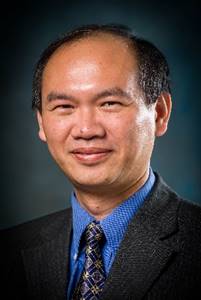 Meikang Qiu合作论文数Department of Computer & Cyber Sciences, School of Computer and Cyber Sciences, Augusta University;Department of Computer Science, Texas A&M University Commerce;Department of Electrical Engineering, Columbia University2
 Natee Pantong合作论文数2
 Zijing Lin (林子敬)合作论文数Key Laboratory of Strongty-Coupled Quantum Matter Physics, Chinese Academy of Sciences;Physics Department, University of Science and Technology of China2
 Honghui Zhang (张红慧)合作论文数School of Mathematics and Statistics, Northwestern Polytechnical University1
 Haijing Niu (牛海晶)合作论文数State Key Laboratory of Cognitive Neuroscience and Learning, Beijing Normal University1
 Good Levi B合作论文数Department of Neurology and Neurotherapeutics, The University of Texas Southwestern Medical Center1Juan M Pascual合作论文数1Ming Ren合作论文数1
 Shaohua Yang合作论文数Univ. of N. Texas Hlth. Sci. Center, University of North Texas Health Science Center at Fort Worth1Lin Zhijin合作论文数1
 Michael V. Klibanov合作论文数Department of Mathematics and Statistics, College of Liberal Arts & Sciences, University of North Carolina at Charlotte1
 Qingyun Wang (王青云)合作论文数Department of Dynamics and Control, School of Aeronautic Science and Engineering, Beihang University1
 Jianwei Hu合作论文数1
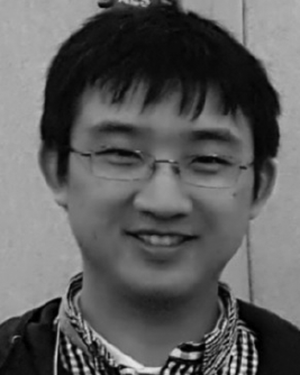 Lin Li合作论文数1




