The thighbone is the largest bone supporting the lower body. If the thighbone fracture is not treated in time, it will lead to lifelong inability to walk. Correct diagnosis of thighbone disease is very important in orthopedic medicine. Deep learning is promoting the development of fracture detection technology. However, the existing computer-aided diagnosis methods rely on a large number of manually labeled data, and labeling these data costs a lot of time and energy. Therefore, we develop an object detection method with limited labeled image quantity and apply it to the thighbone fracture localization. In this work, we build a semi-supervised object detection framework based on single-stage detector, which includes three modules: adaptive difficult sample oriented (ADSO) module, Fusion Box and deformable expand encoder (Dex encoder). ADSO module takes the classification score as the label reliability evaluation criterion by weighting, Fusion Box is designed to merge similar pseudo boxes into a reliable box for box regression and Dex encoder is proposed to enhance the adaptability of image augmentation. The experiment is conducted on the thighbone fracture dataset, which includes 3484 training thighbone fracture images and 358 testing thighbone fracture images. The experimental results show that the proposed method achieves the state-of-the-art AP in thighbone fracture detection at different labeled data rates, i.e., 1%, 5% and 10%. Besides, we use full data to achieve knowledge distillation, our method achieves 86.2% AP50 and 52.6% AP75. Finally, the effectiveness of our method has also been evaluated using the publicly available datasets COCO and VOC.
Deep learning is continuously promoting the development of fracture detection in medical images. In this study, we propose a novel two-stage region-based convolutional neural network for thighbone fractures detection. In this framework, the new network structure is designed to balance the information of each feature map in the feature pyramid of ResNeXt. In experiments, the pre-trained model is implemented on the dataset reported in the previous study, which includes 3842 thighbone X-ray radiographs. To compare the proposed framework with the latest detection techniques, transfer learning is employed to test all the state-of-the-art generic object detection algorithms on the same thighbone fracture dataset. Moreover, a few ablation experiments are given to demonstrate the effects of each component employed in the proposed framework and different hyperparameter settings on fracture detection. The experimental results show that the Average Precision of the proposed detection framework reaches 88.9% in thighbone fracture detection. This result proves the effectiveness of our framework and its superiority over other state-of-the-art methods.
Single-stage detectors suffer from extreme foreground-background class imbalance, while two-stage detectors do not. Therefore, in semi-supervised object detection, two-stage detectors can deliver remarkable performance by only selecting high-quality pseudo labels based on classification scores. However, directly applying this strategy to single-stage detectors would aggravate the class imbalance with fewer positive samples. Thus, single-stage detectors have to consider both quality and quantity of pseudo labels simultaneously. In this paper, we design a dynamic self-adaptive threshold (DSAT) strategy in classification branch, which can automatically select pseudo labels to achieve an optimal trade-off between quality and quantity. Besides, to assess the regression quality of pseudo labels in single-stage detectors, we propose a module to compute the regression uncertainty of boxes based on Non-Maximum Suppression. By leveraging only 10% labeled data from COCO, our method achieves 35.0% AP on anchor-free detector (FCOS) and 32.9% on anchor-based detector (RetinaNet).
It is crucial to obtain accurate and efficient instance segmentation masks in many modern applications such as automatic pilot and robotic manipulation. In this paper, we propose a straightforward and flexible two-stage framework for instance segmentation, which simultaneously generates box-level localization information in an image and instance-level segmentation information for each instance. We name this framework as Attention-based Adaptive Context Network for anchor-free Instance Segmentation (ContextMask), which extends the object detector FCOS (Fully Convolutional One-stage Object Detection) by adding a novel multi-scale adaptive context-guided mask (MACG-Mask) branch containing an adaptive context network and a MaskIoU branch. The adaptive context network is to combine the global context in predicted bounding boxes and the MaskIoU branch is to evaluate the quality of the predicted masks. With the development of deep convolutional neural networks, the network continues to deepen so that it is difficult to balance spatial information and semantic information well. To address the issue, we design a weighted FPN, which obtains feature maps with balance-well spatial and semantic information by concatenating and weighting feature maps of different resolutions. Besides, we also propose an attention-based head, which adds spatial attention and channel attention module to make each pixel have a unique weight to solve the problem of large-scale variant of objects. We verify ContextMask’s effectiveness on the fine-annotations Cityscapes and COCO dataset. ContextMask outperforms state-of-the-art methods and achieves 38.4% AP on the Cityscapes dataset and 39.0 % AP on the COCO dataset.
In this paper, a novel two-stage R-CNN network called ParallelNet is proposed for thigh fracture detection task. In the proposed method, multiple parallel backbone networks and a feature fusion connection structure are designed, which can extract features with different reception fields. Specifically, the first backbone network is denoted as main network, which adopted normal convolution to detect small fractures, the rest backbone networks are denoted as sub-networks which adopted dilated convolution to detect large fractures. We evaluated the proposed method on a thigh fracture dataset containing 3842 X-ray radiographs, 3484 of which is assigned as a training dataset and 358 as a testing dataset. The experiments compare the proposed method with other state-of-the-art deep learning frameworks, including Faster R-CNN, FPN, Cascade R-CNN and RetinaNet, especially DCFPN which focus on thighbone fracture detection task. Our framework achieved 87.8% AP50 and 49.3% AP75 which outperformed other state-of-the-art frameworks. Moreover, ablation experiments on the backbone numbers, connection styles, different dilation rates and the position of dilated convolution have been attempted, and the function of each hyperparameter is analyzed.
Multi-human parsing aims to segment every body part of every human instance. Nearly all state-of-the-art methods follow the “detection first” or “segmentation first” pipelines. Different from them, we present an end-to-end and box-free pipeline from a new and more human-intuitive perspective. In training time, we directly do instance segmentation on humans and parts. More specifically, we introduce a notion of “indiscriminate objects with categories” which treats humans and parts without distinction and regards them both as instances with categories. In the mask prediction, each binary mask is obtained by a combination of prototypes shared among all human and part categories. In inference time, we design a brand-new grouping post-processing method that relates each part instance with one single human instance and groups them together to obtain the final human-level parsing result. We name our method as Nondiscriminatory Treatment between Humans and Parts for Human Parsing (NTHP). Experiments show that our network performs superiorly against state-of-the-art methods by a large margin on the MHP v2.0 and PASCAL-Person-Part datasets.
The human lower limb mechanical axis is the most basic and essential diagnosis reference in clinical orthopedics. Orthopedists diagnose the varus or valgus knee according to the status of the lower limb mechanical axis. The conventional method used in this task relies on manual measurement, which is time-consuming and has operational differences. Given the above reason, in this work, we focus on designing a deep learning algorithm to address this problem and present a novel convolutional neural network architecture for mechanical axis detection. After the mechanical axis is detected, HKAA (Hip-Knee-Ankle Angle), which is a medical index, can be calculated automatically to assist in the medical diagnosis. We locate the mechanical axis by detecting both ends’ key points. Then we apply the detected key points to implement the patella misalignment detection for auxiliary radiography imaging. The mechanical axis key points detection network is based on the stacked hourglass module and adopts the deformable convolution for modeling the geometric features. Besides, we introduce an offset branch to reduce the systematic error. Then a detector trained in a semi-supervised strategy is applied for patella detection. The horizontal deviation of the patella from the knee center reflects the alignment of the patella. We use 879 collected radiographs (X-ray images) to train the key point detection model and other 98 radiographs perform as the validation set in this study. The proposed model achieves an accuracy of 83.0% for key points and reaches 61.1 mAP in patella detection. This model achieves excellent performance in human lower limb mechanical axis and patella detection.
The convolution operation is the core of convolutional neural networks (CNNs). To make CNNs more efficient, existing works construct multi-scale representation by utilizing different filter sizes or expanding filter sizes with dilated convolutions. However, these filters have fixed parameters after training so that they are not adaptive to the input image during inference. To address this issue, we propose an attention-based dynamic filter, which is a novel design that adaptively generates filters based on image contents. We apply the proposed dynamic filter to the mask branch, named Attention-based Adaptive Context-guided mask (ACG-Mask) branch, which is added to anchor-free one-stage object detector (FCOS). Besides, we design a multi-scale head, which contains an improved Receptive Field Block (iRFB) to enhance the discriminability and robustness of the feature. We name our model as Attention-based Dynamic Filters for anchor-free Instance Segmentation (ADFInst). Extensive experiments on the fine-annotation Cityscapes and COCO datasets reveal the effectiveness of the proposed method. ADFInst achieves a new record 37.9% AP and 63.3% AP50 on the fine-annotation Cityscapes dataset and achieves 37.8% AP, 58.7% AP50, and 40.5% AP75 on COCO dataset.
Multi-human parsing is attracting more and more attention due to its wide application, which not only needs to differentiate different human instances but also categorizes each pixel within the human. In this work, we improve the performance of the mask prediction branch of Nondiscriminatory Treatment between Humans and Parts for Human Parsing (NTHP), which regards both the humans and parts as objects and directly executes instance segmentation on both of them using the same structure. Specifically, we learn the mask feature and the mask kernel separately, and the mask feature is convolved by the mask kernel to obtain the binary mask prediction. Besides, to obtain translation-variance and better performance, we design a Position-sensitive Global Context (PGC) block and insert it into the mask feature module. Experiments show that our network performs superiorly against state-of-the-art methods on the MHP v2.0 and PASCAL-Person-Part datasets.
The purpose of this paper is to introduce and study a multi-narrow beam X-ray Luminescence Computed Tomography (XLCT) system based on a simple coded aperture. The proposed XLCT system is studied through simulations of x rays and diffuse light propagation and the implementation of the multi-narrow beam XLCT reconstruction algorithm. The relationship between the reconstructed quality of the XLCT image and the pass-element distribution of the coded aperture mask is investigated. The coded aperture that produces the best image quality metrics for the numerical phantom is selected for the XLCT system. The effects of detection positions and the number of projection angles are also investigated for considering the scanning efficiency and system structural complexity. The results demonstrate that the proposed multi-narrow beam XLCT system is competent in resolving targets with high complexity when comparing with the coded aperture compressed sensing XLCT system based on a complicated mask. It can also offer an enhancement in scanning efficiency in comparison with the conventional multi-narrow beam XLCT system.
Resource Description Framework (RDF) has been widely used to represent information on the web, while SPARQL is a standard query language to manipulate RDF data. Given a SPARQL query, there often exist many joins which are the bottlenecks of efficiency of query processing. Besides, the real RDF datasets often reveal strong data sparsity, which indicates that a resource often only relates to a few resources even the number of total resources is large. In this paper, we propose a sparse matrix-based (SM-based) SPARQL query processing approach over RDF datasets which con- siders both join optimization and data sparsity. Firstly, we present a SM-based storage for RDF datasets to lift the storage efficiency, where valid edges are stored only, and then introduce a predicate- based hash index on the storage. Secondly, we develop a scalable SM-based join algorithm for SPARQL query processing. Finally, we analyze the overall cost by accumulating all intermediate results and design a query plan generated algorithm. Besides, we extend our SM-based join algorithm on GPU for parallelizing SPARQL query processing. We have evaluated our approach compared with the state-of-the-art RDF engines over benchmark RDF datasets and the experimental results show that our proposal can significantly improve SPARQL query processing with high scalability.
X-ray luminescence computed tomography (XLCT) is an emerging hybrid imaging modality which has the potential for achieving both high sensitivity and spatial resolution simultaneously. For the narrow x-ray beam-based XLCT imaging, based on previous work, a spatial resolution of about double the x-ray beam size can be achieved using a translate/rotate scanning scheme, taking step sizes equal to the x-ray beam width. To break the current spatial resolution limit, we propose a scanning strategy achieved by reducing the scanning step size to be smaller than the x-ray beam size. We performed four sets of numerical simulations and a phantom experiment using cylindrical phantoms and have demonstrated that our proposed scanning method can greatly improve the XLCT-reconstructed image quality compared with the traditional scanning approach. In our simulations, by using a fixed x-ray beam size of 0.8 mm, we were able to successfully reconstruct six embedded targets as small as 0.5 mm in diameter and with the same edge-to-edge distances by using a scanning step as small as 0.2 mm which is a 1.6 times improvement in the spatial resolution compared with the traditional approach. Lastly, the phantom experiment further demonstrated the efficacy of our proposed method in improving the XLCT image quality, with all image quality metrics improving as the step size decreased.
Spark is a pervasively used in-memory computing framework in the era of big data, and can greatly accelerate the computation speed by wrapping the accessed data as resilient distribution datasets (RDDs) and storing these datasets in the fast accessed main memory. However, the space of main memory is limited, and Spark does not provide an intelligent mechanism to store reasonable RDDs in the limited memory. In this paper, we propose a fine-grained RDD checkpointing and kick-out selection strategy, by which Spark can intelligently select the reasonable RDDs to maximize the memory usage. The experiment is conducted on a server with four nodes. Experimental results demonstrate that the proposed techniques can effectively accelerate the execution speed.
Objective To study the association of TaqⅠ gene polymorphism with type 2 diabetes and lipodogramme in Uygur people.Methods On basis of case-control design,lipodogramme of Uygur people was determined by automatic biochemical analyzer technology and the polymorphism of cholesteryl ester transfer protein(CETP) was analyzed by PCR-RFLP in 53 type 2 diabetes mellitus(T2DM) patients,53 patients with impaired glucose tolerance(IGT) and 106 normal control of Uygur nationality.Results The fasting plasma glucose(FPG) in normal group was 5.14±0.24 mmol/L,10.79±3.34 mmol/L in T2DM group,and 5.97±0.41 mmol/L in IGT group(F=205.87,P=0.000),respectively.CETP geno-type distribution was significant different between the three groups(P=0.028).The frequency of H+H-genotype for T2DM was significantly higher than that of others(69.8%,45.3%,41.5% for T2DM,IGT,and normal group,respectively).The values of FPG was 6.04±1.72 mmol/L for subjects with H-H-genotype,6.03±1.63 mmol/L with H+H+,and 7.48±3.60 mmol/L with H+H-,respectively,with significant difference between the groups(P=0.001).The results of logistic regression showed that the dependent risk factors of T2DM were total glucose(P=0.000),CETP genotype(P=0.007),waist circumference(P=0.048).The subjects with H+H-had a 4.042 folds(95%CI=1.243-13.149,P=0.020) risk of T2DM compared with subjects with H-H-genotype.Conclusion CETP gene TaqⅠ polymorphism is closely related to the risk of T2DM and the H+H-genotype may serve as a genetic risk factor of T2DM among Uygur people.
We propose a mechanism to consider the effects of the random neuronal threshold on the retrieval properties of neural networks. The retrieval properties of the fully asymmetric Sherrington-Kirkpatrick (SK) and Hopfield models are studied, respectively. We show that the ferromagnetic retrieval states are destroyed by fluctuations induced by random neuronal thresholds.
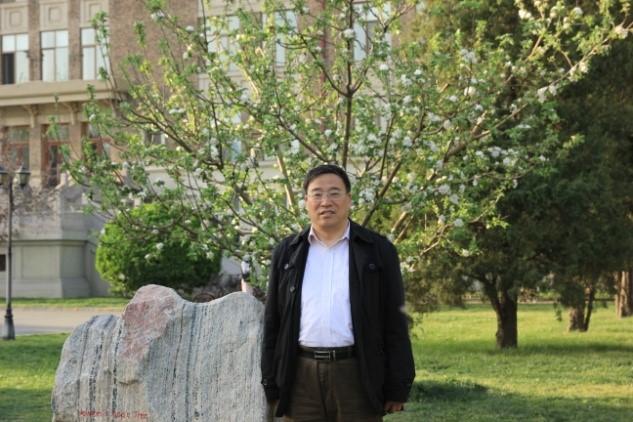 Guoshan Zhang (张国山)合作论文数School of Electrical and Information Engineering, Tianjin University9
 Jinkun Yao合作论文数Department of Radiology, Linyi People's Hospital, Linyi 276000, China4
 Bin Guan合作论文数School of Electrical and Information Engineering, Tianjin University, Tianjin 300072, China4Min Yan合作论文数Key Laboratory of Ministry of Industry and Information Technology, Beijing Institute of Technology4
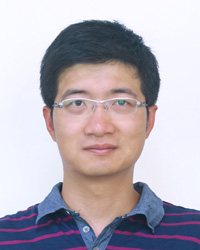 Zhongxing Zhou (周仲兴)合作论文数School of Precision Instrument and Optoelectronics Engineering, Tianjin University3Shaoquan Wang合作论文数2Mengxuan Wang合作论文数2Xinbo Wang合作论文数School of Electrical and Information Engineering, Tianjin University, Tianjin 300072, China2
 Jiao Li (李娇)合作论文数Biomedical Photonic Imaging Laboratory, School of Precision Instrument and Optoelectronics Engineering, Tianjin University2
 Zhiyong Feng (冯志勇)合作论文数College of Intelligence and Computing, Tianjin University;Institute of Knowledge Science and Engineering, Tianjin University2
 Feng Gao (高峰)合作论文数School of Precision Instruments and Opto-electronics Engineering, Tianjin University2
 Xiaowang Zhang (张小旺)合作论文数College of Intelligence and Computing, Tianjin University2Jinman Wei合作论文数1Guo Qingwei合作论文数1Xiaolin Song合作论文数1Chao Liu合作论文数1
 Michael C Lun合作论文数Dept Bioengn, Univ Calif Merced1Tengfei Xing合作论文数1
 Xin Wang (王鑫)合作论文数School of Artificial Intelligence, College of Intelligence and Computing, Tianjin University1
 Jiaming Song (宋佳铭)合作论文数Luma AI1
 Lizhou Dou (窦利州)合作论文数Cancer Hospital Chinese Academy of Medical Sciences1
 Guozheng Rao (饶国政)合作论文数College of Intelligence and Computing, Tianjin University1
 Limin Zhang (张丽敏)合作论文数School of Precision Instruments and Opto-electronics Engineering, Tianjin University1
 Hua Chai合作论文数Didi Chuxing1
 Renhai Chen (陈仁海)合作论文数College of Intelligence and Computing, Tianjin University1
 Xingxu Yao合作论文数Didi Research1
 Changqing Li合作论文数1
 Pengfei Xu合作论文数Didi Chuxing1
 Chen Feng (冯晨)合作论文数AI4CE Lab, Tandon School of Engineering, New York University1
 Changde Gong (龚昌德)合作论文数School of Physics, Nanjing University1
 Xiao Liu合作论文数1
 Lei Zou (邹磊)合作论文数Institute for Artificial Intelligence, Peking University;National Engineering Research Center for New Electronic Publishing Technologies, Wangxuan Institute of Computer Technology, Peking University1
 Jingying Jiang (蒋景英)合作论文数School of Medical Science and Engineering, Beihang University1
 Guiqi Wang (王贵齐)合作论文数Cancer Hospital Chinese Academy of Medical Sciences, Shenzhen1
 Hu Runbo合作论文数1




