Feed costs comprise over 40% of total aquaculture production expenses. However, traditional feeding methods remain heavily dependent on manual operations, leading to imprecise feeding control, significant waste (15-25%) and environmental pollution. To accurately identify fish feeding behavior and mitigate feed waste, along with associated water pollution issues, this study proposes an intelligent feeding behavior recognition system based on an optimized YOLOv8n model. A dedicated dataset comprising 5102 annotated images was constructed and processed through standardized acquisition, pre-processing, and labeling procedures. The enhanced YOLOv8n architecture incorporates three key modifications: (1) Adaptive Kernel Convolution (AKConv) in the Backbone for superior multiscale feature extraction, (2) a Squeeze-and-Excitation (SE) attention mechanism to enhance feature representation, and (3) a Bidirectional Feature Pyramid Network (BiFPN) replacing PANet for efficient feature fusion. Experimental results demonstrate substantial performance improvements: precision increased from 90.1% to 92.7% (+2.9%), recall improved from 83.2% to 88.8% (+6.7%), and mean average precision (mAP) rose from 87.0% to 91.7% (+5.4%) compared to the pre-optimized YOLOv8n. Additionally, the optimized model exhibits reduced computational demands, with parameters decreasing from 3.01M to 2.47M, FLOPs dropping from 8.2G to 5.2G, and model size shrinking from 6.2MB to 5.4MB. Ablation studies further validate the individual contributions of each enhancement. This approach not only enhances feeding precision and reduces waste but also promotes sustainable aquaculture practices, demonstrating significant potential for real-world deployment.
Bait costs constitute 40–50% of the total expenditure in river crab aquaculture, highlighting the critical need for accurately assessing crab growth and scientifically determining optimal feeding regimes across different farming stages. Current traditional methods rely on periodic manual sampling to monitor growth status and artificial feeding platforms to observe consumption and adjust bait input. These approaches are inefficient, disruptive to crab growth, and fail to provide comprehensive growth data. Therefore, this study proposes a machine vision-based monitoring system for river crab feeding platforms. Firstly, the Contrast Limited Adaptive Histogram Equalization (CLAHE) algorithm is applied to enhance underwater images of river crabs. Subsequently, an improved YOLOv11 (You Only Look Once) model is introduced and applied for multi-target detection and counting in crab ponds, enabling the extraction of information related to both river crabs and bait. Concurrently, underwater environmental parameters are monitored in real-time via an integrated environmental information sensing system. Finally, an information processing platform is established to facilitate data sharing under a “detection–processing–distribution” workflow. The real crab farm experimental results show that the river crab quality error rate was below 9.57%, while the detection rates for both corn and pellet baits consistently exceeded 90% across varying conditions. These results indicate that the proposed system significantly enhances farming efficiency, elevates the level of automation, and provides technological support for the river crab aquaculture industry.
Traditional track-based inspection schemes for caged poultry houses face issues with vulnerable tracks and cumbersome maintenance, while existing rail-less alternatives lack robust, reliable path planners. This study proposes TSO-HA*-Net, a hybrid global path planner that combines TSO-HA* with topological planning, which allows the inspection vehicle to continuously traverse a predetermined trackless route within each poultry house and conduct house-to-house inspections. Initially, the spatiotemporally optimized Hybrid A* (TSO-HA*) is employed as the lower-level planner to efficiently construct a semi-structured topological network by integrating predefined inspection rules into the global grid map of the poultry houses. Subsequently, the Dijkstra’s algorithm is adopted to plan a smooth inspection route that aligns with the starting and ending poses, conforming to the network. TSO-HA* retains the smoothness of HA* paths while reducing both time and computational overhead, thereby enhancing speed and efficiency in network generation. Experimental results show that compared to LDP-MAP and A*-dis, utilizing the distance reference tree (DRT) for h2 calculation, the total planning time of the TSO-HA* algorithm is reduced by 66.6% and 96.4%, respectively, and the stored nodes are reduced by 99.7% and 97.4%, respectively. The application of the collision template in TSO-HA* results in a minimum reduction of 4.0% in front-end planning time, and the prior collision detection further decreases planning time by an average of 19.1%. The TSO-HA*-Net algorithm achieves global topological planning in a mere 546.6 ms, thereby addressing the critical deficiency of a viable global planner for inspection vehicles in poultry houses. This study provides valuable case studies and algorithmic insights for similar inspection task.
Aquatic plant cleaning in Eriocheir sinensis farming currently relies heavily on manual methods, which are labor-intensive and inefficient. To address this issue, this study explores fully automated aquatic plant raking technology. Considering the physical characteristics of aquatic plant in Eriocheir sinensis farming, a novel approach using torsion spring hooks instead of traditional cutting blades for plant removal is proposed. A aquatic plant combing mechanism and a water depth adjustment mechanism were designed to enhance functionality. Furthermore, a multi-drawer-type aquatic plant spreading method was introduced, along with an automatic mechanism for uniformly spreading aquatic plant. Adams simulation software was employed to analyze the movement of the multi-drawer silo under various working conditions, determining the minimum damping force required for the damping mechanism in extreme scenarios. A prototype was subsequently fabricated and tested. Experimental results confirmed that the combing mechanism operated smoothly without jamming, meeting all design specifications. The prototype demonstrated stable underwater performance, reliable depth adjustment, and high cleaning efficiency, fully aligning with the intended design objectives.
Real-time detection of unhealthy fish remains a significant challenge in intensive recirculating aquaculture. Early recognition of unhealthy fish and the implementation of appropriate treatment measures are crucial for preventing the spread of diseases and minimizing economic losses. To address this issue, an improved algorithm based on the You Only Look Once v5s (YOLOv5s) lightweight model has been proposed. This enhanced model incorporates a faster lightweight structure and a new Convolutional Block Attention Module (CBAM) to achieve high recognition accuracy. Furthermore, the model introduces the alpha-SIoU loss function, which combines the alpha-Intersection over Union (alpha-IoU) and Shape Intersection over Union (SIoU) loss functions, thereby improving the accuracy of bounding box regression and object recognition. The average precision of the improved model reaches 94.2% for detecting unhealthy fish, representing increases of 11.3%, 9.9%, 9.7%, 2.5%, and 2.1% compared to YOLOv3-tiny, YOLOv4, YOLOv5s, GhostNet-YOLOv5, and YOLOv7, respectively. Additionally, the improved model positively impacts hardware efficiency, reducing requirements for memory size by 59.0%, 67.0%, 63.0%, 44.7%, and 55.6% in comparison to the five models mentioned above. The experimental results underscore the effectiveness of these approaches in addressing the challenges associated with fish health detection, and highlighting their significant practical implications and broad application prospects.
Crab aquaculture is an important component of the freshwater aquaculture industry in China, encompassing an expansive farming area of over 6000 km2 nationwide. Currently, crab farmers rely on manually monitored feeding platforms to count the number and assess the distribution of crabs in the pond. However, this method is inefficient and lacks automation. To address the problem of efficient and rapid detection of crabs via automated systems based on machine vision in low-brightness underwater environments, a two-step color correction and improved dark channel prior underwater image processing approach for crab detection is proposed in this paper. Firstly, the parameters of the dark channel prior are optimized with guided filtering and quadtrees to solve the problems of blurred underwater images and artificial lighting. Then, the gray world assumption, the perfect reflection assumption, and a strong channel to compensate for the weak channel are applied to improve the pixels of red and blue channels, correct the color of the defogged image, optimize the visual effect of the image, and enrich the image information. Finally, ShuffleNetV2 is applied to optimize the target detection model to improve the model detection speed and real-time performance. The experimental results show that the proposed method has a detection rate of 90.78% and an average confidence level of 0.75. Compared with the improved YOLOv5s detection results of the original image, the detection rate of the proposed method is increased by 21.41%, and the average confidence level is increased by 47.06%, which meets a good standard. This approach could effectively build an underwater crab distribution map and provide scientific guidance for crab farming.
This paper presents a nonlinear modeling method for the flux linkage and torque of a switched reluctance motor (SRM). The method is based on Universal Weighted Least Squares Support Vector Machine Regression (WLSSVR), combined with Entropy Method (EM) and Improved Coyote Optimization Algorithm (COA) to optimize the kernel parameters. Among them, EM can well improve the error of the general WLSSVR in the selection of sample weights, and the improved COA can prevent the system from falling into local optimum and improve the iteration speed. This SRM modeling method, which combines WLSSVR based on entropy and improved COA, can improve the modeling speed on the premise of ensuring the modeling accuracy. mode speed. Finally, the effectiveness of the algorithm is verified by experiments
To improve the strong dependence of predictive control parameters on finite control set models, an improved robust finite control set predictive current control (FCS-MPCC) algorithm for permanent magnet synchronous motor (PMSM) drive systems is proposed. Firstly, the problems of complex calculation and inaccurate selection of voltage vectors in traditional FCS-MPCC are analyzed, and an extended voltage vector-based MPCC (EV 2 -MPCC) based on the deadbeat principle is proposed to improve the steady-state performance of FCS-MPCC and also improve the anti-disturbance performance of the system. Secondly, the performance of PMSM under parameter mismatch is analyzed, and a sliding mode observer-based stator current and disturbance observer is proposed. The observed disturbance term is used to compensate the reference voltage term for quickly selecting the optimal voltage vector, and the estimated current replaces the traditional predicted current. This method further improves the robustness of EV 2 -MPCC. Finally, the experimental results prove the effectiveness of the scheme.
In this paper, an optimized-sector-based model predictive torque control (OSB-MPTC) strategy is proposed to reduce the torque ripple of the switched reluctance motors (SRMs). First, a phase torque estimation method based on the magnetic coenergy and Fourier series expansion is introduced. A new sector division rule and a selection of the basic voltage vector in predicting torque are then introduced. The cost function for minimizing torque error is designed to select the optimal voltage vector. In addition, a new reaching law is proposed to improve the robustness of the control system and the dynamic response of the speed loop. Finally, experiments are carried out on a 12/8 pole three-phase SRM prototype to verify the performance of the proposed control method in detail. Compared with the conventional model predictive control, the proposed OSB-MPTC with global robust sliding mode control has better performance in terms of suppression of the torque ripple, speed dynamic response, and robustness.
This article presents a nonlinear modeling method for the flux linkage and torque of a switched reluctance motor. The method is based on universal weighted least squares support vector machine regression (WLSSVR), combined with entropy method (EM) and improved coyote optimization algorithm (COA) to optimize the kernel parameters. Among them, EM can well improve the error of the general WLSSVR in the selection of sample weights, and the improved COA can prevent the system from falling into local optimum and improve the iteration speed. This SRM modeling method, which combines WLSSVR based on entropy and improved COA, can improve the modeling speed on the premise of ensuring the modeling accuracy mode speed. Finally, the effectiveness of the algorithm is verified by experiments.
产业数智化是数字中国的重要组成部分,是产业数字化发展的高级阶段,提升产业数智化水平有助于改变传统产业结构、创新商业模式,协调区域均衡发展,实现共同富裕目标.区域协调发展有助于缓解区域发展矛盾、减少区域差异和实现共同富裕战略发展目标.现阶段我国各区域间产业数智化发展水平差异较大,软硬件基础薄弱、创新不足、人才培养及流动机制缺乏等问题阻碍区域产业协调配置.通过构建产业数智化发展生态系统平台,研究产业数智化系统响应机制,动态调整供需匹配,推动产业跨界融合,重构产业组织与发展系统,提升区域各产业韧性抵御风险,实现区域经济及产业协调分布、经济高质量发展的目标.
A model predictive current control strategy with pulse width modulation is proposed for a single-phase open circuit fault. This method decomposes the change matrix based on the normal vector space to ensure that the decoupling matrix remains unchanged so that there is no need to reconfigure the controller topology. By analysing the fault phase voltage difference under normal and fault conditions, 24 synthetic virtual voltage vectors are used to compensate the voltage vector during a single-phase fault and eliminate the current coupling problem. In addition, a standard pulse width modulation switching sequence is implemented to achieve the purpose of unifying the switching frequency, which makes the method easy to implement. Finally, the effectiveness of the proposed method is verified by experiments.
针对欠驱动水质检测船在外界风、浪扰动以及模型系统存在不确定性参数的情况下,存在直线路径跟踪航向偏离及航向偏差修正速度慢的问题,提出采用有限时间控制理论设计航向控制系统.首先建立欠驱动水质检测船航向控制的数学模型,将复杂非线性的航向控制简化为一个二阶系统,简化了设计复杂度;然后基于齐次性理论设计有限时间航向控制律,通过分数幂提高系统的收敛速度与鲁棒性,结合扩展状态观测器对误差扰动进行估计,提高了控制性能.仿真结果表明,采用有限时间航向控制的水质检测船可将航向角误差控制在0.1°,有效增强了水质检测船的抗干扰能力,保证了作业路径跟踪精度.
传统池塘河蟹养殖主要依靠渔民根据经验来估算投饵量,通过人工撑船投喂饵料,饵料利用率低且劳动强度大.由于河蟹具有领地意识且移动范围较小,池塘各处河蟹分布不均匀,因此河蟹养殖需要科学精准投饵.现有河蟹养殖投饵作业方式粗放,无法满足河蟹高效生态养殖需求.为了掌握河蟹生长规律,更加科学高效地投饵喂料,本文设计基于河蟹生长模型的精准投饵系统.利用灰色关联度分析法确定对河蟹生长发育影响最大的环境因子.在传统水产生物生长模型基础上,加入环境因子进行改进,从线性和指数两个角度对河蟹生长模型进行优化拟合.利用遗传算法(GA)-反向反馈神经网络(BP神经网络)(GA-BP神经网络)对精准投饵预测模型进行训练,通过输入水温、溶解氧含量、pH值等环境参数,推算出最佳环境影响因子数值.根据河蟹生长模型、养殖密度、养殖面积得出河蟹总质量,结合河蟹生长期存活率与投喂率便可得出总投饵量.根据池塘河蟹实际分布密度和水质参数,确定池塘各区域的饵料分配系数,将总投饵量科学地分配到池塘各个区域.通过仿真得出预测投饵量决定系数R2为0.990,预测模型具有较好的拟合效果.池塘投饵试验结果表明,基于河蟹生长模型确定投饵量,通过智能投饵船自动作业能够精准投饵的池塘面积约为5.33 hm2,能节约3个养殖户的劳动力成本.对池塘各区域,投饵船实际投饵密度与预设投饵密度相比,平均绝对误差为0.32 g/m2,平均相对误差为3.90%,且系统可根据环境参数的变化及食台反馈及时调整投饵量,有利于节省饵料,培育大规格河蟹,增加河蟹产量,提高养殖效益,促进河蟹养殖节本增效发展.
针对竹制品加工过程中主要依靠人眼识别分类竹条颜色,存在劳动强度大、效率低和误差大等问题,设计一款通过MATLAB图像处理技术进行竹条色差分类检测系统.首先,对标准竹条与样本竹条进行颜色空间转换,通过中值滤波对竹条图像进行预处理并提取不同颜色分量;然后,在HSV颜色空间中提取竹条图像相关色彩特征数据,并得到HSV颜色空间中竹条各分量的颜色相交直方图,同时计算出相应的相似度值;通过比较其相似度值的大小,对竹条进行色差分类并使其与色差等级建立一定的关系;最后,根据对处理后的竹条图像进行色差分类检测试验.试验结果表明:颜色空间直方图相交法分类检测正确率高达92.22%,算法运行时间为536 ms;相比较夹角余弦相似法,平均识别正确率提高4.44%,而平均运行时间下降63.44%.
This paper describes a robust sparse Bayesian learning approach for DOA estimation in the presence of impulsive noise. In practical situations, impulses in the noise often appear in bursts, resulting in structured rather than independent sparsity, which can be exploited to enhance DOA estimation performance. However, there is no method available for capturing the realistic burst structure of impulsive noise in the literature. In this paper, we model the structured impulsive noise with a novel two-dimensional burst prior and develop a robust variational Bayesian inference (VBI) framework for DOA estimation under burst impulsive noise, and an improved grid refinement method is further proposed to adjust grid points of the dictionary matrix, which can combat the off-grid gap more efficiently. The superior impulse-resistant DOA estimation performance and computational efficiency of our proposed method are verified by simulation results.
针对移动式增氧机在风向、水流等干扰下,存在直线路径跟踪偏离与距离控制精度下降的问题,提出采用自抗扰控制策略优化移动式增氧机的航向控制系统.首先通过二阶跟踪微分器优化移动式增氧机航向过渡过程,跟踪输入信号及其微分信号;再通过扩张状态观测器确定移动式增氧机航向系统内部状态信息,计算误差,得到误差反馈量;最后根据扰动估计值得出最终控制量,计算距离、航向角误差,从而将复杂的路径跟踪简化为1个二阶系统,极大减轻控制器复杂度.试验结果表明,采用自抗扰技术的移动式增氧机可将路径跟踪控制距离误差控制在0.2m,航向角误差控制在0.1°,使移动式增氧机克服干扰的影响.
Effective biomass detection methods utilizing computer vision techniques should be capable of handling large differences in object posture and various degrees of mutual overlap/occlusion in object scenes. We propose an automatic coarse-to-fine joint detection and instance segmentation network (JDSNet) that can perform real-time detection and instance segmentation on underwater non-structural live crabs in real-time. The method was adapted to non-structural objects and mobile devices by applying the anchor-free mechanism and center-ness strategy of the fully convolutional one-stage prediction head and the improved energy-efficient backbone IVoVNet-19-DW with identity mapping and channel attention. This approach avoided the complicated computations related to the anchor-based mechanism and effectively generated the features of various receiving domains, jointly improving the memory access speed and accuracy of predicting the bounding boxes of different instances. A novel spatial attention-guided mask branch was then added to focus on irregular occluded object pixels and conduct precise pixel-level mask segmentation within the predicted coarse instance-aware rectangular-bounding boxes. The experimental analysis using the proposed method resulted in a quality of detection F-1 and segmentation D-ic of 97.7% and 94.6%, respectively. The fastest detection speed of a single image was 48.07/13.32 fps (similar to 10 times faster than the existing network Mask RCNN) on a commonly configured GPU/CPU, requiring only 7.04 MB of storage (similar to 25 times smaller than Mask RCNN). It indicates that JDSNet can segment various non-structural live crabs and perform biomass statistics robustly and efficiently, exhibiting significance for precision feeding applications in automatic feeding boats.
 Dean Zhao (赵德安)合作论文数38JianQing Hong (洪剑青)合作论文数18
 Chengzhi Ruan合作论文数11Jun Zhang (张军)合作论文数7
 Xiao-Yang Liu合作论文数Department of Electrical Engineering, Columbia University7Yanhua Wang合作论文数7
 Xiaodong Sun (孙晓东)合作论文数Automotive Engineering Research Institute, Jiangsu University7
 Junling Liu (刘俊岭)合作论文数College of Basic Medical Sciences, Shanghai Jiao Tong University7T. Kent Gartner合作论文数7
 Ming Yao合作论文数6Lin Zhang合作论文数6Ding Li (丁力)合作论文数6
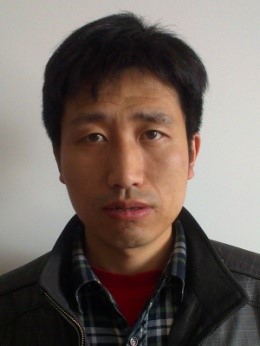 Kemin Wang (王克敏)合作论文数School of Mechatronic Engineering and Automation, Shanghai University6
 Weiran Chai (柴蔚然)合作论文数Shanghai Ninth People’s Hospital, School of Medicine, Shanghai Jiao Tong University6Shuo Cao合作论文数5Ji Luo (罗吉)合作论文数5
 Zhugang Wang (王铸钢)合作论文数School of Medicine, Shanghai Jiaotong University;University of Chinese Academy of Sciences5Bing Shi (史兵)合作论文数4Dong Guo (郭栋)合作论文数4YuYing Chen (陈玉英)合作论文数4
 Jing Yi (易静)合作论文数School of Medicine, Shanghai Jiao Tong University4Niu Haixia合作论文数4
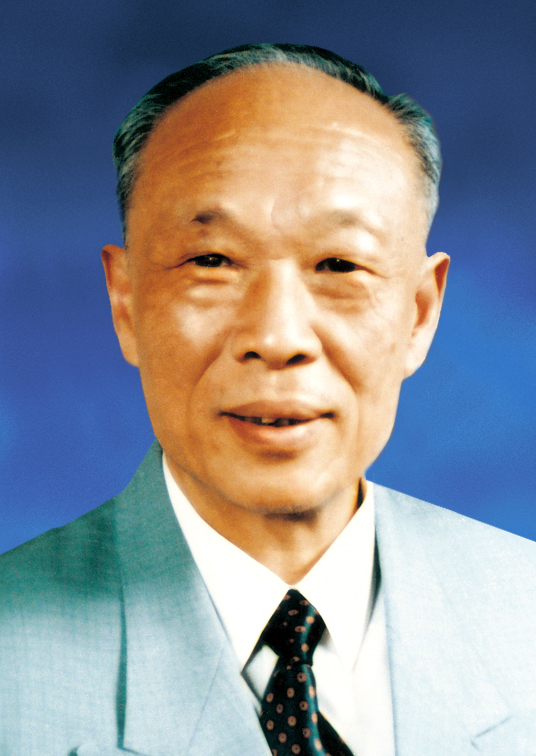 Zhenyi Wang (王振义)合作论文数School of Medicine, Shanghai Jiao Tong University;Shanghai Institute of Hematology4
 Guoqiang Chen (陈国强)合作论文数College of Basic Medical Sciences, School of Medicine, Shanghai Jiaotong University4
 Jisheng Dai (戴继生)合作论文数College of Information Science and Technology, Donghua University4Nuonuo Wang合作论文数3
 Yunfei Cao合作论文数3
 Wei Wang合作论文数3
 Yefei Xiong合作论文数3Zhi Zhou (周直)合作论文数3JianMing Jiang (蒋建明)合作论文数3XinPing Luo (罗心平)合作论文数3JianChu Zhou (周俭初)合作论文数3
 Saijuan Chen (陈赛娟)合作论文数Ruijin Hospital, Shanghai Jiao Tong University School of Medicine3
 Jian Wang (王坚)合作论文数Renji Hospital, School of Medicine, Shanghai Jiao Tong University3
 Zhu Chen (陈竺)合作论文数Ruijin Hospital, Shanghai Jiao Tong University School of Medicine3Zhen-Yu Lu合作论文数3
 Shihong Ding (丁世宏)合作论文数institute of High-Performance Electrical Machine System and Intelligent Control, Jiangsu University3Hui Kong合作论文数University of Illinois at U-C, Urabana, IL
3Guiying Shi合作论文数3
Shihong Ding (丁世宏)合作论文数institute of High-Performance Electrical Machine System and Intelligent Control, Jiangsu University3Hui Kong合作论文数University of Illinois at U-C, Urabana, IL
3Guiying Shi合作论文数3 Weikuan Jia合作论文数3yulei shen (沈玉雷)合作论文数2Yun Qin合作论文数2Jinsheng Ku合作论文数2L Wang合作论文数2
 Lushun Yuan合作论文数Einthoven Lab Vasc & Regenerat Med, Leiden Univ2Yun YU (余韵)合作论文数2Yang Wang合作论文数2




