The RNA-binding ARS2 protein is centrally involved in both early RNA polymerase II (RNAPII) transcription termination and transcript decay. Despite its essential nature, the mechanisms by which ARS2 enacts these functions have remained unclear. Here, we show that a conserved basic domain of ARS2 binds a correspond-ing acidic-rich, short linear motif (SLiM) in the transcription restriction factor ZC3H4. This interaction recruits ZC3H4 to chromatin to elicit RNAPII termination, independent of other early termination pathways defined by the cleavage and polyadenylation (CPA) and Integrator (INT) complexes. We find that ZC3H4, in turn, forms a direct connection to the nuclear exosome targeting (NEXT) complex, hereby facilitating rapid degradation of the nascent RNA. Hence, ARS2 instructs the coupled transcription termination and degradation of the tran-script onto which it is bound. This contrasts with ARS2 function at CPA-instructed termination sites where the protein exclusively partakes in RNA suppression via post-transcriptional decay.
Dynamic RNA-protein interactions govern the co-transcriptional packaging of RNA polymerase II (RNAPII)-derived transcripts. Yet, our current understanding of this process in vivo primarily stems from steady state analysis. To remedy this, we here conduct temporal-iCLIP (tiCLIP), combining RNAPII transcriptional synchronisation with UV cross-linking of RNA-protein complexes at serial timepoints. We apply tiCLIP to the RNA export adaptor, ALYREF; a component of the Nuclear Exosome Targeting (NEXT) complex, RBM7; and the nuclear cap binding complex (CBC). Regardless of function, all tested factors interact with nascent RNA as it exits RNAPII. Moreover, we demonstrate that the two transesterification steps of pre-mRNA splicing temporally separate ALYREF and RBM7 binding to splicing intermediates, and that exon-exon junction density drives RNA 5′end binding of ALYREF. Finally, we identify underappreciated steps in snoRNA 3′end processing performed by RBM7. Altogether, our data provide a temporal view of RNA-protein interactions during the early phases of transcription.
ABSTRACT A 5’, 7-methylguanosine cap is a quintessential feature of RNA polymerase II-transcribed RNAs, and a textbook aspect of co-transcriptional RNA processing. The cap is bound by the cap-binding complex (CBC), canonically consisting of nuclear cap-binding proteins 1 and 2 (NCBP1/2). The CBC has come under renewed investigative interest in recent years due to its participation in RNA-fate decisions via interactions with RNA productive factors as well as with adapters of the degradative RNA exosome - including the proteins SRRT (a.k.a. ARS2) and ZC3H18, and macromolecular assemblies such as the nuclear exosome targeting (NEXT) complex and the poly(A) exosome targeting (PAXT) connection. A novel cap-binding protein, NCBP3, was recently proposed to form an alternative, non-canonical CBC together with NCBP1, and to interact with the canonical CBC along with the protein SRRT. The theme of post-transcriptional RNA fate, and how it relates to co-transcriptional ribonucleoprotein assembly is abundant with complicated, ambiguous, and likely incomplete models. In an effort to clarify the compositions of NCBP1-, 2-, and 3-related macromolecular assemblies, including their intersections and differences, we have applied an affinity capture-based interactome screening approach, where the experimental design and data processing have been modified and updated to identify interactome differences between targets under a range of experimental conditions, in the context of label-free quantitative mass spectrometry. This study generated a comprehensive view of NCBP-protein interactions in the ribonucleoprotein context and demonstrates the potential of our approach to benefit the interpretation of complex biological pathways.
The nuclear Cap Binding Complex (CBC), consisting of Nuclear Cap Binding Protein 1 (NCBP1) and 2 (NCBP2), associates with the nascent 5’cap of RNA polymerase II transcripts and impacts RNA fate decisions. Recently, the C17orf85 protein, also called NCBP3, was suggested to form an alternative CBC by replacing NCBP2. However, applying protein-protein interaction screening of NCBP1, 2 and 3, we find that the interaction profile of NCBP3 is distinct. Whereas NCBP1 and 2 identify known CBC interactors, NCBP3 primarily interacts with components of the Exon Junction Complex (EJC) and the TRanscription and EXport (TREX) complex. NCBP3-EJC association in vitro and in vivo requires EJC core integrity and the in vivo RNA binding profiles of EJC and NCBP3 overlap. We further show that NCBP3 competes with the RNA degradation factor ZC3H18 for binding CBC-bound transcripts, and that NCBP3 positively impacts the nuclear export of polyadenylated RNAs and the expression of large multi-exonic transcripts. Collectively, our results place NCBP3 with the EJC and TREX complexes in supporting the productive fate of mRNA.
Recruitment of the human ribonucleolytic RNA exosome to nuclear polyadenylated (pA+) RNA is facilitated by the Poly(A) Tail eXosome Targeting (PAXT) connection. Besides its core dimer, formed by the exosome co-factor MTR4 and the ZFC3H1 protein, the PAXT connection remains poorly defined. By characterizing nuclear pA+-RNA bound proteomes as well as MTR4-ZFC3H1 containing complexes in conditions favoring PAXT assembly, we here uncover three additional proteins required for PAXT function: ZC3H3, RBM26 and RBM27 along with the known PAXT-associated protein, PABPN1. The zinc-finger protein ZC3H3 interacts directly with MTR4-ZFC3H1 and loss of any of the newly identified PAXT components results in the accumulation of PAXT substrates. Collectively, our results establish new factors involved in the turnover of nuclear pA+ RNA and suggest that these are limiting for PAXT activity.
AbstractThe nuclear Cap-Binding Complex (CBC), consisting of Nuclear Cap-Binding Protein 1 (NCBP1) and 2 (NCBP2), associates with the nascent 5′cap of RNA polymerase II transcripts and impacts RNA fate decisions. Recently, the C17orf85 protein, also called NCBP3, was suggested to form an alternative CBC by replacing NCBP2. However, applying protein–protein interaction screening of NCBP1, 2 and 3, we find that the interaction profile of NCBP3 is distinct. Whereas NCBP1 and 2 identify known CBC interactors, NCBP3 primarily interacts with components of the Exon Junction Complex (EJC) and the TRanscription and EXport (TREX) complex. NCBP3-EJC association in vitro and in vivo requires EJC core integrity and the in vivo RNA binding profiles of EJC and NCBP3 overlap. We further show that NCBP3 competes with the RNA degradation factor ZC3H18 for binding CBC-bound transcripts, and that NCBP3 positively impacts the nuclear export of polyadenylated RNAs and the expression of large multi-exonic transcripts. Collectively, our results place NCBP3 with the EJC and TREX complexes in supporting mRNA expression.
 Torben Heick Jensen合作论文数Department of Molecular Biology and Genetics, University of Aarhus6
 Manfred Schmid合作论文数4Hua Jiang合作论文数3Molloy Kelly R合作论文数3
 John LaCava合作论文数Laboratory of Cellular and Structural Biology, The Rockefeller University/European Research Institute for the Biology of Ageing, University Medical Center Groningen, University of Groningen3Claudia Iasillo合作论文数2Wiebke Manuela Schulze合作论文数2Isabelle Barbosa合作论文数Ecole Normale Super, Ctr Natl Rech Sci, Inst Biol, UMR8197, Paris, France2
 Andrii Bugai合作论文数Dept Mol Biol & Genet, Aarhus Univ2
 William Garland合作论文数2
 Jens S Andersen合作论文数2
 Stephen Cusack合作论文数EMBL Grenoble2
 Herve Le Hir合作论文数2Patrik Polak合作论文数1Toomas Silla合作论文数1Anna Salerno-Kochan合作论文数1
 Maria Pashkova合作论文数1Ewa Šmidová Molska合作论文数1Dennis Johnsen合作论文数1
 Mehrnoosh Oghbaie合作论文数1Kristina Žumer合作论文数1
 Rune Thomsen合作论文数1Guifen Wu合作论文数1
 Svetlana Kalmykova合作论文数Ctr Life Sci, Skolkovo Inst Sci & Technol1
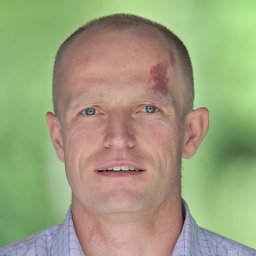 Markus Landthaler合作论文数Max Delbruck Ctr Mol Med, Berlin Inst Med Syst Biol, Berlin, Germany1
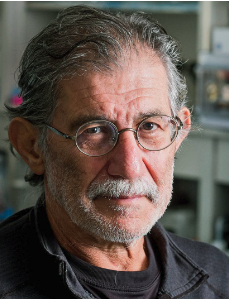 Brian T. Chait合作论文数Laboratory of Mass Spectrometry and Gaseous Ion Chemistry, The Rockefeller University1Jakobsen Lis合作论文数1
 Søren Lykke-Andersen合作论文数1
 Ilya Altukhov合作论文数VK1Imami Koshi合作论文数§Centre for High-Throughput Biology, University of British Columbia1
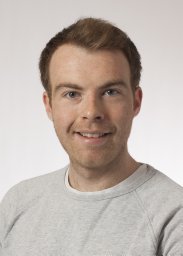 Ross A Cordiner合作论文数1
 Jerome Rouviere合作论文数Institut Jacques Monod, Univ Paris Diderot1
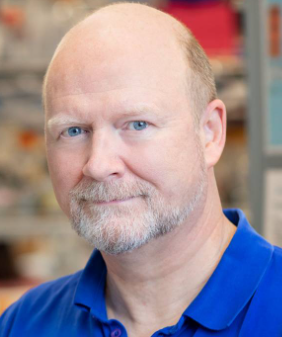 Michael P. Rout合作论文数Laboratory of Cellular and Structural Biology, The Rockefeller University1
 Elena Conti合作论文数Max Planck Institute of Biochemistry1
 Patrick Cramer合作论文数Max Planck Institute for Multidisciplinary Sciences;Max Planck Institute for Biophysical Chemistry1
 Sander Granneman合作论文数Wellcome Trust Centre for Cell Biology, University of Edinburgh, Mayfield Road, Kings Buildings, Michael Swann Building, Edinburgh EH9 3JR, Scotland, UK1
 Matthias Selbach合作论文数Max-Planck-Institut fur Infektionsbiologie;Zentrum fur Infektionsforschung;Zentrum fur Infektionsforschung, Max-Planck-Institut fur Infektionsbiologie1
 Miha Milek合作论文数Faculty of Pharmacy, University of Ljubljana1




