Low-rank tensor completion (LRTC) has become more and more popular in the field of tensor completion. Because solving the tensor rank minimization is NP-hard, extensive surrogate norms of tensor rank have been proposed successively. Among these norms, the innovative nonconvex orthogonal transformed tensor Schatten-p norm (OTT S_p ) can better capture the low-rank property of tensor than most competitive norms. However, the OTT S_p method solely depends on the global low-rank prior and ignores the importance of the nonlocal similar structures, which play a significant role in the tensor data processing. In this paper, to address the defect of the OTT S_p method, we propose a novel LRTC model based on nonlocal self-similarity (NSS) regularization, which combines NSS regularization with the OTT S_p . As a nonlocal prior, NSS can preserve the nonlocal similar details, so the introduction of NSS regularization contributes to promoting the final inpainting performance. Therefore, our proposed model is capable of further conserving nonlocal self-similarities based on the global low-rankness. Moreover, the alternating direction method of multipliers is adopted to solve our proposed model. Experimental results on color images, grey-scale videos, and multispectral images demonstrate the superiority of our proposed method compared with other existing state-of-the-art methods.
Low-rank tensor completion aims to recover the missing entries of the tensor from its partially observed data by using the low-rank property of the tensor. Since rank minimization is an NP-hard problem, the convex surrogate nuclear norm is usually used to replace the rank norm and has obtained promising results. However, the nuclear norm is not a tight envelope of the rank norm and usually over-penalizes large singular values. In this paper, inspired by the effectiveness of the matrix Schatten-q norm, which is a tighter approximation of rank norm when 0 < q < 1, we generalize the matrix Schatten-q norm to tensor case and propose a Unitary Transformed Tensor Schatten-q Norm (UTT-Sq) with an arbitrary unitary transform matrix. More importantly, the factor tensor norm surrogate theorem is derived. We prove large-scale UTT-Sq norm (which is nonconvex and not tractable when 0 < q < 1) is equivalent to minimizing the weighted sum formulation of multiple small-scale UTT- $S_{q_{i}}$ (with different qi and qi ≥ 1). Based on this equivalence, we propose a low-rank tensor completion framework using Unitary Transformed Tensor Multi-Factor Norm (UTTMFN) penalty. The optimization problem is solved using the Alternating Direction Method of Multipliers (ADMM) with the proof of convergence. Experimental results on synthetic data, images and videos show that the proposed UTTMFN can achieve competitive results with the state-of-the-art methods for tensor completion.
白化是一种能够去除数据各属性间相关性的数据预处理方法.最近提出的二维白化重构方法(Two?dimensional whitening reconstruction,TWR)是一种针对单张图片的白化方法,阐述了TWR方法等价于基于图像列的ZCA白化,即TWR具有去除图像列内相关性的作用;但是图像局部块内的相关性往往远大于列内,因此本文从去除图像局部块内相关性的角度出发,提出了两种TWR的改进方法:基于重组的TWR(Reshaped?based TWR,RTWR)方法和基于块的TWR(Patch?based TWR,PTWR)方法.RTWR首先将图像进行重新组合使得每个列向量对应着原始图像的子块,然后将TWR预处理作用在重组后的图像上;而PTWR方法则将TWR直接作用在图像的每个子块上.在ORL、CMU PIE、AR三个人脸数据集上的实验结果表明,RTWR和PTWR预处理比TWR预处理更有利于后续分类性能的提高.
主成分分析网络(principal component analysis network,PCANet)是一种简单的深度学习算法,在图像识别领域具有优秀的性能.将图嵌入思想融入PCANet,提出一种新的图像识别算法光滑主成分分析网络(Smooth-PCANet).为了验证Smooth-PCANet算法的有效性,在人脸、手写体字符以及图片等不同数据集上构建实验,并将Smooth-PCANet与多种基于深度学习的图像识别算法作了对比.实验结果证明,Smooth-PCANet算法比PCANet获得了更高的识别性能,并且更有效地避免了过拟合,在小样本训练时具有显著优势.
Non-convex methods play a critical role in low-rank tensor completion for their approximation to tensor rank is tighter than that of convex methods. But they usually cost much more time for calculating singular values of large tensors. In this paper,we propose a double transformed tubal nuclear norm(DTTNN)to replace the rank norm penalty in low rank tensor completion(LRTC)tasks. DTTNN turns the original non-convex penalty of a large tensor into two convex penalties of much smaller tensors,and it is shown to be an equivalent transformation. Therefore,DTTNN could take advantage of non-convex envelopes while saving time. Experimental results on color image and video inpainting tasks verify the effectiveness of DTTNN compared with state-of-the-art methods.
主成分分析网络(PCANet)是一种简单的深度学习网络模型,在图像识别领域具有很强的应用潜力.本文在PCANet的基础上,通过对PCANet结构进行分析,构造了一种基于多层特征融合的PCANet(PCANet_dense)网络模型.与单纯地只将前一层网络输出作为后一层网络输入的PCANet不同,PCANet_dense利用了不同层的特征信息.在2层网络结构中,它首先将原始图像特征和第1层网络的输出进行级联,然后将级联后的结果作为第2层网络的输入.而在3层网络结构中,它则将第1层和第2层网络的输出级联起来,作为第3层网络的输入.由于PCANet_dense在训练每一层(除了第1层)时使用了更多信息,因此能够获得比原PCANet更好的效果.为了验证所提方法的有效性,本文使用CMU PIE数据集构建网络模型,并在ORL、AR和Extended Yale B 3个公开人脸数据集上对所提出方法的性能进行了测试,实验结果表明,本文提出的PCANet_dense获得了比PCANet更好的性能.
This paper proposes a novel method for face recognition, called, sub-image-based fuzzy 2D Linear Discriminant Analysis (subimage-F2DLDA) based on sub-image method, 2-Dimensional Linear Discriminant Analysis (2D-LDA) and fuzzy set theory. We first partition the whole training image set into several different sub-image sets by dividing each image into sub-images and collecting the same location together, and then redefine the within-class matrix and between-class matrix for each sub-image set, which can be computed by incorporating the membership degree matrix using fuzzy k-nearest neighbor(FKNN). Finally, we construct a nearest classifier based on fuzzy 2DLDA for each sub-image set. We construct experiments on Yale A, Extended Yale B and ORL face databases, and the results show that the proposed approach achieves better performance than compared methods on face recognition.
In this paper, we propose a novel method, called random subspace method (RSM) based on tensor (Tensor-RS), for face recognition. Different from the traditional RSM which treats each pixel (or feature) of the face image as a sampling unit, thus ignores the spatial information within the face image, the proposed Tensor-RS regards each small image region as a sampling unit and obtains spatial information within small image regions by using reshaping image and executing tensor-based feature extraction method. More specifically, an original whole face image is first partitioned into some sub-images to improve the robustness to facial variations, and then each sub-image is reshaped into a new matrix whose each row corresponds to a vectorized small sub-image region. After that, based on these rearranged newly formed matrices, an incomplete random sampling by row vectors rather than by features (or feature projections) is applied. Finally, tensor subspace method, which can effectively extract the spatial information within the same row (or column) vector, is used to extract useful features. Extensive experiments on four standard face databases (AR, Yale, Extended Yale B and CMU PIE) demonstrate that the proposed Tensor-RS method significantly outperforms state-of-the-art methods.
In applying traditional statistical method to face recognition, each original face image is often vectorized as a vector. But such a vectorization not only leads to high-dimensionality, thus small sample size (SSS) problem, but also loses the original spatial relationship between image pixels. It has been proved that spatial regularization (SR) is an effective means to compensate the loss of such relationship and at the same time, and mitigate SSS problem by explicitly imposing spatial constraints. However, SR still suffers from two main problems: one is high computational cost due to high dimensionality and the other is the selection of the key regularization factors controlling the spatial regularization and thus learning performance. Accordingly, in this paper, we provide a new idea, coined as implicit spatial regularization (ISR), to avoid losing the spatial relationship between image pixels and deal with SSS problem simultaneously for face recognition. Different from explicit spatial regularization (ESR), which introduces directly spatial regularization term and is based on vector representation, the proposed ISR constrains spatial smoothness within each small image region by reshaping image and then executing 2D-based feature extraction methods. Specifically, we follow the same assumption as made in SSSL (a typical ESR method) that a small image region around an image pixel is smooth, and reshape each original image into a new matrix whose each column corresponds to a vectorized small image region, and then we extract features from the newly-formed matrix using any off-the-shelf 2D-based method which can take the relationship between pixels in the same row or column into account, such that the original spatial relationship within the neighboring region can be greatly retained. Since ISR does not impose constraint items, compared with ESR, ISR not only avoids the selection of the troublesome regularization parameter, but also greatly reduces computational cost. Experimental results on four face databases show that the proposed ISR can achieve competitive performance as SSSL but with lower computational cost.
Wavelet Transform method has been widely used in face recognition. However, most of them focus on single wavelet transform that suffers from the selection of wavelet basis and order. This paper presents a novel face recognition method to deal with this problem. The proposed method, called IMWT (incorporation of multi wavelet transforms), uses several wavelet transforms that come from the same wavelet family with different order to decompose a face image and obtains several lowest frequency images, and then incorporates all corresponding low-frequency images into a new pattern to replace the original face image, finally, performs PCA and FLD for further extract features. We carry out some experiments on ORL database and the results indicate that our proposed approach can get the best performance compare with single wavelet transform, so IMWI can effectively avoid the selection of wavelet order.
本文针对“Visual Basic程序设计”课程的教学方法进行探讨.将CDIO理念融入该课程的教学中,从培养学生学习能力、交流能力、团队协作能力等方面,在课程内容设置、教学方法和手段及考核等方面进行了探讨与实践,实践证明,该模式有利于培养学生的实际应用能力,教学改革取得了较好的效果.
In this paper, a sub-image method based on feature sampling and feature fusion (called as RS_SpCCA) is proposed. RS_SpCCA first performs a random subspace method in sub-images which are partitioned in a deterministic way. Then, the method obtains correlation features by fusing sampled features and global feature extracted by certain feature extraction method and finally, constructs component classifiers on corrleation features. In this method, the purpose of sampling feature is to construct more diverse component classifiers, and the purpose of the fusing feature is to make good use of the global information. The experimental results on AR, Yale and ORL three face image databases show that sub-image method based on feature sampling and feature fusion (RS_SpCCA) is superior to both SpCCA and Semi-RS which only use feature sampling or feature fusion.
Proposed a 2DPCA method based on random sampling,termed as Row Random Sampling 2DPCA(RRS-2DPCA),for face recognition.Different from those traditional face recognition methods which sampling from feature or feature vector,RRS-2DPCA constructs random sampling on row vector sets and then performs 2DPCA on those row vector sets.The experimental results on ORL,Yale and AR face databases show that RRS-2DPCA not only obtains very good recogntion accuracy and computational efficiency,but also is stable to the number of random sampling row corresponding to different database.In additional,in order to relax the nonrobust of 2DPCA and RRS-2DPCA to occlusion,we further proposed local region random sampling 2DPCA(LRRS-2DPCA),which performs RRS-2DPCA on local regions of face image.The experimental results indicates that LRRS-2DPCA gains better both relative robustness and good recognition accuracy than RRS-2DPCA.
The article starts from successful experiences of the IP/TCP Protocol and the UNIX Operating System, analyzes the feasibility and necessity of the design and realization of public oriented education video system co-construction and sharing platform, simultaneously constructs the basic model of educational video system and proposes a series of technical plan for guaranteeing the system successful realization Co-construction and Platform including transmission, compression code, gathering and so on.
Bagging is not quite suitable for stable classifiers such as nearest neighbor classifiers due to the lack of diversity and it is difficult to be directly applied to face recognition as well due to the small sample size (SSS) property of face recognition. To solve the two problems, local Bagging (L-Bagging) is proposed to simultaneously make Bagging apply to both nearest neighbor classifiers and face recognition. The major difference between L-Bagging and Bagging is that L-Bagging performs the bootstrap sampling on each local region partitioned from the original face image rather than the whole face image. Since the dimensionality of local region is usually far less than the number of samples and the component classifiers are constructed just in different local regions, L-Bagging deals with SSS problem and generates more diverse component classifiers. Experimental results on four standard face image databases (AR, Yale, ORL and Yale B) indicate that the proposed L-Bagging method is effective and robust to illumination, occlusion and slight pose variation.
The small sample size(SSS) problem and the sensitivity to such variations as lighting,expression and occlusion are two challenging problems when LDA deals with the high dimensional face image.In order to address the two problems, this paper proposes a new method called as semi-random subspace LDA(SemiRS-LDA).Different from the traditional Random Subspace Method(RSM) which completely randomly samples features from the whole pattern feature set,SemiRS-LDA performs random sampling features on each local region(or a sub-image) partitioned from the original face image.More specifically,the paper first divides a face image into several sub-images in a deterministic way,then constructs a set of LDA classifiers on different random sampled feature set from each sub-images set,and finally combines all component classifiers for the final decision.Experiments on two benchmarks face databases(AR and ORL)show that the proposed SemiRS-LDA method is robust,effective in recognition performance.
Random subspace method (RSM) is a successful ensemble construction technique for classification and its success mainly lies in that it could generate quite diverse component classifiers. However, the recognition accuracy of the component classifier is often insufficient due to its random selection of inputs. In this paper, to improve the accuracy of the component classifier and further gain high performance ensemble classifier, I introduce the idea of information fusion into RSM and propose a new method called RS CCA. RS CCA fuses randomly selected features and global features using Canonical Correlation Analysis (CCA) method, so it can obtain the feature sets containing global information. The experiments on 13 UCI datasets show RS CCA is very effective to improve the performance of RSM. In addition, an analysis about average diversity and average accuracy is given to explain why RS CCA can yield better performance than RSM.
Ridge regression (RR) for classification is a regularized least square method to model the linear dependency between covariate variables and labels. By applying appropriate techniques to encode the multivariate labels in face recognition as the vertices of the regular simplex which can separate points with highest degree of symmetry, RR maps the face images into a face subspace where the images from each individual will locate near their individual targets. However, as a holistic method, RR operates directly on a whole face region represented as a vector and thus cannot effectively recognize the faces with illumination variations and partial occlusions. In this paper, we present a novel algorithm, termed as local ridge regression (LRR). Different from RR, LRR emphasizes on each local face region matching rather than the whole. As a result, LRR can not only enhance the robustness to the local variations by utilizing the spatial and geometrical information of facial components, but also avoid the dimensionality reduction in the holistic RR as a preprocessing. Furthermore, an efficient cross-validation algorithm is adopted to select the regularization parameters in each local region. Experiments on two standard face databases demonstrate that the proposed algorithm significantly outperforms RR and the two popular linear face recognition techniques (Eigenface and Fisherface). Although we concentrate on RR in this paper, following the proposed line of the research, many current multi-category classifiers can also be applied in face recognition through combining the characteristics of face images and may obtain better recognition accuracies.
本文针对"Visual Basic程序设计"课程的教学方法进行探讨。从学生的实际出发,以培养学生解决实际问题能力为目的。通过多种方法激发学生的学习兴趣,强调实践教学环节,给学生提供良好的学习环境,并取得了较好的效果。
Matrix principal component analysis (MatPCA),as an effective feature extraction method,can dealwith the matrix pattern and the vector pattern.However,like PCA,MatPCA does not use the class informationof samples.As a result,the extracted features cannot provide enough useful information for distinguishing pat-tern from one another,and further resulting in degradation of classification performance.To fullly use class in-formation of samples,a novel method,called the fuzzy within-class MatPCA (F-WMatPCA)is proposed.F-WMatPCA utilizes the fuzzy K-nearest neighbor method (FKNN) to fuzzily the class membership degrees of atraining sample and then performs fuzzy MatPCA within these patterns having the same class label.Due to moreclass information is used in feature extraction,F-WMatPCA can intuitively improve the classification perfor-mance.Experimental results in face databases and some benchmark datasets show that F-WMatPCA is effectiveand competitive than MatPCA.The experimental analysis on face image databases indicates that F-WMatPCA im-proves the recognition accuracy and is more stable and robust in performing classification than the existing methodof fuzzy-based F-Fisherfaces.
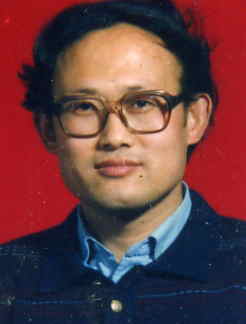 Songcan Chen (陈松灿)合作论文数College of Computer Science & Technology, Nanjing University of Aeronautics & Astronautics6
 CHEN Feiyue (陈飞玥)合作论文数3Jialue Tian合作论文数2刘慧合作论文数Jincheng College, Nanjing University of Aeronautics and Astronautics2Xiaohong Chen (陈晓红)合作论文数Nanjing University of Aeronautics and Astronautics2Jing Xue合作论文数1Xingrui Zhang合作论文数1Ke Jiang合作论文数1ZHAO Guo-an (赵国安)合作论文数1
 Qing Tian (田青)合作论文数School of Software, Nanjing University of Information Science & Technology1Jiahui Liu (刘佳慧)合作论文数1Xing Peng (彭星)合作论文数1
 Chunyan Li (李春岩)合作论文数The Second Hospital of Hebei Medical University1
 Hui Xue (薛晖)合作论文数Department of Computer Science, School of Computer Science and Engineering, Southeast University;College of Software Engineering, Southeast University;School of Artificial Intelligence, Southeast University1
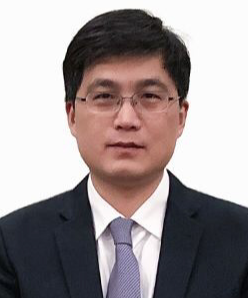 Daoqiang Zhang (张道强)合作论文数Department of Computer Science and Engineering, College of Computer Science and Technology, Nanjing University of Aeronautics and Astronautics1
 Jingyu Yang (杨静宇)合作论文数School of Computer Science and Engineering, Nanjing University of Science and Technology1Xiaofang Hao合作论文数1




