The electrolyte membrane plays a central role in determining the electrochemical performance of protonconducting solid oxide electrolysis cells (H-SOECs). However, obtaining dense membranes with high proton conductivity remains challenging because widely used barium cerate-zirconate perovskite oxides exhibit low sintering activity and typically require high processing temperatures. Here, a pre-reacted powder approach is proposed to enhance electrolyte densification while preserving high conductivity. Powders synthesized directly in the perovskite phase with a compact particle structure achieve full densification at a shrinkage of 13%, whereas conventionally processed precursors remain porous even at 17% shrinkage. The strategy is effective for both BaCe0.7Zr0.1Y0.2O3- delta (BCZY) and BaCe0.7Zr0.1Y0.1Yb0.1O3- delta (BCZYYb) electrolytes, resulting in conductivity increases of approximately 150% and 60%, respectively. The improvement arises from enhanced bulk transport and reduced grain boundary resistance. When combined with a shrinkage-assisted support design, thin electrolyte membranes can be densified at 1400 degrees C, lower than conventional sintering temperatures. The resulting HSOEC single cells exhibit 20-50% higher current density, and resistance contributions are analyzed by electrochemical impedance spectroscopy. This reduced-shrinkage densification strategy provides a scalable route for high-quality proton-conducting electrolytes and offers potential applicability to other ceramic membrane systems.
Protonic ceramic electrochemical cells (PCCs) offer an efficient pathway for electricity-hydrogen interconversion at intermediate temperatures, yet their practical deployment is hindered by complex fabrication routes and limited scalability. Here, we report a powder-to-cell engineering strategy that directly links electrolyte precursor design to cell-level performance. A hybrid-scale BaCe0.7Zr0.1Y0.1Yb0.1O3-δ (BCZYYb) precursor, integrating microscale BaCO3 with nanoscale metal oxides, enables reaction-assisted sintering that improves electrolyte densification, suppresses cation segregation, and promotes proton transport. Cells fabricated from this hybrid-scale powder deliver ∼60% higher power densities than those prepared from fully nanoscale precursors. Importantly, the hybrid-scale powder can be synthesized at the kilogram scale and is compatible with cost-effective ceramic processing, enabling the fabrication of large-area single cells via tape casting, lamination, and co-sintering. These scaled-up PCCs exhibit high electrochemical performance and stable steam electrolysis operation at current densities up to 1 A cm- 2, with a low degradation rate of 0.8% kh- 1.
This study investigates a photovoltaic (PV)-driven electricity-hydrogen cogeneration system integrating a solid oxide fuel cell (SOFC), a proton exchange membrane electrolyzer (PEMEC), and a plasma-assisted ammonia decomposition (PAD) unit. The system enables cross-sector low-carbon co-supply but must balance fluctuating PV generation and time-varying electricity demand with near-constant hydrogen demand. A bi-level control framework is developed: an upper-layer mixed-integer linear program (MILP) schedules optimal energy-allocation trajectories, while a lower-layer dynamic controller tracks them for the SOFC, PEMEC, and battery. For the primary electricity supplier, an enhanced SOFC dynamic model capturing intra-stack distributed states is embedded to enable thermal-safety-aware, constraint-enforced operation beyond lumped models, and a PAD performance model is derived from experiments. Results reveal an economy-tracking trade-off: an SOFC load change rate limit of 20%/15 min yields an LCOE of 59.9 $/MWh with an average relative power-tracking error of 0.4%, whereas tightening the limit to 5%/15 min reduces tracking error but increases LCOE to 63.2 $/MWh due to larger battery capacity. The PEMEC absorbs surplus PV electricity, with hydrogen production reaching 48.3% of total PV generation. Integrating PAD reduces annual PV curtailment from 39.4% to 32.2%, converting an additional 68 MWh of PV electricity to hydrogen annually. Novelty is demonstrated by quantifying the economy-tracking knee point (20%/15 min) under realistic PV fluctuations and by evaluating PAD's system-level role in curtailment utilization within the same plant-level framework. This system architecture and control framework support low-carbon multi-energy parks with improved renewable utilization and flexible electricity-hydrogen co-supply.
To avoid greenhouse gas emissions, reduce the dependence of the traditional ammonia synthesis process on fossil energy, and achieve a low-carbon and sustainable transformation of the ammonia synthesis process, the electrolyzer-based ammonia synthesis system has gradually attracted people's attention. This paper compares and analyses the thermodynamic performance of the synthetic ammonia system when operating with different electrolyzers: alkaline water electrolyzer (AWE), proton exchange membrane electrolyzer (PEMEC), and solid oxide electrolyzer (SOEC). The results show that the energy efficiency of the synthetic ammonia system based on AWE, PEMEC and SOEC is 54.99%, 59.94%, and 77.19%, respectively, which is in positive correlation with the hydrogen production efficiency of the electrolyzer. Meanwhile, by comparing the heat integration of different synthetic ammonia systems, it is found that the heat integration processes of synthetic ammonia systems based on PEMEC and AWE are identical because the excess heat from the low-temperature electrolyzer is directly discharged to the environment through cold utilities, which means that the synthetic ammonia system can adopt the PEMEC and AWE collaborative hydrogen production solution to achieve a trade-off between system flexibility and economy. The high-temperature electrolyzer (SOEC) exhibits the advantage of high thermodynamic compatibility with ammonia synthesis reactions, enabling more efficient utilization of system waste heat and further enhancing the overall system efficiency.
Converting renewable electricity into carbon-free ammonia fuel will not only solve the problem of renewable energy utilization but also contribute to reducing the traditional chemical industry's dependence on fossil energy and achieving a low-carbon transformation in chemical production. This study employs a multi-objective optimization algorithm to optimize the waste heat recovery unit of the ammonia synthesis system based on alkaline water electrolyzer, proton exchange membrane electrolyzer cell, and solid oxide electrolyzer cell, designs the system heat exchange network, and explores the effect of improving the system efficiency by using the system's low-temperature waste heat to produce domestic hot water. The results show that improved system energy efficiency comes at the expense of increased ammonia production costs due to increased investment in auxiliary equipment, and the energy efficiency of the ammonia synthesis system based on solid oxide electrolyzer cell is the highest, ranging from 72.1 % to 73.3 %. The payback time of the ammonia synthesis system based on alkaline water electrolyzer is the shortest, ranging from 7.7 to 8.1 years, due to the minimal investment in alkaline water electrolyzer. The exergy analysis results show that the maximum efficiency point further improves the system energy efficiency by optimizing the utilization of the system's medium and high-temperature waste heat. In addition, at the maximum efficiency point, if the low-temperature waste heat of the system is used to produce domestic hot water, the system's exergy loss will be further reduced, resulting in an increase in system exergy efficiency of about 0.3-0.5 %, and a shortening of the investment payback period by 0.2-0.6 years. Economic analysis results show that when the electricity price is greater than 56.8 $/MWh, the reduced electricity cost when the ammonia synthesis system adopts the solid oxide electrolyzer cell to produce hydrogen can offset the electrolyzer's high investment cost, making it more economical than the proton exchange membrane electrolyzer cell. The above conclusions provide an important reference for the integration design and technology selection of ammonia synthesis processes in regions with different resource conditions and technological maturity.
The production of hydrogen by proton exchange membrane water electrolyzers (PEMWEs) integrated with renewable energy sources is receiving significant interest for its environmental benefits. While, powered by intermittent renewable electricity, the frequent start-up/shut-down events put forward an urgent need for PEMWEs to have rapid start-up capabilities and will significantly accelerate the degradation of electrolyzer, increasing the failure risk and cutting down the cost-effectiveness. In this paper, a novel hydrogen production and hot standby dual-mode system aiming at fast start-up ability as well as slow degradation is proposed. Thermal energy storage based on phase change material (PCM) is used to manage the heat of the electrolyzer by recovering the heat produced during hydrogen production mode and utilizing it to maintain the electrolyzer temperature during hot standby mode. The operating strategy has been given and the dynamic performance has been analyzed. Results indicated that an electrolyzer with a capacity of 397.2 Nm3/h 3 /h can cut start-up time by up to 785 s (from 1067 to 282 s). In the extreme situation, from 0 A to the rated current of 320 A, the start-up time of PEMWE is reduced from 118 s to 88 s, and the voltage overshoot is reduced by 23.91 % when compared to that of a cold start. Moreover, through waste heat recovery and utilization, the system efficiency can be improved. The system employing PCM with a higher melting point (64 degrees C) achieves an efficiency of 58.86 %, which is 1 % and 2.2 % greater than the systems using PCM melting at 45 degrees C and without heat storage, respectively.
The steel industry, a typical energy-intensive sector, experiences significant load power fluctuations, particularly during peak periods, posing challenges to power-grid stability. Traditional studies often overlook its unique production characteristics, limiting a comprehensive understanding of power fluctuations. Meanwhile, air conditioning (AC), as a flexible load, offers stable regulation with an aggregation effect. This study explores the potential for coordinated load dispatch between the steel industry and air conditioning clusters to enhance power system flexibility. A power characteristic model for steel loads was developed based on energy consumption patterns, while a physical ETP model aggregated air conditioning loads. To improve forecasting accuracy, a parallel LSTM-Transformer model predicts both steel and air conditioning loads. CEEMDAN-VMD decomposition reduces noise in steel-load data, and the QR algorithm computes confidence intervals for load responses. The study further examines interactions between electric-arc furnace control strategies and air conditioning demand response. Case studies using real-world data demonstrate that the proposed model enhances prediction accuracy, peak suppression, and variance reduction. These findings provide insights into steel industry power fluctuations and large-scale air conditioning load adjustments.
Solid oxide cells (SOCs) hold great promise for efficient power generation and hydrogen production, with performance strongly influenced by cell architecture. Herein, we present a rational design of yttria-stabilized zirconia (YSZ) trilayer-structured SOCs, combining porous|dense|porous scaffold engineered with optimized catalyst impregnation techniques. Symmetrical cell analyses reveal that the pore structure of the porous scaffold governs the optimal catalyst loading, while scaffold thickness is critical for minimizing gas diffusion resistance. Sequential impregnation of Ce0.9Gd0.1O2-delta (CGO) and La0.6Sr0.4CoO3-delta (LSC) into the YSZ scaffold produces air electrodes with polarization resistances as low as 0.009 S2 cm2 at 850 degrees C and 0.025 S2 cm2 at 750 degrees C. During steam electrolysis, the electrolyte-supported single cells achieve stable operation for 160 h under high current densities of-0.75 A cm-2 and-1.00 A cm-2. These results highlight the potential of trilayer-structure fabrication and catalyst impregnation as effective strategies for advancing the SOC technology.
Protonic ceramic fuel cells (PCFCs) show great promise as a technology for clean power generation. However, the sluggish reaction kinetics and instability of the cathodes continue to impede their commercialization. Here, we report a multiphase nanocomposite produced through dual self-assembly, which serves as a highly active and durable cathode for PCFCs. During cathode sintering, self-assembly takes place to create a composite consisting of PrNi0.5Co0.5O3-delta (PNC), BaCe0.7Zr0.1Y0.2O3-delta (BCZY), and PrO x nanoparticles. Compared to the single-phase PNC cathode, this cathode demonstrates enhanced performance with a reduction of 49.1% in ohmic resistance and 48.5% in polarization resistance at 700 C-o. This outcome is attributed to improved oxygen surface exchange kinetics and electrolyte-cathode interface strength. Furthermore, the self-assembled cathode in the single cell exhibits a 33.3% increase in power output relative to that of the PNC cathode cell. More interestingly, the cell displays performance activation during 400 h of operation, resulting in a power output increase of 27.5%. The cathode is revealed to be further self-assembled during operation in the post-mortem analysis, featuring an in situ-formed needle-like nanocomposite composed of BaPrO3 and BCZY. This work presents an innovative approach to nanocomposite self-assembly for potential use in PCFC cathode applications. [GRAPHICS] .
Energy transition towards clean, efficient energy supply has been a common sense of the government and public in China. However, lacking reasonable planning will lead to undisciplined development, resource waste, and excessive investment. In this context, this paper investigates potential pathways of Beijing energy transition towards a high-level low-carbon, clean and efficient energy system in 2035 with an extended energysocpe model. Firstly, based on available data, future energy demands are predicted by a newly proposed hybrid forecasting method, which combines the traditional regression model, grey model, and support vector machine model with an entropy-based weighted factor. Secondly, the superstructure-based optimization model is employed to investigate the system configuration and operation strategy of the future Beijing energy system. Finally, the uncertainty impact of electricity price, natural gas price, hydrogen price, and the capital expenditures of electrolyzer and steam methane reforming for hydrogen applications are studied. The forecasting results show that all walks of life will witness a continuously increasing energy demand in multiple sectors of Beijing towards 2035. The planning results suggest that the imported electricity and natural gas will dominate the energy supply of Beijing in 2035 with a contribution of 86% of the energy resources consumption of 384 TWh. Moreover, the energy system presents a high end-use electrification level of 65% and high penetration of efficient technologies, which supply 119 TWh via combined heat and power, 26 TWh via heat pump and 95 TWh via district heating network. The energy use of various sectors of energy resources, technologies and end-use are closely related. Hydrogen will have an increased penetration in the private mobility sector, but the locally generated hydrogen is mainly from steam methane reforming technology.
Electrolyte-supported solid oxide electrochemical cells (SOCs) offer advantages in terms of easier fabrication and enhanced mechanical properties, but achieving high performance and multifunctionality remains challenging. In this study, we develop high-performance and versatile electrolyte-supported SOCs using La 0.9 Sr 0.1 Ga 0.8 Mg 0.2 O 3-delta (LSGM) electrolyte materials through microstructural engineering of Sr 2 Fe 1.5 Mo 0.5 O 6-delta (SFM)-based fuel electrodes. We evaluate the cells for power generation, hydrogen production, and carbon dioxide reduction, showcasing the diverse potential of various fuel electrode configurations. Among these, the impregnated SFM@LSGM electrode achieves the best overall performance, with a maximum power density of 739 mW cm-2 in fuel-cell mode, a current density of-0.81 A cm- 2 at 1.3 V during steam electrolysis, and an unprecedented current density of-1.92 A cm- 2 at 1.5 V in COQ electrolysis. Furthermore, it exhibits satisfactory stability across all operational modes. These findings provide valuable insights into the design of versatile electrolyte-supported SOCs and open new possibilities for their flexible applications in future low-carbon energy systems.
Protonic ceramic fuel/electrolysis cells (PCFCs/PCECs) show great potential for the efficient and reversible conversion of chemical and electrical energy. The electrolyte and oxygen electrode interface in PCFCs/PCECs is particularly crucial for achieving optimal performance. In this work, Ba evaporation and Y enrichment phenomena are investigated on the surface of a BaCe0.7Zr0.1Y0.2O3-delta electrolyte during high-temperature sintering. Furthermore, an interfacial engineering strategy is proposed by removing the non-stoichiometric perovskite surface layer via a facile polishing process to enable a comparative analysis of the detrimental effects of the undesired layer on the cell performance. Polishing the electrolyte leads to a remarkable -50 % enhancement in PCFC performance and -120 % enhancement in PCEC performance at 650 degrees C. Electrochemical impedance spectroscopy coupled with distribution of relaxation time analysis reveals that the improved performance of the polished cell can be attributed to reductions in both the ohmic and polarization losses, with the latter primarily influenced by the facilitated oxygen electrode reactions. This interfacial engineering approach restores the high proton conductivity at the electrolyte surface and strengthens the physical and chemical adhesion between the electrolyte and the oxygen electrode. Our findings shed light on the existing challenges at the electrolyteelectrode interface and underscore the significance of interfacial engineering in enhancing PCFC/PCEC performance.
Green ammonia and hydrogen from renewable energy sources have emerged as crucial players during the transition of the chemical industry from a fossil energy-dominated economy to one that is environmentally friendly. This work proposes a green ammonia synthesis system driven by synergistic hydrogen generation using alkaline water electrolyzers (AWE) and proton exchange membrane electrolyzers (PEMEC). The effects of hydrogen-production ratios of PEMEC and AWE on the thermodynamic and economic performance of the system are compared and analyzed via multi-objective optimization. The findings showed that an increase in the amount of hydrogen produced by PEMEC improves the system's energy efficiency, but the payback period is delayed because of the PEMEC high initial investment cost. The techno-economic performance of the system at a 1:1 ratio of PEMEC to AWE hydrogen production are investigated considering the system level heat integration based on the pinch point analysis method to maximize the heat recovery. The results show that increasing the operational temperature, the pressure of the electrolyzer, and the ammonia synthesis pressure will enhance the system's thermal performance. Economic analysis shows that reducing electricity prices and electrolyzer investment costs will be the key to achieving the economic feasibility of the green ammonia system. A novel ammonia synthesis system is proposed, which combines alkaline water electrolyzers (AWE) and proton exchange membrane electrolyzers (PEMEC) to produce hydrogen in a synergistic manner. A comparative analysis is performed to assess the influence of hydrogen-production ratios of PEMEC and AWE on the thermodynamic and economic performance of the system via multi-objective optimization.image (c) 2024 WILEY-VCH GmbH
Green hydrogen production via electrochemical water splitting is a promising approach for future sustainable energy and industry. Among the existing water electrolysis technologies, solid oxide steam electrolysis exhibits the highest electrical efficiency, and hence potentially considerable cost-effectiveness. Moreover, from thermodynamic considerations, the efficiency can be increased further by integrating external high temperature heat to reduce the electrical energy required for the water splitting reaction. Therefore, this paper proposes an innovative system for cost-competitive solar hydrogen production by integrating concentrated solar heat into the solid oxide electrolysis steam generation process. Economic viability of such solar-driven solid oxide electrolysis hydrogen production system is assessed over the long term (from current status to 2030) by taking into account the cost reduction of essential components and the expansion of the solid oxide electrolysis load range. Heat cascade utilization in each time step is optimized using multi-time heat and mass integration technology to maximize cost savings. The results showed that, for a hydrogen yield of 200 kg/day, levelized cost of hydrogen production has a significant amount of space to fall from its current 4.6 Euro/kg to 1.7 Euro/kg in 2030, achieving cost-competitiveness with hydrogen produced by traditional non-renewable energy sources, and the main drivers of this decrease are cost reductions of SOE unit and PV. To achieve hydrogen production cost below 2.7 Euro/kg and even 2 Euro/kg, the investment costs of SOE unit should be decreased by at least to 1000 Euro/kWe and 500 Euro/kWe respectively. Compared with the system using photovoltaic battery to provide electricity and heat for hydrogen production, the system coupling concentrated solar heat-thermal energy storage-steam generation subsystem with photovoltaic-battery subsystem showed higher economic viability. Employing 134 kWth concentrated solar heat with 420 kWhth thermal storage allows for maximum 3.2 Euro/kg hydrogen production cost reduction via significantly saving capacities of battery and solid oxide electrolyzer.
This study proposes a multi-objective optimization methodology for planning multi-energy complementary distributed energy systems considering process synergy and thermal integration. The process integration tech-nique is integrated into the Energy Hub model to deal with the multi-process synergy and temporal source-load matching. The system design and dispatch strategy are optimized by an augmented epsilon-constraint method with three objectives (economics, carbon emission, and fossil fuel consumption), and then the optimal tradeoff so-lution is identified by the Technique for Order Preference by Similarity to an Ideal Solution. Moreover, a novel multi-energy complementary distributed energy system is developed, which includes comprehensive utilization of solar energy (photovoltaic, photothermal, and thermochemical) and middle-low temperature heat utilization technologies, as well as hybrid energy storage technologies. Finally, a case study located in Beijing is selected as an illustrated example. The obtained single-objective optimization solutions and Pareto optimal solutions are further analyzed and compared in terms of system configuration, hourly/yearly energy balance, and thermal integration condition. The results show that the multi-energy complementary distributed energy system presents an economic benefit (reducing 25% of the annual total cost) compared to a gas turbine-based integrated energy system. Considering thermal integration contributes to 5.13% of the cost reduction. The configuration of the energy storage devices will reduce 18% energy supply cost, 9% fossil fuel consumption, and 42% carbon emission with the storage devices' boundary increase from 2 MWh to 60 MWh. Moreover, the optimal design of the system provides a reference for decision-making and a basis for flexible operation. The annual total cost, carbon emission, and fossil fuel consumption of the optimal solution in the Pareto frontier are 8.19 million CNY, 2.91 kt CO2-eq./year, and 18.4 GWh, respectively.
Building a multi-energy complementary power generation system is a viable way to encourage the use of renewable energy and decarbonize power generation. However, the intermittent nature of renewable power generation, such as photovoltaic and wind power, has prompted concerns regarding power grid stability. To balance such fluctuations, energy storage systems or other flexible power generation technologies should be integrated. In this paper, the peak regulation ability of integrated solar combined-cycle has been enhanced via employing a gas/oil exchanger between the top and bottom cycle. When integrating high penetration inter-mittent renewable energy, an appropriate operational strategy towards high-quality steady power output regulation is proposed. Dynamic performance analysis of the system, coupled characteristic of heat and mass transfer between subsystems have been highlighted. The case study demonstrates that fluctuations of the multi -energy complementary system power output can be controlled below 0.3 MW without renewable energy curtailment, even though wind-PV power generation fluctuates from 0.3 MW to 26.1 MW with variations per second reaching-2.8/3.7 MW. Furthermore, the system's levelized cost of electricity is down to 0.0512 $/kWh, which is cost-competitive with conventional power generation technologies.
Protonic ceramic cells (PCCs) are emerging as promising technologies for energy conversion at intermediate temperatures (400-700 degrees C). Here, we present a comprehensive study on the scalable fabrication and resistance deconvolution of Ni/BaCe0.7Zr0.1Y0.2O3-delta (BCZY) fuel electrode-supported PCCs featuring triple-conducting PrNi0.5Co0.5O3-delta (PNC) oxygen electrodes. The Ni/BCZY|BCZY half cells are fabricated using commercially relevant tape-casting methods in dimensions of 18 x 18 cm(2) before sintering. The sintering process of both the half cells and the PNC oxygen electrodes is optimized by examining the influence of sintering temperature on cell microstructure. Even a deviation of 50 degrees C in the sintering temperature of the PNC electrode can result in a remarkable 5-fold difference in cell performance. Through comprehensive analysis of electrochemical impedance spectroscopy data obtained under various gas supply and operating temperature conditions, different electrode processes are successfully identified, and their respective contributions to the overall resistance of the cell are quantified. The results reveal that the resistance associated with the PNC oxygen electrode processes primarily governs the total polarization resistance (R-p), while the resistance associated with the Ni/BCZY fuel electrode is considerably smaller. During short-term durability tests, the cell undergoes continuous activation. The changes in resistance associated with different electrode processes indicate that the major activation of the cell is contributed by the PNC oxygen electrode. After durability tests, the resistance associated with reactions occurring on the Ni/BCZY fuel electrode contributes the highest percentage to the total R-p. Postmortem analysis is performed on the cell after the durability tests. Our work provides insights to guide the design and optimization of PCCs.
This paper evaluates the thermo-economics of power-to-chemicals using solar energy, with the chemicals being methane, methanol, and gasoline. In addition to the optimal technology sizing and heat cascade utilization, this paper also considers the optimal molten-salt solar power tower (MSPT) design, as the MSPT significantly affects the levelized product cost. A bi-level optimization is proposed, employing mixed-integer linear programming at the lower level with heat and mass integration for optimizing sizes and operating strategies of technologies, and with heat cascade utilization and a genetic algorithm at the upper level for optimizing the MSPT design. In the upper level, the full-load storage hours, design direct normal irradiance, solar multiple, and sizes of the MSPT are optimized. The electricity sources considered are the MSPT, photovoltaic (PV) with daily electricity storage, and the electrical grid as a complementary technology to satisfy the targeted daily product demand. Cost-competitiveness of solar-driven chemical synthesis is thoroughly assessed via considering sensitivity analysis on 1) regional solar resource endowments and actual local demands; 2) electricity sources, that is, PV vs. MSPT; and 3) the scale effect represented by different chemicals’ yield. The results show that the levelized methane cost ranges from 4.5 to 8.5 €/kg, depending on the location, plant size, and annual power contribution of concentrated solar power. Due to the larger mass production, the levelized cost of methanol and gasoline is lower: 1.5–2.2 €/kg for methanol and 4–6 €/kg for gasoline. The findings highlight the significance of location choice, that is, natural endowment of solar radiation and carbon sources. Using the syngas co-electrolysis pathway and direct solar radiation 100 kWh/m2 higher, the methane production cost is decreased by 2.4 €/kg. Sensitivity analysis performed on plant scale reveals that a compact, small-scale system is far too expensive. The levelized cost of methane could be decreased by 1.2 €/kg when the plant is scaled up from 4,000 to 20,000 kg/day H2. Due to its expensive electricity storage and limited working hours, PV is typically not chosen as a power source. Overall, solar fuels are unlikely to be cost-competitive in the near future when compared to market prices for all three compounds under consideration.
To guarantee the space heating in the heating season, conventional combined heat and power (CHP) plants operate in a heat-controlled operation mode, resulting in restricted peak-shaving ability (PSA). To improve the CHP plant's PSA, a novel solar aided CHP (SA-CHP) system is proposed and simulated in this paper. In the new system, solar heat could be flexibly used to generate power or to supply heat according to the heating and power demands, thereby realizing the heat-power decoupling. A set of models for the SA-CHP system is developed and validated. The PSA, the standard coal consumption (SCC) and the techno-economic performances of a 330 MWe SA-CHP system are comprehensively analyzed in this paper. The results show that the SA-CHP system can significantly improve (up to double) the PSA compared with the CHP plant under the same rated heating power. The feasible operation region area of the SA-CHP system is 74.7% larger than that of the CHP plant. The annual SCC of the SA-CHP system are 17378.23 t less than that of the CHP plant. The net annual revenue of the SA-CHP system is $2.24 M. Besides, techno-economic performances of SA-CHP systems with two different heat storage systems are compared. (c) 2020 Elsevier Ltd. All rights reserved.
 ning ling wang合作论文数15
 Yongping Yang (杨勇平)合作论文数North China Electric Power University;Lanzhou University14
 Xiaofeng Tong合作论文数Innovat Res Inst Energy & Power, North China Elect Power Univ10
 Liqiang Duan (段立强)合作论文数School of Energy Power and Mechanical Engineering, North China Electric Power University9
 François Maréchal合作论文数Institute of Mechanical Engineering, School of Engineering, Ecole Polytechnique Federale de Lausanne9
 Jan Van Herle合作论文数School of Engineering, Ecole Polytechnique Federale de Lausanne6
 Ping Li (李萍)合作论文数Department of Environmental Science and Engineering, North China Electric Power University6
 Zhiping Yang合作论文数Electromagnetic Compatibility Laboratory, Missouri University of Science and Technology;PCB Automation Inc6
 Zhongliang Zhan (占忠亮)合作论文数School of Chemistry and Materials Science, University of Science and Technology of China6
 Chengzhou Li合作论文数North China Electric Power University5
 Xiaoen Li合作论文数5
 Luyao Liu合作论文数Sch Informat Technol & Elect Engn, Univ Queensland4
 Lin Tzu-En合作论文数Department of Chemistry, National Taiwan University4Peng Fu合作论文数4
 Umberto Desideri合作论文数Department of Energy, Systems, Territory and Constructions Engineering, University of Pisa3
 M.D.M. (Mar) Pérez-Fortes合作论文数Department of Engineering Systems and Services, Delft University of Technology3Yongcheng Tong合作论文数2Han XU (徐汉)合作论文数2Hanfei Zhang合作论文数2Zhuo Wang合作论文数2Nan Zhang合作论文数North China Electric Power University(North China Electric Power University),Beijing,China2
 Arianna Baldinelli合作论文数Dept Engn, Univ Perugia2Chen Li合作论文数2
 Hongjuan Hou (侯宏娟)合作论文数School of Energy Power and Mechanical Engineering, North China Electric Power University2
 Ming Chen (陈铭)合作论文数Department of Energy Conversion and Storage, Technical University of Denmark2
 Changqing Dong (董长青)合作论文数School of Renewable Energy, North China Electric Power University;Stare Key Lahoratory of Alternate Electrical Power System with Renewable Energy Sources, North China Electric Power University2Xiaohu Shen合作论文数1LI Chen (李晨)合作论文数1Philippe Aubin合作论文数1Xuesong Shen合作论文数1Xiaoxiao Dou合作论文数1Qingjie Wang合作论文数1Hangyu Yu合作论文数1Pengpai FENG (冯澎湃)合作论文数1Shengli Pang (庞胜利)合作论文数1Shengwei Huang合作论文数1Zeyu DING (丁泽宇)合作论文数1
 Wenping Sun (孙文平)合作论文数School of Materials Science and Engineering, Zhejiang University1
 Chang Huang (黄畅)合作论文数Energy and Electricity Research Center, Jinan University1
 Minfang Han (韩敏芳)合作论文数Department of Energy and Power Engineering, Tsinghua University;State Key Laboratory of Power System Operation and Control, Tsinghua University1
 Shi You合作论文数Dept. of Electr. Eng., Tech. Univ. of Denmark;c;Dept. of Electr. Eng., Tech. Univ. of Denmark1
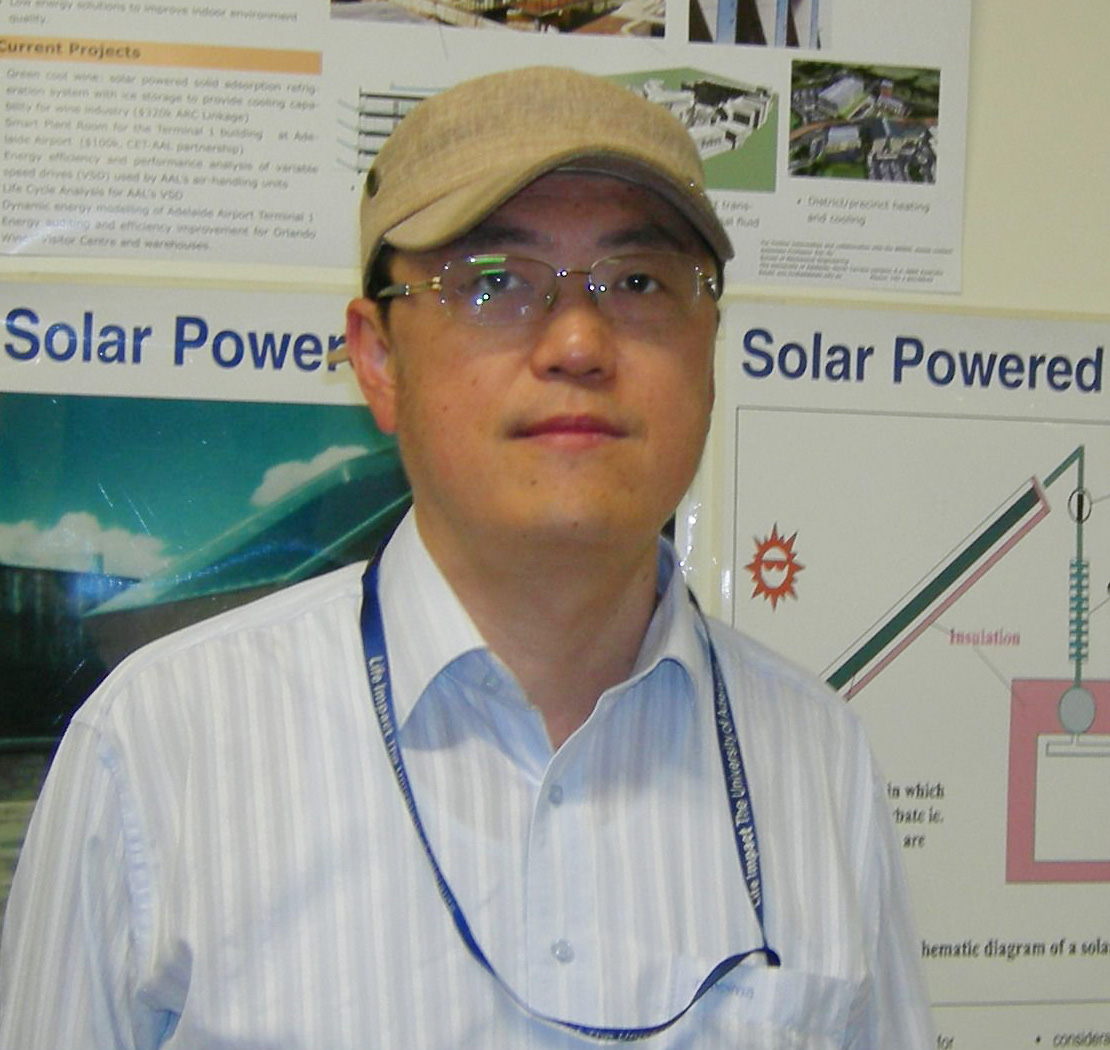 Eric Hu合作论文数School of Mechanical Engineering, Faculty of Sciences, Engineering and Technology, University of Adelaide1Du Yiyun合作论文数1
 Xiaodong Zhang (张晓东)合作论文数School of Energy Power and Mechanical Engineering, North China Electric Power University1Yongming Zhao合作论文数1
 Liang Li (李亮)合作论文数School of Materials Science and Engineering, East China University of Science and Technology1
 Xu Han (韩旭)合作论文数North China Electric Power University1Bin SHI (时斌)合作论文数1




