Predicting video saliency is crucial for improving sports video processing efficiency, thereby providing an enriched viewing experience for a wide-ranging audience. However, there is a long-term absence of well-established eye-tracking database and learning-based approach, particularly tailored for sports videos. In this paper, we establish a large-scale eye-tracking database dubbed audio-visual sports (AVS). AVS consists of 1,000 high-quality sports videos with eye fixations from 60 participants. Through the data analysis on AVS, we observe that human attention patterns exhibit significant variations based on the specific scene context of the sports. Motivated by this, we propose a sport-aware audiovisual saliency model, which can adaptively learn the scene context in a hyper manner. Specifically, a new audio-visual fusion (AVF) block is developed to effectively fuse features from the visual and audio backbone. After that, a hyper network is introduced to learn sport-aware priors, which are then adopted to guide the self-adaptive saliency predictor for predicting saliency map. Experimental results demonstrate that our approach outperforms other state-of-the-art saliency prediction models over the only two sports video eye-tracking databases.
Salient object ranking (SOR) aims to segment salient objects in an image and simultaneously predict their saliency rankings, according to the shifted human attention over different objects. The existing SOR approaches mainly focus on object-based attention, e.g., the semantic and appearance of object. However, we find that the scene context plays a vital role in SOR, in which the saliency ranking of the same object varies a lot at different scenes. In this paper, we thus make the first attempt towards explicitly learning scene context for SOR. Specifically, we establish a large-scale SOR dataset of 24,373 images with rich context annotations, i.e., scene graphs, segmentation, and saliency rankings. Inspired by the data analysis on our dataset, we propose a novel graph hypernetwork, named HyperSOR, for context-aware SOR. In HyperSOR, an initial graph module is developed to segment objects and construct an initial graph by considering both geometry and semantic information. Then, a scene graph generation module with multi-path graph attention mechanism is designed to learn semantic relationships among objects based on the initial graph. Finally, a saliency ranking prediction module dynamically adopts the learned scene context through a novel graph hypernetwork, for inferring the saliency rankings. Experimental results show that our HyperSOR can significantly improve the performance of SOR.
This report introduces two high-quality datasets Flickr360 and ODV360 for omnidirectional image and video super-resolution, respectively, and reports the NTIRE 2023 challenge on 360° omnidirectional image and video super-resolution. Unlike ordinary 2D images/videos with a narrow field of view, omnidirectional images/videos can represent the whole scene from all directions in one shot. There exists a large gap between omnidirectional image/video and ordinary 2D image/video in both the degradation and restoration processes. The challenge is held to facilitate the development of omnidirectional image/video super-resolution by considering their special characteristics. In this challenge, two tracks are provided: one is the omnidirectional image super-resolution and the other is the omnidirectional video super-resolution. The task of the challenge is to super-resolve an input omnidirectional image/video with a magnification factor of ×4. Realistic omnidirectional downsampling is applied to construct the datasets. Some general degradation(e.g., video compression) is also considered for the video track. The challenge has 100 and 56 registered participants for those two tracks. In the final testing stage, 7 and 3 participating teams submitted their results, source codes, and fact sheets. Almost all teams achieved better performance than baseline models by integrating omnidirectional characteristics, reaching compelling performance on our newly collected Flickr360 and ODV360 datasets.
In the existing coding standards, rate control (RC) plays a critical role in optimally allocating bit-rates to each coding unit, for improving rate-distortion performance under the limited bandwidth. However, the existing RC methods are mainly based on traditional distortion metrics, which fail to take the advantage of the emerging DNN based image quality assessment (IQA) metrics. In this paper, we set up the first attempt to achieve IQA score based RC for image compression. Specifically, a novel visualization based score-distortion (VSD) model and ρ-slope model are proposed to explicitly establish the relationship between IQA score and bit-rates. Then, by solving optimal rate-distortion optimization based on the IQA score, we propose a novel RC method for the HEVC standard. The experimental results show that, given the target bit-rates, the proposed RC method can accurately control the bit-rates and generate the compressed images with higher IQA score and better perceptual quality. More importantly, the proposed RC method is evaluated to be effective over two DNN based IQA metrics and four image datasets, exhibiting the potential in practical use. The code is available at https://github.com/Ffangqy/IQA-RC.
With the rapid development of virtual reality, 360° images have gained increasing popularity. Their wide field of view necessitates high resolution to ensure image quality. This, however, makes it harder to acquire, store and even process such 360° images. To alleviate this issue, we propose the first attempt at 360° image rescaling, which refers to downscaling a 360° image to a visually valid lowresolution (LR) counterpart and then upscaling to a highresolution (HR) 360° image given the LR variant. Specifically, we first analyze two 360° image datasets and observe several findings that characterize how 360° images typically change along their latitudes. Inspired by these findings, we propose a novel deformable invertible neural network (INN), named DINN360, for latitude-aware 360° image rescaling. In DINN360, a deformable INN is designed to downscale the LR image, and project the high-frequency (HF) component to the latent space by adaptively handling various deformations occurring at different latitude regions. Given the downscaled LR image, the high-quality HR image is then reconstructed in a conditional latitude-aware manner by recovering the structure-related HF component from the latent space. Extensive experiments over four public datasets show that our DINN360 method performs considerably better than other state-of-the-art methods for 2 x, 4 x and 8 x 360° image rescaling.
This paper reviews the NTIRE 2023 challenge on image denoising (σ = 50) with a focus on the proposed solutions and results. The aim is to obtain a network design capable to produce high-quality results with the best performance measured by PSNR for image denoising. Independent additive white Gaussian noise (AWGN) is assumed and the noise level is 50. The challenge had 225 registered participants, and 16 teams made valid submissions. They gauge the state-of-the-art for image denoising.
As introduced in Section 3 of the main text, our Finding 1 validates that in 360◦ images, low-latitude regions tend to contain more textures, leading to larger HF components. Fig. 1 illustrates some examples of indoor and outdoor scenes in F-360iSOD [14] and SUN360 [11] datasets, respectively. Note that the HF components are calculated by Haar transformation [1]. It can be seen that, for both indoor and outdoor scenes, the image patches at low-latitude regions (in orange) contain more textures with larger HF components, compared with those at high-latitude regions (in blue). This again verifies our Finding 1.
This paper reviews the NTIRE 2022 Challenge on Super-Resolution and Quality Enhancement of Compressed Video. In this challenge, we proposed the LDV 2.0 dataset, which includes the LDV dataset (240 videos) and 95 additional videos. This challenge includes three tracks. Track 1 aims at enhancing the videos compressed by HEVC at a fixed QP. Track 2 and Track 3 target both the super-resolution and quality enhancement of HEVC compressed video. They require x2 and x4 super-resolution, respectively. The three tracks totally attract more than 600 registrations. In the test phase, 8 teams, 8 teams and 12 teams submitted the final results to Tracks 1, 2 and 3, respectively. The proposed methods and solutions gauge the state-of-the-art of super-resolution and quality enhancement of compressed video. The proposed LDV 2.0 dataset is available at https://github.com/RenYang-home/LDV_dataset. The homepage of this challenge (including open-sourced codes) is at https://github.com/RenYang-home/NTIRE22_VEnh_SR.
In this paper, we consider two challenging issues in reference-based super-resolution (RefSR), (i) how to choose a proper reference image, and (ii) how to learn real-world RefSR in a self-supervised manner. Particularly, we present a novel self-supervised learning approach for real-world image SR from observations at dual camera zooms (SelfDZSR). Considering the popularity of multiple cameras in modern smartphones, the more zoomed (telephoto) image can be naturally leveraged as the reference to guide the SR of the lesser zoomed (short-focus) image. Furthermore, SelfDZSR learns a deep network to obtain the SR result of short-focus image to have the same resolution as the telephoto image. For this purpose, we take the telephoto image instead of an additional high-resolution image as the supervision information and select a center patch from it as the reference to super-resolve the corresponding short-focus image patch. To mitigate the effect of the misalignment between short-focus low-resolution (LR) image and telephoto ground-truth (GT) image, we design an auxiliary-LR generator and map the GT to an auxiliary-LR while keeping the spatial position unchanged. Then the auxiliary-LR can be utilized to deform the LR features by the proposed adaptive spatial transformer networks (AdaSTN), and match the Ref features to GT. During testing, SelfDZSR can be directly deployed to super-solve the whole short-focus image with the reference of telephoto image. Experiments show that our method achieves better quantitative and qualitative performance against state-of-the-arts. Codes are available at https://github.com/cszhilu1998/SelfDZSR.
Image deraining has achieved considerable progress based on supervised learning with synthetic training pairs, but is usually limited in handling real-world rainy images. Although semi-supervised methods are suggested to exploit real-world rainy images when training deep deraining models, their performances are still notably inferior. To address this crucial issue, this work proposes a semi-supervised image deraining network with knowledge distillation (SSID-KD) for better exploiting real-world rainy images. In particular, the consistency of feature distribution of rain streaks extracted from synthetic and real-world rainy images is enforced by adopting knowledge distillation. Moreover, as for the backbone in SSID-KD, we propose the multi-scale feature fusion module and the pyramid fusion module to better extract deep features of rainy images. SSID-KD can relieve the problem of over-deraining or under-deraining for real-world rainy images, while it can keep comparable performance with supervised deraining methods on several benchmark datasets. Extensive experiments on both synthetic and real-world rainy images have validated that our SSID-KD not only can achieve better deraining results than existing semi-supervised deraining methods but also are quantitatively comparable with state-of-the-art supervised deraining methods. Benefiting from the well exploration of real-world rainy images, our SSID-KD can obtain more visually plausible deraining results. The source code and trained models are publicly available at https://github.com/cuiyixin555/SSID-KD.
In recent years, many conventional image denoising techniques have been intensively studied to enhance the signal to noise ratio (SNR) of Brillouin optical time domain analyzer (BOTDA), due to their superior denoising performance to one-dimensional methods. However, in the case of low sampling rate, the details of the signal are smoothed out due to less useful information, resulting in a degradation of the spatial resolution. Moreover, these conventional denoising algorithms are quite time-consuming compared with the BOTDA measuring time. To overcome these drawbacks, we employ a feed-forward convolutional neural networks (CNN) based image denoising for BOTDA. A conventional BOTDA system with 15 ns pulse width is implemented to demonstrate the effectiveness of the exploited CNN-based denoising method. The actual electrical noise signals of the BOTDA at different sampling rates are collected to synthesize training samples. The CNN model is trained with the noise and simulated BOTDA signals. Experimental results show that SNR improvement of 13.43 dB, 13.57 dB, and 12.9 dB is achieved at a sampling rate of 500 MSa/s, 250 MSa/s, and 125 MSa/s, respectively, via the trained CNN denoiser. No spatial resolution distortion can be observed in the denoised BOTDA signals. Besides, the CNN denoiser only takes 0.045 s to process a 151 x 50000 image benefiting from GPU computing. This processing time is negligible compared with the acquisition time of BOTDA, which makes real-time denoising possible.
The depth images acquired by consumer depth sensors (e.g., Kinect and ToF) usually are of low resolution and insufficient quality. One natural solution is to incorporate a high resolution RGB camera and exploit the statistical correlation of its data and depth. In recent years, both optimization-based and learning-based approaches have been proposed to deal with the guided depth reconstruction problems. In this paper, we introduce a weighted analysis sparse representation (WASR) model for guided depth image enhancement, which can be considered a generalized formulation of a wide range of previous optimization-based models. We unfold the optimization by the WASR model and conduct guided depth reconstruction with dynamically changed stage-wise operations. Such a guidance strategy enables us to dynamically adjust the stage-wise operations that update the depth image, thus improving the reconstruction quality and speed. To learn the stage-wise operations in a task-driven manner, we propose two parameterizations and their corresponding methods: dynamic guidance with Gaussian RBF nonlinearity parameterization (DG-RBF) and dynamic guidance with CNN nonlinearity parameterization (DG-CNN). The network structures of the proposed DG-RBF and DG-CNN methods are designed with the the objective function of our WASR model in mind and the optimal network parameters are learned from paired training data. Such optimization-inspired network architectures enable our models to leverage the previous expertise as well as take benefit from training data. The effectiveness is validated for guided depth image super-resolution and for realistic depth image reconstruction tasks using standard benchmarks. Our DG-RBF and DG-CNN methods achieve the best quantitative results (RMSE) and better visual quality than the state-of-the-art approaches at the time of writing. The code is available at https://github.com/ShuhangGu/GuidedDepthSR.
Compressive sensing (CS) has proved effective for tomographic reconstruction from sparsely collected data or under-sampled measurements, which are practically important for few-view computed tomography (CT), tomosynthesis, interior tomography, and so on. To perform sparse-data CT, the iterative reconstruction commonly uses regularizers in the CS framework. Currently, how to choose the parameters adaptively for regularization is a major open problem. In this paper, inspired by the idea of machine learning especially deep learning, we unfold the state-of-the-art "fields of experts"-based iterative reconstruction scheme up to a number of iterations for data-driven training, construct a learned experts' assessment-based reconstruction network (LEARN) for sparse-data CT, and demonstrate the feasibility and merits of our LEARN network. The experimental results with our proposed LEARN network produces a superior performance with the well-known Mayo Clinic low-dose challenge data set relative to the several state-of-the-art methods, in terms of artifact reduction, feature preservation, and computational speed. This is consistent to our insight that because all the regularization terms and parameters used in the iterative reconstruction are now learned from the training data, our LEARN network utilizes application-oriented knowledge more effectively and recovers underlying images more favorably than competing algorithms. Also, the number of layers in the LEARN network is only 50, reducing the computational complexity of typical iterative algorithms by orders of magnitude.
This paper attempts to address non-stationary speckle reduction in high-resolution synthetic aperture radar (HR-SAR) images, using a novel Bayesian approach. First, non-stationary speckle is defined. Second, an innovative log-normal mixture model (LogNMM) is proposed to model the underlying data; the data priors are represented by using Fields of Experts (FoE); and then the despeckling model is derived based on maximum a posteriori (MAP) method. The experimental results demonstrate that the proposal produces state-of-the-art despeckling performance on synthetic and real HR-SAR data, and prove that the speckle is non-stationary in the HR-SAR data of interest.
Image restoration problems are typical ill-posed problems where the regularization term plays an important role. The regularization term learned via generative approaches is easy to transfer to various image restoration, but offers inferior restoration quality compared with that learned via discriminative approaches. On the contrary, the regularization term learned via discriminative approaches are usually trained for a specific image restoration problem, and fail in the problem for which it is not trained. To address this issue, we propose a generic diffusion process (genericDP) to handle multiple Gaussian denoising problems based on the Trainable Non-linear Reaction Diffusion (TNRD) models. Instead of one model, which consists of a diffusion and a reaction term, for one Gaussian denoising problem in TNRD, we enforce multiple TNRD models to share one diffusion term. The trained genericDP model can provide both promising denoising performance and high training efficiency compared with the original TNRD models. We also transfer the trained diffusion term to non-blind deconvolution which is unseen in the training phase. Experiment results show that the trained diffusion term for multiple Gaussian denoising can be transferred to image non-blind deconvolution as an image prior and provide competitive performance.
This paper reviews the 2nd NTIRE challenge on single image super-resolution (restoration of rich details in a low resolution image) with focus on proposed solutions and results. The challenge had 4 tracks. Track 1 employed the standard bicubic downscaling setup, while Tracks 2, 3 and 4 had realistic unknown downgrading operators simulating camera image acquisition pipeline. The operators were learnable through provided pairs of low and high resolution train images. The tracks had 145, 114, 101, and 113 registered participants, resp., and 31 teams competed in the final testing phase. They gauge the state-of-the-art in single image super-resolution.
The depth images acquired by consumer depth sensors (e.g., Kinect and ToF) usually are of low resolution and insufficient quality. One natural solution is to incorporate with high resolution RGB camera for exploiting their statistical correlation. However, most existing methods are intuitive and limited in characterizing the complex and dynamic dependency between intensity and depth images. To address these limitations, we propose a weighted analysis representation model for guided depth image enhancement, which advances the conventional methods in two aspects: (i) task driven learning and (ii) dynamic guidance. First, we generalize the analysis representation model by including a guided weight function for dependency modeling. And the task-driven learning formulation is introduced to obtain the optimized guidance tailored to specific enhancement task. Second, the depth image is gradually enhanced along with the iterations, and thus the guidance should also be dynamically adjusted to account for the updating of depth image. To this end, stage-wise parameters are learned for dynamic guidance. Experiments on guided depth image upsampling and noisy depth image restoration validate the effectiveness of our method.
This paper studies the hyperspectral image (HSI) denoising problem under the assumption that the signal is low in rank. In this paper, a mixture of Gaussian noise and sparse noise is considered. The sparse noise includes stripes, impulse noise, and dead pixels. The denoising task is formulated as a low-rank tensor recovery (LRTR) problem from Gaussian noise and sparse noise. Traditional low-rank tensor decomposition methods are generally NP-hard to compute. Besides, these tensor decomposition based methods are sensitive to sparse noise. In contrast, the proposed LRTR method can preserve the global structure of HSIs and simultaneously remove Gaussian noise and sparse noise.The proposed method is based on a new tensor singular value decomposition and tensor nuclear norm. The NP-hard tensor recovery task is well accomplished by polynomial time algorithms. The convergence of the algorithm and the parameter settings are also described in detail. Preliminary numerical experiments have demonstrated that the proposed method is effective for low-rank tensor recovery from Gaussian noise and sparse noise. Experimental results also show that the proposed LRTR method outperforms other denoising algorithms on real corrupted hyperspectral data.
Single image interpolation has wide applications in digital photography and image display. Most single image interpolation approaches achieve state-of-the-art performance at the expense of very high computation time. While efficient alternatives exist, they do not reach the same level of image quality. In this paper, we propose an image interpolation method offering both high computational efficiency and high interpolation quality. We exploit a newly-developed variational framework with time-varying regularization, i.e., the parameters of the regularization are allowed to change with time, making it different to conventional variational problems with time-independent regularization parameters. These time-varying parameters are learned from training samples. We train the model parameters for the problem of single image interpolation. Experiments show that the trained models lead to promising quality of the interpolated images in terms of quantitative measurements (e.g., PSNR and SSIM), compared with the state-of-the-art approaches. Meanwhile, high computational efficiency is obtained.
 Wangmeng Zuo (左旺孟)合作论文数School of Computer Science and Technology, Harbin Institute of Technology9
 Thomas Pock合作论文数Institute of Visual Computing, Graz University of Technology8
 Wensen Feng合作论文数Institute of Electronics, Institute of Electronics Chinese Academy of Sciences8
 Lai Jiang (蒋铼)合作论文数Department of Electronic and Engineering, Beihang University;Department of Computer Science, University of British Coulumbia6
 Mai Xu (徐迈)合作论文数School of Electronic and Information Engineering, Beihang University6
 Yu Cao (曹毓)合作论文数5
 Radu Timofte合作论文数Computer Vision Laboratory, Institute of Computer Science, Faculty of Mathematics and Computer Science, Julius Maximilians University of Würzburg;ETH Zurich5
 Peng Qiao合作论文数Fudan University, Fudan University5Zhilu Zhang (张志路)合作论文数Harbin Institute of Technology4Ying Feng合作论文数4Yuntao Yang合作论文数4
 Rene Ranftl合作论文数Epic Games4
 Kai Zhang (张凯)合作论文数School of Intelligence Science and Technology, Nanjing University, Suzhou4
 Lei Zhang (张磊)合作论文数Department of Computing, Faculty of Computer and Mathematical Sciences, The Hong Kong Polytechnic University4
 Leonid Sigal合作论文数Department of Computer Science, Faculty of Science, University of British Columbia;Beam AI;Vector Institute;Borealis AI4
 Dongwei Ren (任冬伟)合作论文数College of Intelligence and Computing, Tianjin University4
 Minglang Qiao合作论文数Beihang Univ3
 Luc Van Gool合作论文数Computer Vision Lab, Department of Information Technology and Electrical Engineering, ETH Zurich;Institute for Computer Science, Artificial Intelligence and Technology3
 Hong Qiao (乔红)合作论文数Institute of Automation, Chinese Academy of Sciences;University of Chinese Academy of Sciences;School of Mechanical Engineering, University of Science and Technology Beijing3
 Chao Dong (董超)合作论文数Shanghai AI Lab, Shenzhen Institutes of Advanced Technology, Chinese Academy of Sciences;University of Chinese Academy of Sciences;Shenzhen University of Advanced Technology3
 Yong Dou (窦勇)合作论文数College of Computer Science and Technology, National University of Defense Technology3Renlong Wu合作论文数Harbin Institute of Technology2Shijie Wen合作论文数2Shaobo Gao (高少博)合作论文数2Yichen Guo合作论文数2
 Jiseok Yoon合作论文数Tech Univ Korea2Shijie Zhao合作论文数2
 Xiaopeng Sun (孙孝鹏)合作论文数2
 Sunder Ali Khowaja合作论文数Univ Sindh, Inst Informat & Commun Technol, Jamshoro, Pakistan2
 Xintao Wang (王鑫涛)合作论文数KwaiVGI, Kuaishou Technology2
 Shengxi Li (李胜曦)合作论文数School of Electronic Information Engineering, Beihang University2
 Ikhyun Lee合作论文数2
 Haoyu Ma合作论文数Meta2
 Shi Guo合作论文数Shanghai Artificial Intelligence Laboratory;OPPO2
 Jinshan Pan (潘金山)合作论文数School of Computer Science and Engineering, Nanjing University of Science and Technology2
 Yulun Zhang (张宇伦)合作论文数Department of Computer Science and Engineering, Shanghai Jiao Tong University2
 Yulan Guo (郭裕兰)合作论文数School of Electronics and Communication Engineering, Sun Yat-sen University2Xiaofeng Wang合作论文数2
 Horst Bischof合作论文数Institute of Computer Graphics and Vision, Graz University of Technology2
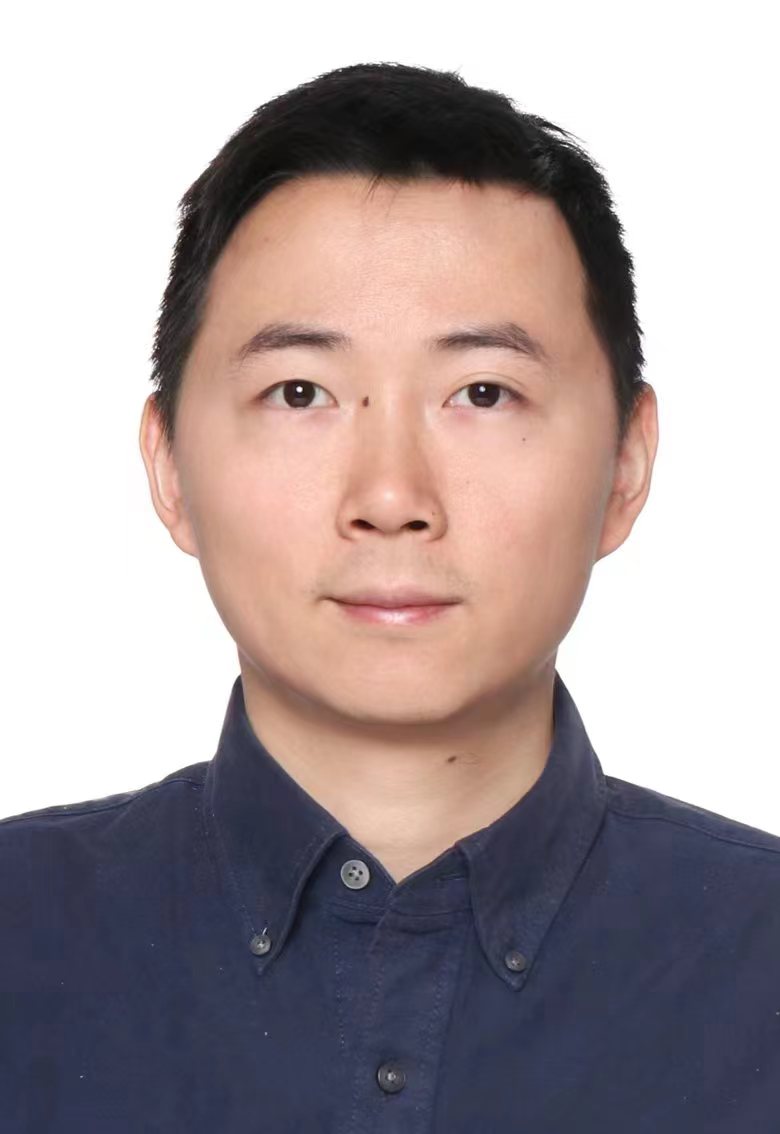 Shuhang Gu (顾舒航)合作论文数School of Computer Science and Engineering, University of Electronic Science and Technology of China2Lishuang Zhao合作论文数2Jichun Tan合作论文数2Chen Fu合作论文数1Ruohao Wang合作论文数1Xuan-Phung Huynh合作论文数1Tao Xu合作论文数1Zhihao Zhao合作论文数1Yi-Chung Chen合作论文数1Yuqian Zhang合作论文数1




