This paper introduces ARM, a discrete representation-based AutoRegressive Model that unifies image understanding, generation, and editing within a next-token prediction framework. ARM is built on three efforts: first, we train a discrete semantic visual tokenizer that maps images into compact token sequences. Our tokenizer is supervised with multiple objectives that jointly promote semantic discriminability, language alignment and faithful reconstruction, thereby supporting diverse tasks in a shared latent space. With this, we train a 7B autoregressive model over large-scale text and image token sequences, seamlessly developing vision-language perception and generation capabilities. Finally, to further improve preference-aligned behavior for text-to-image generation and instruction-guided editing, ARM applies reinforcement learning (RL) to optimize task-level objectives such as visual quality, instruction adherence, and edit consistency. Surprisingly, the results show that RL not only substantially improves performance on the target tasks (e.g., raising WISE overall from 0.50 to 0.56, GEdit-Bench-EN G_O from 5.75 to 6.68), but also induces cross-task synergy between text-to-image generation and editing. Collectively, these findings highlight autoregressive modeling, when paired with strong representations and preference optimization, as a scalable foundation for multimodal intelligence. Code: https://github.com/wdrink/ARM.
Recent progress in text-to-image generation has greatly advanced visual fidelity and creativity, but it has also imposed higher demands on prompt complexity—particularly in encoding intricate spatial relationships. In such cases, achieving satisfactory results often requires multiple sampling attempts.To address this challenge, we introduce a novel method that strengthens the spatial understanding of current image generation models. We first construct the SpatialReward-Dataset with over 80k preference pairs. Building on this dataset, we build SpatialScore, a reward model designed to evaluate the accuracy of spatial relationships in text-to-image generation, achieving performance that even surpasses leading proprietary models on spatial evaluation.We further demonstrate that this reward model effectively enables online reinforcement learning for the complex spatial generation. Extensive experiments across multiple benchmarks show that our specialized reward model yields significant and consistent gains in spatial understanding for image generation. All models and datasets will be released.
In text-to-image generation, producing a series of consistent contents that preserve the same identity is highly valuable for real-world applications. Although a few works have explored training-free methods to enhance the consistency of generated subjects, we observe that they suffer from the following problems. First, they fail to maintain consistent background details, which limits their applicability. Furthermore, when the foreground character undergoes large motion variations, inconsistencies in identity and clothing details become evident. To address these problems, we propose CharaConsist, which employs point-tracking attention and adaptive token merge along with decoupled control of the foreground and background. CharaConsist enables fine-grained consistency for both foreground and background, supporting the generation of one character in continuous shots within a fixed scene or in discrete shots across different scenes. Moreover, CharaConsist is the first consistent generation method tailored for text-to-image DiT model. Its ability to maintain fine-grained consistency, combined with the larger capacity of latest base model, enables it to produce high-quality visual outputs, broadening its applicability to a wider range of real-world scenarios. The source code has been released at https://github.com/Murray-Wang/CharaConsist
We introduce Seedream 4.0, an efficient and high-performance multimodal image generation system that unifies text-to-image (T2I) synthesis, image editing, and multi-image composition within a single framework. We develop a highly efficient diffusion transformer with a powerful VAE which also can reduce the number of image tokens considerably. This allows for efficient training of our model, and enables it to fast generate native high-resolution images (e.g., 1K-4K). Seedream 4.0 is pretrained on billions of text-image pairs spanning diverse taxonomies and knowledge-centric concepts. Comprehensive data collection across hundreds of vertical scenarios, coupled with optimized strategies, ensures stable and large-scale training, with strong generalization. By incorporating a carefully fine-tuned VLM model, we perform multi-modal post-training for training both T2I and image editing tasks jointly. For inference acceleration, we integrate adversarial distillation, distribution matching, and quantization, as well as speculative decoding. It achieves an inference time of up to 1.8 seconds for generating a 2K image (without a LLM/VLM as PE model). Comprehensive evaluations reveal that Seedream 4.0 can achieve state-of-the-art results on both T2I and multimodal image editing. In particular, it demonstrates exceptional multimodal capabilities in complex tasks, including precise image editing and in-context reasoning, and also allows for multi-image reference, and can generate multiple output images. This extends traditional T2I systems into an more interactive and multidimensional creative tool, pushing the boundary of generative AI for both creativity and professional applications. Seedream 4.0 is now accessible on https://www.volcengine.com/experience/ark?launch=seedream.
This work addresses the problem of cross-domain few-shot classification which aims at recognizing novel categories in unseen domains with only a few labeled data samples. We think that the pre-trained model contains the redundant elements which are useless or even harmful for the downstream tasks. To remedy the drawback, we introduce an L2-SP regularized dense-sparse-dense (DSD) fine-tuning flow for regularizing the capacity of pre-trained networks and achieving efficient few-shot domain adaptation. Given a pre-trained model from the source domain, we start by carrying out a conventional dense fine-tuning step using the target data. Then we execute a sparse pruning step that prunes the unimportant connections and fine-tunes the weights of sub-network. Finally, initialized with the fine-tuned sub-network, we retrain the original dense network as the output model for the target domain. The whole fine-tuning procedure is regularized by an L2-SP term. In contrast to the existing methods that either tune the weights or prune the network structure for domain adaptation, our regularized DSD fine-tuning flow simultaneously exploits the benefits of sparsity regularity and dense network capacity to gain the best of both worlds. Our method can be applied in a plug-and-play manner to improve the existing fine-tuning methods. Extensive experimental results on benchmark datasets demonstrate that our method in many cases outperforms the existing cross-domain few-shot classification methods in significant margins. Our code will be released soon.
Public large-scale text-to-image diffusion models, such as Stable Diffusion, have gained significant attention from the community. These models can be easily customized for new concepts using low-rank adaptations (LoRAs). However, the utilization of multiple concept LoRAs to jointly support multiple customized concepts presents a challenge. We refer to this scenario as decentralized multi-concept customization, which involves single-client concept tuning and center-node concept fusion. In this paper, we propose a new framework called Mix-of-Show that addresses the challenges of decentralized multi-concept customization, including concept conflicts resulting from existing single-client LoRA tuning and identity loss during model fusion. Mix-of-Show adopts an embedding-decomposed LoRA (ED-LoRA) for single-client tuning and gradient fusion for the center node to preserve the in-domain essence of single concepts and support theoretically limitless concept fusion. Additionally, we introduce regionally controllable sampling, which extends spatially controllable sampling (e.g., ControlNet and T2I-Adaptor) to address attribute binding and missing object problems in multi-concept sampling. Extensive experiments demonstrate that Mix-of-Show is capable of composing multiple customized concepts with high fidelity, including characters, objects, and scenes.
In this paper, we present a novel Distribution-Aware Single-stage (DAS) model for tackling the challenging multi-person 3D pose estimation problem. Different from existing top-down and bottom-up methods, the proposed DAS model simultaneously localizes person positions and their corresponding body joints in the 3D camera space in a one-pass manner. This leads to a simplified pipeline with enhanced efficiency. In addition, DAS learns the true distribution of body joints for the regression of their positions, rather than making a simple Laplacian or Gaussian assumption as previous works. This provides valuable priors for model prediction and thus boosts the regression-based scheme to achieve competitive performance with volumetric-base ones. Moreover, DAS exploits a recursive update strategy for progressively approaching to regression target, alleviating the optimization difficulty and further lifting the regression performance. DAS is implemented with a fully Convolutional Neural Network and end-to-end learnable. Comprehensive experiments on benchmarks CMU Panoptic and MuPoTS-3D demonstrate the superior efficiency of the proposed DAS model, specifically 1.5x speedup over previous best model, and its stat-of-the-art accuracy for multi-person 3D pose estimation.
Recently, MLP-Like networks have been revived for image recognition. However, whether it is possible to build a generic MLP-Like architecture on video domain has not been explored, due to complex spatial-temporal modeling with large computation burden. To fill this gap, we present an efficient self-attention free backbone, namely MorphMLP, which flexibly leverages the concise Fully-Connected (FC) layer for video representation learning. Specifically, a MorphMLP block consists of two key layers in sequence, i.e., MorphFCs and MorphFC(t), for spatial and temporal modeling respectively. MorphFCs can effectively capture core semantics in each frame, by progressive token interaction along both height and width dimensions. Alternatively, MorphFC(t) can adaptively learn long-term dependency over frames, by temporal token aggregation on each spatial location. With such multi-dimension and multi-scale factorization, our MorphMLP block can achieve a great accuracy-computation balance. Finally, we evaluate our MorphMLP on a number of popular video benchmarks. Compared with the recent state-of-the-art models, MorphMLP significantly reduces computation but with better accuracy, e.g., MorphMLP-S only uses 50% GFLOPs of VideoSwin-T but achieves 0.9% top-1 improvement on Kinetics400, under ImageNet1K pretraining. MorphMLP-B only uses 43% GFLOPs of MViT-B but achieves 2.4% top-1 improvement on SSV2, even though MorphMLP-B is pretrained on ImageNet1K while MViT-B is pretrained on Kinetics400. Moreover, our method adapted to the image domain outperforms previous SOTA MLP-Like architectures. Code is available at https://github.com/MTLab/MorphMLP.
Recent state-of-the-art one-stage instance segmentation model SOLO divides the input image into a grid and directly predicts per grid cell object masks with fully-convolutional networks, yielding comparably good performance as traditional two-stage Mask R-CNN yet enjoying much simpler architecture and higher efficiency. We observe SOLO generates similar masks for an object at nearby grid cells, and these neighboring predictions can complement each other as some may better segment certain object part, most of which are however directly discarded by non-maximum-suppression. Motivated by the observed gap, we develop a novel learning-based aggregation method that improves upon SOLO by leveraging the rich neighboring information while maintaining the architectural efficiency. The resulting model is named SODAR. Unlike the original per grid cell object masks, SODAR is implicitly supervised to learn mask representations that encode geometric structure of nearby objects and complement adjacent representations with context. The aggregation method further includes two novel designs: 1) a mask interpolation mechanism that enables the model to generate much fewer mask representations by sharing neighboring representations among nearby grid cells, and thus saves computation and memory; 2) a deformable neighbour sampling mechanism that allows the model to adaptively adjust neighbor sampling locations thus gathering mask representations with more relevant context and achieving higher performance. SODAR significantly improves the instance segmentation performance, e.g., it outperforms a SOLO model with ResNet-101 backbone by 2.2 AP on COCO set, with only about 3% additional computation. We further show consistent performance gain with the SOLOv2 model.
Self-attention has become an integral component of the recent network architectures, e.g., Transformer, that dominate major image and video benchmarks. This is because self-attention can flexibly model long-range information. For the same reason, researchers make attempts recently to revive Multiple Layer Perceptron (MLP) and propose a few MLP-Like architectures, showing great potential. However, the current MLP-Like architectures are not good at capturing local details and lack progressive understanding of core details in the images and/or videos. To overcome this issue, we propose a novel MorphMLP architecture that focuses on capturing local details at the low-level layers, while gradually changing to focus on long-term modeling at the high-level layers. Specifically, we design a Fully-Connected-Like layer, dubbed as MorphFC, of two morphable filters that gradually grow its receptive field along the height and width dimension. More interestingly, we propose to flexibly adapt our MorphFC layer in the video domain. To our best knowledge, we are the first to create a MLP-Like backbone for learning video representation. Finally, we conduct extensive experiments on image classification, semantic segmentation and video classification. Our MorphMLP, such a self-attention free backbone, can be as powerful as and even outperform self-attention based models.
Knowledge Distillation (KD) refers to transferring knowledge from a large model to a smaller one, which is widely used to enhance model performance in machine learning. It tries to align embedding spaces generated from the teacher and the student model (i.e. to make images corresponding to the same semantics share the same embedding across different models). In this work, we focus on its application in face recognition. We observe that existing knowledge distillation models optimize the proxy tasks that force the student to mimic the teacher's behavior, instead of directly optimizing the face recognition accuracy. Consequently, the obtained student models are not guaranteed to be optimal on the target task or able to benefit from advanced constraints, such as large margin constraints (e.g. margin-based softmax). We then propose a novel method named ProxylessKD that directly optimizes face recognition accuracy by inheriting the teacher's classifier as the student's classifier to guide the student to learn discriminative embeddings in the teacher's embedding space. The proposed ProxylessKD is very easy to implement and sufficiently generic to be extended to other tasks beyond face recognition. We conduct extensive experiments on standard face recognition benchmarks, and the results demonstrate that ProxylessKD achieves superior performance over existing knowledge distillation methods.
Recently proposed one-stage instance segmentation models (\emph{e.g.}, SOLO) learn to directly predict location-specific object mask with fully-convolutional networks. They perform comparably well as the traditional two-stage Mask R-CNN model, yet enjoying much simpler architecture and higher efficiency. However, an intrinsic limitation of these models is that they tend to generate similar mask predictions for a single object at nearby locations, while most of them are directly discarded by non-maximum suppression, leading to a waste of some useful predictions that can supplement the final result. In this work, we aim to explore how the model can benefit from better leveraging the neighboring predictions while maintaining the architectural simplicity and efficiency. To this end, we develop a novel learning-based aggregation framework that learns to aggregate the neighboring predictions. Meanwhile, unlike original location-based masks, the segmentation model is implicitly supervised to learn location-aware \textit{mask representations} that encode the geometric structure of nearby objects and complements adjacent representations with context. Based on the aggregation framework, we further introduce a mask interpolation mechanism that enables sharing mask representations for nearby spatial locations, thus allowing the model to generate much fewer representations for computation and memory saving. We experimentally show that by simply augmenting the baseline model with our proposed aggregation framework, the instance segmentation performance is significantly improved. For instance, it improves a SOLO model with ResNet-101 backbone by 2.0 AP on the COCO benchmark, with only about 2\% increase of computation. {Code and models} are available at anonymous repository: {\url{https://github.com/advdfacd/AggMask}}.
Transformers, which are popular for language modeling, have been explored for solving vision tasks recently, e.g., the Vision Transformer (ViT) for image classification. The ViT model splits each image into a sequence of tokens with fixed length and then applies multiple Transformer layers to model their global relation for classification. However, ViT achieves inferior performance to CNNs when trained from scratch on a midsize dataset like ImageNet. We find it is because: 1) the simple tokenization of input images fails to model the important local structure such as edges and lines among neighboring pixels, leading to low training sample efficiency; 2) the redundant attention backbone design of ViT leads to limited feature richness for fixed computation budgets and limited training samples. To overcome such limitations, we propose a new Tokens-To-Token Vision Transformer (T2T-VTT), which incorporates 1) a layer-wise Tokens-to-Token (T2T) transformation to progressively structurize the image to tokens by recursively aggregating neighboring Tokens into one Token (Tokens-to-Token), such that local structure represented by surrounding tokens can be modeled and tokens length can be reduced; 2) an efficient backbone with a deep-narrow structure for vision transformer motivated by CNN architecture design after empirical study. Notably, T2T-ViT reduces the parameter count and MACs of vanilla ViT by half, while achieving more than 3.0% improvement when trained from scratch on ImageNet. It also outperforms ResNets and achieves comparable performance with MobileNets by directly training on ImageNet. For example, T2T-ViT with comparable size to ResNet50 (21.5M parameters) can achieve 83.3% top1 accuracy in image resolution 384x384 on ImageNet.1
Domain adversarial training has become a prevailing and effective paradigm for unsupervised domain adaptation (UDA). To successfully align the multi-modal data structures across domains, the following works exploit discriminative information in the adversarial training process, e.g., using multiple class-wise discriminators and involving conditional information in the input or output of the domain discriminator. However, these methods either require non-trivial model designs or are inefficient for UDA tasks. In this work, we attempt to address this dilemma by devising simple and compact conditional domain adversarial training methods. We first revisit the simple concatenation conditioning strategy where features are concatenated with output predictions as the input of the discriminator. We find the concatenation strategy suffers from the weak conditioning strength. We further demonstrate that enlarging the norm of concatenated predictions can effectively energize the conditional domain alignment. Thus we improve concatenation conditioning by normalizing the output predictions to have the same norm of features, and term the derived method as Normalized OutpUt coNditioner (NOUN). However, conditioning on raw output predictions for domain alignment, NOUN suffers from inaccurate predictions of the target domain. To this end, we propose to condition the cross-domain feature alignment in the prototype space rather than in the output space. Combining the novel prototype-based conditioning with NOUN, we term the enhanced method as PROtotype-based Normalized OutpUt coNditioner (PRONOUN). Experiments on both object recognition and semantic segmentation show that NOUN can effectively align the multi-modal structures across domains and even outperform state-of-the-art domain adversarial training methods. Together with prototype-based conditioning, PRONOUN further improves the adaptation performance over NOUN on multiple object recognition benchmarks for UDA. Code is available at https://github.com/tim-learn/NOUN.
Recent state-of-the-art one-stage instance segmentation model SOLO divides the input image into a grid and directly predicts per grid cell object masks with fully-convolutional networks, yielding comparably good performance as traditional two-stage Mask R-CNN yet enjoying much simpler architecture and higher efficiency. We observe SOLO generates similar masks for an object at nearby grid cells, and these neighboring predictions can complement each other as some may better segment certain object part, most of which are however directly discarded by non-maximum-suppression. Motivated by the observed gap, we develop a novel learning-based aggregation method that improves upon SOLO by leveraging the rich neighboring information while maintaining the architectural efficiency. The resulting model is named SODAR. Unlike the original per grid cell object masks, SODAR is implicitly supervised to learn mask representations that encode geometric structure of nearby objects and complement adjacent representations with context. The aggregation method further includes two novel designs: 1) a mask interpolation mechanism that enables the model to generate much fewer mask representations by sharing neighboring representations among nearby grid cells, and thus saves computation and memory; 2) a deformable neighbour sampling mechanism that allows the model to adaptively adjust neighbor sampling locations thus gathering mask representations with more relevant context and achieving higher performance. SODAR significantly improves the instance segmentation performance, e.g., it outperforms a SOLO model with ResNet-101 backbone by 2.2 AP on COCO test set, with only about 3% additional computation. We further show consistent performance gain with the SOLOv2 model.
Inspired by the success of BERT, several multimodal representation learning approaches have been proposed that jointly represent image and text. These approaches achieve superior performance by capturing high-level semantic information from large-scale multimodal pretraining. In particular, LXMERT and UNITER adopt visual region feature regression and label classification as pretext tasks. However, they tend to suffer from the problems of noisy labels and sparse semantic annotations, based on the visual features having been pretrained on a crowdsourced dataset with limited and inconsistent semantic labeling. To overcome these issues, we propose unbiased Dense Contrastive Visual-Linguistic Pretraining (DCVLP), which replaces the region regression and classification with cross-modality region contrastive learning that requires no annotations. Two data augmentation strategies (Mask Perturbation and Intra-/Inter-Adversarial Perturbation) are developed to improve the quality of negative samples used in contrastive learning. Overall, DCVLP allows cross-modality dense region contrastive learning in a self-supervised setting independent of any object annotations. We compare our method against prior visual-linguistic pretraining frameworks to validate the superiority of dense contrastive learning on multimodal representation learning.
Continual learning tackles the setting of learning different tasks sequentially. Despite the lots of previous solutions, most of them still suffer significant forgetting or expensive memory cost. In this work, targeted at these problems, we first study the continual learning process through the lens of information theory and observe that forgetting of a model stems from the loss of information gain on its parameters from the previous tasks when learning a new task. From this viewpoint, we then propose a novel continual learning approach called Bit-Level Information Preserving (BLIP) that preserves the information gain on model parameters through updating the parameters at the bit level, which can be conveniently implemented with parameter quantization. More specifically, BLIP first trains a neural network with weight quantization on the new incoming task and then estimates information gain on each parameter provided by the task data to determine the bits to be frozen to prevent forgetting. We conduct extensive experiments ranging from classification tasks to reinforcement learning tasks, and the results show that our method produces better or on par results comparing to previous state-of-the-arts. Indeed, BLIP achieves close to zero forgetting while only requiring constant memory overheads throughout continual learning1.
Recently, DETR [3] pioneered the solution of vision tasks with transformers, it directly translates the image feature map into the object detection result. Though effective, translating the full feature map can be costly due to redundant computation on some area like the background. In this work, we encapsulate the idea of reducing spatial redundancy into a novel poll and pool (PnP) sampling module, with which we build an end-to-end PnP-DETR architecture that adaptively allocates its computation spatially to be more efficient. Concretely, the PnP module abstracts the image feature map into fine foreground object feature vectors and a small number of coarse background contextual feature vectors. The transformer models information interaction within the fine-coarse feature space and translates the features into the detection result. Moreover, the PnP-augmented model can instantly achieve various desired trade-offs between performance and computation with a single model by varying the sampled feature length, without requiring to train multiple models as existing methods. Thus it offers greater flexibility for deployment in diverse scenarios with varying computation constraint. We further validate the generalizability of the PnP module on panoptic segmentation and the recent transformer-based image recognition model ViT [7] and show consistent efficiency gain. We believe our method makes a step for efficient visual analysis with transformers, wherein spatial redundancy is commonly observed. Code and models will be available.
3D object detection with LiDAR point clouds plays an important role in autonomous driving perception module that requires high speed, stability and accuracy. However, the existing point-based methods are challenging to reach the speed requirements because of too many raw points, and the voxel-based methods are unable to ensure stable speed because of the 3D sparse convolution. In contrast, the 2D grid-based methods, such as PointPillar, can easily achieve a stable and efficient speed based on simple 2D convolution, but it is hard to get the competitive accuracy limited by the coarse-grained point clouds representation. So we propose an improved pillar with fine-grained feature based on PointPillar that can significantly improve detection accuracy. It consists of two modules, including height-aware sub-pillar and sparsity-based tiny-pillar, which get fine-grained representation respectively in the vertical and horizontal direction of 3D space. For height-aware sub-pillar, we introduce a height position encoding to keep height information of each sub-pillar during projecting to a 2D pseudo image. For sparsity-based tiny-pillar, we introduce sparsity-based CNN backbone stacked by dense feature and sparse attention module to extract feature with larger receptive field efficiently. Experimental results show that our proposed method significantly outperforms previous state-of-the-art 3D detection methods on the Waymo Open Dataset. The related code will be released to facilitate the academic and industrial study.
Salient object detection models often demand a considerable amount of computation cost to make precise prediction for each pixel, making them hardly applicable on low-power devices. In this paper, we aim to relieve the contradiction between computation cost and model performance by improving the network efficiency to a higher degree. We propose a flexible convolutional module, namely generalized OctConv (gOctConv), to efficiently utilize both in-stage and cross-stages multi-scale features, while reducing the representation redundancy by a novel dynamic weight decay scheme. The effective dynamic weight decay scheme stably boosts the sparsity of parameters during training, supports learnable number of channels for each scale in gOctConv, allowing 80% of parameters reduce with negligible performance drop. Utilizing gOctConv, we build an extremely light-weighted model, namely CSNet, which achieves comparable performance with about 0.2% parameters (100k) of large models on popular salient object detection benchmarks.
 Jiashi Feng (冯佳时)合作论文数Tencent32
 Shuicheng Yan (颜水成)合作论文数Department of Computer Science, School of Computing, National University of Singapore31
 Jianshu Li合作论文数Ant Group9
 Xiaojie Jin (靳潇杰)合作论文数School of Computer and Information Technology, Beijing Jiaotong University7
 Jian Zhao (赵健)合作论文数School of Artificial Intelligence, Optics and Electronics, Northwestern Polytechnical University;Evolutionary Visione+x Oriented Learning Lab, TeleAI of China Telecom5
 Tao Wang (王韬)合作论文数Institue of Data Science, National University of Singapore5
 Xiaohui Shen合作论文数ByteDance;TikTok4
 Zequn Jie (揭泽群)合作论文数Meituan4
 Jun Hao Liew合作论文数ByteDance Research;TikTok4
 Luoqi Liu (刘洛麒)合作论文数MT Lab, Meitu Inc.4
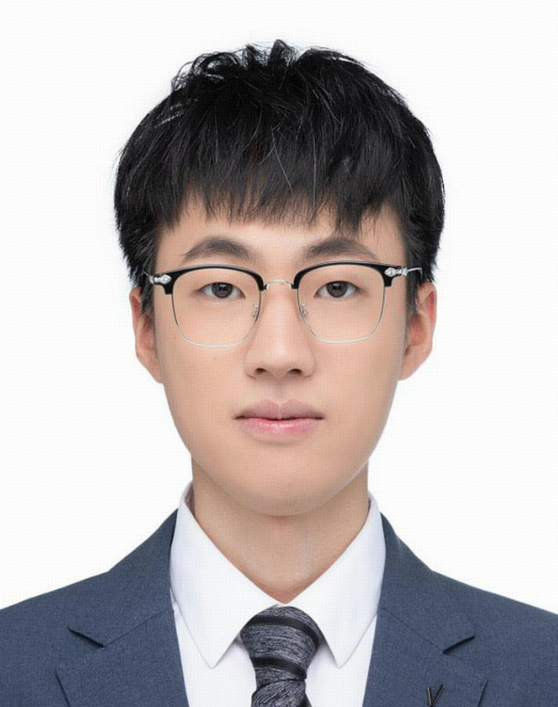 Qibin Hou (侯淇彬)合作论文数College of Computer Science, Nankai University4
 Yunchao Wei (魏云超)合作论文数Institute of Information Science, Beijing Jiaotong University;Center of Digital Media Information Processing, Beijing Jiaotong University4
 Yannis Kalantidis合作论文数Computer Vision Group, NAVER LABS Europe4
 Daquan Zhou (周大权)合作论文数School of Electronic and Computer Engineering, Peking University;Bytedance Inc.3
 Xiaodan Liang (梁小丹)合作论文数School of Intelligent Systems Engineering, Sun Yat-Sen University3
 Huaxin Xiao合作论文数Department of System Engineering, National University of Defense Technology3
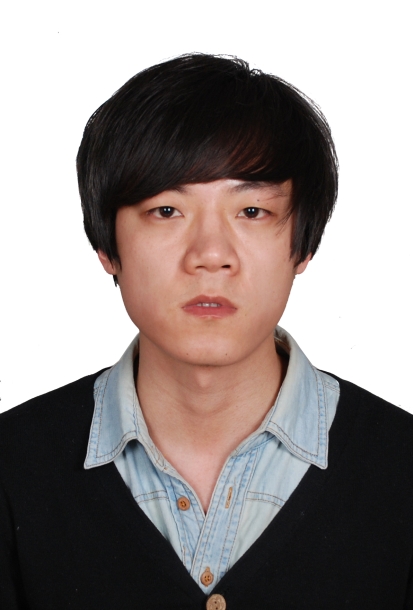 Xuecheng Nie (聂学成)合作论文数YiTu Technology3
 Dapeng Hu合作论文数Centre for Frontier AI Research, Agency for Science, Technology and Research3
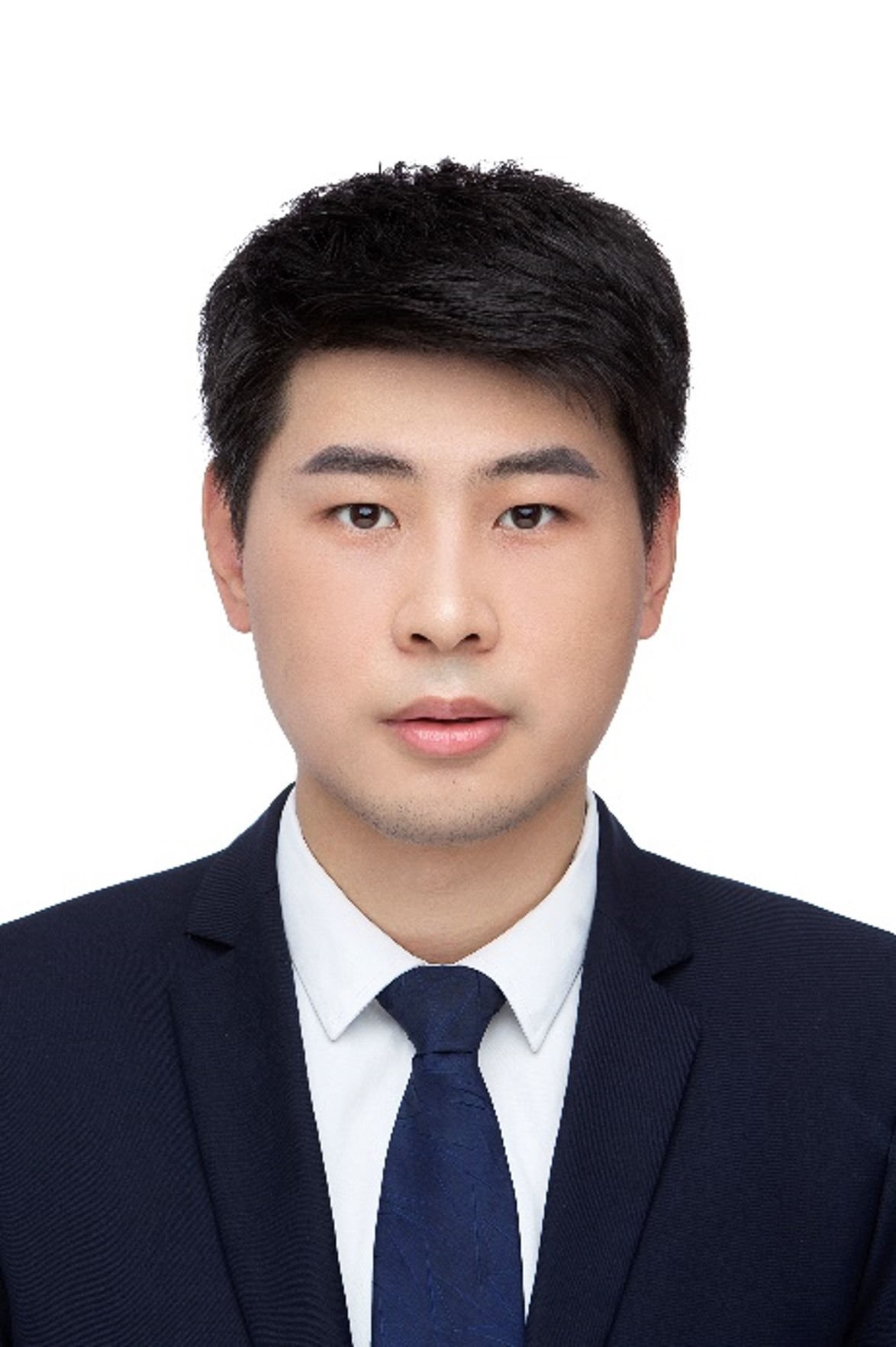 Jian Liang (梁坚)合作论文数State Key Laboratory of Multimodal Artificial Intelligence Systems, Institute of Automation, Chinese Academy of Sciences;National Laboratory of Pattern Recognition, Institute of Automation, Chinese Academy of Sciences;School of Artificial Intelligence, University of Chinese Academy of Sciences3
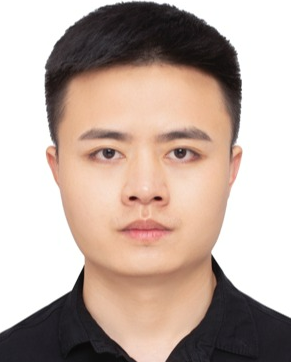 Li Yuan (袁粒)合作论文数School of Electrical and Computer Engineering, Shenzhen Graduate School, Peking University3
 Yao Zhao (赵耀)合作论文数School of Computer and Information Technology, Beijing Jiaotong University;Institute of Information Science of Beijing Jiaotong University3
 Hanshu Yan (严汉书)合作论文数Rhymes.AI3
 Terence Sim合作论文数Department of Computer Science, School of Computing, National University of Singapore3
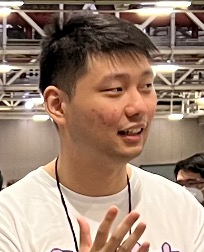 Yujun Shi (施宇钧)合作论文数Meta GenAI3
 Sujoy Roy合作论文数Dept. of Physics3
 Si Liu (刘偲)合作论文数Institute of Artificial Intelligence, Beihang University3
 David Junhao Zhang合作论文数Show Lab, National University of Singapore;Google2
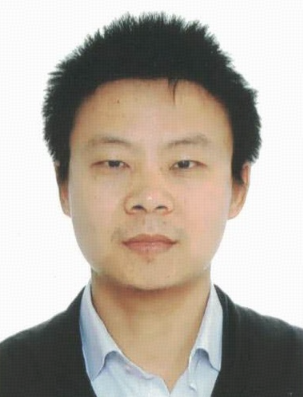 Jian Dong (董健)合作论文数School of Electronic Information, Central South University2
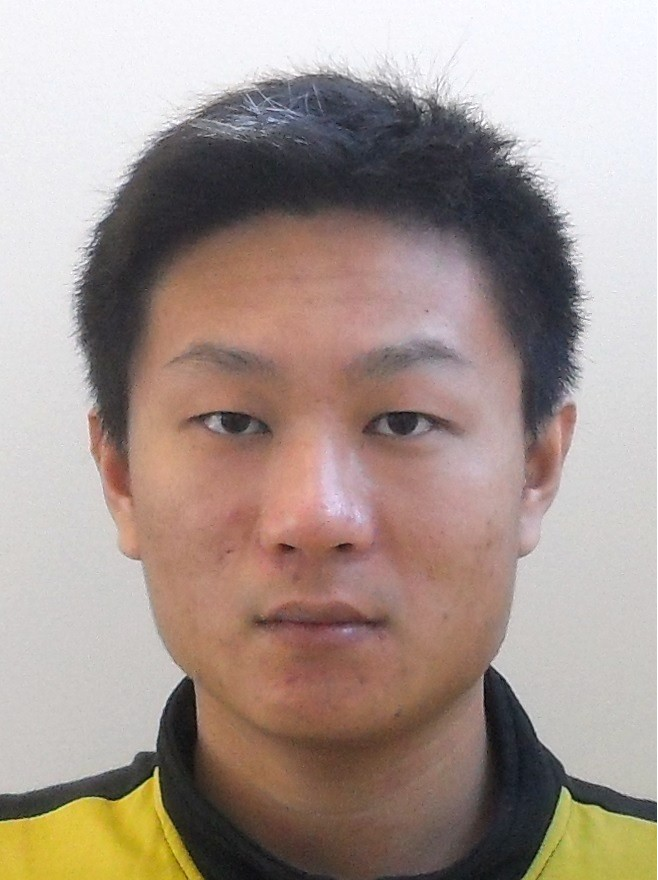 Yali Wang (王亚立)合作论文数University of Chinese Academy of Sciences;Shenzhen Institutes of Advanced Technology, Chinese Academy of Sciences2
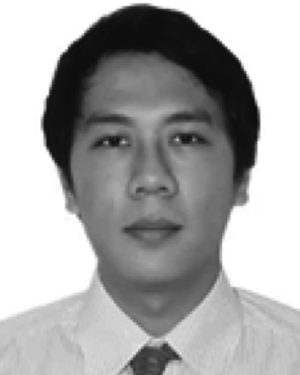 Shengtao Xiao合作论文数Dept Elect & Comp Engn, Natl Univ Singapore2
 Haoqi Fan合作论文数ByteDance Seed2
 Marcus Rohrbach合作论文数Technische Universität Darmstadt2
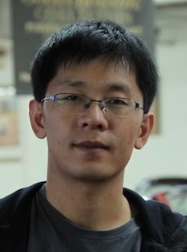 Zhe Lin合作论文数Imagination Lab, Adobe Research2
 Zi-Hang Jiang合作论文数School of Biomedical Engineering, Suzhou Institute for Advanced Research, University of Science and Technology of China2
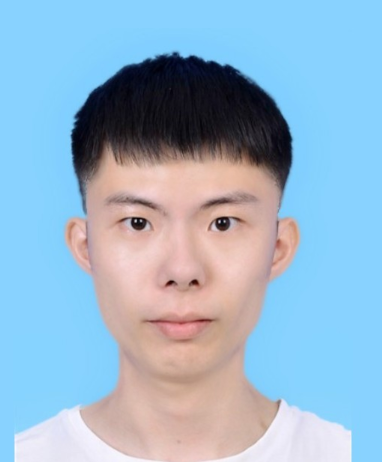 Weihao Yu (余伟浩)合作论文数ByteDance Seed2
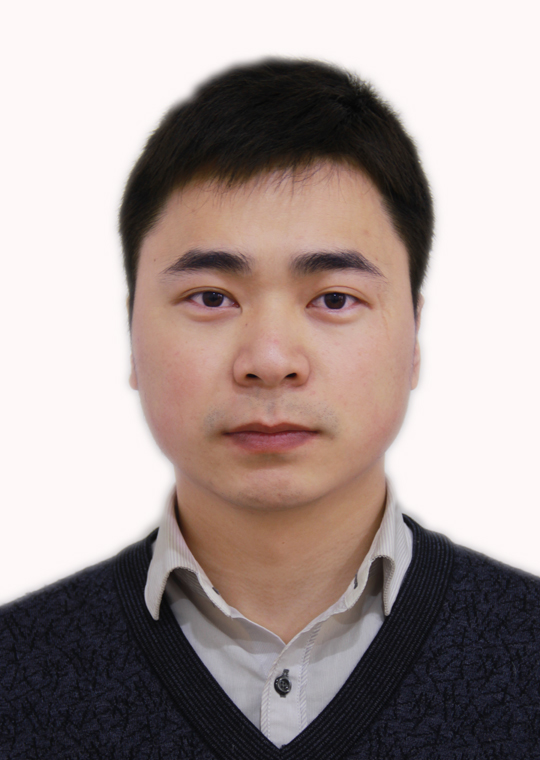 Jingkuan Song (宋井宽)合作论文数School of Computer Science and Technology, Tongji University2
 Yu Qiao (乔宇)合作论文数Multimedia Laboratory, Shenzhen Institutes of Advanced Technology, Chinese Academy of Sciences;Shanghai AI Laboratory;Shenzhen University of Advanced Technology2
 Kunchang Li (黎昆昌)合作论文数ByteDance Seed2
 Weilin Huang合作论文数Alibaba Group2
 Zhicheng Yan (严志程)合作论文数Meta2
 Fang Zhao (赵放)合作论文数School of Intelligence Science and Technology, Nanjing University2
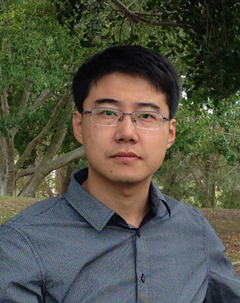 Yang Yang (杨阳)合作论文数School of Computer Science and Engineering, University of Electronic Science and Technology of China;Center for Future Media, University of Electronic Science and Technology of China;School of Computing and Artificial Intelligence, Southwestern University of Finance and Economics2Yu Li合作论文数Institute of Computing Technology, Chinese Academy of Science2
 Bing Xu合作论文数NVIDIA2
 Ming-Ming Cheng (程明明)合作论文数Department of Computer Science and Technology, College of Computer Science, Nankai University2
 Ke Zhou (周可)合作论文数School of Computer Science & Technology, Huazhong University of Science and Technology;Wuhan National Laboratory for Optoelectronics, Huazhong University of Science and Technology2
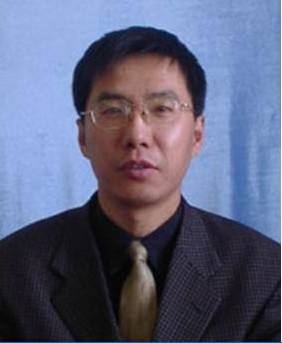 Guanghui Ren (任广辉)合作论文数School of Electronics and Information Engineering, Harbin Institute of Technology2
 Zhecan James Wang (王哲灿)合作论文数University of California, Los Angeles2
 Jianchao Yang (杨建朝)合作论文数Bytedance Inc.2




