The deviation of specific electrical conductance (EC) from conservative mixing behavior is well-established in the scientific literature. This principle is based on the observation that, as salt concentration in a water sample increases, the mobility of individual ions in the sample decreases, and thus their ability to conduct electricity decreases. Despite this fact, some commonly used models for salinity transport in the San Francisco Estuary (estuary) utilize EC as a primary simulation constituent, treating it as a conservative quantity. Such a modeling approach has likely been followed to exploit the wide availability of EC data for model calibration and validation, and to obviate the need to translate between EC and salinity in a domain characterized by multiple source waters with varying ionic make-ups. Arguably, this approach provides a reasonable trade-off between data translation error and model simulation error. In this paper, we critically evaluate this approach, employing an extensive salinity data set that includes measurements of EC and major ion concentrations in the estuary. We demonstrate and quantify EC deviation from steady-state, conservative mixing behavior; review the conservative mixing behavior of three bulk salinity measures (practical salinity, ionic strength, and limiting equivalent conductance); and evaluate their source-dependent correlations with EC in the estuary. We find limiting equivalent conductance—a value that assumes uninhibited mobility among individual ions in a water sample—to be an attractive alternative for salinity transport in the estuary. In addition to being a conservative quantity, it is consistently correlated with EC in the estuary’s dominant source waters, and thus addresses concerns related to data-translation error. We conclude this paper discussing pros and cons of adopting various salinity-transport model constituents.
This work presents a simplified approach for estimating ionic concentrations from specific electrical conductance (EC) data in the San Francisco Estuary. Monitoring the EC of water through electrodes is simple and inexpensive. As a result, a wealth of high-resolution time-series data is available to indirectly estimate salinity concentrations and, by extension, seawater intrusion throughout the study domain. However, scientists and managers are also interested in quantifying ionic (e.g., bromide, chloride) and total dissolved solids (TDS) concentrations to meet water-quality regulations, protect beneficial uses, support environmental analyses, and track source-water dominance. These constituent concentrations, reported with lower spatial and temporal resolution than EC, are typically measured in the laboratory from discrete (grab) water samples. We divided the study domain into four unique regions to estimate concentrations of major ions and TDS as mathematical functions of measured or model-simulated EC. Salinity relationships in three of the four regions—regions that represent Sacramento-San Joaquin Delta (Delta) inflow and seawater-dominated boundaries—reflect ionic make-ups that are either independent of or weakly dependent on season and hydrologic condition, and are highly correlated with EC. The fourth region—represented by the interior Delta—exhibits salinity characteristics associated with complex-boundary source-water mixing that varies by season and hydrologic condition. We introduce a novel method to estimate ionic and dissolved solids concentrations within this fourth region, given month, water year type, and (optionally) X2 isohaline position, which allows for more accurate EC-based estimates than previously available. The resulting approach, while not a substitute for hydrodynamic modeling, can provide useful information under constrained schedules and budgets.
PURPOSE:To gain a deeper understanding of healthcare workers experiences during COVID-19 using an anonymous, web-based, audio narrative platform.METHODS:Data were collected from healthcare workers in the midwestern United States using a web-enabled audio diary approach. Participant recordings were analysed using a narrative coding and conceptualization process derived from grounded theory coding techniques.RESULTS:Fifteen healthcare workers, in direct patient care or non-patient care roles, submitted 18 audio narratives. Two paradoxical themes emerged: 1) A paradox of distress and meaningfulness, where a harsh work environment resulted in psychological distress while simultaneously resulting in new rewarding experiences, sense of purpose and positive outlooks. 2) A paradox of social isolation and connection, where despite extreme isolation, healthcare workers formed intense and meaningful interpersonal connections with patients and colleagues in new ways.CONCLUSIONS:A web-enabled audio diary approach provided an opportunity for healthcare workers to reflect deeper on their experiences without investigator influence, which led to some unique findings. Paradoxically, amid social isolation and extreme distress, a sense of value, meaning and rewarding human connections emerged. These findings suggest that interventions addressing healthcare worker burnout and distress might be enhanced by leveraging naturally occurring positive experiences as much as mitigating negative ones.
Abstract Background and objective The notion of prediabetes, defined by the ADA as glycated hemoglobin A1c (HbA1c) of 5.7–6.4%, implies increased vascular inflammatory and immunologic processes and higher risk for developing diabetes mellitus and major cardiovascular events. We aimed to determine the risk factors associated with rapid progression of normal and prediabetes patients to type 2 diabetes mellitus (T2DM). Methods Retrospective cohort study in a single 8-hospital health system in southeast Michigan, between 2006 and 2020. All patients with HbA1c <6.5% at baseline and at least 2 other HbA1c measurements were clustered in five trajectories encompassing more than 95% of the study population. Multivariate linear regression analysis was performed to examine the association of demographic and comorbidities with HbA1c trajectories progressing to diabetes. Results A total of 5,347 prediabetic patients were clustered based on their HbA1c progression (C1: 4,853, C2: 253, C66: 102, C12: 85, C68: 54). The largest cluster (C1) had a baseline median HbA1c value of 6.0% and exhibited stable HbA1c levels in prediabetic range across all subsequent years. The smallest cluster (C68) had the lowest median baseline HbA1c value and also remained stable across subsequent years. The proportion of normal HbA1c in each of the pre-diabetic trajectories ranged from 0 to 12.7%, whereas 81.5% of the reference cluster (C68) were normal HbA1c at baseline. The C2 (steady rising) trajectory was significantly associated with BMI (adj OR 1.10, 95%CI 1.03–1.17), and family history of DM (adj OR 2.75, 95%CI 1.32–5.74). With respect to the late rising trajectories, baseline BMI was significantly associated with both C66 and C12 trajectory (adj OR 1.10, 95%CI 1.03–1.18) and (adj OR 1.13, 95%CI 1.05–1.23) respectively, whereas, the C12 trajectory was also significantly associated with age (adj OR 1.62, 95%CI 1.04–2.53) and history of MACE (adj OR 3.20, 95%CI 1.14–8.93). Conclusions We suggest that perhaps a more aggressive preventative approach should be considered in patients with a family history of T2DM who have high BMI and year-to-year increase in HbA1c, whether they have normal hemoglobin A1c or they have prediabetes. KEY MESSAGES Progression to diabetes from normal or prediabetic hemoglobin A1c within four years is associated with baseline BMI. A steady rise in HbA1c during a four-year period is associated with age and family history of T2DM, whereas age and personal history of MACE are associated with a rapid rise in HbA1c. A more aggressive preventative approach should be considered in patients with a family history of T2DM who have high BMI and year-to-year increase in HbA1c.
Accurate estimates of freshwater flow to the San Francisco Estuary are important in successfully regulating this water body, in protecting its beneficial uses, and in accurately modeling its hydrodynamic and water-quality transport regime. For regulatory purposes, freshwater flow to the estuary is not directly measured; rather, it is estimated from a daily balance of upstream Delta inflows, exports, and in-Delta water use termed the net Delta outflow index (NDOI). Field research in the 1960s indicated that NDOI estimates are biased low in summer–fall and biased high in winter–spring as a result of conflating Delta island evapotranspiration estimates with the sum of ungauged hydrologic interactions between channels and islands referred to as net channel depletions. In this work, we employed a 50-year observed salinity record along with gauged tidal flows and an ensemble of five empirical flow-salinity (X2) models to test whether a seasonal bias in Delta outflow estimates could be inferred. We accomplished this objective by conducting statistical analyses and evaluating whether model skill could be improved through seasonal NDOI flow adjustments. Assuming that model residuals are associated with channel depletion uncertainty, our findings corroborate the 1960s research and suggest that channel depletions are biased low in winter months (i.e., NDOI is biased high) and biased high in late summer and early fall months (i.e., NDOI is biased low). The magnitude of seasonal bias, which can reach 1,000 cfs, is a small percentage of typical winter outflow but represents a significant percentage of typical summer outflow. Our findings were derived from five independently developed models, and are consistent with the physical understanding of water exchanges on the islands. This work provides motivation for improved characterization of these exchanges to improve Delta outflow estimates, particularly during drought periods when water supplies are scarce and must be carefully managed.
Multi-task learning is popular in machine learning and computer vision. In multitask learning, properly modeling task relations is important for boosting the performance of jointly learned tasks. Task covariance modeling has been successfully used to model the relations of tasks but is limited to homogeneous multi-task learning. In this paper, we propose a feature based task relation modeling approach, suitable for both homogeneous and heterogeneous multitask learning. First, we propose a new metric to quantify the relations between tasks. Based on the quantitative metric, we then develop the task relation layer, which can be combined with any deep learning architecture to form task relation networks to fully exploit the relations of different tasks in an online fashion. Benefiting from the task relation layer, the task relation networks can better leverage the mutual information from the data. We demonstrate our proposed task relation networks are effective in improving the performance in both homogeneous and heterogeneous multi-task learning settings through extensive experiments on computer vision tasks.
Water consumption for crop irrigation is the largest single use of water in the U.S. but is poorly quantified because of limitations in data and the inherent challenges in measuring water consumption. In this study, water consumption for irrigated agriculture was estimated across the U.S. to improve understanding of water budgets in different regions. Published data on cropping patterns and water application were used in conjunction with a national-scale analysis to estimate water application and crop water consumption using the SWAT (Soil and Water Assessment Tool) watershed model. Crop water consumption estimates were based on evapotranspiration, with supporting information on the diversity of crops, irrigated area, water quantity and source, and local weather conditions. Quantification of water consumption supports broader analyses of the food-energy-water nexus and allows evaluation of the efficiency of irrigation water use at different spatial scales. Focusing on 2005 data, it is estimated that 60% of water reported as withdrawn from various sources is applied to fields, indicating a potentially large and poorly understood conveyance loss that occurs in a small number of states. Of the field-applied irrigation water, roughly 65% is directly used by crops or is lost in the field, with large regional variations. This may be compared to consumption estimates in prior studies that ranged from 16% to 90%. Areas that dominate the national aggregate estimate of crop water consumption include California's Central and Imperial Valleys, areas overlying the Ogallala Aquifer in the central U.S., the Lower Colorado Basin, and the eastern part of the Pacific Northwest Basin.
Understanding and evaluating the robustness of neural networks under adversarial settings is a subject of growing interest. Attacks proposed in the literature usually work with models trained to minimize cross-entropy loss and output softmax probabilities. In this work, we present interesting experimental results that suggest the importance of considering other loss functions and target representations, specifically, (1) training on mean-squared error and (2) representing targets as codewords generated from a random codebook. We evaluate the robustness of neural networks that implement these proposed modifications using existing attacks, showing an increase in accuracy against untargeted attacks of up to 98.7% and a decrease of targeted attack success rates of up to 99.8%. Our model demonstrates more robustness compared to its conventional counterpart even against attacks that are tailored to our modifications. Furthermore, we find that the parameters of our modified model have significantly smaller Lipschitz bounds, an important measure correlated with a model's sensitivity to adversarial perturbations.
Face attribute prediction in the wild is important for many facial analysis applications, yet it is very challenging due to ubiquitous face variations. In this paper, we address face attribute prediction in the wild by proposing a novel method, lAndmark Free Face AttrIbute pRediction (AFFAIR). Unlike traditional face attribute prediction methods that require facial landmark detection and face alignment, AFFAIR uses an end-to-end learning pipeline to jointly learn a hierarchy of spatial transformations that optimize facial attribute prediction with no reliance on landmark annotations or pre-trained landmark detectors. AFFAIR achieves this through simultaneously: 1) learning a global transformation which effectively alleviates negative effect of global face variation for the following attribute prediction tailored for each face; 2) locating the most relevant facial part for attribute prediction; and 3) aggregating the global and local features for robust attribute prediction. Within AFFAIR, a new competitive learning strategy is developed that effectively enhances global transformation learning for better attribute prediction. We show that with zero information about landmarks, AFFAIR achieves the state-of-the-art performance on three face attribute prediction benchmarks, which simultaneously learns the face-level transformation and attribute-level localization within a unified framework.
Human parsing is an important task in human-centric analysis. Despite the remarkable progress in single-human parsing, the more realistic case of multi-human parsing remains challenging in terms of the data and the model. Compared with the considerable number of available single-human parsing datasets, the datasets for multi-human parsing are very limited in number mainly due to the huge annotation effort required. Besides the data challenge to multi-human parsing, the persons in real-world scenarios are often entangled with each other due to close interaction and body occlusion, making it difficult to distinguish body parts from different person instances. In this paper we propose the Multi-Human Parsing Machines (MHPM) system, which contains an MHP Montage model and an MHP Solver, to address both challenges in multi-human parsing. Specifically, the MHP Montage model in MHPM generates realistic images with multiple persons together with the parsing labels. It intelligently composes single persons onto background scene images while maintaining the structural information between persons and the scene. The generated images can be used to train better multi-human parsing algorithms. On the other hand, the MHP Solver in MHPM solves the bottleneck of distinguishing multiple entangled persons with close interaction. It employs a Group-Individual Push and Pull (GIPP) loss function, which can effectively separate persons with close interaction. We experimentally show that the proposed MHPM can achieve state-of-the-art performance on the multi-human parsing benchmark and the person individualization benchmark, which distinguishes closely entangled person instances.
In this study, we developed and evaluated a novel text-mining approach, using non-negative tensor factorization (NTF), to simultaneously extract and functionally annotate transcriptional modules consisting of sets of genes, transcription factors (TFs), and terms from MEDLINE abstracts. A sparse 3-mode term × gene × TF tensor was constructed that contained weighted frequencies of 106,895 terms in 26,781 abstracts shared among 7,695 genes and 994 TFs. The tensor was decomposed into sub-tensors using non-negative tensor factorization (NTF) across 16 different approximation ranks. Dominant entries of each of 2,861 sub-tensors were extracted to form term-gene-TF annotated transcriptional modules (ATMs). More than 94% of the ATMs were found to be enriched in at least one KEGG pathway or GO category, suggesting that the ATMs are functionally relevant. One advantage of this method is that it can discover potentially new gene-TF associations from the literature. Using a set of microarray and ChIP-Seq datasets as gold standard, we show that the precision of our method for predicting gene-TF associations is significantly higher than chance. In addition, we demonstrate that the terms in each ATM can be used to suggest new GO classifications to genes and TFs. Taken together, our results indicate that NTF is useful for simultaneous extraction and functional annotation of transcriptional regulatory networks from unstructured text, as well as for literature based discovery. A web tool called Transcriptional Regulatory Modules Extracted from Literature (TREMEL), available at http://binf1.memphis.edu/tremel, was built to enable browsing and searching of ATMs.
This paper presents the proposed solution to the "affect in the wild" challenge, which aims to estimate the affective level, i.e. the valence and arousal values, of every frame in a video. A carefully designed deep convolutional neural network (a variation of residual network) for affective level estimation of facial expressions is first implemented as a baseline. Next we use multiple memory networks to model the temporal relations between the frames. Finally ensemble models are used to combine the predictions from multiple memory networks. Our proposed solution outperforms the baseline model by a factor of 10.62% in terms of mean square error (MSE).
The persistent progress of quantum computing with algorithms of Shor and Proos and Zalka has put our present RSA and ECC based public key cryptosystems at peril. There is a flurry of activity in cryptographic research community to replace classical cryptography schemes with their post-quantum counterparts. The learning with errors problem introduced by Oded Regev offers a way to design secure cryptography schemes in the post-quantum world. Later for efficiency LWE was adapted for ring polynomials known as Ring-LWE. In this paper we discuss some of these ring-LWE based schemes that have been designed. We have also drawn comparisons of different implementations of those schemes to illustrate their evolution from theoretical proposals to practically feasible schemes.
Recommending content to users involves understanding a) what to present and b) how to present them, so as to increase quality of experience (QoE) and thereby, content consumption. This work attempts to address the question of how to present contents in a way so that the user finds it easy to get to desired content. While the process of User Interface (UI) design is dependent on several human factors, there are basic design components and their combination that have to be common to any recommender system user interface. Personalization of the UI design process involves picking the right components and their combination, and presenting a UI to suit the usage behavior of an individual user, so as to enhance the QoE. This work proposes a system that learns from a user's content consumption patterns and makes some recommendations regarding how to present the content for the user (in the context of Video-On-Demand/Live-TV services on Computer displays), so as to enhance the QoE of the recommender system.
Automatically understanding and discriminating different users' liking for an image is a challenging problem. This is because the relationship between image features (even semantic ones extracted by existing tools, viz., faces, objects, and so on) and users' likes is non-linear, influenced by several subtle factors. This paper presents a deep bi-modal knowledge representation of images based on their visual content and associated tags (text). A mapping step between the different levels of visual and textual representations allows for the transfer of semantic knowledge between the two modalities. Feature selection is applied before learning deep representation to identify the important features for a user to like an image. The proposed representation is shown to be effective in discriminating users based on images they like and also in recommending images that a given user likes, outperforming the state-of-the-art feature representations by ~15 %-20%. Beyond this test-set performance, an attempt is made to qualitatively understand the representations learned by the deep architecture used to model user likes.
 Terence Sim合作论文数Department of Computer Science, School of Computing, National University of Singapore8
 Shuicheng Yan (颜水成)合作论文数Department of Computer Science, School of Computing, National University of Singapore8
 David Dzombak合作论文数School of Architecture, Carnegie Mellon University;Department of Civil and Environmental Engineering, Carnegie Mellon University7
 Ruchir Srivastava合作论文数Dept. of Electrical and Computer Engineering, National University of Singapore7
 Weisi Lin合作论文数School of Computer Science and Engineering, Nanyang Technological University;College of Computing and Data Science, Nanyang Technological University5
 Sharath C. Guntuku合作论文数University of Pennsylvania5
 Jiashi Feng (冯佳时)合作论文数Tencent5
 Ramin Homayouni合作论文数Department of Foundational Medical Studies, Oakland University William Beaumont School of Medicine;Quire5
 Vipin Narang合作论文数5
 Jianshu Li合作论文数Ant Group4
 Ankush Mittal合作论文数Department of Electronics and Computer Engineering, Indian Institute of Technology4
 Ee Chien Chang合作论文数Department of Computer Science, School of Computing, National University of Singapore4
 Kongwah Wan合作论文数Institute for Infocomm Research4
 John S. Rath合作论文数3
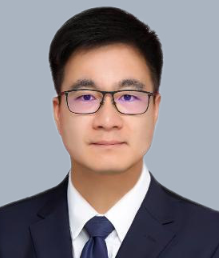 Jian Zhao (赵健)合作论文数School of Artificial Intelligence, Optics and Electronics, Northwestern Polytechnical University;Evolutionary Visione+x Oriented Learning Lab, TeleAI of China Telecom3
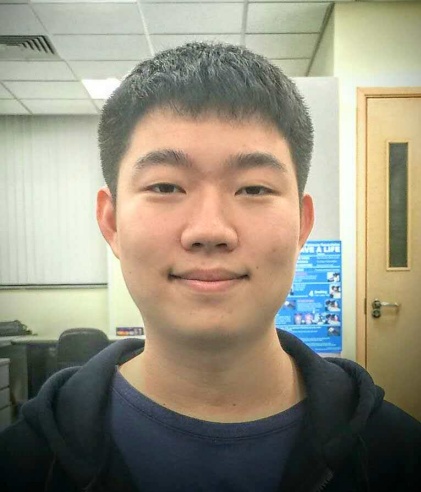 Yunpeng Chen (陈云鹏)合作论文数YITU Teach3
 Richard Luthy合作论文数Department of Civil & Environmental Engineering, Stanford University;Department of Oceans, Stanford University;Doerr School of Sustainability, Stanford University;School of Engineering, Stanford University3Benedict F. Massell合作论文数3
 Qibin Sun (孙启彬)合作论文数Institute of Advanced Technology, University of Science and Technology of China;School of Cyber Science and Technology, University of Science and Technology of China3Paul H. Hutton合作论文数3
 Madasu Hanmandlu合作论文数CSE Department, Maturi Venkata Subba Rao Engineering College3DA Dzombak合作论文数2bill bohn合作论文数2hope herron合作论文数2
 Catherine Peters合作论文数Department of Civil and Environmental Engineering, Princeton University2
 Max H. Garzon合作论文数Computer Science, The University of Memphis2
 Naushad Ali合作论文数2
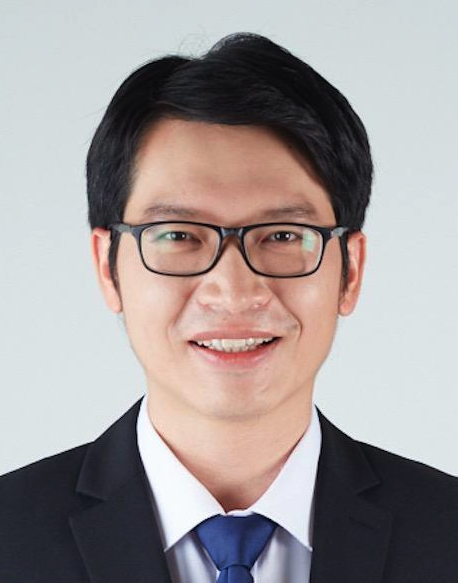 Joey Tianyi Zhou (周天異)合作论文数Institute of High Performance Computing, Agency for Science, Technology and Research;Centre for Frontier AI Research, Agency for Science, Technology and Research2
 O. V. Ramana Murthy合作论文数Department of Electrical Engineering, Indian Institute of Technology2Chih-Fang Chung合作论文数2
 Michael W. Berry合作论文数University of Tennessee2
 Vinhthuy Phan合作论文数Computer Science, The University of Memphis2K. Natarajan合作论文数1Kuldip Singh合作论文数1m c costacabral合作论文数1maharshi h desai合作论文数1anca a ivan合作论文数1Js Guleria合作论文数1b baginska合作论文数1Lori Lackman Zeman合作论文数1Emily Langnas合作论文数1sungkyun park合作论文数1Kathleen Duchak合作论文数1Pranjali P Surnis合作论文数1Clayton Creager合作论文数1Maidah Raja合作论文数1
 Stephen Kevan合作论文数Lawrence Berkeley National Laboratory1Todd Anderson合作论文数1
 Sean Saito合作论文数1




