Research SummaryThis study explores how traditional craft produces novelty, which appears to be at odds with its emphasis on continuation. While prior research has explored how tradition is rediscovered and revived from the past, traditional craft can produce intrinsic novelty potentially through its own repetitive acts. This study examines a Japanese cuisine Kaiseki, which is traditional but simultaneously innovative. The analysis of a well-known chef's design processes reveals that the chef designs novel dishes by responding to what has been done before, making something better and differently and thereby going beyond the limit of the tradition; Kaiseki tradition is re-enacted through such practices. A process philosophy of Gills Deleuze is engaged to explain our concept of "tradition as capacity" as well as "tradition as object."Managerial SummaryTradition is now seen as important source of value. This study explains how craft can be both traditional and innovative. Typically, innovation has been explained by recombination with new technologies and restoration and reinterpretation to reinvigorate identity rooted in the past, this study sheds light on the intrinsic novelty within the practices of craft. This novelty is evident in traditional Japanese cuisine, called Kaiseki, which is traditional but also innovative because customers seek novel exquisite experience as they do in any Michelin Guide starred restaurants. Through the analysis of a chef's practices, we propose a new conceptualization of tradition as capacity. The creative force of this tradition as capacity is important for creating new opportunities and novel values.
Based on an empirical illustration of Onta pottery and more broadly a discussion of the Japanese Mingei movement, we study the intimacy between craft work, ethics and time. We conceptualize craft work through the temporal structure of tradition, to which we find three aspects: generational rhythms of making; cycles of use and re-use amongst consumers and a commitment to historically and naturally attuned communities. We argue these temporal structures of tradition in craftwork are animated by two contrasting but co-existing ideas of the good: the moral and the ethical. By developing the work of Elizabeth Grosz, we conceptualize this distinction between moral and ethical as a temporal phenomenon, specifically in differing relations to ideas of the future. Moral aspects of craft work understand the future as a progression from past, whether in preserving practices and norms, or improving upon them in relation to ideals. Ethical aspects understand the future as inherently open to chance and divergence, valuing difference, accident and the possibilities for creativity these entail. Empirically, we show evidence of both aspects in the case of Mingei —a organized movement dedicated to preserving and promoting traditional Japanese craft work. We contribute to studies of craft work by revealing and classifying its temporal aspects. We contribute to studies in business ethics by conceptualising a generative distinction between morals and ethics configured through differing understandings of time.
The concept of performativity, a central theme in routine dynamics research, suggests that a routine does not first exist as a recognizable phenomenon, and then actions are taken subsequently. On the contrary, actions themselves need to achieve the recognizability of the routine. This paper revisits recognizability in light of routine interdependence and materiality. Focusing on order taking routines at sushi bars, the analysis reveals that participants constantly achieve the beginning of a routine performance by drawing on performances of other routines and materiality, both of which are seemingly unrelated to the focal routine. Prior to routine initiation, much material and embodied work is conducted in order to make the routine recognizable. Once initiated, the routine performance makes subtle use of materiality, allowing participants to engage in a seemingly unrelated routine while they remain subordinately attentive to the focal routine. While a routine appears to exist on its own once it is recognized, the achievement of this recognition relies largely on factors that are not part of the routine.
This edited book focuses on the organization and meaning of craft work in contemporary society. It considers the relationship between craft and place and how this enables the construction of a meaningful relationship with objects of production and consumption. The book explores the significance of raw materials, the relationship between the body, the crafted object and the mind, and the importance of skill, knowledge and learning in the making process. Through this, it raises important questions about the role of craft in facing future challenges by challenging the logic of globalized production and consumption. The Organization of Craft Work encompasses international analyses from the United States, France, Italy, Australia, Canada, the UK and Japan involving a diverse range of sectors, including brewing, food and wine production, clothing and shoe making, and perfumery. The book will be of interest to students and academic researchers in organization studies, marketing and consumer behaviour, business ethics, entrepreneurship, sociology of work, human resource management, cultural studies, geography, and fashion and design. In addition, the book will be of interest to practitioners and organizations with an interest in the development and promotion of craft work.
Japanese imagination meets Western heritage under the commercially managed imprint of a global design house. The quality of the leather and stitching is of minimal interest; the look governs, and the projection of status predominates. The craft for which the Japanese are developing a nostalgia is more that of risk than design; the pre-industrialized exposure to material form and purposive structures to which the skill of the worker must be brought under the impress of lengthy apprenticeships, habituated generational expectations and rigorously embodied ceremony. The risk comes in allowing nature into the house whose apparent simplicity has very little to do with the stripped-back, tidy and efficient designs favoured by Western rationalism and its obsession with the new. It is to these aspects of Japanese craft that we bring o-sushi or sushi. Sushi is the serving of raw fish on a softly packed ball of slightly salted, vinegared rice.
Speech acoustics are easily degraded due to extralinguistic and environmental factors. This degradation is often troublesome to non-native listeners. To improve their robustness in listening, high variability phonetic training (HVPT) is widely used. In this paper, technically-enhanced HVPT is tested and new types of acoustic variability, namely, vocal tract length and channel distortion, are examined. Listening tests using the degraded speech materials are carried out with Japanese learners of English and it is found that their listening abilities are particularly impaired when radio communication distortion is added. An 18-day listening drill for speech samples with different levels of radio distortion is imposed on the English learners. Post-tests show that robustness of listening comprehension is significantly improved in the case of advanced learners, and that improvement is transferred effectively to listening to materials with other distortions.
While learners desire to acquire so comprehensible pronunciations as to make themselves understood smoothly, acquisition often becomes difficult because, outside of classrooms, it is not rare that learners can hardly find chances to talk in the target language. Even when they talk to native speakers, they may receive only lenient or superficial suggestions from native speakers. How can learners know native speakers' honest perception on their utterances? In this paper, shadowing is introduced not to learners but to native listeners, who are asked to shadow learners' utterances. Since shadowing is as simultaneous repetition as possible, it is expected that native listeners' perceived comprehensibility can be measured objectively as smoothness of natives' shadowings. Experiments show that 1) shadowers' subjective assessment of learners' speech and that of their shadowings are highly correlated and that 2) the former is more correlated with the GOP scores of natives' shadowings than those of learners' speech. These results suggest it is valid to regard comprehensible pronunciation as shadowahle pronunciation.
As long as service is characterized as value co-creation achieved jointly by multiple participants, service lies between the participants rather than reduced to any single one. This intersubjective nature of service forces us to break with subject-object dualism. That is to say, the customer and the service provider—subject—cannot judge the value of the service—object—from a distance. The customer as well as the provider is implicated in the service. When the value of service is concerned, the value of the participants, who are inseparable from the service, is also at issue. Specifically, they need to present who they are. An ethnomethodological study of videotaped customer-provider interactions at traditional sushi bars in Tokyo reveals that while engaging in service interactions, customers present how familiar and qualified they are in relation to the service and providers present how special their service is. By bringing this intersubjectivity to the fore, this chapter proposes a new theoretical perspective portraying service as dialectical struggle in which involved parties seek to demonstrate their own selves in relation to others. This perspective helps move beyond the notion of subjective customer satisfaction and explain some counterintuitive facts of services such as service providers who do not appear to care about customers’ satisfaction.
This chapter suggests that some of the Japanese services can claim high prices due to the cultural experience they offer. It presents a case study on sushi bars in Tokyo. The chapter examines the social relationship between service providers and customers. It shows that service providers and customers are defining and negotiating themselves and others through service interactions. Service providers try to present a certain representation of the culture. Looking back at history, the traditional meaning of culture was a critique of the capitalist material society or, to put it simply, the society of businesses. Now the concept of culture needs to be internalized within the business. Even when integrated within business, the concept of culture remains critical in that it always paints something other than the existing social order. It is precisely this displacement of capitalist society by culture that is now the source of value in the business realm.
Shadowing has become a well-known method to improve learners' overall proficiency. Our previous studies realized automatic scoring of shadowing speech using HMM phoneme posteriors, called GOP (Goodness of Pronunciation) and learners' TOEIC scores were predicted adequately. In this study, we enhance our studies from multiple angles: 1) a much larger amount of shadowing speech is collected, 2) manual scoring of these utterances is done by two native teachers, 3) DNN posteriors are introduced instead of HMM ones, 4) language -independent shadowing assessment based on posteriors -based DTW (Dynamic Time Warping) is examined. Experiments suggest that, compared to HMM, DNN can improve teacher -machine correlation largely by 0.37 and DTW based on DNN posteriors shows as high correlation as 0.74 even when posterior calculation is done using a different language from the target language of learning.
Some recent discussions in the service science community have been around the need for research on and innovation of human-centered service systems (HCSS) from a multiple discipline perspective. HCSS are complex because of the involvement of people, multiple stakeholders with usually incommensurate value systems spanning networks of resources. Designers of such systems have to draw knowledge and connections from service science, system thinking, design thinking, business, and engineering. In this research, we build an underpinning of the system thinking aspect of service design based on Churchman’s The Design of Inquiring Systems and Swanson’s Churchman’s Theory of Design Integrity as an important aspect of the education of service designers. This will form the philosophical foundation of a creed or set of beliefs and aims that will guide the service designer’s actions. Of particular relevance to service system design is Swanson’s interpretation of Churchman’s work to propose a Theory of Design Integrity, i.e., designing the wholeness, soundness, and virtue of a system. A system professional can design such a system with precepts based on Churchman’s necessary conditions to conceive a system S: it is teleological; it has a measure of performance, a client whose interests (value) are served, teleological components, an environment, a decision maker of resources, and a designer with good intentions to maximize the system’s value to the client; and it is stable. Even though Churchman was not specifically referring to service systems, we see that his ideas are as fresh today as then in applying the precepts to value cocreation scenarios. The Theory of Design Integrity also explicitly offers a virtue component that is lacking in the current service design literature. We feel that this should be an essential part of a service designer’s creed in today’s climate of privacy and security concerns. Swanson also introduced the role of a social witness as an observer who evaluates the system’s design integrity by maintaining a critical and responsible stance not separable from the system. We will illustrate the applicability of the Creed for Service Designers with service system scenarios and describe how it could be incorporated into service design education.
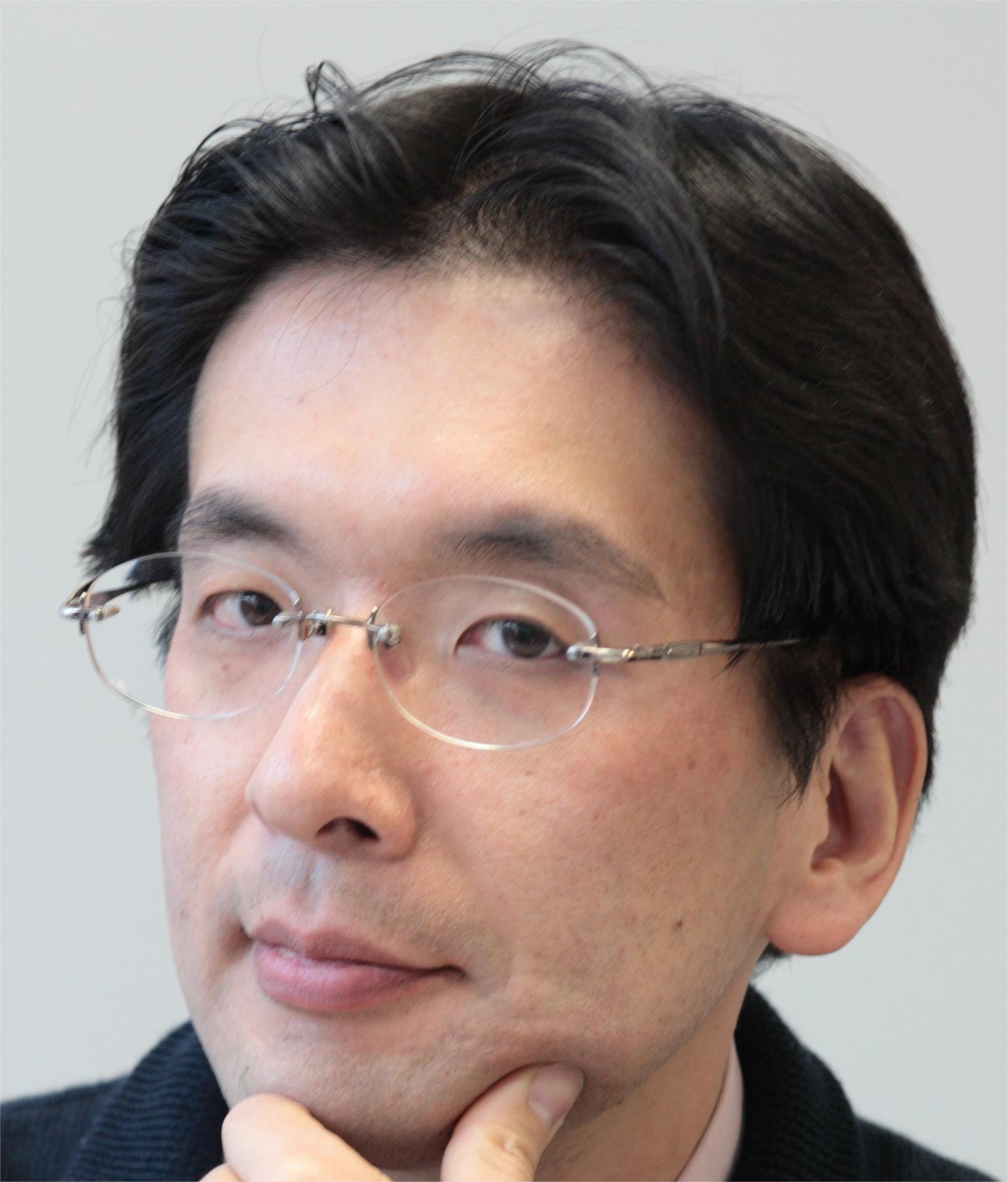 Nobuaki Minematsu (峯松信明)合作论文数Department of Electrical Engineering and Information Systems,;Graduate School of Engineering, The University of Tokyo23
 Keikichi Hirose合作论文数Univ Tokyo13
 Dean LUO (罗德安)合作论文数8
 Takeshi Hiramoto合作论文数6
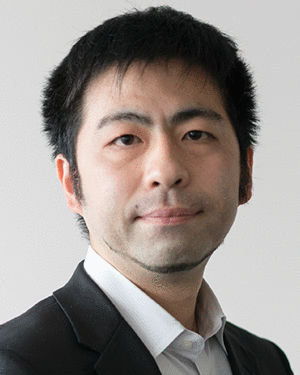 Daisuke Saito合作论文数6Kayoko Ito合作论文数4Junwei Yue合作论文数4Hiroharu Isomoto合作论文数4keisuke hayashida合作论文数3Naoya Shimomura合作论文数3
 shuhei kato合作论文数National Institute of Informatics3Teruo Kakegawa合作论文数3
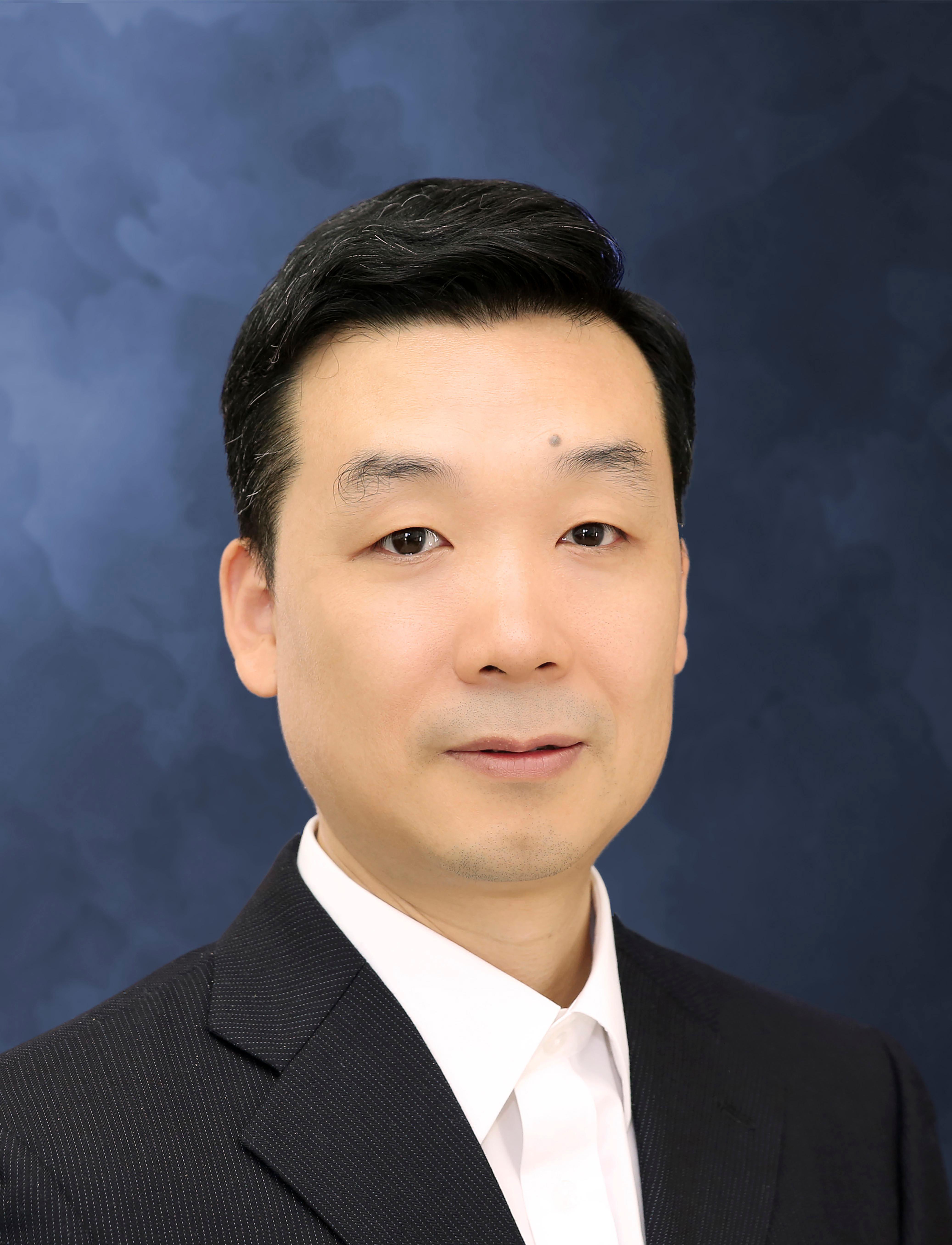 Yu Qiao (乔宇)合作论文数Multimedia Laboratory, Shenzhen Institutes of Advanced Technology, Chinese Academy of Sciences;Shanghai AI Laboratory;Shenzhen University of Advanced Technology3
 Toru Ishida合作论文数Department of Computer Science, Hong Kong Baptist University;Kyoto University;Shizuoka University of Art and Culture3
 Nozomi Ikeya合作论文数Palo Alto Research Center3
 Jack Whalen合作论文数Palo Alto Research Center3Chiharu Tsurutani合作论文数3
 Masayuki Suzuki合作论文数Univ Tokyo3kazuhiko kamesaki合作论文数2toshio kobatake合作论文数2Suguru Kabashima合作论文数2Shohei Toyama合作论文数2DeHan Luo (骆德汉)合作论文数2
 Yi Luan合作论文数Google Deepmind2Shuju Shi合作论文数Beijing Language and Culture University, Beijing Language and Culture Univ.2Shinichi Ono合作论文数2Yoshinori Hara合作论文数2
 Yuichi Yamashita合作论文数Dept Surg Gastroenterol, Fukuoka Univ2
 Robin Holt合作论文数2
 Erik Vinkhuyzen合作论文数2
 Yusuke Inoue合作论文数2
 James Glasnapp合作论文数Palo Alto Research Center2Isamu Tsuchida合作论文数2Kazutaka Maruyama合作论文数2Makoto Yokozawa合作论文数Makoto YokozawaNo picture of Makoto Yokozawa available - click to provide one
No description available of Makoto Yokozawa2
James Glasnapp合作论文数Palo Alto Research Center2Isamu Tsuchida合作论文数2Kazutaka Maruyama合作论文数2Makoto Yokozawa合作论文数Makoto YokozawaNo picture of Makoto Yokozawa available - click to provide one
No description available of Makoto Yokozawa2 Jean-Francois Coget合作论文数Orfalea College of Business, California Polytechnic State University2
 Takeshi Shinohara合作论文数Division of Developmental Biology and Health Science2Kyohei Iwamoto合作论文数1T. Kobatake合作论文数1Yukio Ogata合作论文数1shigeki hikita合作论文数1hironaru fukushima合作论文数1kimio yokota合作论文数1Kitano K合作论文数1
 Michael Suman合作论文数1Nao Sato合作论文数1kazuhiro okamoto合作论文数1kenichiro kajiwara合作论文数1




