Establishing a permanent lunar base is essential for prolonged human habitation, scientific exploration, and resource exploitation on the Moon. This paper proposes a novel habitat that merges the features of lunar lava tubes with the benefits of in-situ construction techniques to create a lava tube-like protective lunar structure with a large span that includes two unique arch curves. This structure is refined for in-situ construction, usable volume, structural rigidity, and thermal insulation through parametric design tools, utilizing the Non-Dominated Sorting Genetic Algorithm (NSGA-III) to refine seven design parameters. The optimal structural configuration is identified by selecting the arch apex with the minimum displacement from the Pareto set. To reduce stress concentrations in the shelter, the arch abutment is re-engineered, resulting in a ladder-like design that decreases the maximum stress by 63.69 % and maximum displacement by 75.13 %.
The construction of extraterrestrial bases has become a new goal in the active exploration of deep space. Among the construction techniques, in situ resource-based construction is one of the most promising because of its good sustainability and acceptable economic cost, triggering the development of various types of extraterrestrial construction materials. A comprehensive survey and comparison of materials from the perspective of performance was conducted to provide suggestions for material selection and optimization. 13 types of typical construction materials are discussed in terms of their reliability and applicability in extreme extraterrestrial environment. Mechanical, thermal and optical, and radiation-shielding properties are considered. The influencing factors and optimization methods for these properties are analyzed. From the perspective of material properties, the existing challenges lie in the comprehensive, long-term, and real characterization of regolith-based construction materials. Correspondingly, the suggested future directions include the application of high-throughput characterization methods, accelerated durability tests, and conducting extraterrestrial experiments.
Temperature variations on the lunar surface can cause significant thermal stress and increase energy consumption within a lunar base. Thus, studying the thermal behavior of lunar structures over time and space is crucial. This study utilizes classical thermomechanical coupling simulations to develop a comprehensive methodology for assessing the thermal performance of lunar shell structures. The model incorporates realistic assumptions about critical loads and boundary conditions and uses the real properties of regolith-based construction materials as input parameters. Using this method, the study simulates 36 scenarios for shell structures, including three types of structures, four latitudes, and three time periods. The temperature field, heat loss, and thermal stress for each scenario are calculated, and the overall trends and specific cases are analyzed. These results can inform further recommendations for the architectural design of lunar shell structures and the selection of construction materials.
To establish foundational support for forthcoming deep space exploration and settlement endeavors, the significance of extraterrestrial construction has become paramount. Recent developments underscore a growing acknowledgment of the imperative role played by in situ resource utilization, attributed to its potential for cost efficiency and facilitation of sustainable progress. This paper compiles and categorizes the advancements in this domain, focusing on three distinctive categories of in situ resources: regolith, water-ice, and energy resources. A review of their distribution, acquisition, and utilization procedures is presented. Subsequently, an intricate examination ensues, elucidating the applicability of each resource within the context of extraterrestrial construction, in conjunction with five prevalent technologies and the latest architectural constructs. Drawing insights from the research, the existing limitations are identified, particularly pertaining to the comprehensive, deep processing, and sustainable utilization of resources. Consequently, a proposition is put forth to address these challenges. Prospective investigations are recommended, focusing on the mining of water-ice, the metallurgy and production of regolith and slag, and the integrated construction in the pursuit of extraterrestrial construction and operational endeavors. (c) 2024 COSPAR. Published by Elsevier B.V. All rights are reserved, including those for text and data mining, AI training, and similar technologies.
To facilitate the collection of lunar regolith for lunar base construction, the use of a bucket drum has emerged as an efficient and convenient method. This paper aimed to investigate the influence of drum configurations and operating parameters on collection performance. Initially, a DEM model for lunar regolith simulant particles was developed, and parameters were calibrated using RSM. Three different drum configurations were designed for simulation to compare the motion behavior of particles, drum forces, torque, and collection mass. Additionally, the effects of the rotation speed, cut depth, and linear cut speed on collection process were analyzed through simulations. Furthermore, a testing platform was constructed to evaluate the collection performance of the drum under various operating parameters. The influence of operating parameters was further confirmed, thereby validating the effectiveness and accuracy of the DEM simulations. These findings offer valuable insights for optimizing drum structures and establishing appropriate operating parameters.
With advances in automated construction and deeper Moon exploration missions, the concept of “building a house on the moon” is becoming increasingly feasible. The launch/landing (LL) infrastructure plays a vital role in ensuring the safety of landers and astronauts and should be prioritized for construction. Initially, this review explores the variety of designs used at existing LL sites, analyzing the logic and unique features of each design. It then outlines three main construction methods for landing pads, from material production to basic construction processes. The review also covers experiments related to LL pads, including material, component, and construction testing. Finally, current challenges and future directions for the development of lunar LL infrastructure are discussed, and 3D-printed biomimetic structures are highlighted as a particularly promising option.
Martian regolith has gradually become a consensus as an important in-situ natural resource for building habitats and infrastructure on Mars.As more and more research focusing on in-situ utiliza-tion of Martian regolith,this article provides a comprehensive review of construction materials based on Martian regolith.However,it is necessary to consider the vastly different environmental conditions on Mars compared to Earth,such as low gravity,near vacuum,large temperature differences,cosmic ray ra-diation and so on.Similarly,due to the unique chemical composition,particle size,porosity,as well as thermal and mechanical properties of Martian regolith,it also brings several certain difficulties for in-situ production of construction materials on Mars.As a result,based on the extreme environment of Mars and the special properties of Martian regolith,this article provides a detailed overview of the prepara-tion process and physical and mechanical characteristics of in-situ construction materials.Then,the re-search progress in two aspects of various Martian regolith-based concrete materials(including sulfur con-crete,polymer concrete,geopolymer concrete,hydrogel-based concrete),Martian regolith-based melting and sintering materials is further emphasized.Moreover,this article systematically compares the prepa-ration conditions and in-situ utilization rates of each construction material and analyzes both the advan-tages and weakness of their preparation processes in the special Martian environment.Finally,the prob-lems and limitations of the above-mentioned materials in Martian in-situ construction are pointed out,including difficulties in production of polymer concrete,high energy consumption during melting and sin-tering processes,and insufficient service performance of construction materials in Martian environments.Accordingly,in order to provide useful references for the realization of in-situ construction on Mars in the future,the development direction of construction materials has been proposed in three aspects,which are the improved methods of anhydrous concrete represented by polymer concrete,optimization of melt-ing and sintering processes and development of new materials suitably adapted to the environment.
Shield tunneling has been prevalent in tunnel construction since its introduction into the field. To take advantage of the massive data generated during tunneling and to assist in engineers' judgement, deep learning models have been widely applied. A comprehensive survey is presented in this paper to organize emerging research and propose future directions. Typical types of data in shield and the corresponding pre-processing approaches are summarized and listed. Specific application scenarios are defined, including the recognition, predication, and control of external environments, shield efficiency, and shield safety. The explainability and generalizability of the applied deep learning models are also analyzed to evaluate their performance. The research challenges are proposed, including the lack of high-quality datasets, limited evaluation of the generalizability of the models, and their limited interpretability. Federated learning, model-based deep learning, and semi-supervised learning are then recommended as potential solutions to these challenges in future research.
Clogging challenges caused by mud cake in shield tunneling can hinder the efficiency, making it of great significance for clogging detection during tunneling. However, low explainability of previous intelligent computing methods block their applications. An explainable spatiotemporal graph convolutional network for clogging detection is therefore proposed to judge the risk level of clogging for each ring. The graphs are transformed from original multi-dimensional time-series monitoring data, which include spatio-temporal information, whose risk are leveled by experts as labels. A practical tunneling case is applied to discuss the results of the model and the data from another tunneling line is applied to validate the robustness. The hierarchical pooling process and attention mechanism highlight the important nodes in each graph as the spatio-temporal explainability. Typical clogging characteristics can be observed in those important nodes. With complex network indices, more detailed explanations are obtained, showing potential value in learning from the explainable AI.
The establishment of lunar habitats is significant for humans to explore the Moon and carry out scientific work. Constructing lunar habitats through additive manufacturing using lunar in situ resource is a promising solution. This study proposed a parametric design and multiobjective optimization approach based on genetic algorithms for the structure of lunar habitats. Structural shape was translated into design parameters, which were optimized during the design phase. The optimization objectives were determined considering the material mass consumption, space efficiency, and resistance ability for extreme extraterrestrial environment of the structure. Three kinds of genetic algorithm-based multiobjective optimization methods were used and compared to optimize the structural parameters. The optimized Pareto solution set containing multiple solutions based on the hypervolume index are obtained. Finite-model analysis was performed on the structures of the Pareto solution set and the optimal structure was determined based on the results of maximum stress and displacement. Finally, partially scaled-down physical models were produced through additive manufacturing to demonstrate the optimized double-shell habitat structure.
Purpose This study presented the experience of improving the nucleic acid sample collection and transportation service in response to the epidemic. The main purpose is that through intelligent path planning, combined with the time scheduling of sample points, the process of obtaining results to determine the state of COVID-19 patients could be speeding up. Design/methodology/approach The research optimized the process, including finding an optimal path to traverse all sample points in the hospital area via intelligent path planning method and standardizing the operation through the time sequence scheduling of each round of support staff to collect and send samples in the hospital area, so as to ensure the shortest time in each round. And the study examines these real-time experiments through retrospective examination. Findings The real-time experiments' data showed that the proposed path planning and scheduling model could provide a reliable reference for improving the efficiency of hospital logistics. Testing is a very important part of diagnosis and prompt results are essential. It shows the possibility of applying the shortest-path algorithms to optimize sample collection processes in the hospital and presents the case study that gives the expected outcomes of such a process. Originality/value The value of the study lies in the abstraction of a very practical and urgent problem into a TSP. Combining the ant colony algorithm with the genetic algorithm (ACAGA), the performance of path planning is improved. Under the intervention and guidance, the efficiency of hospital regional logistics planning was greatly improved, which may be of greater benefit to critical patients who must go through fever clinic during the epidemic. By detailing how to more rapidly obtain results through engineering method, the paper contributes ideas and plans for practitioners to use. The experience and lessons learned from Tongji Hospital are expected to provide guidance for supporting service measures in national public health infrastructure management and valuable reference for the development of hospitals in other countries or regions.
工程实景测绘不仅能辅助工程师发现工程进度、质量问题,更能结合其他信息处理技术,为进一步工程分析提供数据基础.相较于传统工程测绘技术,无人机低空摄影技术具有操作简便、经济性好、机动性强等优点.将无人机摄影技术引入土方工程,对其航迹规划问题展开讨论,旨在实现场地三维实景建模.对场地进行分区,将航迹规划问题简化为不规则场地下的全覆盖路径规划问题,且无需考虑避障规划.在方法层面上,将A?算法与BINN算法结合,改进了BINN算法中可能出现的"死区",并通过设置约束规则,解决了算法初期路径随机游走的问题.最终,以某项目土方工程的实景建模工作为案例,利用以上算法完成无人机航迹规划,证明了该算法的可行性.
With the development of monitoring technologies, collected data has become more massive, precise, and timely, which can be an excellent foundation for more comprehensive assessment. However, existing data-analyzing researches still concentrate mainly on spatial or temporal characteristics separately, neglecting the dependence inside. Actually, the spatio-temporal correlation has been widely studied in other areas. Based on that, this paper proposed an undirected and unweighted data-based complex network as a risk assessment tool to explore the spatio-temporal correlation in safety monitoring data. Eigenvectors containing both spatial and temporal characteristic values are the nodes and the degree of correlation determines whether edges exist between each pair of nodes. The good application of the model in a metro construction project verifies the existence and significance of the correlation. This work not only reveals the spatio-temporal correlation of construction characteristics but also provides a new perspective in safety assessment.
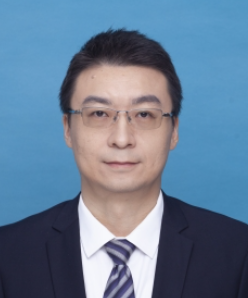 Cheng Zhou (周诚)合作论文数School of Civil and Hydraulic Engineering, Huazhong University of Science and Technology9
 Yan Zhou (周燕)合作论文数Faculty of Engineering, China University of Geosciences6
 Lie-Yun Ding (丁烈云)合作论文数School of Civil and Hydraulic Engineering, Huazhong University of Science and Technology5
 Wenbin Han合作论文数3
 Yu-Sheng Shi (史玉升)合作论文数School of Materials Science and Engineering, Huazhong University of Science and Technology3Rao Li合作论文数2
 Wei She (佘伟)合作论文数School of Materials Science and Engineering, Southeast University2Rui Chen合作论文数Samsung Research America2Shuangnan Jiang合作论文数1Wang Yan (王艳)合作论文数1Li Rao (黎娆)合作论文数1XiaoJu Xiong (熊晓菊)合作论文数1LinChun Wei (魏林春)合作论文数1
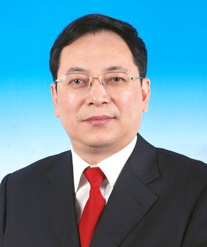 Changwen Miao (缪昌文)合作论文数School of Materials Science and Engineering, Southeast University1
 Shifeng Wen (文世峰)合作论文数School of Materials Science and Engineering, Huazhong University of Science and Technology1
 Jian Chen (陈健)合作论文数School of Civil and Hydraulic Engineering, Huazhong University of Science and Technology1
 Jie Li (李节)合作论文数School of Nursing, Tongji Medical College, Huazhong University of Science and Technology1
 Long Xiao (肖龙)合作论文数School of Earth Sciences, China University of Geosciences (Wuhan)1




