The CI (Ivuna-type) carbonaceous material returned from asteroids Ryugu and Bennu contain mobilized sodium from the evaporation or freezing of liquid water into brines, shedding light on the internal structure of ice-rich CI-type worlds and the formation of prebiotic organic compounds. The formation of brines has not been demonstrated in CM (Mighei-type) carbonaceous chondrites, which also supplied organic matter to the early Earth. Here, we announce the fall of a primitive meteorite from a daytime fireball over the New York metropolitan area in July 2024. It is a CM2 breccia that contains unique CM1 clasts rich in water and sodium. The meteorite contains abundant amino acids and other products of organic chemistry in brines that reveal subsurface processes on CM-type asteroid parent bodies.
Organic matter in meteorites reveals clues about early Solar System chemistry and the origin of molecules important to life, but terrestrial exposure complicates interpretation. Samples returned from the B-type asteroid Bennu by the Origins, Spectral Interpretation, Resource Identification, and Security–Regolith Explorer mission enabled us to study pristine carbonaceous astromaterial without uncontrolled exposure to Earth’s biosphere. Here we show that Bennu samples are volatile rich, with more carbon, nitrogen and ammonia than samples from asteroid Ryugu and most meteorites. Nitrogen-15 isotopic enrichments indicate that ammonia and other N-containing soluble molecules formed in a cold molecular cloud or the outer protoplanetary disk. We detected amino acids (including 14 of the 20 used in terrestrial biology), amines, formaldehyde, carboxylic acids, polycyclic aromatic hydrocarbons and N-heterocycles (including all five nucleobases found in DNA and RNA), along with 10,000 N-bearing chemical species. All chiral non-protein amino acids were racemic or nearly so, implying that terrestrial life’s left-handed chirality may not be due to bias in prebiotic molecules delivered by impacts. The relative abundances of amino acids and other soluble organics suggest formation and alteration by low-temperature reactions, possibly in NH3-rich fluids. Bennu’s parent asteroid developed in or accreted ices from a reservoir in the outer Solar System where ammonia ice was stable. Rocks and dust from the asteroid Bennu contain some of the molecular building blocks of life on Earth, such as amino acids and nucleobases. They also carry ammonia that formed billions of years ago in cold, distant regions of our Solar System.
Nitrogen-containing organic compounds play key biological roles, and their identification in primitive astromaterials such as meteorites can shed light on the origin of life. However, meteorites are typically contaminated by uncontrolled exposure to Earth. Here we show that pristine samples returned from asteroid Bennu contain polymeric organics exceptionally rich in nitrogen and oxygen. These polymers contain a variety of functional groups including amines, amides, N-heterocycles, and aliphatic and aromatic hydrocarbons, among others. They are seen in a carbonaceous vein with mineral inclusions and in multilayered organic sheets. Their morphology and composition indicate formation from pre-aqueous N-rich precursors and later modification during aqueous alteration. These findings demonstrate that asteroids like Bennu contain complex nitrogen-rich organic phases formed by pre-aqueous and aqueous processes, and they expand the known inventory of potential prebiotic extraterrestrial compounds.
We analyzed an asteroid Ryugu sample returned to Earth by JAXA's Hayabusa2 mission using nanoIR, SEM, and TEM microscopy. We identified multiple distinct carbon reservoirs within the phyllosilicate matrix and demonstrate infrared spectral affinities for some of the carbon to insoluble organic matter (IOM). TEM studies of Ryugu samples have allowed us to better understand the interrelationship between the crystallographic orientations of phyllosilicates and the secondary minerals such as carbonate, sulfide, and apatite. Transport of elements provides a unifying theme for understanding these interrelationships.
A literature compilation of 1136 low-Ca pyroxene compositions from chondrules from 12 primitive type 2-3 carbonaceous, ordinary and enstatite chondrite groups define unique regions on an Al2O3 and Cr2O3 diagram when compared to low-Ca pyroxenes from equilibrated type 4-6 chondrites. Measured compositions of 100 low-Ca pyroxenes from comet Wild 2 and a giant cluster IDP of probable cometary origin are similar to each other and fall in the type 2-3 chondrite chondrule region suggesting that most of the pyroxenes likely formed in the solar nebula like conventional chondrules. The data imply that most low Ca-pyroxenes from comet Wild 2 and the giant cluster IDP formed from igneous crystallization processes and did not experience significant thermal metamorphism, indicating that the low-Ca pyroxenes were unlikely incorporated into large parent bodies prior to accretion in their respective comet bodies. An intriguing group of nine low-Ca pyroxenes from comet Wild 2 with low Cr and Al that fall where type 4-6 chondrites are located are interpreted as products of condensation. The compositional data combined with previously measured oxygen isotopes on 17 low-Ca pyroxenes support earlier conclusions that comet samples have links with carbonaceous, ordinary, and possibly enstatite chondrite groups. Our results provide additional evidence that comets accreted materials from multiple chondrule reservoirs throughout the solar nebula.
We measured oxygen isotope ratios of 16 silicate fragments from seven aerogel tracks (turnip-like type B tracks 77, 149, 172, 191, and 220; carrot-like type A tracks 22 and 175) of the comet 81P/Wild 2 collector from NASA’s Stardust mission using secondary ion mass spectrometry. Thirteen were prepared by ultramicrotomy; three from track 220 were prepared by sputtering resin blocks using a SIMS Kohler beam, a new procedure aiming to mine as many cometary particles encased in aerogel/resin as possible. Combining new and literature results, we recognized that most silicate fragments of individual type B tracks have diverse mineralogy but consistent mass-independent fractionation of oxygen isotopes (Δ17O = δ17O − 0.52 × δ18O) or display negative Δ17O–Mg# relationship like CR chondrules. These observations suggest that their impactors are loosely bound aggregates of unequilibrated materials originating mainly from similar protoplanetary disk regions, resembling the cluster IDP U2-20-GCA. Furthermore, silicate fragments from type A track 22 have almost identical mineralogy and Δ17O values, confirming that its impactor is a single chondrule-like fragment. The terminal particle of type A track 175 is pure forsterite with Δ17O of ∼–23‰.Six iron-rich fragments of this study have positive oxygen isotope ratios (Δ17O∼+2‰) and ordinary chondrite chondrule-like olivine compositions. Together with five similar fragments in the literature, a unique population (Mg# ≤86) of Wild 2 fragments that resemble chondrules from the inner solar system (O-E-R) chondrites or the outer solar system CH-CB chondrites was identified. The remaining 16O-poor Wild 2 fragments are Mg# ≥79 silicates with Δ17O∼–2‰ and a small amount of Mg# ≤79 silicates with Δ17O∼0‰, which are most consistent with CR chondrite chondrules. Thus, we conclude that in addition to the possible major source of CR chondrite chondrule-like materials, the inner solar system or CH-CB chondrule-like materials are a minor component of comet Wild 2, like the cluster IDP U2-20-GCA.
Samples of the carbonaceous asteroid Ryugu were brought to Earth by the Hayabusa2 spacecraft. We analyzed 17 Ryugu samples measuring 1 to 8 millimeters. Carbon dioxide-bearing water inclusions are present within a pyrrhotite crystal, indicating that Ryugu's parent asteroid formed in the outer Solar System. The samples contain low abundances of materials that formed at high temperatures, such as chondrules and calcium- and aluminum-rich inclusions. The samples are rich in phyllosilicates and carbonates, which formed through aqueous alteration reactions at low temperature, high pH, and water/rock ratios of <1 (by mass). Less altered fragments contain olivine, pyroxene, amorphous silicates, calcite, and phosphide. Numerical simulations, based on the mineralogical and physical properties of the samples, indicate that Ryugu's parent body formed ~2 million years after the beginning of Solar System formation.
It is often assumed that electron backscatter and continuum (bremsstrahlung) productions emitted from electron-solid interactions during X-ray microanalysis in compounds can be extrapolated from pure element observations by means of the assumption of average atomic number, or Z-bar (Z¯). For pure elements the average Z is equal to the atomic number, but this direct approach fails for compounds. The use of simple atomic fractions yields completely spurious results, and while the commonly used mass fraction Z averaging produces fairly reasonable results, we know from physical considerations that the mass of the neutron plays only a negligible role in such interactions below ∼1 MeV. Therefore, including the mass or atomic weight in such calculations can only introduce further errors in these models. We present an expression utilizing atomic fractions of the atomic numbers of the elements in the compound (Z fraction), with an exponent to account for the variation in nuclear screening as a function of the element Z value.
The past decade has witnessed the development of layered-hydroxide-based self-supporting electrodes, but the low active mass ratio impedes its all-around energy-storage applications. Herein, the intrinsic limit of layered hydroxides is broken by engineering F-substituted β-Ni(OH)2 (Ni-F-OH) plates with a sub-micrometer thickness (over 700 nm), producing a superhigh mass loading of 29.8 mg cm-2 on the carbon substrate. Theoretical calculation and X-ray absorption spectroscopy analysis demonstrate that Ni-F-OH shares the β-Ni(OH)2 -like structure with slightly tuned lattice parameters. More interestingly, the synergy modulation of NH4 + and F- is found to serve as the key enabler to tailor these sub-micrometer-thickness 2D plates thanks to the modification effects on the (001) plane surface energy and local OH- concentration. Guided by this mechanism, the superstructures of bimetallic hydroxides and their derivatives are further developed, revealing they are a versatile family with great promise. The tailored ultrathick phosphide superstructure achieves a superhigh specific capacity of 7144 mC cm-2 and a superior rate capability (79% at 50 mA cm-2 ). This work highlights a multiscale understanding of how exceptional structure modulation happens in low-dimensional layered materials. The as-built unique methodology and mechanisms will boost the development of advanced materials to better meet future energy demands.
 Andrew Westphal合作论文数Space Sciences Laboratory, University of California, Berkeley;Center for Integrative Planetary Science, Department of Astronomy, University of California, Berkeley163
 Anna L. Butterworth合作论文数115
 Ryan C. Ogliore合作论文数83
 Don Brownlee合作论文数Department of Astronomy, College of Arts & Sciences, University of Washington78
 Michael Zolensky合作论文数NASA Johnson Space Center, NASA Astrobiology Institute;NASA Stardust, Hayabusa and Spacecraft Microimpact Samples67
 Scott Sandford合作论文数Space Sciences and Astrophysics Branch, Space Science and Astrobiology Division, Ames Research Center, National Aeronautics and Space Administration63Anton T Kearsley合作论文数Impacts & Astromaterials Research Centre;Dept . of Mineralogy;History Museum;Dept . Earth Sci;Imperial College London;Uni - versity of Kent;Impacts & Astromaterials Research Centre, Imperial College London62
 John Bridges合作论文数Space Research Centre;Dept . of Physics & Astronomy University;Dept . Earth;Planetary Sciences;Univ of Hawaii;Dept . of Geology and Geophysics;y University, Univ of Hawaii58
 Frank Postberg合作论文数Max-Planck Institute for Nuclear Physics58
 Hugues Leroux合作论文数Unité Matériaux et transformations, Université de Lille58
 Mark J. Burchell合作论文数School of Physical Sciences, University of Kent57Peter Hoppe合作论文数Max Planck Institute for Chemistry, P.O. Box 3060, 55020 Mainz, Germany57
 Christine Floss合作论文数Laboratory for Space Sciences, Washington University56
 Frank E. Brenker合作论文数Institut für Geologie und Mineralogie, Universität zu Köln56
 Mario Trieloff合作论文数Institute of Earth Sciences, Heidelberg University55Julien Stodolna合作论文数53Laurence Lemelle合作论文数UMR5570, CNRS51
 Larry R. Nittler合作论文数Earth and Planets Laboratory, Carnegie Institution of Washington51
 Alexandre S. Simionovici合作论文数Observatory of Sciences of the Universe, University Grenoble Alpes;Institut Des Sciences De La Terre, University Joseph Fourier51
 Saša Bajt合作论文数CFEL, Deutsches Elektronen-Synchrotron49
 Jan Leitner合作论文数48
 Rhonda Stroud合作论文数Buseck Center for Meteorite Studies, School Of Earth and Space Exploration, Arizona State University48
 Peter Cloetens合作论文数European Synchrotron Radiation Facility47
 Gary R. Huss合作论文数W. M. Keck Cosmochemistry Laboratory, School of Ocean and Earth Science and Technology, University of Hawai‘i at Manoa;Hawai‘i Institute of Geophysics and Planetology, School of Ocean and Earth Science and Technology, University of Hawai‘i at Manoa46Jon K. Hillier合作论文数46Carlton C. Allen合作论文数45
 Hans A. Bechtel合作论文数Adv Light Source Div, Lawrence Berkeley Natl Lab45
 Geert Silversmit合作论文数44Peter Tsou合作论文数42
 Andrew M. Davis合作论文数Chicago Center for Cosmochemistry;Department of the Geophysical Sciences, The University of Chicago;Field Museum of Natural History41
 Thomas Stephan合作论文数Institut für Planetologie41
 Philipp R. Heck合作论文数Robert A. Pritzker Center for Meteoritics and Polar Studies, The Field Museum of Natural History41
 Manfred Burghammer合作论文数40
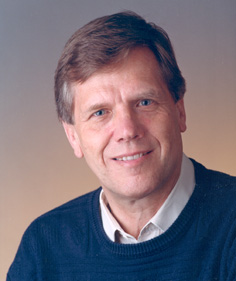 Eberhard Gruen合作论文数Max Planck Institute for Nuclear Physics;Laboratory for Atmospheric and Space Physics, University of Colorado40d frank合作论文数39r bastien合作论文数38Bart Vekemans合作论文数38Laszlo Vincze合作论文数38G.J. Flynn合作论文数38
 J. Borg合作论文数Imperial Coll, London, England37
 Tom Schoonjans合作论文数Department of Analytical Chemistry, Ghent University37
 Tolek Tyliszczak合作论文数Lawrence Berkeley National Laboratory37
 Akira Tsuchiyama合作论文数Guangzhou Institute of Geochemistry, Chinese Academy of Science34Mark C. Price合作论文数33Frank J. Stadermann合作论文数33t tyliczszak合作论文数31j huth合作论文数30Stephen R. Sutton合作论文数30
 Ralf Srama合作论文数29




