Background: Nutrition plays a pivotal role in health, yet poor dietary habits are now the leading risk factor for illness and death. In the United States, diet-related conditions such as heart disease, cancer, diabetes, and obesity cause > 1 million deaths per year and are leading contributors to the nation's $4.5 trillion in healthcare spending. Objectives: Addressing these issues requires coordinated efforts across multiple sectors and government agencies. The National Institutes of Health (NIH) and the United States Food and Drug Administration (FDA) are essential partners in this endeavor. A strong foundation of scientific research, coupled with effective, practical, and real-world regulatory activities, is critical to inform consumers and support a healthier food environment. Methods: In December 2024, NIH and FDA convened a workshop to advance nutrition science for food-related policy decision making. A diverse group of researchers, policymakers, and other experts participated in the event to identify research gaps, explore strategies for enhanced NIH-FDA collaboration, and highlight emerging technologies in nutrition science, with a particular focus on the topic of ultra-processed foods. Results: The workshop was designed to do the following: 1) identify critical research gaps and priorities in nutrition regulatory science; 2) enhance scientific collaboration between NIH and FDA; 3) explore how scientific evidence informs food-related policies and regulations; and 4) highlight emerging technologies and data resource needs for nutrition research. Conclusion: This article summarizes the workshop proceedings and describes priority research gaps, opportunities, and suggested next steps that emerged from the discussions.
Epidemiology studies evaluate associations between the metabolome and disease risk. Urine is a common biospecimen used for such studies due to its wide availability and non-invasive collection. Evaluating the robustness of urinary metabolomic profiles under varying preanalytical conditions is thus of interest. Here we evaluate the impact of sample handling conditions on urine metabolome profiles relative to the gold standard condition (no preservative, no refrigeration storage, single freeze thaw). Conditions tested included the use of borate or chlorhexidine preservatives, various storage and freeze/thaw cycles. We demonstrate that sample handling conditions impact metabolite levels, with borate showing the largest impact with 125 of 1,048 altered metabolites (adjusted P < 0.05). When simulating a case-control study with expected inconsistencies in sample handling, we predicted the occurrence of false positive altered metabolites to be low (< 11). Predicted false positives increased substantially (³63) when cases were simulated to undergo alternate handling. Finally, we demonstrate that sample handling impacts on the urinary metabolome were markedly smaller than those in serum. While changes in urine metabolites incurred by sample handling are generally small, we recommend implementing consistent handling conditions and evaluating robustness of metabolite measurements for those showing significant associations with disease outcomes.
Supplementary Figure S5 shows scatterplot illustrating 80 cancer-metabolomics primary analyses from 77 studies. Studies that had multiple cancer outcomes were considered separately in the analysis.
Supplementary Figure S6 shows pie chart displaying breakdown of studies that used an LC-MS semi-targeted approach.
Supplementary Table S2 shows additional study design and analysis characteristics of population-based cancer metabolomics studies.
Supplementary Figure S4 shows bar graph displaying distribution of metabolomic epidemiology studies of cancer by number of cancer cases recruited.
Supplementary Figure S3 shows bar graph displaying the distribution of metabolomic epidemiology studies of cancer reporting race information by race category.
Despite lung cancer affecting all races and ethnicities, disparities are observed in incidence and mortality rates among different ethnic groups in the United States. Non-Hispanic African Americans had a high incidence rate of lung cancer at 55.8 per 100 000 people, as well as the highest death rate at 37.2 per 100 000 people from 2016 to 2020. While previous genome-wide association studies (GWAS) have identified over 45 susceptibility risk loci that influence lung cancer development, few GWAS have investigated the etiology of lung cancer in African Americans. To address this gap in knowledge, we conducted GWAS of lung cancer focused on studying African Americans, comprising 2267 lung cancer cases and 4264 controls. We identified three loci associated with lung cancer, one with lung adenocarcinoma, and four with lung squamous cell carcinoma in this population at the genomic-wide significance level. Among them, three novel loci were identified near VWF at 12p13.31 for overall lung cancer and GACAT3 at 2p24.3 and LMAN1L at 15q24.1 for lung squamous cell carcinoma. In addition, we confirmed previously reported risk loci with known or new lead variants near CHRNA5 at 15q25.1 and CYP2A6 at 19q13.2 associated with lung cancer and TRIP13 at 5p15.33 and ERC1 at 12p13.33 associated with lung squamous cell carcinoma. Further multi-step functional analyses shed light on biological mechanisms underlying these associations of lung cancer in this population. Our study highlights the importance of ancestry-specific studies for the potential alleviation of lung cancer burden in African Americans.
Supplementary Figure S1 shows metabolomic epidemiology studies of cancer published from January 1998 to June 2021.
Supplementary Figure S2 shows geographic distribution of participant recruitment for metabolomic epidemiology studies of cancer.
Supplementary Table S1 shows metabolite super-pathways examined in semi-targeted population-based cancer metabolomics studies.
Background Quality assurance (QA) and quality control (QC) practices are key tenets that facilitate study and data quality across all applications of untargeted metabolomics. These important practices will strengthen this field and accelerate its success. The Best Practices Working Group (WG) within the Metabolomics Quality Assurance and Quality Control Consortium (mQACC) focuses on community use of QA/QC practices and protocols and aims to identify, catalogue, harmonize, and disseminate current best practices in untargeted metabolomics through community-driven activities. Aim of review A present goal of the Best Practices WG is to develop a working strategy, or roadmap, that guides the actions of practitioners and progress in the field. The framework in which mQACC operates promotes the harmonization and dissemination of current best QA/QC practice guidance and encourages widespread adoption of these essential QA/QC activities for liquid chromatography-mass spectrometry. Key scientific concepts of review Community engagement and QA/QC information gathering activities have been occurring through conference workshops, virtual and in-person interactive forum discussions, and community surveys. Seven principal QC stages prioritized by internal discussions of the Best Practices WG have received participant input, feedback and discussion. We outline these stages, each involving a multitude of activities, as the framework for identifying QA/QC best practices. The ultimate planned product of these endeavors is a “living guidance” document of current QA/QC best practices for untargeted metabolomics that will grow and change with the evolution of the field.
Introduction During the Metabolomics 2023 conference, the Metabolomics Quality Assurance and Quality Control Consortium (mQACC) presented a QA/QC workshop for LC-MS-based untargeted metabolomics. Objectives The Best Practices Working Group disseminated recent findings from community forums and discussed aspects to include in a living guidance document. Methods Presentations focused on reference materials, data quality review, metabolite identification/annotation and quality assurance. Results Live polling results and follow-up discussions offered a broad international perspective on QA/QC practices. Conclusions Community input gathered from this workshop series is being used to shape the living guidance document, a continually evolving QA/QC best practices resource for metabolomics researchers.
Metabolomic epidemiology studies are complex and require a broad array of domain expertise. Although many metabolite-phenotype associations have been identified; to date, few findings have been translated to the clinic. Bridging this gap requires understanding of both the underlying biology of these associations and their potential clinical implications, necessitating an interdisciplinary team approach. To address this need in metabolomic epidemiology, a workshop was held at Metabolomics 2023 in Niagara Falls, Ontario, Canada that highlighted the domain expertise needed to effectively conduct these studies -- biochemistry, clinical science, epidemiology, and assay development for biomarker validation -- and emphasized the role of interdisciplinary teams to move findings towards clinical translation.
Bar graph depicts cancer types studied in the metabolomic epidemiology literature. *Other includes extrahepatic cholangiocarcinoma, leucoma, and other not specified.
Introduction The Metabolomics Quality Assurance and Quality Control Consortium (mQACC) organized a workshop during the Metabolomics 2022 conference.Objectives The goal of the workshop was to disseminate recent findings from mQACC community-engagement efforts and to solicit feedback about a living guidance document of QA/QC best practices for untargeted LC-MS metabolomics.Methods Four QC-related topics were presented.ResultsDuring the discussion, participants expressed the need for detailed guidance on a broad range of QA/QC-related topics accompanied by use-cases.Conclusions Ongoing efforts will continue to identify, catalog, harmonize, and disseminate QA/QC best practices, including outreach activities, to establish and continually update QA/QC guidelines.
AbstractAn increasing number of cancer epidemiology studies use metabolomics assays. This scoping review characterizes trends in the literature in terms of study design, population characteristics, and metabolomics approaches and identifies opportunities for future growth and improvement. We searched PubMed/MEDLINE, Embase, Scopus, and Web of Science: Core Collection databases and included research articles that used metabolomics to primarily study cancer, contained a minimum of 100 cases in each main analysis stratum, used an epidemiologic study design, and were published in English from 1998 to June 2021. A total of 2,048 articles were screened, of which 314 full texts were further assessed resulting in 77 included articles. The most well-studied cancers were colorectal (19.5%), prostate (19.5%), and breast (19.5%). Most studies used a nested case–control design to estimate associations between individual metabolites and cancer risk and a liquid chromatography–tandem mass spectrometry untargeted or semi-targeted approach to measure metabolites in blood. Studies were geographically diverse, including countries in Asia, Europe, and North America; 27.3% of studies reported on participant race, the majority reporting White participants. Most studies (70.2%) included fewer than 300 cancer cases in their main analysis. This scoping review identified key areas for improvement, including needs for standardized race and ethnicity reporting, more diverse study populations, and larger studies.
Study-, population-, and metabolomics-related characteristics of population-based cancer metabolomics studies.
Supplementary Text, Figures 1-3, Tables 1-6 from EpCAM and α-Fetoprotein Expression Defines Novel Prognostic Subtypes of Hepatocellular Carcinoma
 Curtis C. Harris合作论文数Laboratory of Human Carcinogenesis, Center for Cancer Research, National Cancer Institute, National Institutes of Health23
 Stephen J. Chanock合作论文数Division of Cancer Epidemiology & Genetics, National Cancer Institute, National Institutes of Health14
 Loftfield Erikka合作论文数National Cancer Institute, Yale School of Public Health14
 Le Marchand Loïc合作论文数University of Hawaiʻi Cancer Center;John A. Burns School of Medicine, University of Hawaiʻi at Mānoa12
 Livinski Alicia A合作论文数12
 Catherine Yu合作论文数Clinical Public Health Division, Dalla Lana School of Public Health, University of Toronto12Zeinab Farhat合作论文数11
 Sonja Berndt合作论文数Occupational and Environmental Epidemiology Branch, Division of Cancer Epidemiology & Genetics, National Cancer Institute, National Institutes of Health11
 Melinda C Aldrich合作论文数Dept Thorac Surg, Vanderbilt Univ10
 John K. Wiencke合作论文数Helen Diller Family Comprehensive Cancer Center, University of California, San Francisco;Department of Neurological Surgery, University of California, San Francisco;Division of Epidemiology, University of California, San Francisco10
 Neil E. Caporaso合作论文数Division of Cancer Epidemiology & Genetics, National Cancer Institute, National Institutes of Health10
 William Blot合作论文数Vanderbilt University Medical Center;International Epidemiology Institute10
 Wei Zheng合作论文数Vanderbilt Institute for Global Health, Vanderbilt University Medical Center;Department of Medicine, Vanderbilt University Medical Center10Ann G Schwartz合作论文数10
 Margaret A. Tucker合作论文数Division of Cancer Epidemiology and Genetics, National Cancer Institute, National Institutes of Health9
 Xifeng Wu (吴息凤)合作论文数School of Medicine, Zhejiang University;School of Public Health, Zhejiang University;The Second Affiliated Hospital of Zhejiang University School of Medicine9
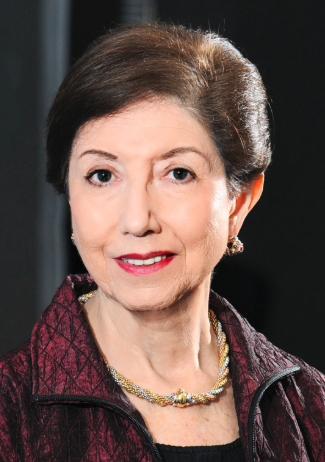 Margaret R. Spitz合作论文数Department of Medicine, Baylor College of Medicine;Dan L Duncan Comprehensive Cancer Center, Baylor College of Medicine9
 Christopher Haiman合作论文数Norris Comprehensive Cancer Center, University of Southern California;Epidemiology and Genetics Division, Department of Preventive Medicine, Keck School of Medicine, University of Southern California9Elizabeth M. Gillanders合作论文数9Elise D. Bowman合作论文数9
 Lorna H Mcneill合作论文数8
 Victoria L. Stevens合作论文数DLH Corporation;Rollins School of Public Health, Emory University8Wang Zhaoming合作论文数8
 Brian E. Henderson合作论文数Department of Preventive Medicine, Keck School of Medicine, University of Southern California8
 Laurence N. Kolonel合作论文数Cancer Center, University of Hawaiʻi;Department of Public Health Sciences, University of Hawaiʻi8
 Joshua Sampson合作论文数Food and Drug Administration8
 Bríd Ryan合作论文数MiNA Therapeutics Limited7
 Regina G. Ziegler合作论文数Division of Cancer Epidemiology & Genetics, National Cancer Institute, National Institutes of Health7
 Majda Haznadar合作论文数Cancer Center;University of Minnesota;Cancer Research and Biostatistics;Dana Farber Cancer Institute7
 Steven C. Moore合作论文数National Cancer Institute, National Institutes of Health (NIH),7Signorello Lisa B合作论文数6
 Charles Kooperberg合作论文数Translational Data Science Integrated Research Center, Fred Hutchinson Cancer Center;Public Health Sciences Division, Fred Hutchinson Cancer Center;Department of Biostatistics, School of Public Health, University of Washington6Wrensch Margaret合作论文数6
 Mukesh Verma合作论文数Division of Cancer Control and Population Sciences, National Cancer Institute, National Institues of Health6
 Ann Hsing合作论文数Department of Epidemiology and Population Health, Stanford University;Center for Innovation in Global Health, School of Medicine, Stanford University6
 Xiao-Ou Shu (舒晓鸥)合作论文数Vanderbilt Institute for Global Health, Vanderbilt University Medical Center;Department of Medicine, Division of Epidemiology, Vanderbilt University School of Medicine6
 Meredith Yeager合作论文数Department of Biology, Hood College;Cancer Genomics Research Laboratory, Division of Cancer Epidemiology and Genetics, National Cancer Institute6
 Anuradha S. Budhu合作论文数Center for Cancer Research, National Cancer Institute;Laboratory of Human Carcinogenesis, National Cancer Institute6
 Demetrius Albanes合作论文数Division of Cancer Epidemiology and Genetics, National Cancer Institute, National Institutes of Health6Cathryn H. Bock合作论文数6
 Julie E Goodman合作论文数6
 Ulrike Peters合作论文数Department of Epidemiology, School of Public Health, University of Washington5
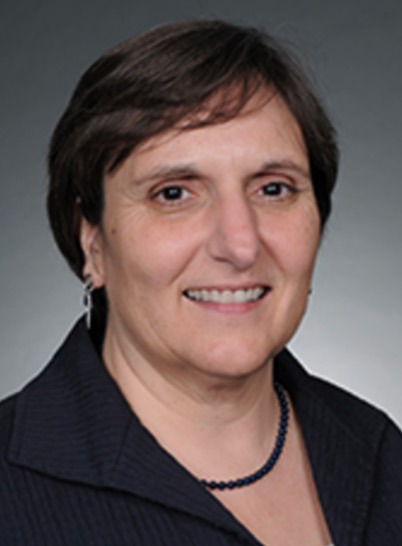 Susan Gapstur合作论文数American Cancer Society5
 Fredrick R. Schumacher合作论文数Department of Population and Quantitative Health Sciences, School of Medicine, Case Western Reserve University;Population and Cancer Prevention Program, Case Comprehensive Cancer Center, Case Western Reserve University;Cleveland Institute for Computational Biology, Case Western Reserve University5Charles C. Chung合作论文数National Cancer Institute, National Institutes of Health5
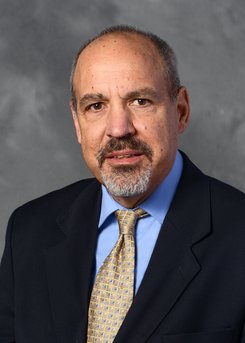 Benjamin A Rybicki合作论文数Department of Public Health Sciences, Henry Ford Hospital5
 Daniel Oscar Stram合作论文数Keck School of Medicine of University of Southern California5
 Christine Ambrosone合作论文数Department of Epidemiology and Environmental Health, School of Public Health and Health Professions, University at Buffalo;Department of Cancer Prevention & Control, Roswell Park Comprehensive Cancer Center5
 Chris Amos合作论文数Baylor College of Medicine5




