Dynamic updating of intelligence knowledge graphs has emerged as a significant research topic for wide range of applications. However, as intelligence data continuously accumulates, dynamic update process of knowledge graph faces the inaccuracy problem, caused by complexity of incremental data and noise interference. To address the issue, we propose a novel Graph Embedding-based Dynamic Update Method (GEDUM) for intelligence knowledge graphs, which comprehensively considers the dynamic evolution characteristics of intelligence data and optimizes the updating of knowledge graph through embedding networks. Specifically, we design a Local-to-Global Feature Aggregation Module (L2GFAM) for learning global graph embeddings, deeply exploring and optimizing intrinsic features of graph nodes and edges. Building on this, an Attention-guided Weighted Fusion Strategy (AWFS) is proposed to efficiently merge and update embeddings of local subgraphs and newly added graph components, taking into account the correlation and complementarity between new and existing data. Extensive validations on real-world dataset demonstrate the significant superiority of our proposed solution over traditional methods in handling dynamically evolving intelligence data.
Recent years have witnessed the widespread application of artificial intelligence technologies in major hospitals for accurate diagnoses and effective treatments. Existing methods for personalizing treatment mainly focus on recommending drug combinations for patients based on their profiles and symptoms. However, the generation of prescriptions, including drugs and the corresponding doses, based on context information during hospitalization has been largely ignored. Therefore, in this paper, we propose a multisource, context-aware prescription generation model, namely hierarchical transformer-based prescription generation (HTPG), to solve this problem. Specifically, we first formulate prescription generation as a sequence generation task, where each prescription is regarded as a sequential composition of drug-dose pairs. Then, we propose to model the multisource context information of patients and generate prescriptions based on a hierarchical transformer structure. Extensive experiments on a public real-world dataset demonstrate the effectiveness of our HTPG model compared with several competitive baseline methods.
Factor analysis is integrated with the Combination of a Uniform and a Binomial distribution (CUB) model to analyze multivariate ordinal data. By augmenting the CUB model with latent random factors, the proposed Factor Augmented CUB (FACUB) model generalizes the conventional multivariate CUB approach to capture complex correlations among items. This framework functions as a probabilistic principal component analysis tailored for multivariate ordinal data, enabling natural dimensionality reduction. For efficient inference, a maximum variational likelihood method is developed via a fast variational expectation-maximization algorithm. The consistency and asymptotic normality of the resulting estimator are established using profile M-estimation theory, and extensions for specific response styles are discussed. The effectiveness and practical utility of the model are demonstrated through comprehensive simulations and two complementary case studies: a low-dimensional application providing an intuitive illustration of the latent space, and a moderate-dimension application incorporating covariates to showcase the recovery of complex dependence structures.
Supervised fine-tuning (SFT) followed by reinforcement learning (RL) has become a standard post-training paradigm for large language models. This paradigm provides a cold-start for RL exploration, avoiding the inefficiency of pure RL where on-policy sampling yields insufficient positive samples. However, in practice, existing approaches often use a small amount of data for SFT initialization compared to the RL phase, which can cause the model to fit the limited samples and shift away from its pre-trained distribution. This distribution shift impedes the model's ability to effectively explore during subsequent RL training. To address this challenge, we propose that in low-data regimes, SFT should prioritize activating task-relevant capabilities rather than memorizing specific content. Along this line, we propose EKSFT (Entropy-KL Selective Fine-Tuning), which selectively masks tokens that exhibit either high entropy or high KL divergence from a reference model. By excluding these high-uncertainty, distribution-shifting tokens from imitation, EKSFT injects task-specific knowledge while preserving the integrity of the model's pre-trained distribution. Empirical evaluations on mathematical reasoning benchmarks demonstrate that EKSFT consistently outperforms standard SFT. Further RL fine-tuning from the EKSFT model yields consistently better post-RL performance, indicating improved exploration for the RL stage. Our codes and datasets are available at https://github.com/MINE-USTC/EKSFT.
Multi-hop question answering (MHQA) enables accurate answers to complex queries by retrieving and reasoning over evidence dispersed across multiple documents. Existing MHQA approaches mainly rely on iterative retrieval-augmented generation, which suffer from the following two major issues. 1) Existing methods prematurely commit to surface-level entities rather than underlying reasoning structures, making question decomposition highly vulnerable to lexical ambiguity. 2) Existing methods overlook the logical dependencies among reasoning steps, resulting in uncoordinated execution. To address these issues, we propose STRIDE, a framework that separates strategic planning, dynamic control, and grounded execution. At its core, a Meta-Planner first constructs an entity-agnostic reasoning skeleton to capture the abstract logic of the query, thereby deferring entity grounding until after the reasoning structure is established, which mitigates disambiguation errors caused by premature lexical commitment. A Supervisor then orchestrates sub-question execution in a dependency-aware manner, enabling efficient parallelization where possible and sequential coordination when necessary. By dynamically deciding whether to retrieve new evidence or infer from existing facts, it avoids redundant queries and error propagation, while fusing cross-branch information and reformulating failed queries to enhance robustness. Grounded fact extraction and logical inference are delegated to specialized execution modules, ensuring faithfulness through explicit separation of retrieval and reasoning. We further propose STRIDE-FT, a modular fine-tuning framework that uses self-generated execution trajectories from STRIDE, requiring neither human annotations nor stronger teacher models. Experiments show that STRIDE achieves robust and accurate reasoning, while STRIDE-FT effectively enhances open-source LLMs.
Recent years have witnessed the rapid development of Large Language Model-based Multi-Agent Systems (MAS), which excel at collaborative decision-making and complex problem-solving. Recently, researchers have further investigated Multi-Agent Debate (MAD) frameworks, which enhance the reasoning and collaboration capabilities of MAS through information exchange and debate among multiple agents. However, existing approaches often rely on unguided initialization, causing agents to adopt identical reasoning paths that lead to the same errors. As a result, effective debate among agents is hindered, and the final outcome frequently degenerates into simple majority voting. To solve the above problem, in this paper, we introduce Dynamic Multi-Agent Debate (DynaDebate), which enhances the effectiveness of multi-agent debate through three key mechanisms: (1) Dynamic Path Generation and Allocation, which employs a dedicated Path Generation Agent to generate diverse and logical solution paths with adaptive redundancy; (2) Process-Centric Debate, which shifts the focus from surface-level outcome voting to rigorous step-by-step logic critique to ensure process correctness; (3) A Trigger-Based Verification Agent, which is activated upon disagreement and uses external tools to objectively resolve deadlocks. Extensive experiments demonstrate that DynaDebate achieves superior performance across various benchmarks, surpassing existing state-of-the-art MAD methods.
Speculative decoding has significantly accelerated Large Language Model (LLM) inference by alleviating memory-bound bottlenecks. However, traditional speculative decoding typically relies on auxiliary draft modules, incurring significant training and communication overhead. Although recent methods attempt to generate drafts within the target model itself, they often fail to fully exploit its latent parallel capacity due to a lack of structural coordination. In this paper, we propose Progressive Tree Drafting (PTD), which employs a structured, guided parallel drafting strategy to harness the model's parallel potential. By coupling a progressive tree structure with a stepwise pruning mechanism, PTD actively guides the LLM to explore multiple semantic paths in a single forward pass, ensuring both draft diversity and coherence. Experiments demonstrate that PTD achieves up to 2× decoding speedup across various benchmarks while remaining training-free and model-agnostic. Our code is available at: https://github.com/MINE-USTC/PTD.
Recent years have witnessed the rapid development of Large Language Model-based Multi-Agent Systems (MAS), which excel at collaborative decision-making and complex problem-solving. However, malicious agents in MAS may inject misinformation to mislead other agents and disrupt system performance, giving rise to a new research direction that focuses on attack mechanisms and defense strategies in MAS. Prior studies largely assume malicious agents act independently and investigate the corresponding defense strategies. However, we argue that malicious agents may exhibit collaborative behaviors, enabling more effective attacks through internal information exchange. In this paper, we propose an adaptive cooperative attack framework, where malicious agents autonomously coordinate and dynamically adjust their attack strategies through multi-round interactions. Furthermore, we introduce Sentence-Level Trustworthiness Analysis and Rectification (STAR), a defense framework that identifies and rectifies misleading information at the sentence level within agent communications. Our experiments show that cooperative attacks lead to a significantly larger degradation in task success rate than independent attacks, resulting in a relative drop of 5.34%. Meanwhile, STAR effectively mitigates both cooperative and independent threats and improves task success rate by an average of 36.76%. The code is available at https://github.com/smoooom/STAR.
Recent years have witnessed the prosperity of Knowledge Graph-Based Recommendation System (KGRS), which enriches the representation of users, items, and entities by structural knowledge with striking improvement. Nevertheless, its unaffordable computational cost still limits researchers from exploring more sophisticated models. We observe that the bottleneck for training efficiency arises from the knowledge graph, which is plagued by the well-known issue of knowledge explosion. Recently, some works have attempted to slim the inflated KG via summarization techniques, which summarize multiple real nodes into the single virtual one. However, these summarized virtual nodes may ignore collaborative signals and thus fail to figure out the redundant nodes related to recommendation task. To this end, in this article, we propose a novel approach called KGTrimmer for knowledge graph pruning tailored for recommendation, to remove the unessential nodes while minimizing performance degradation. Specifically, we design an importance evaluator from a dual-view perspective. For the collective view, we embrace the idea of collective intelligence by extracting community consensus based on abundant collaborative signals, i.e., nodes are considered important if they attract attention of numerous users. For the holistic view, we learn a global mask to identify the valueless nodes from their inherent properties or overall popularity. With the collective and holistic importance scores, we build an end-to-end importance-aware graph neural network, which injects filtered knowledge to enhance the distillation of valuable user-item collaborative signals. Ultimately, we generate a pruned knowledge graph with lightweight, stable, and robust properties to facilitate the following-up recommendation task. Extensive experiments are conducted on three publicly available datasets to prove the effectiveness and generalizability of KGTrimmer, where it can reduce the number of triplets in KG by up to 90% without compromising performance.
Large language models (LLMs) demonstrate strong reasoning and generation abilities, but their fixed context windows limit long-term information accumulation and reuse across multi-session interactions. Existing memory-augmented systems often construct memory in a coarse and unstable manner, relying on inefficient memory representations or unstable unconstrained updates. To address these challenges, we propose AtomMem, a long-term memory system designed for value-dense storage and stable memory evolution. AtomMem introduces a Fact Executor, which selectively extracts high value atomic facts from long form interactions to serve as highly efficient memory representations. Subsequently, AtomMem organizes these facts into hierarchical event structures and temporal profiles, capturing coherent episodic contexts and tracking dynamically evolving user attributes over time. During retrieval, the system activates an associative memory graph to connect fragmented memories. Experiments on the LoCoMo benchmark confirm that AtomMem achieves state-of-the-art performance across various reasoning tasks, offering a scalable and economically viable solution for deploying intelligent personalized agents.
Effective training-time guidance is central to multi-agent reinforcement learning (MARL), yet remains difficult in sparse-reward settings where weak supervision limits coordination and policy improvement, and existing methods often require substantial domain expertise or manual design effort. Large language models (LLMs) provide a promising alternative for flexible learning-signal design, yet existing LLM-based methods remain largely single-agent-oriented, one-shot, or weakly validated for the evolving training dynamics of cooperative MARL. To address these limitations, we propose LLM-ALSO, an iterative LLM-driven adaptive learning-signal optimization framework for MARL. Rather than directly deploying LLM-generated rewards, LLM-ALSO decomposes adaptation into iterative diagnosis, proposal, and validation: a Critic LLM diagnoses stage-specific learning and coordination failures from sparse-return metrics and compact behavior evidence, a Generator LLM proposes candidate reward-shaping configurations conditioned on the diagnosis, and branch-validation feedback refines candidates before they affect the main training trajectory. Through short-horizon validation and stage-aware adaptation, LLM-ALSO promotes only validated updates into training, reducing the risk of unreliable LLM-generated modifications. Experiments on sparse-reward cooperative MARL tasks show that LLM-ALSO improves sparse-evaluation performance and learning efficiency.
Large Language Models (LLMs) have demonstrated strong potential for generative recommendation by leveraging rich semantic knowledge. However, existing LLM-based recommender systems struggle to effectively incorporate collaborative filtering (CF) signals, due to a fundamental mismatch between item-level preference modeling in CF and token-level next-token prediction (NTP) optimization in LLMs. Prior approaches typically treat CF as contextual hints or representation bias, and resort to multi-stage training to reduce behavioral semantic space discrepancies, leaving CF unable to explicitly regulate LLM generation. In this work, we propose Token-level Collaborative Alignment for Recommendation (TCA4Rec), a model-agnostic and plug-and-play framework that establishes an explicit optimization-level interface between CF supervision and LLM generation. TCA4Rec consists of (i) Collaborative Tokenizer, which projects raw item-level CF logits into token-level distributions aligned with the LLM token space, and (ii) Soft Label Alignment, which integrates these CF-informed distributions with one-hot supervision to optimize a soft NTP objective. This design preserves the generative nature of LLM training while enabling collaborative alignment with essential user preference of CF models. We highlight TCA4Rec is compatible with arbitrary traditional CF models and generalizes across a wide range of decoder-based LLM recommender architectures. Moreover, it provides an explicit mechanism to balance behavioral alignment and semantic fluency, yielding generative recommendations that are both accurate and controllable. Extensive experiments demonstrate that TCA4Rec consistently improves recommendation performance across a broad spectrum of CF models and LLM-based recommender systems.
Putnam's Social Capital Theory is a foundational framework for collective action and community prosperity. However, traditional empirical methods face practical limits on control and replication. Meanwhile, LLM-based social simulations are typically behavior-driven and lack theory-aligned environments for modeling Putnam's core propositions. To address these gaps, we introduce SocaSim, an LLM-based multi-agent simulation framework to study Putnam's Social Capital Theory from theoretical blueprint to simulated reality. Specifically, we build an environment integrating social network evolution, trust dynamics, and norm propagation, where agents engage in repeated collective-action experiments, and then apply the three dimensions to analyze adaptation challenges in smart elderly care. Our simulations reproduce Putnam's macro-level patterns and exhibit strong human-agent alignment at the group level. Unlike traditional methods, SocaSim traces micro-level causal pathways of social network, trust, and norms via round-by-round simulations and counterfactual interventions, enabling process-level interpretability. Taken together, these capabilities establish a research paradigm that leverages LLM agents to bridge social science and computer science.
The stock movement prediction task has long been treated as one of the most crucial tasks for financial data mining. Unfortunately, prior arts may fail to capture the intricate nature of severe stock fluctuations, not to mention the difficulties in extracting reliable cues from massive, noisy financial news. In this case, it becomes more challenging to explore the distinctive evolving dynamics of individual stocks and discover deep-seated interstock dependencies within the market. To tackle these challenges, in this article, we propose a novel Memory-ENhanced Dependency Network, dubbed as MENDNet, for the multistock movement prediction task. Specifically, we first leverage the recent price movement from a dual-view perspective, providing a comprehensive depiction of each stock. Afterward, to mitigate noise information and the temporal effect of news cues, we assess their contribution based on the stock price volatility with a time-aware updating function. Along this line, we develop a well-elaborated memory structure to store selective news history for each stock, so that history embeddings can be dynamically estimated by attentively aggregating exclusive history information. Finally, we further delve into the evolving interdependencies among different stocks without relying on additional prior knowledge via a dependency-aware graph attention network. Extensive experiments on three real-world datasets validate the effectiveness of our proposed MENDNet framework compared with state-of-the-art baseline methods.
Automated feature generation extracts informative features from raw tabular data without manual intervention and is crucial for accurate, generalizable machine learning. Traditional methods rely on predefined operator libraries and cannot leverage task semantics, limiting their ability to produce diverse, high-value features for complex tasks. Recent Large Language Model (LLM)-based approaches introduce richer semantic signals, but still suffer from a restricted feature space due to fixed generation patterns and from the absence of feedback from the learning objective. To address these challenges, we propose a Memory-Augmented LLM-based Multi-Agent System ( MALMAS ) for automated feature generation. MALMAS decomposes the generation process into agents with distinct responsibilities, and a Router Agent activates an appropriate subset of agents per iteration, further broadening exploration of the feature space. We further integrate a memory module comprising procedural memory, feedback memory, and conceptual memory, enabling iterative refinement that adaptively guides subsequent feature generation and improves feature quality and diversity. Extensive experiments on multiple public datasets against state-of-the-art baselines demonstrate the effectiveness of our approach.
Knowledge-based Visual Question Answering (KB-VQA) aims to answer queries that necessitate reasoning over external knowledge sources beyond the visual content. Typically, current methods fuse multimodal features to retrieve external information, subsequently leveraging Multimodal Large Language Models (MLLMs) to derive answers from the retrieved evidence. However, these methods often struggle to capture structural associations within complex contexts to effectively filter noise. Furthermore, they frequently fail to ensure that the reasoning process remains strictly faithful to the retrieved evidence. To address these challenges, we propose SAFE-G, a Structure-Aware Faithful Evidence-guided Generation framework, which enables precise evidence localization and trustworthy reasoning. Specifically, we first employ a coarse-grained hybrid search fusing visual and textual modalities to recall candidate documents, and subsequently implement a structure-aware fine-grained graph retrieval that captures structural dependencies to filter noise and pinpoint precise evidence. Moreover, we introduce a reinforcement learning (RL) strategy with an evidence-grounded reward that assigns credit to correct answers only when the selected evidence is correct. This strict alignment constraint compels the model to anchor its response in the retrieved context, effectively enhancing its capability to locate evidence via multimodal features and perform faithful reasoning. Extensive experiments on the Encyclopedic-VQA and InfoSeek benchmarks demonstrate that SAFE-G outperforms prior methods by a margin of 8.9
Recommendation systems have become ubiquitous tools in online platforms, providing personalized suggestions based on user-item interactions. To capture the dynamic higher-order connections between users and items, recommendation approaches based on dynamic graphs have garnered significant attention from researchers. However, existing recommendation methods based on dynamic graphs are often limited by data sparsity, which prevents them from achieving satisfactory performance. Fortunately, the rapid development of large language models (LLMs) with powerful text generation capabilities and extensive domain knowledge has offered new possibilities for addressing this challenge. However, how to effectively integrate LLMs with dynamic graphs remains unexplored. To bridge this gap, in this article, we propose a novel framework, that is, DynLLM, for applying LLMs to dynamic graph-based recommendation methods. Specifically, DynLLM harnesses the power of LLMs to generate multi-faceted user profiles based on the rich textual features of historical purchase records, which in turn supplement and enrich the underlying relationships between users and items. Along this line, to fuse the multi-faceted profiles with temporal graph embedding, we engage LLMs to derive corresponding profile embeddings and further employ a distilled attention mechanism to refine the LLM-generated profile embeddings for alleviating noisy signals, while also assessing and adjusting the relevance of each distilled facet embedding for seamless integration with temporal graph embedding from continuous time dynamic graphs (CTDGs). Extensive experiments on three real datasets have validated the superior improvements of DynLLM over a wide range of state-of-the-art baseline methods. The implementation code is available online at https://github.com/meteor-gif/DynLLM.
Large language model (LLM) agents are increasingly deployed in user-facing services that require iterative tool use under dynamic business conditions. Reliable evaluation is essential for sustained improvement: it must reveal capability deficiencies, inform priorities, and assess interventions. Yet industrial agent service unfolds both through the iterative trajectory of a current request and through continued user interaction. Final-outcome assessment can therefore obscure where deficiencies arise and whether later service remains aligned with context from earlier exchanges. We propose ATLAS, a dual-horizon diagnostic evaluation framework for industrial tool-use agents. At the request horizon, trajectory-wise diagnostic signals relate deficiencies to execution locations and capability concerns. At the interaction horizon, user-wise signals assess whether service remains responsive across continued interaction. Together, these views provide structured diagnostic evidence for analyzing execution deficiencies and sustained service behavior. ATLAS instantiates them as executable signals with explicit evidence scopes and decision boundaries. LLM judge interfaces are calibrated against high-confidence references from real business logs; when needed, their decision behavior is distilled into efficient diagnostic models for lower-latency, lower-cost evaluation. The resulting feedback supports policy optimization. We evaluate ATLAS on Meituan Xiaotuan production traffic. Offline experiments assess diagnostic-signal fidelity and replay-based policy improvement, while online A/B experiments show concurrent gains in user engagement, downstream business outcomes, and sampled human-audit quality.
Code Agents have achieved remarkable advances in recent years, exhibiting strong capabilities across a wide range of software engineering tasks. However, their misuse often produces bloated and disorganized code that impairing readability, extensibility, and robustness. Despite this risk, existing benchmarks largely evaluate functional correctness rather than long-term maintainability of code agents. In this paper, we propose SmellBench, an extensible code refactoring benchmark that proactively injects code smells into clean code snippets from real-world repositories. This design enables the generation of controlled, high-quality, and diverse refactoring cases with human-written ground truth. Specifically, it contains 294 cases spanning 7 popular smell types, 3 difficulty levels, 2 instruction settings across 7 real-world repositories. We further design 3 evaluation aspects covering functional correctness, localization ability, and refactoring quality assessment. Experiments with 2 popular agents and 6 large langauge models (LLMs) show that the best combination - Qwen Code + Claude Sonnet 4.5 - achieved only a 50.34 score of smell elimination. Further analysis reveals that this gap arises from a focus on local code smells and a lack of cross-file understanding, which hinders comprehensive smell elimination.
LLM agents operating in open environments face escalating risks from indirect prompt injection, particularly within the tool stream where manipulated metadata and runtime feedback hijack execution flow. Existing defenses encounter a critical dilemma as advanced models prioritize injected rules due to strict alignment while static protection mechanisms sever the feedback loop required for adaptive reasoning. To reconcile this conflict, we propose VIGIL , a framework that shifts the paradigm from restrictive isolation to a verify-before-commit protocol. By facilitating speculative hypothesis generation and enforcing safety through intent-grounded verification, VIGIL preserves reasoning flexibility while ensuring robust control. We further introduce SIREN , a benchmark comprising 959 tool stream injection cases designed to simulate pervasive threats characterized by dynamic dependencies. Extensive experiments demonstrate that VIGIL outperforms state-of-the-art dynamic defenses by reducing the attack success rate by over 22% while more than doubling the utility under attack compared to static baselines, thereby achieving an optimal balance between security and utility. Our code is available at: https://github.com/Touring-686/vigil .
 Tong Xu (徐童)合作论文数School of Computer Science and Technology, University of Science and Technology of China42
 En-Hong Chen (陈恩红)合作论文数Anhui Province Key Laboratory of Big Data Analysis and Application, School of Computer Science and Technology, University of Science and Technology of China29
 Hui Xiong (熊辉)合作论文数The Hong Kong University of Science and Technology (Guangzhou)17
 Hengshu Zhu (祝恒书)合作论文数Computer Network Information Center, Chinese Academy of Sciences;University of Chinese Academy of Sciences;The Hong Kong University of Science and Technology (Guangzhou)10
 Qi Liu (刘淇)合作论文数School of Data Science, University of Science and Technology of China;State Key Laboratory of Cognitive Intelligence, School of Computer Science and Technology, University of Science and Technology of China;Anhui Province Key Laboratory of Big Data Analysis and Application, School of Computer Science and Technology, University of Science and Technology of China8
 Wei Chen合作论文数State Key Laboratory of Cognitive Intelligence, University of Science and Technology of China7
 Zhaopeng Qiu合作论文数Tencent Medical AI Lab, Beijing, China7Fake Lin合作论文数School of Computer Science and Technology, University of Science and Technology of China6Ziwei Zhao合作论文数6
 Xi Zhu合作论文数6
 Derong Xu (許德容)合作论文数University of Science and Technology of China;Department of Data Science, City University of Hong Kong5
 Xiangyu Zhao (赵翔宇)合作论文数Applied Machine Learning Lab, Department of Data Science, College of Computing, City University of Hong Kong5
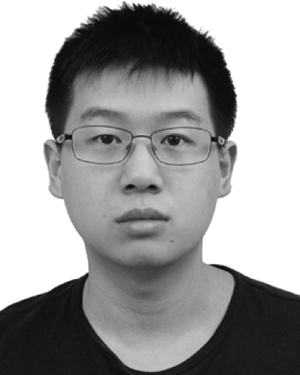 Zikai Yin合作论文数4
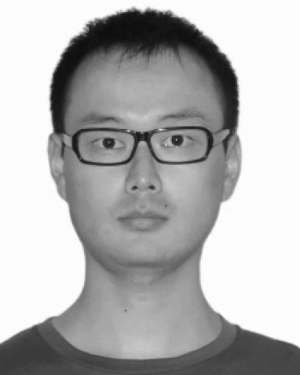 Chen Zhu合作论文数Alibaba Group4Ziqi Wang合作论文数3Che Liu合作论文数3Yongyi He合作论文数3Xiao Hu合作论文数3
 Xian Wu合作论文数Pinterest3
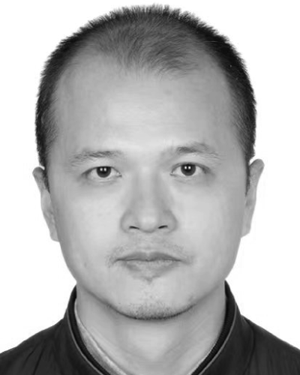 Xueying Li合作论文数3
 Likang Wu (吴李康)合作论文数College of Management and Economics, Tianjin University3
 Zhefeng Wang合作论文数Huawei Cloud System AI Innovation Lab3Junda Lin合作论文数State Key Laboratory of Cognitive Intelligence, University of Science and Technology of China2
 Chuan Qin (秦川)合作论文数Computer Network Information Center, Chinese Academy of Sciences;University of Chinese Academy of Sciences2Zipeng Gao合作论文数2Shitian Shen合作论文数2Wenshuo Chao合作论文数2Lili Zhao合作论文数University of Science and Technology of China2
 Penggang Qin合作论文数2Tongzhu Liu合作论文数2
 Dazhong Shen (申大忠)合作论文数College of Computer Science and Technology, Nanjing University of Aeronautics and Astronautics2Baoxing Huai合作论文数Huawei Cloud & AI2
 Haifeng Wang (王海峰)合作论文数Cooperative Medianet Innovation Center;National Engineering Research Center of Deep Learning Technology and Application;Baidu2Qingrong Xia合作论文数Institute of Artificial Intelligence, School of Computer Science and Technology, Soochow University2
 Chao Wang (王超)合作论文数School of Computer Science and Technology, University of Science and Technology of China;School of Software Engineering, University of Science and Technology of China2
 Hua Wu (吴华)合作论文数Department of NLP, Baidu Inc.;Department of Knowledge Graph, Baidu Inc.2
 Jing Liu (刘璟)合作论文数Natural Language Processing Department, Baidu Inc.2
 Jun Zhou合作论文数Ant Group2
 William Wang (王威廉)合作论文数Department of Computer Science, University of California, Santa Barbara;ChipAgents2
 Yongduo Sui (隋勇铎)合作论文数Tencent2
 Binbin Hu (胡斌斌)合作论文数Ant Group2Fengxian Dong合作论文数University of Science and Technology of China1
 Xin Ma合作论文数School of Artificial Intelligence and Data Science, University of Science and Technology of China1Jinke wang合作论文数1huijun hou合作论文数1Huijun Hou合作论文数1




