We present a preview version of DeepSeek-V4 series, including two strong Mixture-of-Experts (MoE) language models – DeepSeek-V4-Pro with 1.6T parameters (49B activated) and DeepSeek-V4-Flash with 284B parameters (13B activated) – both supporting a context length of one million tokens. DeepSeek-V4 series incorporate several key upgrades in architecture and optimization: (1) a hybrid attention architecture that combines Compressed Sparse Attention (CSA) and Heavily Compressed Attention (HCA) to improve long-context efficiency; (2) Manifold-Constrained Hyper-Connections (mHC) that enhance conventional residual connections; (3) and the Muon optimizer for faster convergence and greater training stability. We pre-train both models on more than 32T diverse and high-quality tokens, followed by a comprehensive post-training pipeline that unlocks and further enhances their capabilities. DeepSeek-V4-Pro-Max, the maximum reasoning effort mode of DeepSeek-V4-Pro, redefines the state-of-the-art for open models, outperforming its predecessors in core tasks. Meanwhile, DeepSeek-V4 series are highly efficient in long-context scenarios. In the one-million-token context setting, DeepSeek-V4-Pro requires only 27
State-of-the-art embedding models are increasingly derived from decoder-only Large Language Model (LLM) backbones adapted via contrastive learning. Given the emergence of reasoning models trained via Reinforcement Learning with Verifiable Rewards (RLVR), a natural question arises: do enhanced reasoning translate to superior semantic representations when these models serve as embedding initializations? Contrary to expectation, our evaluation on MTEB and BRIGHT reveals a **null effect**: embedding models initialized from RLVR-tuned backbones yield no consistent performance advantage over their base counterparts when subjected to identical training recipes. To unpack this paradox, we introduce **H**ierarchical **R**epresentation **S**imilarity **A**nalysis (HRSA), a framework that decomposes similarity across representation, geometry, and function levels. HRSA reveals that while RLVR induces irreversible latent manifold's local geometry reorganization and reversible coordinate basis drift, it preserves the global manifold geometry and linear readout. Consequently, subsequent contrastive learning drives strong alignment between base- and reasoning-initialized models, a phenomenon we term **Manifold Realignment**. Empirically, our findings suggest that unlike Supervised Fine-Tuning (SFT), RLVR optimizes trajectories within an existing semantic landscape rather than fundamentally restructuring the landscape itself.
Multi-subject image generation aims to synthesize images that faithfully preserve the identities of multiple reference subjects while following textual instructions. However, existing methods often suffer from identity inconsistency and limited compositional control, as they rely on diffusion models to implicitly associate text prompts with reference images. In this work, we propose Hierarchical Concept-to-Appearance Guidance (CAG), a framework that provides explicit, structured supervision from high-level concepts to fine-grained appearances. At the conceptual level, we introduce a VAE dropout training strategy that randomly omits reference VAE features, encouraging the model to rely more on robust semantic signals from a Visual Language Model (VLM) and thereby promoting consistent concept-level generation in the absence of complete appearance cues. At the appearance level, we integrate the VLM-derived correspondences into a correspondence-aware masked attention module within the Diffusion Transformer (DiT). This module restricts each text token to attend only to its matched reference regions, ensuring precise attribute binding and reliable multi-subject composition. Extensive experiments demonstrate that our method achieves state-of-the-art performance on the multi-subject image generation, substantially improving prompt following and subject consistency.
The application of lightweight Large Language Models in rule-based scientific domains remains severely limited by their tendency to mimic linguistic patterns rather than reproduce axiomatic reasoning, causing frequent hallucinations. Here, we show that G-Frame, an adaptive multi-agent framework integrating Bayesian and team game principles, establishes an automated closed-loop for high-quality data synthesis and model training. By forcing the internalization of domain constraints through structured reasoning, we synthesized a specialized corpus of 363,045 chains-of-thought and 199,589 question-answer pairs. The resulting 7B model OmniChem achieves performance parity with GPT 4o mini on custom benchmarks and ChemBench while exhibiting a 79.46
World models for interactive text agents must typically be learned from observation-action trajectories alone. Specifically, the environment returns text observations after each action, but does not expose a ground-truth latent state nor an inspectable transition model.A research gap remains in how to induce executable code as a world model in this black-box setting for prediction and agent decision making. We introduce PatchWorld, a gradient-free framework that turns offline trajectories into executable Python world models through counterexample-guided code repair.Instead of predicting the next observation with a black-box model, PatchWorld induces symbolic belief-state programs whose action updates can be inspected, replayed, and locally patched. Across seven AgentGym environments, PatchWorld-Simple achieves the highest code-based decision-making score among evaluated methods (76.4
Extracting interpretable governing equations from sparse, noisy chemical time-series data remains difficult because discrete reaction topology and continuous kinetic parameters are tightly coupled. We present PC-MCMC-CIGP, a reproducible gray-box workflow that combines spike-and-slab topology sampling, hard conservation and thermodynamic screening, and a Chemical-Informed Gaussian Process (CIGP) residual model for parameter calibration and experimental design. The methodological contribution is not a new MCMC or GP family in isolation; rather, it is the integration of these components into a physically constrained workflow with explicit uncertainty-aware acquisition choices. On the H2 + Br2 benchmark, the constrained sampler distinguishes elementary radical pathways from deceptive phenomenological fits in our experiments. On styrene epoxidation, the CIGP optimization loop improves final yield by 12.5
Large Language Models (LLMs) rely on massive training datasets, often including proprietary data, which raises concerns about unauthorized usage and copyright infringement. Existing dataset inference methods typically require access to log probabilities or other internal signals, but many modern LLMs restrict such access, motivating token-only inference approaches. We propose CatShift, a token-only dataset inference framework based on catastrophic forgetting, where models overwrite prior knowledge when trained on new data. Fine-tuning an LLM on a subset of its training data induces larger output shifts than fine-tuning on unseen data. CatShift compares these shifts against those from a known non-member validation set to infer whether a dataset was included in training. Experiments on both open-source and API-based LLMs show that CatShift remains effective without logit access, enabling practical protection of proprietary datasets.
Complex Query Answering (CQA) is a fundamental knowledge representation and reasoning task over incomplete knowledge graphs (KGs). Answering existential first-order queries with k free variables (i.e., EFO_k queries) is a crucial yet challenging problem, as it requires ranking answer tuples in ℰ^k, where ℰ denotes the entity set of a KG. This quickly becomes intractable as k grows. Consequently, existing benchmarks and methods rely on marginal rankings over individual variables; however, marginal rankings are a poor proxy for the true joint ranking of tuples. Building on neural symbolic search for EFO_1 queries, we propose Neural Scalable Symbolic Search (NS3), a budgeted framework that approximates joint ranking without enumerating ℰ^k. NS3 (i) answers marginalized sub-queries to obtain necessary candidate sets, (ii) merges multiple free variables into hypernodes whose domains are pruned and controlled by a dynamic budget B, and (iii) progressively reduces an EFO_k query to an EFO_k-1 query over a budgeted reduced domain. Across three standard KG datasets, NS3 substantially improves joint ranking performance while retaining strong marginal accuracy. We further release a joint-ranking benchmark that extends existing EFO_1 datasets to k=3, enabling systematic evaluation of multi-variable queries. Our code is provided in https://github.com/HKUST-KnowComp/NS3_KDD2026.
This paper studies the minimal dimension required to embed subset memberships (m elements and m k subsets of at most k elements) into vector spaces, denoted as Minimal Embeddable Dimension (MED). The tight bounds of MED are derived theoretically and supported empirically for various notions of "distances" or "similarities," including the ℓ_2 metric, inner product, and cosine similarity. In addition, we conduct numerical simulation in a more achievable setting, where the m k subset embeddings are chosen as the centroid of the embeddings of the contained elements. Our simulation easily realizes a logarithmic dependency between the MED and the number of elements to embed. These findings imply that embedding-based retrieval limitations stem primarily from learnability challenges, not geometric constraints, guiding future algorithm design.
The "think-with-image” paradigm has recently gained traction for complex visual reasoning tasks. However, existing approaches often struggle with inference inefficiency due to a fixed number of redundant reasoning steps, as well as training instability.This challenge primarily arises from the direct use of standard reinforcement learning policies, which do not incorporate improvements for the think-with-image multi-turn conversational scenario.To address this challenge, we propose VisionLeaf, an entropy-guided, tree-based reasoning framework. Unlike conventional GRPO, where all nodes expand from the root and each leaf has only a single branch, our method grows the reasoning tree from the leaf nodes and selects the most valuable nodes based on entropy for thorough rollout exploration. This leaf-first expansion naturally aligns with the hierarchical nature of multi-step image analysis. Without modifying any model or training data, our VisionLeaf achieves a 4.2\% performance improvement on benchmarks such as VSTAR and HRBench, while reducing the number of inference rounds by nearly half—demonstrating significant gains in both accuracy and speed. All our code will be released.
Efficient and scalable agentic intelligence requires models that can deliver both low-latency responses and strong reasoning capabilities while remaining practical to train, serve, and deploy. In this report, we present Ling-2.6 and Ring-2.6, a family of models designed to address this challenge at scale. Ling-2.6 is optimized for instant response generation and high capability per output token, whereas Ring-2.6 is tailored for deeper reasoning and more advanced agentic workflows. Instead of training from scratch, we upgrade the Ling-2.0 base model through architectural migration pre-training and large-scale post-training. This upgrade is guided by a unified co-design of model architecture, optimization objectives, serving systems, and agent training environments, enabling improvements in both model capability and deployment efficiency. At the architectural level, we introduce a hybrid linear attention design that integrates Lightning Attention with MLA, improving the efficiency of long-context training and decoding. To further enhance token efficiency, we optimize capability per output token through Evolutionary Chain-of-Thought, Linguistic Unit Policy Optimization, bidirectional preference alignment, and shortest-correct-response distillation. For agentic capabilities, we propose KPop, a reinforcement learning framework designed to support stable training of Ring-2.6-1T on large-scale environment-grounded data. KPop improves training efficiency through asynchronous scheduling across coding, search, tool use, and workflow execution, enabling scalable learning from complex agent-environment interactions. Together, Ling-2.6 and Ring-2.6 provide a practical pathway toward efficient, scalable, and open agentic systems. We open-source all checkpoints in the 2.6 family to support further research and development in practical agentic intelligence.
In [Q. Liao et al., Commun. Math. Sci., 20(2022)], a linear-time Sinkhorn algorithm is developed based on dynamic programming, which significantly reduces the computational complexity involved in solving optimal transport problems. However, this algorithm is specifically designed for the Wasserstein-1 metric. We are curious whether the preceding dynamic programming framework can be extended to tackle optimal transport problems with different transport costs. Notably, two special kinds of optimal transport problems, the Sinkhorn ranking and the far-field reflector and refractor problems, are closely associated with the log-type transport costs. Interestingly, by employing series rearrangement and dynamic programming techniques, it is feasible to perform the matrix-vector multiplication within the Sinkhorn iteration in linear time for this type of cost. This paper provides a detailed exposition of its implementation and applications, with numerical simulations demonstrating the effectiveness and efficiency of our methods.
To reduce emissions and facilitate the reclamation of hydrofluorocarbons (HFCs), which are potent greenhouse gases, ionic liquid (ILs)-based absorption separation of HFCs from fluorinated refrigerant (FR) blends is considered as an effective approach. In this work, computer-aided ionic liquid design (CAILD) is carried out to rationally design ILs for separating FR blends, with the near-azeotropic R-32/R-125 system as an illustrative case study. Firstly, the machine learning algorithm, namely artificial neural network (ANN), is employed to develop a group contribution (GC) model for accurate prediction of FR-in-IL solubility. Then, a mixed-integer nonlinear programming (MINLP) problem is formulated and solved by integrating the ANN-GC model with two available GC models for predicting the melting point and viscosity of ILs. Consequently, the optimal three ILs including [C1C10Im][dca], [C1C11Im][dca], and [C1C12Im][dca] are identified. Finally, quantum chemistry calculations are conducted to disclose the separation mechanism from molecular perspective, further validating the reliability of the CAILD results.
Complex Query Answering (CQA) is a crucial reasoning task over Knowledge Graphs (KGs), which aims to answer first-order logical queries from incomplete KGs. While existing neural-symbolic methods achieve strong performance, they face significant complexity bottlenecks: quadratic data complexity scaling with the number of entities, and NP-hard query complexity for cyclic queries. Consequently, these approaches struggle to scale effectively to large knowledge graphs and complex queries. To address these limitations, we propose an efficient and scalable symbolic search method comprising two key components: (1) constraint strategies that drastically reduce the variable search domain, lowering data complexity; and (2) a local search algorithm that approximately solves NP-hard cyclic queries. Experiments on various CQA benchmarks demonstrate that, for tree-form queries, our method achieves 97
Knowledge graphs (KGs) are widely used in many AI applications, but they are often incomplete, which limits their effectiveness. In many cases, most relations have very few examples, making it difficult to learn accurate models. Few-shot learning has emerged as a promising solution by enabling KG completion with only a small number of training triplets. However, many existing methods treat each relation separately and miss the opportunity to share useful information across tasks. In this paper, we propose TransNet, a transfer learning approach for few-shot KG completion that captures relationships between tasks and reuses knowledge from related ones. TransNet also uses meta learning to better handle unseen relations. Experiments on standard benchmarks show that TransNet achieves strong performance compared to prior methods. Code and data will be released upon acceptance.
The study of machine learning-based logical query answering enables reasoning with large-scale and incomplete knowledge graphs. This paper advances this area of research by addressing the uncertainty inherent in knowledge. While the uncertain nature of knowledge is widely recognized in the real world, it does not align seamlessly with the first-order logic that underpins existing studies. To bridge this gap, we explore the soft queries on uncertain knowledge, inspired by the framework of soft constraint programming. We propose a neural symbolic approach that incorporates both forward inference and backward calibration to answer soft queries on large-scale, incomplete, and uncertain knowledge graphs. Theoretical discussions demonstrate that our method avoids catastrophic cascading errors in the forward inference while maintaining the same complexity as state-of-the-art symbolic methods for complex logical queries. Empirical results validate the superior performance of our backward calibration compared to extended query embedding methods and neural symbolic approaches.
Transformers, as the fundamental deep learning architecture, have demonstrated great capability in reasoning. This paper studies the generalizable first-order logical reasoning ability of transformers with their parameterized knowledge and how to improve it. Transformers' capability of first-order reasoning is further captured by whether they can conduct first-order logical entailment, which is quantitatively measured by their performance in answering knowledge graph queries. We establish the connections between (1) two types of distribution shifts studied in out-of-distribution generalization and (2) unseen knowledge and query settings discussed in the task of knowledge graph query answering, which makes it possible to characterize the fine-grained generalizability. Results on our comprehensive dataset showed that transformers outperform previous methods designed particularly for this task and provided detailed empirical evidence about the impact of the input query syntax, token embedding, and transformer architectures on the reasoning capability of transformers. Interestingly, our results revealed the mismatch of positional encoding and other design choices of transformer architectures in previous practices. Motivated by this, we propose TEGA, a logic-aware architecture that significantly improves the performance in generalizable first-order logical entailment.
Knowledge graph reasoning is pivotal in various domains such as data mining, artificial intelligence, the Web, and social sciences. These knowledge graphs function as comprehensive repositories of human knowledge, facilitating the inference of new information. Traditional symbolic reasoning, despite its strengths, struggles with the challenges posed by incomplete and noisy data within these graphs. In contrast, the rise of Neural Symbolic AI marks a significant advancement, merging the robustness of deep learning with the precision of symbolic reasoning. This integration aims to develop AI systems that are not only highly interpretable and explainable but also versatile, effectively bridging the gap between symbolic and neural methodologies. Additionally, the advent of large language models (LLMs) has opened new frontiers in knowledge graph reasoning, enabling the extraction and synthesis of knowledge in unprecedented ways. This survey offers a thorough review of knowledge graph reasoning, focusing on various query types and the classification of neural symbolic reasoning. Furthermore, it explores the innovative integration of knowledge graph reasoning with large language models, highlighting the potential for groundbreaking advancements. This comprehensive overview is designed to support researchers and practitioners across multiple fields, including data mining, AI, the Web, and social sciences, by providing a detailed understanding of the current landscape and future directions in knowledge graph reasoning.
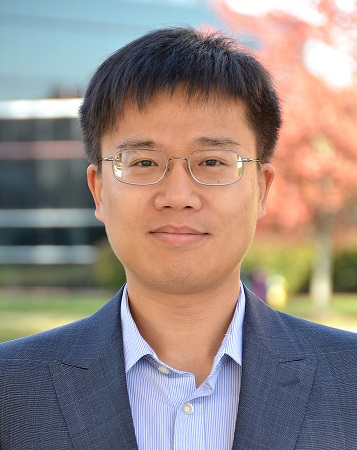 Yangqiu Song (宋陽秋)合作论文数Department of Computer Science and Engineering, The Hong Kong University of Science and Technology30
 Yong Zhang (张勇)合作论文数14
 Hang Yin合作论文数College of Civil Engineering and Architecture, Zhejiang University13
 Jiaxin Bai合作论文数Department of Computer Science, Hong Kong Baptist University11
 Hanghang Tong (童行行)合作论文数Department of Computer Science, University of Illinois at Urbana-Champaign;Siebel School of Computing and Data Science, The Grainger College of Engineering, University of Illinois at Urbana-Champaign11
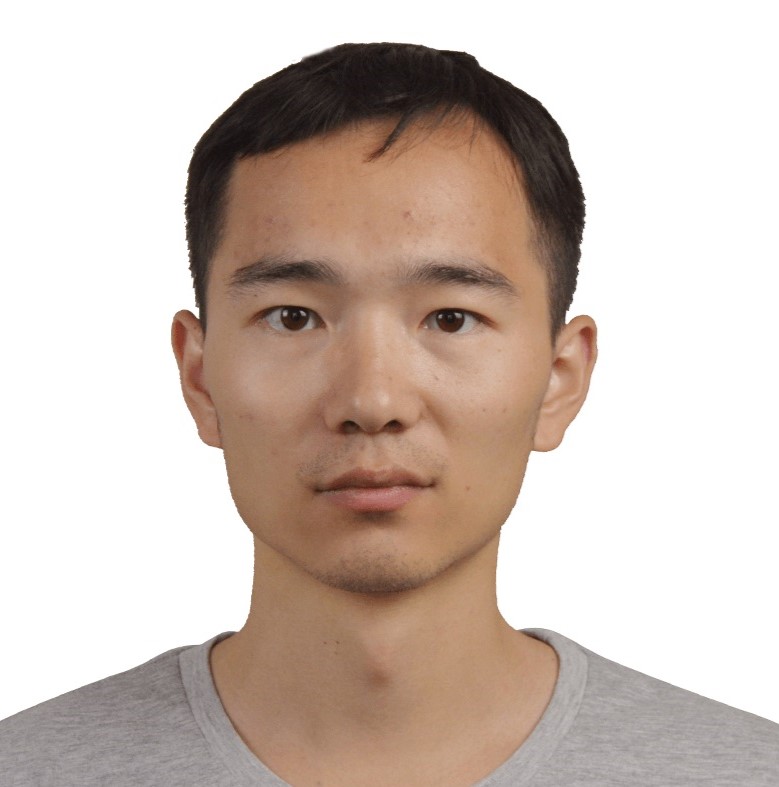 Lihui Liu合作论文数Department of Computer Science, James and Patricia Anderson College of Engineering, Wayne State University;Institute for AI and Data Science, Division of Research & Innovation, Wayne State University8
 Wai Lam (林偉)合作论文数Department of Systems Engineering and Engineering Management, The Chinese University of Hong Kong6
 Chunxiao Xing (邢春晓)合作论文数Beijing National Research Center for Information Science and Technology, Tsinghua University6Qi Hu合作论文数Department of Computer Science and Engineering, Hong Kong University of Science and Technology5
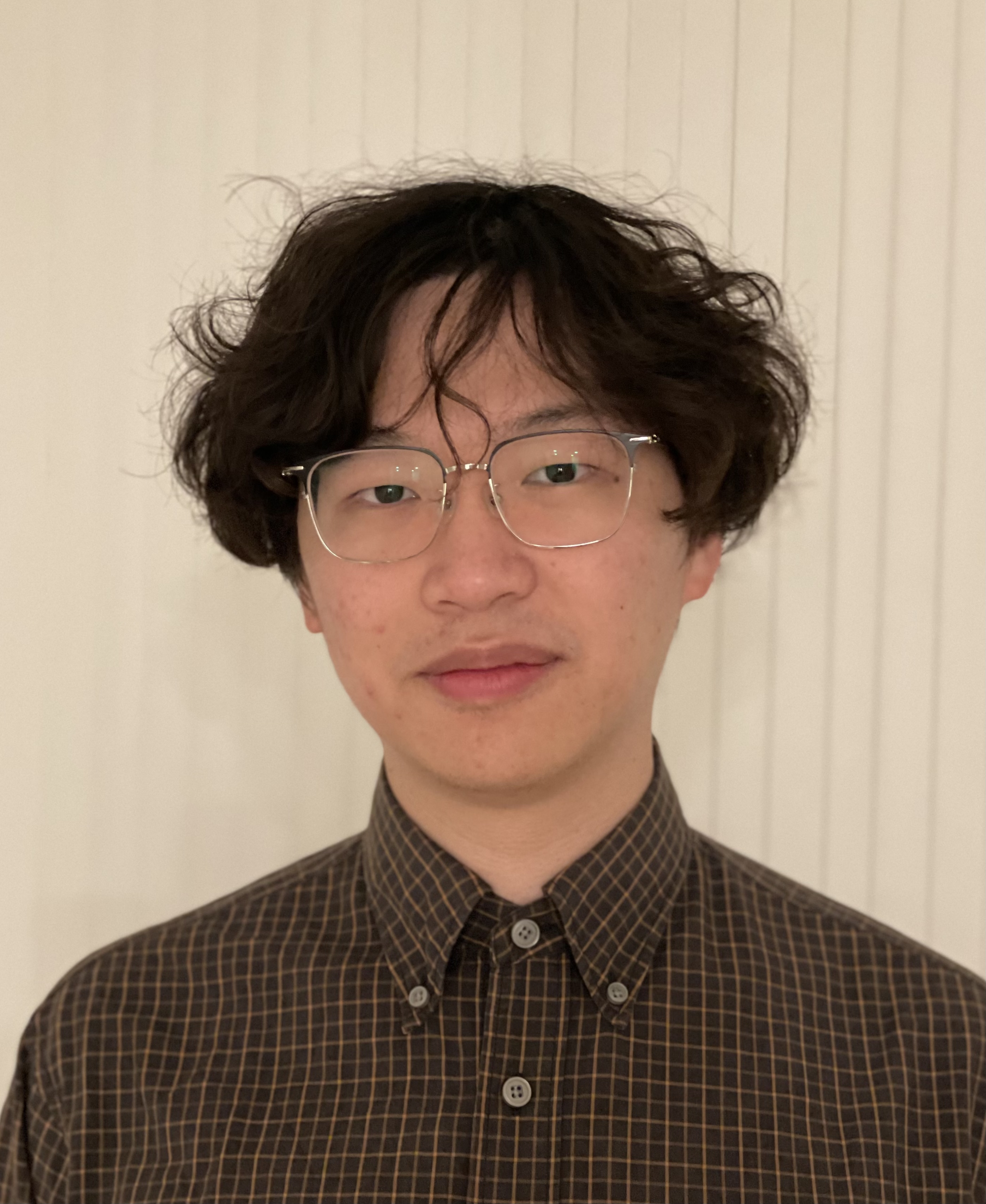 Ziyin Liu (刘子寅)合作论文数Research Laboratory of Electronics, MIT;Physics & Informatics Laboratories, NTT Research5
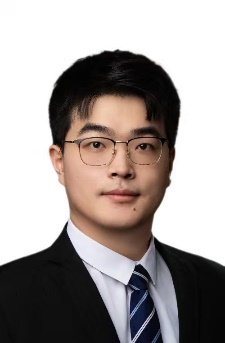 Haoran Li (李浩然)合作论文数School of Cyber Science and Technology, Beihang University5
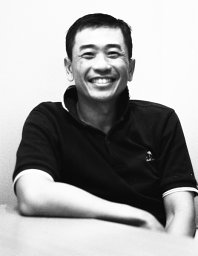 Simon See合作论文数Sun Microsystems Inc.5
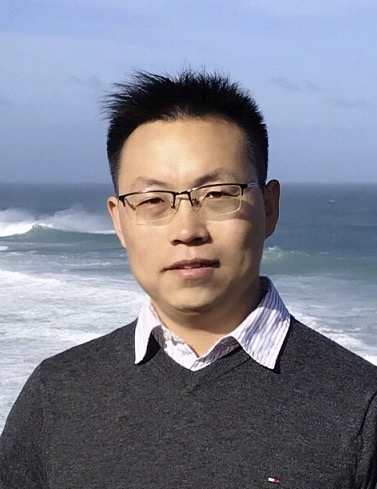 Lidong Bing (邴立东)合作论文数Shanda AI Research Institute, Shanda Group;MiroMind.ai5
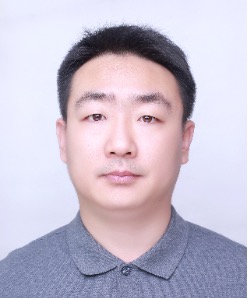 Piji Li (李丕绩)合作论文数College of Computer Science and Technology, Nanjing University of Aeronautics and Astronautic5
 Hong Ting Tsang合作论文数4
 Teng Zhou合作论文数East China University of Science and Technology, East China University of Science and Technology4
 Lixin Fan合作论文数WeBank AI, Shenzhen, China4
 Jianxin Li (李建欣)合作论文数School of Computer Science & Engineering, Beihang University;Beijing Advanced Innovation Center of Big data and Brain Computing, Beihang University4
 Zheye Deng (邓哲也)合作论文数Department of Computer Science and Engineering, The Hong Kong University of Science and Technology3
 Weizhi Fei (费卫芝)合作论文数3
 Qianren Mao合作论文数Zhongguancun Laboratory3
 Hao Wu (吴昊)合作论文数Department of Mathematical Sciences, Tsinghua University;Yau Mathematical Sciences Center, Tsinghua University3Ying Su (苏莹)合作论文数3
 Ginny Y. Wong合作论文数Centre for Signal Processing, The Hong Kong Polytechnic University3
 Gong Zhang合作论文数Huawei Technologies Ltd.3Yao Xu合作论文数The Laboratory of Cognition and Decision Intelligence for Complex Systems, Institute of Automation, Chinese Academy of Sciences;School of Artificial Intelligence, University of Chinese Academy of Sciences2
 Yifan Zhang合作论文数AI Lab, Princeton University2Weifeng Jiang合作论文数2
 Ziqian Zeng (曾子倩)合作论文数Shien-Ming Wu School of Intelligent Engineering, South China University of Technology2Zhiquan Tan合作论文数Department of Math, Tsinghua University2Qineng Wang合作论文数2
 Jiayang Cheng合作论文数Department of Computer Science and Engineering, The Hong Kong University of Science and Technology;Amazon2
 Yuchen Yan合作论文数Amazon2
 Tianshi Zheng合作论文数2Chuang Zheng (郑创)合作论文数2
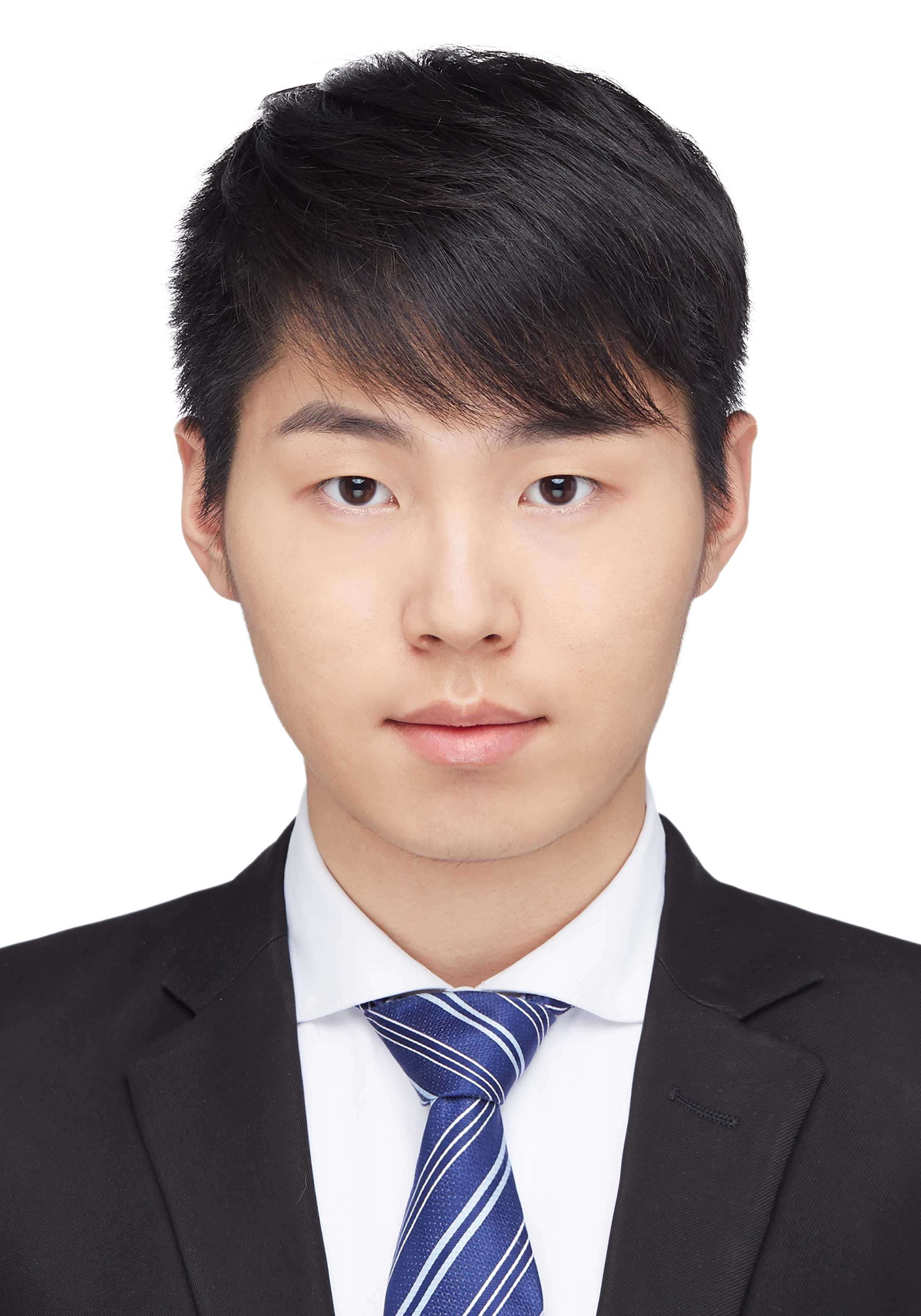 Xinhang Li合作论文数Alibaba2
 Yang Duan合作论文数Univ Illinois2Qichen Liao合作论文数2
 Huiping Zhuang (庄辉平)合作论文数Shien-Ming Wu School of Intelligent Engineering, South China University of Technology2
 Tianqing Fang (方天庆)合作论文数Tencent AI Lab2
 Hao Qin合作论文数Chair Proc Syst Engn, Otto von Guericke Univ2
 Zhifei Xu合作论文数Electromagnetic Compatibility Laboratory, Missouri University of Science and Technology, Rolla, MO, USA2
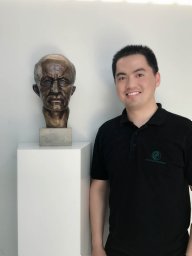 Zhen Song合作论文数School of Chemical Engineering, East China University of Science and Technology2
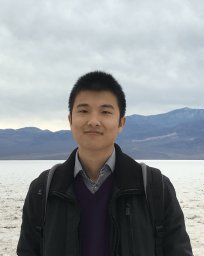 Datong P Zhou合作论文数University of California Berkeley2
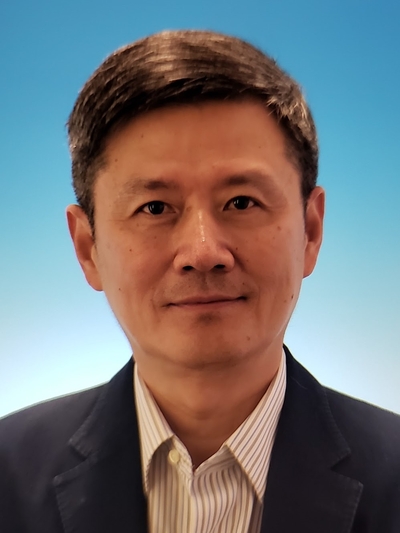 Xiaofang Zhou (周晓方)合作论文数Department of Computer Science and Engineering, School of Engineering, The Hong Kong University of Science and Technology;Big Data Institute, The Hong Kong University of Science and Technology2
 Chulsoon Hwang合作论文数Dept. of Electr. Eng., Korea Adv. Inst. of Sci. & Technol. (KAIST),;c;Dept. of Electr. Eng., Korea Adv. Inst. of Sci. & Technol. (KAIST),2




