Vision-language models (VLMs) have demonstrated remarkable zero-shot capabilities yet remain sensitive to real-world distribution shifts during inference. Although significant efforts are devoted to adapting VLMs at test time, they rely heavily on noisy pseudo-labels predicted directly from raw embedding similarities during inference, which are unreliable under distribution shift and mislead the adaptation. To avoid noise amplification, existing works craft coarse-grained surrogate objectives during adaptation, which fail to explicitly model sample-level relationships across different modalities, creating objective mismatch with inference, thus leading to marginal performance improvement. In this work, we aim to bridge the detached objectives of inference and adaptation for VLMs, and propose a principled VLM TTA method called . For VLM inference, we formulate the zero-shot image classification task as a cross-modal alignment problem encoded via a Wasserstein OT formulation, providing robust pseudo-labels at the sample-level to effectively adapt VLMs. For VLM adaptation, we adopt a soft-label InfoNCE loss to adapt VLMs based on the OT-induced pseudo-labels, leveraging fine-grained supervisions to explicitly model relationships of individual image-text pairs via contrastive learning, which empowers accurate inference at the same granularity. Moreover, we theoretically reveal that the InfoNCE loss can be neatly reformulated as a Wasserstein OT formulation, thereby unifying the objectives of the inference and adaptation of VLMs to achieve their mutual benefits. Extensive experiments demonstrate the effectiveness and efficiency of our methods, outperforming the best-performing methods by up to 7
Graph Neural Networks (GNNs) have demonstrated strong performance across various tasks by leveraging the structural information inherent in graph-structured data. To address the challenge of edge heterophily, where connected nodes may have dissimilar labels or features, two main families of GNNs have emerged: Mixture-of-Experts (MoE) based spatial GNNs and frequency filtering based spectral GNNs. While MoE-based spatial GNNs intuitively assign experts to different hops without solid theoretical grounding, spectral GNNs are based on principled insights from graph signal processing but often rely on manually designed filters and global operators, limiting their scalability and adaptability. In this work, we identify an inherent connection between these two families by showing that the eigengraph components in spectral methods can be treated as experts within an MoE framework. Building on this insight, we propose MORGAN, a novel spectral GNN that integrates Mixture-of-Experts into the spectral domain. MORGAN performs eigen-decomposition of the graph Laplacian, partitions the spectrum into multiple frequency bands, and assigns a dedicated expert network to each band. A learnable gating function dynamically combines these experts based on the spectral characteristics of the input. To support scalable and inductive learning, we further develop MORGAN(L), which incorporates subgraph sampling to enable localized spectral filtering without requiring full access to the graph Laplacian. Extensive experiments on 16 real-world benchmark datasets show that MORGAN achieves competitive or superior performance compared to state-of-the-art baselines, particularly in inductive node classification under heterophilic settings.
As large language models (LLMs) continue to grow in size, their abilities to tackle complex tasks have significantly improved. However, issues such as hallucination and the lack of up-to-date knowledge largely remain unresolved. Knowledge graphs (KGs), which serve as symbolic representations of real-world knowledge, offer a reliable source for enhancing reasoning. Integrating KG retrieval into LLMs can therefore strengthen their reasoning by providing dependable knowledge. Nevertheless, due to limited understanding of the underlying knowledge graph, LLMs may struggle with queries that have multiple interpretations. Additionally, the incompleteness and noise within knowledge graphs may result in retrieval failures. To address these challenges, we propose an embedding-based retrieval reasoning framework EMBRAG. In this approach, the model first generates multiple logical rules grounded in knowledge graphs based on the input query. These rules are then applied to reasoning in the embedding space, guided by the knowledge graph, ensuring more robust and accurate reasoning. A reranker model further interprets these rules and refines the results. Extensive experiments on two benchmark KGQA datasets demonstrate that our approach achieves the new state-of-the-art performance in KG reasoning tasks.
World models for interactive text agents must typically be learned from observation-action trajectories alone. Specifically, the environment returns text observations after each action, but does not expose a ground-truth latent state nor an inspectable transition model.A research gap remains in how to induce executable code as a world model in this black-box setting for prediction and agent decision making. We introduce PatchWorld, a gradient-free framework that turns offline trajectories into executable Python world models through counterexample-guided code repair.Instead of predicting the next observation with a black-box model, PatchWorld induces symbolic belief-state programs whose action updates can be inspected, replayed, and locally patched. Across seven AgentGym environments, PatchWorld-Simple achieves the highest code-based decision-making score among evaluated methods (76.4
This paper studies the minimal dimension required to embed subset memberships (m elements and m k subsets of at most k elements) into vector spaces, denoted as Minimal Embeddable Dimension (MED). The tight bounds of MED are derived theoretically and supported empirically for various notions of "distances" or "similarities," including the ℓ_2 metric, inner product, and cosine similarity. In addition, we conduct numerical simulation in a more achievable setting, where the m k subset embeddings are chosen as the centroid of the embeddings of the contained elements. Our simulation easily realizes a logarithmic dependency between the MED and the number of elements to embed. These findings imply that embedding-based retrieval limitations stem primarily from learnability challenges, not geometric constraints, guiding future algorithm design.
Large Language Models (LLMs) have achieved impressive performance across a wide range of applications. However, they often suffer from hallucinations in knowledge-intensive domains due to their reliance on static pretraining corpora. To address this limitation, Retrieval-Augmented Generation (RAG) enhances LLMs by incorporating external knowledge sources during inference. Among these sources, textual graphs provide structured and semantically rich information that supports more precise and interpretable reasoning. This has led to growing interest in graph-based RAG systems. Despite their potential, most existing approaches rely on a single retriever to identify relevant subgraphs, which limits their ability to capture the diverse aspects of complex queries. Moreover, these systems often struggle to accurately judge the relevance of retrieved content, making them prone to distraction by irrelevant noise. To address these challenges, in this paper, we propose MIXRAG, a Mixture-of-Experts Graph-RAG framework that introduces multiple specialized graph retrievers and a dynamic routing controller to better handle diverse query intents. Each retriever is trained to focus on a specific aspect of graph semantics, such as entities, relations, or subgraph topology. A Mixture-of-Experts module adaptively selects and fuses relevant retrievers based on the input query. To reduce noise in the retrieved information, we introduce a query-aware GraphEncoder that carefully analyzes relationships within the retrieved subgraphs, highlighting the most relevant parts while down-weighting unnecessary noise. Empirical results demonstrate that our method achieves state-of-the-art performance and consistently outperforms various baselines. MIXRAG is effective across a wide range of graph-based tasks in different domains. The code will be released upon paper acceptance.
Answering complex first-order logic (FOL) queries on knowledge graphs is essential for reasoning. Symbolic methods offer interpretability but struggle with incomplete graphs, while neural approaches generalize better but lack trans- parency. Neural-symbolic models aim to integrate both strengths but often fail to capture the hierarchical structure of logical queries, limiting their effectiveness. We propose HYQNET, a neural-symbolic model for logic query reasoning that fully leverages hyperbolic space. HYQNET decomposes FOL queries into relation projections and logical operations over fuzzy sets, enhancing interpretability. To address missing links, it employs a hyperbolic GNN-based approach for knowledge graph completion in hyperbolic space, effectively embedding the re- cursive query tree while preserving structural dependencies. By utilizing hyperbolic representations, HYQNET captures the hierarchical nature of logical projection reasoning more effectively than Euclidean-based approaches. Experiments on three benchmark datasets demonstrate that HYQNET achieves strong performance, highlighting the advantages of reasoning in hyperbolic space.
Graph learning has been crucial to many real-world tasks, but they are often studied with a closed-world assumption, with all possible labels of data known a priori. To enable effective graph learning in an open and noisy environment, it is critical to inform the model users when the model makes a wrong prediction to in-distribution data of a known class, i.e., misclassification detection or when the model encounters out-of-distribution from novel classes, i.e., out-of-distribution detection. This paper introduces Evidential Reasoning Network (EviNet), a framework that addresses these two challenges by integrating Beta embedding within a subjective logic framework. EviNet includes two key modules: Dissonance Reasoning for misclassification detection and Vacuity Reasoning for out-of-distribution detection. Extensive experiments demonstrate that EviNet outperforms state-of-the-art methods across multiple metrics in the tasks of in-distribution classification, misclassification detection, and out-of-distribution detection. EviNet demonstrates the necessity of uncertainty estimation and logical reasoning for misclassification detection and out-of-distribution detection and paves the way for open-world graph learning. Our code and data are available at https://github.com/SSSKJ/EviNET.
Knowledge graphs (KGs) are widely used in many AI applications, but they are often incomplete, which limits their effectiveness. In many cases, most relations have very few examples, making it difficult to learn accurate models. Few-shot learning has emerged as a promising solution by enabling KG completion with only a small number of training triplets. However, many existing methods treat each relation separately and miss the opportunity to share useful information across tasks. In this paper, we propose TransNet, a transfer learning approach for few-shot KG completion that captures relationships between tasks and reuses knowledge from related ones. TransNet also uses meta learning to better handle unseen relations. Experiments on standard benchmarks show that TransNet achieves strong performance compared to prior methods. Code and data will be released upon acceptance.
ChatGPT said: Text-attributed graphs, where nodes and edges contain rich textual information, are widely used across diverse domains. A central challenge in this setting is question answering, which requires jointly leveraging unstructured text and the structured relational signals within the graph. Although Large Language Models (LLMs) have made significant advances in natural language understanding, their direct use for reasoning over text-attributed graphs remains limited. Retrieval-augmented generation methods that operate purely on text often treat passages as isolated units, ignoring the interconnected structure of the graph. Conversely, graph-based RAG methods that serialize large subgraphs into long textual sequences quickly become infeasible due to LLM context-length constraints, resulting in fragmented reasoning and degraded accuracy. To overcome these limitations, we introduce Graph-O1, an agentic GraphRAG framework that enables LLMs to conduct stepwise, interactive reasoning over graphs. Our approach integrates Monte Carlo Tree Search (MCTS) with end-to-end reinforcement learning, allowing the model to selectively explore and retrieve only the most informative subgraph components. The reasoning procedure is framed as a multi-turn interaction between the agent and the graph environment, and the agent is trained through a unified reward mechanism. Extensive experiments across multiple LLM backbones demonstrate that Graph-O1 consistently surpasses state-of-the-art baselines, producing answers that are more accurate, reliable, and interpretable.
Graph Self-Supervised Learning (SSL) has emerged as a pivotal area of research in recent years. By engaging in pretext tasks to learn the intricate topological structures and properties of graphs using unlabeled data, these graph SSL models achieve enhanced performance, improved generalization, and heightened robustness. Despite the remarkable achievements of these graph SSL methods, their current implementation poses significant challenges for beginners and practitioners due to the complex nature of graph structures, inconsistent evaluation metrics, and concerns regarding reproducibility hinder further progress in this field. Recognizing the growing interest within the research community, there is an urgent need for a comprehensive, beginner-friendly, and accessible toolkit consisting of the most representative graph SSL algorithms. To address these challenges, we present a Graph SSL toolkit named PyG-SSL, which is built upon PyTorch and is compatible with various deep learning and scientific computing backends. Within the toolkit, we offer a unified framework encompassing dataset loading, hyper-parameter configuration, model training, and comprehensive performance evaluation for diverse downstream tasks. Moreover, we provide beginner-friendly tutorials and the best hyper-parameters of each graph SSL algorithm on different graph datasets, facilitating the reproduction of results. The GitHub repository of the library is https://github.com/iDEA-iSAIL-Lab-UIUC/pyg-ssl.
Knowledge graph reasoning is pivotal in various domains such as data mining, artificial intelligence, the Web, and social sciences. These knowledge graphs function as comprehensive repositories of human knowledge, facilitating the inference of new information. Traditional symbolic reasoning, despite its strengths, struggles with the challenges posed by incomplete and noisy data within these graphs. In contrast, the rise of Neural Symbolic AI marks a significant advancement, merging the robustness of deep learning with the precision of symbolic reasoning. This integration aims to develop AI systems that are not only highly interpretable and explainable but also versatile, effectively bridging the gap between symbolic and neural methodologies. Additionally, the advent of large language models (LLMs) has opened new frontiers in knowledge graph reasoning, enabling the extraction and synthesis of knowledge in unprecedented ways. This survey offers a thorough review of knowledge graph reasoning, focusing on various query types and the classification of neural symbolic reasoning. Furthermore, it explores the innovative integration of knowledge graph reasoning with large language models, highlighting the potential for groundbreaking advancements. This comprehensive overview is designed to support researchers and practitioners across multiple fields, including data mining, AI, the Web, and social sciences, by providing a detailed understanding of the current landscape and future directions in knowledge graph reasoning.
Knowledge graphs (KGs) enable reasoning tasks such as link prediction, question answering, and knowledge discovery. However, real-world KGs are often incomplete, making link prediction both essential and challenging. Existing methods, including embedding-based and path-based approaches, rely on Euclidean embeddings, which struggle to capture hierarchical structures. GNN-based methods aggregate information through message passing in Euclidean space, but they struggle to effectively encode the recursive tree-like structures that emerge in multi-hop reasoning. To address these challenges, we propose a hyperbolic GNN framework that embeds recursive learning trees in hyperbolic space and generates query-specific embeddings. By incorporating hierarchical message passing, our method naturally aligns with reasoning paths and dynamically adapts to queries, improving prediction accuracy. Unlike static embedding-based approaches, our model computes context-aware embeddings tailored to each query. Experiments on multiple benchmark datasets show that our approach consistently outperforms state-of-the-art methods, demonstrating its effectiveness in KG reasoning.
Knowledge graphs (KGs) are ubiquitous and widely used in various applications. However, most real-world knowledge graphs are incomplete, which significantly degrades their performance on downstream tasks. Additionally, the relationships in real-world knowledge graphs often follow a long-tail distribution, meaning that most relations are represented by only a few training triplets. To address these challenges, few-shot learning has been introduced. Few-shot KG completion aims to make accurate predictions for triplets involving novel relations when only a limited number of training triplets are available. Although many methods have been proposed, they typically learn each relation individually, overlooking the correlations between different tasks and the relevant information in previously trained tasks. In this paper, we propose a transfer learning-based few-shot KG completion method (TransNet). By learning the relationships between different tasks, TransNet effectively transfers knowledge from similar tasks to improve the current task's performance. Furthermore, by employing meta-learning, TransNet can generalize effectively to new, unseen relations. Extensive experiments on benchmark datasets demonstrate the superiority of TransNet over state-of-the-art methods. Code can be found at https://github.com/lihuiliullh/TransNet/tree/main
Large Language Models (LLMs) often struggle with producing factually consistent answers due to limitations in their parametric memory. Retrieval-Augmented Generation (RAG) methods address this issue by incorporating external knowledge from trusted sources at inference time. However, such methods typically treat knowledge as unstructured text, which limits their ability to support compositional reasoning and identify factual inconsistencies. To overcome these limitations, we propose a novel framework that dynamically constructs and expands knowledge graphs (KGs) during inference, integrating both internal knowledge extracted from LLMs and external information retrieved from external sources. Our method begins by extracting a seed KG from the question via prompting, followed by iterative expansion using the LLM's latent knowledge. The graph is then selectively refined through external retrieval, enhancing factual coverage and correcting inaccuracies. We evaluate our approach on three diverse factual QA benchmarks, demonstrating consistent improvements in factual accuracy, answer precision, and interpretability over baseline prompting and static KG-augmented methods. Our findings suggest that inference-time KG construction is a promising direction for enhancing LLM factuality in a structured, interpretable, and scalable manner.
Given an evolving tensor time series and multiple time ranges, how can we compute Tucker decomposition for each time range efficiently and accurately? Tucker decomposition has been widely used in a variety of applications to obtain latent factors of tensor data. For example, Tucker decomposition on air pollution data allows us to analyze and compare air pollution patterns between different locations during different periods of time. In these applications, a common need is to compute Tucker decomposition for a given time range. Furthermore, real-world tensor time series are typically evolving in the time dimension. Such needs call for a data structure that can efficiently and accurately support range queries of Tucker decomposition and stream updates. Unfortunately, existing methods do not support either range queries or stream updates. For methods that do not support range queries, they have to re-compute from scratch for each query. Not until 2021 has a data structure called Zoom-Tucker been proposed to support range queries via block-wise preprocessing. However, Zoom-Tucker does not support stream updates and, more critically, suffers from a reluctant efficiency–accuracy tradeoff — a large block size causes inaccuracy, while a small block size leads to inefficiency. This challenging problem has remained open for years prior to our work. To solve this challenging problem, we propose TUCKET, a data structure that can efficiently and accurately handle both range queries and stream updates. Our key idea is to design a new data structure that we call a stream segment tree by generalizing the segment tree, a data structure that was originally invented for computational geometry. For a range query of length 𝐿, our TUCKET can find 𝑂 (log 𝐿) nodes (called the hit set) from the tree and efficiently stitch their preprocessed decompositions to answer the range query. We also propose an algorithm to optimally prune the hit set via an approximation of subtensor decomposition. For the 𝑇 -th stream update, our TUCKET modifiesonlyamortized𝑂(1)nodesandonly𝑂(log𝑇)nodesinthe worst case. Extensive evaluation demonstrates that our TUCKET consistently achieves the highest efficiency and accuracy across four large-scale datasets. Our TUCKET achieves at least 3 times lower latency and at least 1.4 times smaller reconstruction error than Zoom-Tucker on all datasets. The full version can be found at https://github.com/q-rz/TUCKET/blob/main/TUCKET-Full.pdf.
 Hanghang Tong (童行行)合作论文数Department of Computer Science, University of Illinois at Urbana-Champaign;Siebel School of Computing and Data Science, The Grainger College of Engineering, University of Illinois at Urbana-Champaign32
 Yuchen Yan合作论文数Amazon9
 Boxin Du合作论文数Department of Computer Science, University of Illinois at Urbana-Champaign9
 Zihao Wang合作论文数TSY Capital Limited8
 Jiejun Xu合作论文数HRL Laboratories7
 Yangqiu Song (宋陽秋)合作论文数Department of Computer Science and Engineering, The Hong Kong University of Science and Technology5
 Zhichen Zeng合作论文数University of Illinois Urbana-Champaign4
 Ruizhong Qiu (邱睿中)合作论文数Siebel School of Computing and Data Science, University of Illinois Urbana-Champaign;Department of Computer Science, University of Illinois Urbana-Champaign4
 Jingrui He (何京芮)合作论文数School of Information Sciences, University of Illinois Urbana-Champaign;Computer Science Department, University of Illinois Urbana-Champaign4
 Dawei Zhou (周大为)合作论文数Department of Computer Science, College of Engineering, Virginia Tech;VLOG Lab, Virginia Tech4
 Haibo Wang合作论文数3
 Ruijie Wang (王睿杰)合作论文数School of Computer Science and Engineering, Beihang University3
 Baoyu Jing合作论文数University of Illinois at Urbana-Champaign3
 Heng Ji (季姮)合作论文数Siebel School of Computing and Data Science, The Grainger College of Engineering, University of Illinois at Urbana-Champaign3
 Haohui Wang合作论文数Department of Computer Science, Virginia Tech;Sanghani Center for Artificial Intelligence and Data Analytics, Virginia Tech2
 Hang Yin合作论文数College of Civil Engineering and Architecture, Zhejiang University2
 Jiaxin Bai合作论文数Department of Computer Science, Hong Kong Baptist University2
 Yuzhong Chen (陈羽中)合作论文数College of Computer and Data Science, Fuzhou University2
 Kai Shu合作论文数Department of Computer Science, College of Arts and Sciences, Emory University2
 Jian Kang合作论文数Department of Computer Science, Hajim School of Engineering & Applied Sciences, University of Rochester2
 Huiyuan Chen合作论文数Amazon2
 Bo Xiong合作论文数International Max Plank Research School for Intelligent Systems;Institute of Parallel and Distributed Systems, University of Stuttgart2
 Simon See合作论文数Sun Microsystems Inc.2
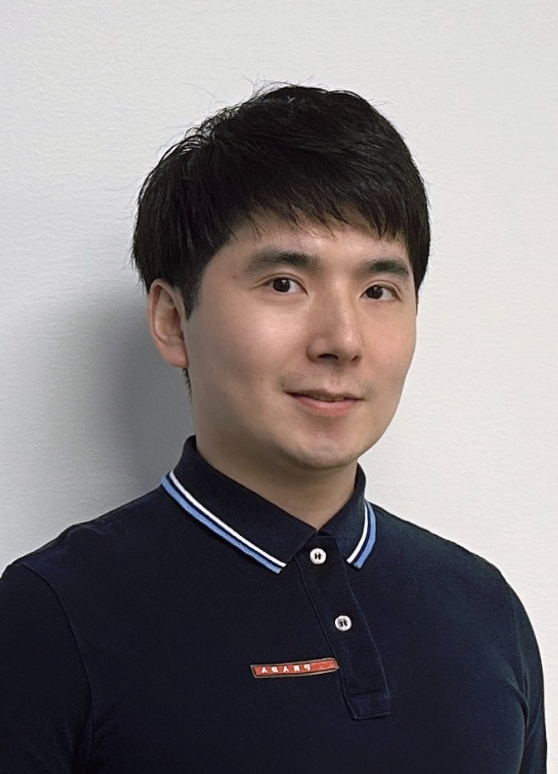 Yikun Ban (班义琨)合作论文数School of Information Sciences, University of Illinois at Urbana-Champaign2
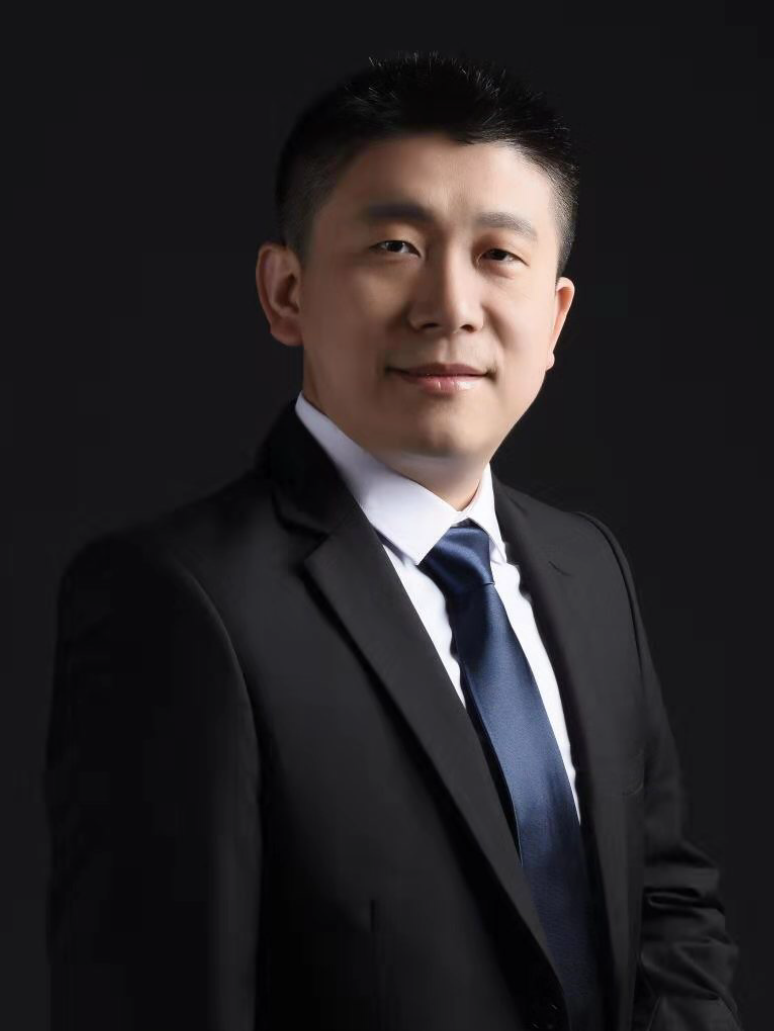 Pin Lv (吕品)合作论文数School of Artificial Intelligence, University of Chinese Academy of Sciences;Institute of Automation, Chinese Academy of Sciences2
 Fei Wang合作论文数Division of Health Informatics and AI, Department of Population Health Sciences, Weill Cornell Medicine, Cornell University;Department of Emergency Medicine, Weill Cornell Medicine, Cornell University2
 Mahashweta Das合作论文数Hewlett Packard Labs2
 Junping Song合作论文数2Boxin Dut合作论文数1Blaine Hill合作论文数1Xiao Lin合作论文数1Jun-Gi Jang合作论文数1
 Weijie Guan合作论文数Virginia Tech1
 Jinning Li (黎金宁)合作论文数Google1
 Tianshi Zheng (郑天石)合作论文数Department of Computer Science and Engineering, Hong Kong University of Science and Technology1
 Hong Ting Tsang合作论文数1Mengting Ai合作论文数1
 Yixia Li (李乙侠)合作论文数Southern University of Science and Technology;Tencent Hunyuan Team1Eunice Chan合作论文数1
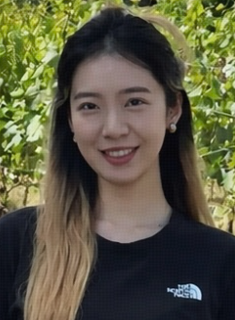 Xinrui He合作论文数Department of Computer Science, University of Illinois Urbana-Champaign1Zhifei Tan合作论文数1Connie Ni合作论文数1
 Chenqi Guo (郭晨琪)合作论文数School of Control and Computer Engineering, North China Electric Power University1
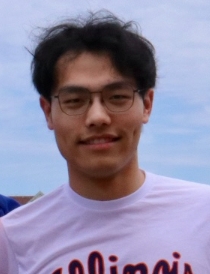 Zihao Li (李子豪)合作论文数Siebel School of Computing and Data Science, University of Illinois Urbana-Champaign;Amazon1
 Zhe Xu合作论文数University of Illinois Urbana-Champaign1Yongyi Hu合作论文数1
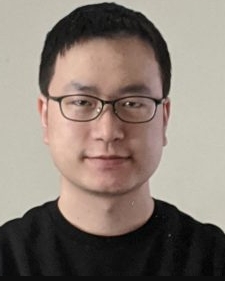 Jun Wu合作论文数Department of Computer Science and Engineering, Michigan State University1




