End-to-end autonomous driving models increasingly benefit from large vision–language models for semantic understanding, yet ensuring safe and accurate operation under long-tail conditions remains challenging. These challenges are particularly prominent in long-tail mixed-traffic scenarios, where autonomous vehicles must interact with heterogeneous road users, including human-driven vehicles and vulnerable road users, under complex and uncertain conditions. This paper proposes HERMES, a holistic risk-aware end-to-end multimodal driving framework designed to inject explicit long-tail risk cues into trajectory planning. HERMES employs a foundation-model-assisted annotation pipeline to produce structured Long-Tail Scene Context and Long-Tail Planning Context, capturing hazard-centric cues together with maneuver intent and safety preference, and uses these signals to guide end-to-end planning. HERMES further introduces a Tri-Modal Driving Module that fuses multi-view perception, historical motion cues, and semantic guidance, ensuring risk-aware accurate trajectory planning under long-tail scenarios. Experiments on the real-world long-tail dataset demonstrate that HERMES consistently outperforms representative end-to-end and VLM-driven baselines under long-tail mixed-traffic scenarios. Ablation studies verify the complementary contributions of key components.
Vision-language-model (VLM)-guided reinforcement learning (RL) has recently attracted significant attention for it, replacing brittle hand-crafted rewards with semantically grounded signals; however, deploying such simulation-trained policies on real vehicles remains a fundamental challenge, because they rely on simulator-native observations and simulator-coupled action semantics with no counterpart on physical hardware. We identify a general principle: the simulation-to-reality gap decomposes into two largely orthogonal axes, a sensing-and-dynamics domain gap and a task-and-geometry gap, the former closable without real-world policy training by re-projecting real perception and control onto the policy's training manifold. We formalize this as a transfer guarantee that bounds the deployment gap by three independently controllable error terms, and instantiate it as Sim2Real-AD, which combines a Geometric Observation Bridge, a Physics-Aware Action Mapping, a Two-Phase Progressive Training curriculum, and a Real-time Deployment Pipeline. As a proof of concept, a CARLA-trained VLM-guided RL policy is transferred zero-shot to a full-scale battery-electric Ford E-Transit van in Madison, WI, USA, and drives across car-following, obstacle-avoidance, and stop-sign scenarios using no real-world training data. To our knowledge, this is among the first zero-shot closed-loop deployments of a CARLA-trained VLM-guided RL policy on a full-scale real vehicle, and the decomposition offers a principled, broadly applicable route for moving simulation-trained, foundation-model-guided policies into the physical world, supporting energy-efficient intelligent driving on electrified transportation platforms. The demo video, code, and model checkpoint are available at: https://zilin-huang.github.io/Sim2Real-AD-website/.
Multimodal large language models (MLLMs) have achieved remarkable progress across a range of vision-language tasks and demonstrate strong potential for traffic accident understanding. However, existing MLLMs in this domain primarily focus on coarse-grained image-level or video-level comprehension and often struggle to handle fine-grained visual details or localized scene components, limiting their applicability in complex accident scenarios. To address these limitations, we propose SafePLUG, a novel framework that empowers MLLMs with both Pixel-Level Understanding and temporal Grounding for comprehensive traffic accident analysis. SafePLUG supports both arbitrary-shaped visual prompts for region-aware question answering and pixel-level segmentation based on language instructions, while also enabling the recognition of temporally anchored events in traffic accident scenarios. To advance the development of MLLMs for traffic accident understanding, we curate a new dataset containing multimodal question-answer pairs centered on diverse accident scenarios, with detailed pixel-level annotations and temporal event boundaries. Experimental results show that SafePLUG achieves strong performance on multiple tasks, including region-based question answering, pixel-level segmentation, temporal event localization, and accident event understanding. These capabilities lay a foundation for fine-grained understanding of complex traffic scenes, with the potential to improve driving safety and enhance situational awareness in smart transportation systems. The code, dataset, and model checkpoints will be made publicly available at: https://zihaosheng.github.io/SafePLUG
Reinforcement Learning (RL) has emerged as a dominant paradigm for end-to-end autonomous driving (AD). However, RL suffers from sample inefficiency and a lack of semantic interpretability in complex scenarios. Foundation Models, particularly Vision-Language Models (VLMs), can mitigate this by offering rich, context-aware knowledge, yet their high inference latency hinders deployment in high-frequency RL training loops. To bridge this gap, we present Found-RL, a platform tailored to efficiently enhance RL for AD using foundation models. A core innovation is the asynchronous batch inference framework, which decouples heavy VLM reasoning from the simulation loop, effectively resolving latency bottlenecks to support real-time learning. We introduce diverse supervision mechanisms: Value-Margin Regularization (VMR) and Advantage-Weighted Action Guidance (AWAG) to effectively distill expert-like VLM action suggestions into the RL policy. Additionally, we adopt high-throughput CLIP for dense reward shaping. We address CLIP's dynamic blindness via Conditional Contrastive Action Alignment, which conditions prompts on discretized speed/command and yields a normalized, margin-based bonus from context-specific action-anchor scoring. Found-RL provides an end-to-end pipeline for fine-tuned VLM integration and shows that a lightweight RL model can achieve near-VLM performance compared with billion-parameter VLMs while sustaining real-time inference (approx. 500 FPS). Code, data, and models will be publicly available at https://github.com/ys-qu/found-rl.
Ensuring safety in autonomous driving systems remains a critical challenge, particularly in handling rare but potentially catastrophic safety-critical scenarios. While existing research has explored generating safety-critical scenarios for autonomous vehicle (AV) testing, there is limited work on effectively incorporating these scenarios into policy learning to enhance safety. Furthermore, developing training curricula that adapt to an AV’s evolving behavioral patterns and performance bottlenecks remains largely unexplored. To address these challenges, we propose CurricuVLM, a novel framework that leverages Vision-Language Models (VLMs) to enable personalized curriculum learning for autonomous driving agents. Our approach uniquely exploits VLMs’ multimodal understanding capabilities to analyze agent behavior, identify performance weaknesses, and dynamically generate tailored training scenarios for curriculum adaptation. Through a comprehensive analysis of unsafe driving situations with narrative descriptions, CurricuVLM performs in-depth reasoning to evaluate the AV’s capabilities and identify critical behavioral patterns. The framework then synthesizes customized training scenarios targeting these identified limitations, enabling effective and personalized curriculum learning. Extensive experiments on the Waymo Open Motion Dataset show that CurricuVLM outperforms state-of-the-art baselines across both regular and safety-critical scenarios, achieving superior performance in terms of navigation success, driving efficiency, and safety metrics. Further analysis reveals that CurricuVLM serves as a general approach that can be integrated with various RL algorithms to enhance autonomous driving systems. The code and demo video will be available at: https://zihaosheng.github.io/CurricuVLM/.
Ensuring safe decision-making in autonomous vehicles remains a fundamental challenge despite rapid advances in end-to-end learning approaches. Traditional reinforcement learning (RL) methods rely on manually engineered rewards or sparse collision signals, which fail to capture the rich contextual understanding required for safe driving and make unsafe exploration unavoidable in real-world settings. Recent vision-language models (VLMs) offer promising semantic understanding capabilities; however, their high inference latency and susceptibility to hallucination hinder direct application to real-time vehicle control. To address these limitations, this paper proposes DriveVLM-RL, a neuroscience-inspired framework that integrates VLMs into RL through a dual-pathway architecture for safe and deployable autonomous driving. The framework decomposes semantic reward learning into a Static Pathway for continuous spatial safety assessment using CLIP-based contrasting language goals, and a Dynamic Pathway for attention-gated multi-frame semantic risk reasoning using a lightweight detector and a large VLM. A hierarchical reward synthesis mechanism fuses semantic signals with vehicle states, while an asynchronous training pipeline decouples expensive VLM inference from environment interaction. All VLM components are used only during offline training and are removed at deployment, ensuring real-time feasibility. Experiments in the CARLA simulator show significant improvements in collision avoidance, task success, and generalization across diverse traffic scenarios, including strong robustness under settings without explicit collision penalties. These results demonstrate that DriveVLM-RL provides a practical paradigm for integrating foundation models into autonomous driving without compromising real-time feasibility. Demo video and code are available at: https://zilin-huang.github.io/DriveVLM-RL-website/
Multimodal large language models (MLLMs) have shown strong potential for autonomous driving, yet existing benchmarks remain largely ego-centric and therefore cannot systematically assess model performance in infrastructure-centric and cooperative driving conditions. In this work, we introduce V2X-QA, a real-world dataset and benchmark for evaluating MLLMs across vehicle-side, infrastructure-side, and cooperative viewpoints. V2X-QA is built around a view-decoupled evaluation protocol that enables controlled comparison under vehicle-only, infrastructure-only, and cooperative driving conditions within a unified multiple-choice question answering (MCQA) framework. The benchmark is organized into a twelve-task taxonomy spanning perception, prediction, and reasoning and planning, and is constructed through expert-verified MCQA annotation to enable fine-grained diagnosis of viewpoint-dependent capabilities. Benchmark results across ten representative state-of-the-art proprietary and open-source models show that viewpoint accessibility substantially affects performance, and infrastructure-side reasoning supports meaningful macroscopic traffic understanding. Results also indicate that cooperative reasoning remains challenging since it requires cross-view alignment and evidence integration rather than simply additional visual input. To address these challenges, we introduce V2X-MoE, a benchmark-aligned baseline with explicit view routing and viewpoint-specific LoRA experts. The strong performance of V2X-MoE further suggests that explicit viewpoint specialization is a promising direction for multi-view reasoning in autonomous driving. Overall, V2X-QA provides a foundation for studying multi-perspective reasoning, reliability, and cooperative physical intelligence in connected autonomous driving. The dataset and V2X-MoE resources are publicly available at: https://github.com/junwei0001/V2X-QA.
Previous fastslow system architectures demonstrated that pairing a reactive E2E planner with a deliberative vision-language model (VLM) can address these long-tail scenarios. However, these dual-system models that query the slow module at fixed intervals are computationally inefficient and introduce unnecessary latency during normal operation. To bridge this gap, we introduce textbf{FASIONAD}, an adaptive fastslow framework for autonomous driving that selectively integrates E2E planning and VLM reasoning. A lightweight fast planner manages general control, while a slow reasoner is activated only when a Laplace-based uncertainty gate detects changed uncertainty. Rather than overriding control, the VLM provides concise planning states and high-level plans. These inform the planner through an information bottleneck and high-level action guidance, enhancing interpretability and safety. Evaluated on the nuScenes, Bench2Drive, and CARLA Town05 closed-loop benchmarks, FASIONAD lowers the average trajectory error by 6.7% and the collision rate by 28.1% compared with strong E2E baselines, while also markedly reducing computational overhead relative to always-on fastslow dual systems. These results demonstrate that adaptive fastslow fusion is a practical route to safer, more reliable, and more efficient autonomous driving.
Vision-Language Models (VLMs) have demonstrated significant potential for end-to-end autonomous driving, yet a substantial gap remains between their current capabilities and the reliability necessary for real-world deployment. A critical challenge is their fragility, characterized by hallucinations and poor generalization in out-of-distribution (OOD) scenarios. To bridge this gap, we introduce MTRDrive, a novel framework that integrates procedural driving experiences with a dynamic toolkit to enhance generalization and proactive decision-making. MTRDrive addresses these limitations through a closed-loop system that combines a memory-based experience retrieval mechanism with dynamic toolkits. This synergy enables the model to interact more effectively with its environment, improving both reasoning and decision-making capabilities with the help of our memory-tool synergistic reasoning. Additionally, we introduce a new benchmark based on complex Roadwork construction scenarios to rigorously evaluate zero-shot generalization. Extensive experiments demonstrate the effectiveness of our approach. On the public NavSim benchmark, MTRDrive achieves state-of-the-art performance with a driving metric score of 79.8% and a planning accuracy of 82.6%. To rigorously test generalization, we evaluate our model in a zero-shot setting on our new Roadwork-VLM benchmark. In this challenging out-of-distribution test, it attains a driving metric score of 80.2% and a planning accuracy of 33.5%, showcasing its strong ability to reason robustly in unseen scenarios. These results highlight the potential of MTRDrive to advance the field of autonomous driving towards safer and more reliable systems.
Vehicle-to-everything (V2X) cooperation has emerged as a promising paradigm to overcome the perception limitations of classical autonomous driving by leveraging information from both ego-vehicle and infrastructure sensors. However, effectively fusing heterogeneous visual and semantic information while ensuring robust trajectory planning remains a significant challenge. This paper introduces V2X-VLM, a novel end-to-end (E2E) cooperative autonomous driving framework based on vision-language models (VLMs). V2X-VLM integrates multiperspective camera views from vehicles and infrastructure with text-based scene descriptions to enable a more comprehensive understanding of driving environments. Specifically, we propose a contrastive learning-based mechanism to reinforce the alignment of heterogeneous visual and textual characteristics, which enhances the semantic understanding of complex driving scenarios, and employ a knowledge distillation strategy to stabilize training. Experiments on a large real-world dataset demonstrate that V2X-VLM achieves state-of-the-art trajectory planning accuracy, significantly reducing L2 error and collision rate compared to existing cooperative autonomous driving baselines. Ablation studies validate the contributions of each component. Moreover, the evaluation of robustness and efficiency highlights the practicality of V2X-VLM for real-world deployment to enhance overall autonomous driving safety and decision-making.
Deploying autonomous vehicles (AVs) requires testing in diverse and challenging scenarios to ensure safety and reliability, yet collecting real-world data remains prohibitively expensive. While simulation-based approaches offer costeffective alternatives, most existing methods lack sufficient support for intuitive, interactive editing of generated scenarios. This paper presents Talk2Traffic, a novel framework that leverages multimodal large language models (MLLMs) to enable interactive and editable traffic scenario generation. Talk2Traffic allows human users to generate various traffic scenarios through multimodal inputs (text, speech, and sketches). Our approach first employs an MLLM-based interpreter to extract structured representations from these inputs. These representations are then translated into executable Scenic code using a retrieval-augmented generation mechanism to reduce hallucinations and ensure syntactic correctness. Furthermore, a human feedback guidance module enables iterative refinement and editing of scenarios through natural language instructions. Experiments demonstrate that Talk2Traffic outperforms state-of-the-art methods in generating challenging scenarios. Qualitative evaluations further illustrate the framework can handle diverse input modalities and support scenario editing.
Autonomous driving policy learning with reinforcement learning (RL) is fundamentally limited by low sample efficiency, weak generalization, and a dependence on unsafe online trial-and-error interactions. Although safe RL introduces explicit constraints or costs, existing methods often fail to capture the semantic meaning of safety in real driving scenes, leading to conservative behaviors in simple cases and insufficient risk awareness in complex ones. To address this issue, we propose VLM-SAFE, an offline safe RL framework that follows a human cognitive loop of observe-imagine-evaluate-act. Starting from offline driving data, VLM-SAFE observes traffic scenarios and leverages a vision-language model (VLM) to provide semantic safety signals grounded in scene understanding. A learned world model then imagines future trajectories from the observed context, enabling the agent to reason about possible consequences without interacting with the real environment. Rather than using imagined rollouts solely for return estimation, VLM-SAFE further evaluates these predicted futures with VLM-based safety guidance, explicitly coupling future anticipation with semantic risk assessment. The resulting safety-aware imagined experience is finally used to optimize the policy via actor-critic learning, such that actions are chosen based on both predicted outcomes and their safety implications. By tightly integrating observation, imagination, evaluation, and action into a unified closed loop, VLM-SAFE enables safer and more efficient offline policy learning for autonomous driving. Extensive experiments in simulation show that VLM-SAFE achieves improved safety, stronger robustness under traffic-density shift, and a better safety-performance trade-off than representative baselines.
Driver assistance systems have been shown to reduce crashes by providing real-time warnings or assistance, with their effectiveness depending on communication with driver. Due to their unique characteristics, human drivers possess varying hazard perception skills and interaction preferences, making personalized assistance crucial to improving the user experience and system acceptance. However, how to leverage multimodal interfaces that dynamically adapt to warning contents and driver characteristics remains an open question. At the same time, large language models (LLMs) have demonstrated advanced capabilities in knowledge acquisition, planning, and human-machine collaboration, offering potential solutions for existing warning systems. Thus, we develop an LLM-based personalized driver agent (PDA), which provides personalized warnings through multimodal interactions (visual, voice, and tactile). The agent's architecture mimics human cognitive processes via four core modules: memory, perception, control, and action. Results from our experiments indicate that the LLM-PDA effectively customizes warning contents for different drivers in various situations, providing enhanced safety and driver support. This article pioneers the integration of LLMs into automotive human-vehicle interaction and offers novel insights into personalized human-machine interaction in intelligent vehicles.
The rapid progress of multimodal large language models (MLLM) has paved the way for Vision-Language-Action (VLA) paradigms, which integrate visual perception, natural language understanding, and control within a single policy. Researchers in autonomous driving are actively adapting these methods to the vehicle domain. Such models promise autonomous vehicles that can interpret high-level instructions, reason about complex traffic scenes, and make their own decisions. However, the literature remains fragmented and is rapidly expanding. This survey offers the first comprehensive overview of VLA for Autonomous Driving (VLA4AD). We (i) formalize the architectural building blocks shared across recent work, (ii) trace the evolution from early explainer to reasoning-centric VLA models, and (iii) compare over 20 representative models according to VLA's progress in the autonomous driving domain. We also consolidate existing datasets and benchmarks, highlighting protocols that jointly measure driving safety, instruction fidelity, and explanation quality. Finally, we detail open challenges—robustness, real-time efficiency, and formal verification—and outline future directions toward foundation-scale driving models and a standardised “traffic language.” This survey provides a concise yet complete reference for advancing interpretable, instruction-following, and socially aligned autonomous vehicles.
Autonomous driving faces significant challenges in achieving human-like iterative decision-making, which continuously generates, evaluates, and refines trajectory proposals. Current generation-evaluation frameworks isolate trajectory generation from quality assessment, preventing iterative refinement essential for planning, while reinforcement learning methods collapse multi-dimensional preferences into scalar rewards, obscuring critical trade-offs and yielding scalarization bias.To overcome these issues, we present EvaDrive, a novel multi-objective reinforcement learning framework that establishes genuine closed-loop co-evolution between trajectory generation and evaluation via adversarial optimization. EvaDrive frames trajectory planning as a multi-round adversarial game. In this game, a hierarchical generator continuously proposes candidate paths by combining autoregressive intent modeling for temporal causality with diffusion-based refinement for spatial flexibility. These proposals are then rigorously assessed by a trainable multi-objective critic that explicitly preserves diverse preference structures without collapsing them into a single scalarization bias.This adversarial interplay, guided by a Pareto frontier selection mechanism, enables iterative multi-round refinement, effectively escaping local optima while preserving trajectory diversity.Extensive experiments on NAVSIM and Bench2Drive benchmarks demonstrate SOTA performance, achieving 94.9 PDMS on NAVSIM v1 (surpassing DiffusionDrive by 6.8, DriveSuprim by 5.0, and TrajHF by 0.9) and 64.96 Driving Score on Bench2Drive. EvaDrive generates diverse driving styles via dynamic weighting without external preference data, introducing a closed-loop adversarial framework for human-like iterative decision-making, offering a novel scalarization-free trajectory optimization approach.
Vision-Language Models (VLMs) show promise for autonomous driving, yet their struggle with hallucinations, inefficient reasoning, and limited real-world validation hinders accurate perception and robust step-by-step reasoning. To overcome this, we introduce AgentThink, a pioneering unified framework that, for the first time, integrates Chain-of-Thought (CoT) reasoning with dynamic, agent-style tool invocation for autonomous driving tasks. AgentThink's core innovations include: (i) Structured Data Generation, by establishing an autonomous driving tool library to automatically construct structured, self-verified reasoning data explicitly incorporating tool usage for diverse driving scenarios; (ii) A Two-stage Training Pipeline, employing Supervised Fine-Tuning (SFT) with Group Relative Policy Optimization (GRPO) to equip VLMs with the capability for autonomous tool invocation; and (iii) Agent-style Tool-Usage Evaluation, introducing a novel multi-tool assessment protocol to rigorously evaluate the model's tool invocation and utilization. Experiments on the DriveLMM-o1 benchmark demonstrate AgentThink significantly boosts overall reasoning scores by 53.91% and enhances answer accuracy by 33.54%, while markedly improving reasoning quality and consistency. Furthermore, ablation studies and robust zero-shot/few-shot generalization experiments across various benchmarks underscore its powerful capabilities. These findings highlight a promising trajectory for developing trustworthy and tool-aware autonomous driving models.
Semantic scene completion (SSC) plays a pivotal role in achieving comprehensive perceptions of autonomous driving systems. However, existing methods often neglect the high deployment costs of SSC in real-world applications, and traditional architectures such as three-dimensional (3D) convolutional neural networks (3D CNNs) and self-attention mechanisms struggle to efficiently capture long-range dependencies within 3D voxel grids, limiting their effectiveness. To address these challenges, we propose MetaSSC, a novel meta-learning-based framework for SSC that leverages deformable convolution, large-kernel attention, and the Mamba (D-LKA-M) model. Our approach begins with a voxel-based semantic segmentation (SS) pretraining task, which is designed to explore the semantics and geometry of incomplete regions while acquiring transferable meta-knowledge. Using simulated cooperative perception datasets, we supervise the training of a single vehicle's perception via the aggregated sensor data from multiple nearby connected autonomous vehicles (CAVs), generating richer and more comprehensive labels. This meta-knowledge is then adapted to the target domain through a dual-phase training strategy—without adding extra model parameters—ensuring efficient deployment. To further enhance the model's ability to capture long-sequence relationships in 3D voxel grids, we integrate Mamba blocks with deformable convolution and large-kernel attention into the backbone network. Extensive experiments show that MetaSSC achieves state-of-the-art performance, surpassing competing models by a significant margin while also reducing deployment costs.
Existing methods for signal timing and vehicle trajectory coordination often rely on fixed‐phase designs or leading vehicle guidance, limiting efficiency in dynamic traffic and multi‐vehicle coordination. This study models signal timing as right‐of‐way allocation for each inbound lane at discrete time intervals and integrates trajectory planning into a mixed integer linear programming framework for joint optimization. By ensuring the isolation of conflicting flows and optimizing the coordinated release of non‐conflicting traffic, the proposed method enhances intersection throughput while maintaining safety. To ensure the real‐time applicability of the cooperative optimization strategy, this study employs an iterative Benders decomposition algorithm to reduce computational costs and mitigate the impact of prolonged solution times on optimization accuracy. Compared to leading vehicle guidance and fixed‐phase cooperative optimization methods, the proposed framework reduces average delay by 13.37% and 23.4%. These results demonstrate that the proposed method effectively balances computational efficiency and traffic performance, making it a promising solution for real‐world intersection management.
Ensuring safe, comfortable, and efficient planning is crucial for autonomous driving systems. While end-to-end models trained on large datasets perform well in standard driving scenarios, they struggle with complex low-frequency events. Recent Large Language Models (LLMs) and Vision Language Models (VLMs) advancements offer enhanced reasoning but suffer from computational inefficiency. Inspired by the dual-process cognitive model "Thinking, Fast and Slow", we propose FASIONAD – a novel dual-system framework that synergizes a fast end-to-end planner with a VLM-based reasoning module. The fast system leverages end-to-end learning to achieve real-time trajectory generation in common scenarios, while the slow system activates through uncertainty estimation to perform contextual analysis and complex scenario resolution. Our architecture introduces three key innovations: (1) A dynamic switching mechanism enabling slow system intervention based on real-time uncertainty assessment; (2) An information bottleneck with high-level plan feedback that optimizes the slow system's guidance capability; (3) A bidirectional knowledge exchange where visual prompts enhance the slow system's reasoning while its feedback refines the fast planner's decision-making. To strengthen VLM reasoning, we develop a question-answering mechanism coupled with reward-instruct training strategy. In open-loop experiments, FASIONAD achieves a 6.7% reduction in average L2 trajectory error and 28.1% lower collision rate.
Recent advances in autonomous system simulation platforms have significantly enhanced the safe and scalable testing of driving policies. Although existing simulators have greatly accelerated development by providing controlled testing environments, they face limitations in addressing the evolving needs of future transportation research, particularly in enabling effective human-artificial intelligence (human-AI) collaboration and modeling socially aware driving agents. This study introduces Sky-Drive, a novel distributed multiagent simulation platform that addresses these limitations through four key innovations: (1) a distributed architecture for synchronized simulation across multiple terminals; (2) a multimodal human-in-the-loop framework that integrates diverse sensors to collect rich behavioral data; (3) a human-AI collaboration mechanism that supports continuous and adaptive knowledge exchange; and (4) a digital twin framework for constructing high-fidelity virtual replicas of real-world transportation environments. Sky-Drive supports diverse applications, such as autonomous vehicle-human road user interaction modeling, human-in-the-loop training, socially aware reinforcement learning, personalized driving development, and customized scenario generation. Future extensions will incorporate foundation models for context-aware decision support and hardware-in-the-loop testing for real-world validation. By bridging scenario generation, data collection, algorithm training, and hardware integration, Sky-Drive has the potential to become a foundational platform for the next generation of human-centered and socially aware autonomous transportation system research.
 Sikai Chen合作论文数Lyles School of Civil Engineering, Purdue University26
 Zihao Sheng合作论文数Shanghai Engineering Research Center of Intelligent Control and Management20
 Lunhui Xu (许伦辉)合作论文数School of Civil Engineering & Transportation, South China University of Technology12
 Pan Wu (吴攀)合作论文数10Jinlong Li合作论文数7
 Yuzhuang Pian (骈宇庄)合作论文数华南理工大学7Ziang Luo合作论文数6
 Diange Yang (杨殿阁)合作论文数School of Vehicle and Mobility, Tsinghua University6
 Bin Ran (冉斌)合作论文数6
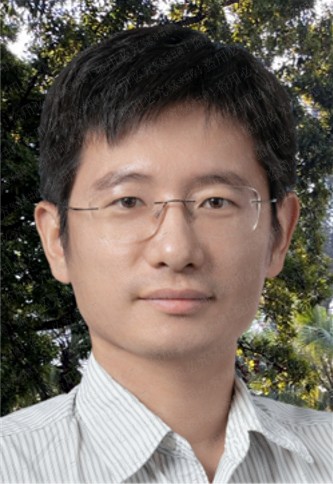 Yongjie Ling (林永杰)合作论文数School of Civil Engineering & Transportation, South China University of Technology6
 Kun Jiang (江昆)合作论文数School of Vehicle and Mobility, Tsinghua University6Kangan Qian合作论文数5
 Zheng Fu合作论文数5
 Jinyu Miao合作论文数School of Automation Science and Electrical Engineering, Beihang University5Yunlong Wang合作论文数4
 Ruonan Li (李若南)合作论文数4
 Haotian Shi (石皓天)合作论文数College of Transportation, Tongji University4
 Mengmeng Yang合作论文数Deakin Univ, Sch Informat Technol, Melbourne, Vic 3125, Australia4Pei Li合作论文数4
 Keke Long合作论文数3
 David A. Noyce合作论文数Department of Civil and Environmental Engineering, College of Engineering, University of Wisconsin-Madison3
 Soyoung Ahn合作论文数Department of Civil and Environmental Engineering, College of Engineering, University of Wisconsin-Madison3
 Samuel Labi合作论文数Purdue Univ3
 Keshu Wu合作论文数2
 Chengyuan Ma (马成元)合作论文数2
 Yining Shi合作论文数Lab of Automated Driving, School of Vehicle and Mobility, Tsinghua University2
 Lijun Sun (孙立君)合作论文数2
 Xiaopeng Li合作论文数2
 Xiaochen Li (李晓晨)合作论文数School of Civil Engineering & Transportation, South China University of Technology2Peng Hu合作论文数1Jiamin Zeng合作论文数1Sicheng Fu合作论文数1Kaixun CHEN (陈凯勋)合作论文数1Mengmeng Wu合作论文数1
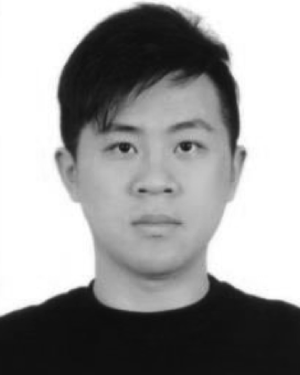 Runnan Xu合作论文数1Yifeng Ding合作论文数1Shuya Zong合作论文数1Yan LIN (林焰)合作论文数1
 Xinyu Jiao合作论文数School of Vehicle and Mobility, Tsinghua University, Beijing, China1
 Hengcong Guo合作论文数South China Univ Technol, Sch Civil Engn & Transportat, Guangzhou 510640, Guangdong, Peoples R China1Huang Heye合作论文数1
 Tuopu Wen合作论文数Tsinghua University1Jin-tao DU (杜锦涛)合作论文数1
 Yuan Liu合作论文数Beijing Inst Satellite Environm & Engn1Seongjin Choi合作论文数1
 Bin Feng合作论文数South China Univ Technol, Sch Civil Engn & Transportat, Guangzhou 510641, Peoples R China1
 Tiantian Chen合作论文数Korea Adv Inst Sci & Technol, Cho Chun Shik Grad Sch Mobil1
 Yang Xing (邢阳)合作论文数Centre for Autonomous and Cyberphysical Systems, Cranfield University1




