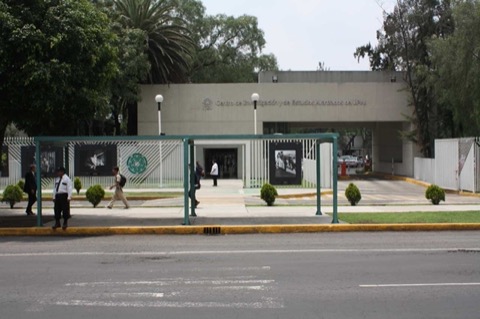

Heavy metals in urban dust, derived from anthropogenic activities and natural sources, are considered potentially toxic elements for human health. The city of Puebla, located in Central Mexico, is one of the ten largest metropolitan cities in Mexico. Near this city is the Popocat & eacute;petl volcano, which contributes heavy metals through the emission of ash. The objectives of this study were to evaluate heavy metal contamination in urban dust and volcanic ash from the city of Puebla, and to determine the associated human health risks. Heavy metals were analyzed using an XRF spectrometer. The level of contamination was established according to the contamination factor, the geoaccumulation index and the contaminant load index. Furthermore, non-carcinogenic risk indices (HIs) were calculated to evaluate the health risk. The results revealed the presence of 18 elements (Ca, Cr, Cu, Fe, K, Mn, Nb, Ni, Pb, Rb, Sb, Sn, Sr, Ti, Y, V, Zn and Zr), with the highest concentrations found for most in urban dust samples, while Rb, Ca and K showed higher concentrations in ash samples. High levels of Sb and Sn contamination were found in 90 to 100% of the dust and ash samples, while Cr, Cu, Ni, Pb and Zn showed considerable levels of contamination in 60 to 90% of the samples. According to the US EPA thresholds, the health risk assessment indicated safe levels (HI < 0.25) for Cu, Fe, Mn, Ni, Pb, Sn, V and Zn in the urban dust and volcanic ash samples, while some of the samples exceeded the safety threshold (HI > 1) for Cr and Sb with respect to the child population in the city of Puebla. These results must be taken into consideration by environmental and government authorities, and the degree of pollution should be reduced accordingly.
An extreme disturbance, i.e. a 1-day chloroform fumigation, had a strong impact on the bacterial community structure in an extreme saline alkaline soil, but how Archaea respond to such an event is largely unknown. Three alkaline saline soils with electrolytic conductivity (EC) between 139 and 157 dS m− 1 and pH 10.0–10.3 were chloroform fumigated for one day and the recovery of the archaeal community determined after 1, 5 and 10 days, while an unfumigated soil served as control. Six archaeal phyla dominated by Candidatus Halobacterota (relative abundance 96.9
The nonlinear problem of controlling the attitude of a suspended cargo during transportation and various flight phases of an aerial vehicle is considered. The control system requirement is to provide independent cargo attitude control relative to the aerial vehicle. The suspension is done by a cable and a pair of spherical joints on both sides, resulting in a system containing two oscillations of the cable and a two-dimensional rotation of cargo, simplified as a double spherical pendulum model. The technical solution is obtained by a reaction wheel system installed in the cargo and an Omni wrist at the pivot point. Different stages of flight, agile movement of the drone, and highly perturbed environments require a robust control capable of being adjusted rapidly to new operating conditions. Attitude control algorithms are synthesized based on the newly developed optimized integral sliding mode, and the sufficient conditions of reachability and convergence for the nonlinear case are derived. The efficiency of the algorithm is confirmed by the results of numerical simulation.
Methane (CH4) emissions from shallow, polluted, or structurally complex aquatic ecosystems, including systems with dense vegetation or floating debris, remain insufficiently understood, in part because access to these environments is restricted by standard boat-based methods. This limitation reduces our capacity to capture key spatial features of CH4 emissions that are essential for accurate inventories and mitigation strategies. To overcome these constraints, we built and evaluated a low-cost, remotely operated unmanned surface vehicle (USV) with a low draft and air propulsion, optimized for the simultaneous measurement of CH4 fluxes and key physicochemical parameters. The USV was deployed in two shallow wastewater ponds where standard boat-based methods could not be used. The study revealed CH4 fluxes spanning more than 3 orders of magnitude. Oxidation-reduction potential was the most consistent predictor of flux, while pH and temperature were also significant. Spatial structure was further quantified using a Homogeneity Model, semivariogram, and anisotropy analyses, which revealed strong dispersion and directional patterns. A bootstrapping assessment of sampling effort showed that achieving reliable mean flux estimates requires substantial sampling density. These results highlight that accurate CH4 inventories require extensive spatial coverage and that USVs provide a cost-effective tool for methane monitoring in challenging aquatic ecosystems.
This paper investigates M-PSK symbol detection in Orthogonal Frequency Division Multiplexing (OFDM) systems for wideband Vehicle-to-Vehicle (V2V) communications using lightweight convolutional neural networks. In doubly dispersive channels, Inter-Carrier Interference (ICI) degrades subcarrier orthogonality, rendering conventional equalization ineffective. Current ICI mitigation techniques face a trade-off between Bit-Error Rate (BER) performance and computational complexity, limiting their applicability in dynamic vehicular scenarios. To address this issue, a low-complexity MobileNetV3-based receiver is proposed, incorporating a signal-model-driven preprocessing stage that compensates for Doppler-induced phase distortions responsible for ICI. Simulation results show that the proposed receiver improves BER performance compared to conventional equalizers and recent neural-based schemes in the low-SNR regime (below 15 dB) while maintaining computational complexity close to linear least-squares detection.





