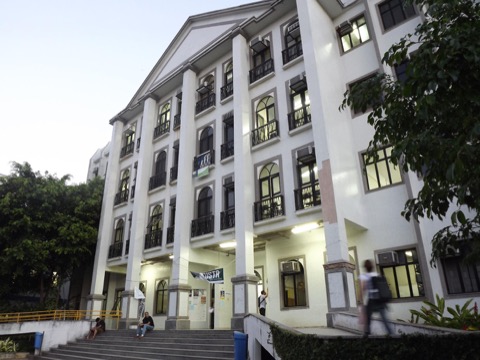
The Federal University of the State of Rio de Janeiro (Portuguese: Universidade Federal do Estado do Rio de Janeiro, UNIRIO), is one of the four federally funded public universities in the State of Rio de Janeiro, Brazil. It has several campuses in the city of Rio de Janeiro, including two in the Urca neighborhood.It was established on June 5, 1979.The university was ranked 23rd in the Government's ENADE classification, in 2006. In 2010, it was given a score of 4 out of 5 in ENADE's system of evaluation.

Urban coastal lagoons are heavily impacted by untreated sewage, industrial effluents and diffuse pollution, heightening ecotoxicological risks. Herein, Nile tilapia (Oreochromis niloticus) was employed as a sentinel species concerning metal exposure at the Jacarepaguá Lagoon Complex (JLC), a critical case of ecological degradation under intense anthropogenic pressure in Rio de Janeiro, Southeastern Brazil. Samplings were conducted between 2022 and 2023 during the dry (autumn–winter) and rainy (spring–summer) seasons. Organosomatic indices and total (muscle) and subcellular (liver and muscle) metal levels were determined. Antioxidant system alterations were evaluated through superoxide dismutase (SOD), glutathione-S-transferase (GST), reduced glutathione (GSH), total antioxidant capacity (TAC) and metallothionein (MT) assessments. Lipid peroxidation (LPO) and protein carbonylation (PTC) levels were also determined as oxidative effect markers, while vitellogenin (VTG) was used as an estrogenic effect indicator. Arsenic (0.018–0.033 mg L⁻¹), Mn (0.041–0.050 mg L⁻¹), Rb (0.019–0.023 mg L⁻¹), and V (0.008–0.010 mg L⁻¹) were detected in water samples in both sampling seasons; while Fe was detected only in the dry season (0.023 ± 0.03 mg L⁻¹). Subcellular As, Co, Cu, Fe, Mn, Ni, Pb, Rb, Ti, V, and Zn were quantified in both liver and muscle, albeit with no significant differences between seasons or sexes. Seasonal variations were noted for male VTG, although not statistically significant, with attenuation of sexual VTG differences from the dry (M/F = 0.67) to the rainy season (M/F = 1.20). The multibiomarker approach applied to wild tilapia under diffuse urban pollution indicates mild sublethal effects while highlighting the need for expanded, integrated monitoring of additional endocrine and oxidative biomarkers. Although centered on a specific lagoon complex system, these mechanisms recur in urban lagoons worldwide, indicating the need for consumption-risk evaluations and actionable remediation/management frameworks.
Microplastics (MPs) are a pervasive environmental threat due to their persistence, bioavailability, and toxicity. In marine environments, MPs are widely distributed and ingested by fish, posing risks to human consumers. This study examined how ecological and anthropogenic factors—body size, water column position, seasonality, and human impact—influence MP concentrations in the muscle and digestive tissues of coastal fish from southeastern Brazil. We hypothesized that fish from more impacted environments would contain higher MP levels; that pelagic species would ingest more MPs due to particle buoyancy; and that ingestion would be higher in summer and in larger fish due to seasonal and size-related factors. Additionally, we hypothesized that MP loads would be higher in digestive tissues than in muscle, given limited translocation capacity. Four commercially important species (Caranx crysos, Sardinella aurita, Menticirrhus americanus, and Micropogonias furnieri) were collected from two bays with contrasting anthropogenic influences—Sepetiba (more impacted) and Ilha Grande (less impacted)—during summer and winter. Digestive tracts and muscle tissues were digested, vacuum-filtered, and analyzed using microscopy and micro-FTIR. MPs were detected in all species and in 83.1
This study assessed the availability, nutritional quality, and economic accessibility of eco-labeled animal-based products and plant-based analogues within the urban food environment. A crosssectional audit of 149 retail establishments in the city of Rio de Janeiro, Brazil, was conducted between July 2022 and June 2023, stratified by the Social Progress Index (& Iacute;ndice de Progresso Social-IPS). In total, 1,643 eco-labeled protein-rich foods (animal-based products and plant-based analogues) were evaluated for availability, price, and macronutrient composition. Multivariate factor analysis (MFA) and principal component analysis (PCA) were used to examine the relationships between product availability, geographic regions, and IPS levels, while chi-square and G tests compared product categories (p <= 0.05). The results indicated that IPS accounted for 86.8% of the variance in product availability, suggesting that socio-spatial segregation is strongly associated with differences in access to sustainable protein-rich foods. Plant-based products were on average 71% more expensive than their animal-based counterparts. Among plant-based products, burgers emerged as the most prevalent item in the segment, whereas certified chicken was the most prevalent within the animal-based category. The nutritional composition of plant-based products showed advantages, including higher dietaryfiber content, absence of cholesterol, and a more favorable lipid profile, but also limitations, such as lower protein content and elevated sodium levels. The unequal concentration of ecolabeled protein-rich foods reinforces disparities in access to innovative and sustainable foods. The protein transition in Brazil is unlikely to occur solely through market forces; targeted public policies will be necessary to overcome structural barriers related to price, distribution, and consumer information within sustainable food systems.
Molluscs are among the most threatened freshwater organisms in the world; yet, their occurrence and distribution in most ecosystems on Earth remain unknown. This study aimed to survey molluscs in the Parna & iacute;ba River Basin, Piau & iacute;, Northeastern Brazil, with the goal of understanding the variation in species richness among rivers and the role of ecoregions in their composition. Molluscs associated with macrophytes and sediments were collected from the upstream, middle, and downstream of each of the main rivers in the Basin. Species richness was compared between the rivers and the ecoregions in which they are located. Our study is the first conducted in the Northeast region at the river basin level. It reveals the diversity and complexity of freshwater mollusc assemblages, challenging the idea of low species richness attributed to the Brazilian Northeast and semiarid regions, documenting 10 genera and 12 species of molluscs in the Parna & iacute;ba River for the first time. Although no endemic species have been reported for the basin, the species unique to each ecoregion reflect the environmental complexity of these areas. The increasing environmental degradation affecting the region makes it essential to carry out further studies to document the diversity of molluscs in the basin area.
The genus Sarcocystis comprises apicomplexan parasites associated with clinical manifestations, including reproductive and neurological disorders, in a wide range of domestic and wild animals. Infections by Sarcocystis spp. have been reported in birds on all continents except Antarctica. In this context, the present study reports two cases in which Sarcocystis spp. were identified at different developmental stages, endogenous and exogenous, in wild birds captured in Southeastern Brazil. Oocysts and sporocysts were detected in the feces of a roadside hawk Rupornis magnirostris, captured on Marambaia Island, Rio de Janeiro State, Brazil. In addition, bradyzoite cysts were observed in the muscle tissue of a rufous-bellied thrush Turdus rufiventris, captured in Itatiaia National Park. Accordingly, this study provides comments on the parasitic dynamics of Sarcocystis spp. in a wild environment and discusses the potential species involved in these host-parasite associations. For Sarcocystis sp. detected in the rufous-bellied thrush, based on evidence from previous studies, we strongly suggest that this species is Sarcocystis falcatula. In contrast, for Sarcocystis sp. detected from the roadside hawk, no specific species assignment can be made, as data on hawks acting as definitive hosts of Sarcocystis spp. in South America remain scarce. Although S. falcatula may involve Accipitriformes in its life cycle, members of this order are considered intermediate rather than definitive hosts for this species. Therefore, we present herein a survey of Sarcocystis spp. that involve Accipitriformes in their life cycles, including comparative data on sporocyst measurements for each species.





