
Transition intermediaries play a pivotal role in configuring networks aligning the interests of stakeholders to achieve sustainable goals. However, the transition literature has paid little attention to the influence intermediaries can have in strengthening organisational capabilities. Especially in sectors that are slow to change, such as the energy supply industry, where entrenched incumbent firms maintain significant control. In this paper, we develop a conceptual framework for exploring the development of green absorptive capacity (GAC) in incumbent firms through the intervention of transition intermediary functions. We investigated this framework by qualitatively analysing the relationship between incumbent firms and transition intermediaries in the UK energy supply sector. The research found that transition intermediary functions can reduce the inherent risk of innovation through the provision of R&D resources and facilitate its absorption within incumbent firms. This study contributes to the intermediation field by integrating the resource-based view into the transition literature to create our conceptual framework. This enables a deeper examination of the role of transition intermediaries in supporting the development of capabilities for technology absorption in incumbent firms with limited prior engagement in corporate R&D.
Concerns over the mental health of children and young people (CYP) continue to grow as rates of poorer mental health increase globally. To gain an understanding of the complex array of determinants of CYP mental health, Bronfenbrenner's bioecological model can be used to provide a conceptual framework to organise and analyse evidence, which can then be used to inform mental health policy and interventions. This rapid review brings together the published evidence on the use of Bronfenbrenner's bioecological model to understand and address the mental health of CYP. We searched Web of Science and PsychINFO to identify published studies. We grouped studies based on the system levels (e.g., micro-, macro-) before exploring the ways in which 'interactions' between and within model levels were examined. Thirty-four studies were included, with all studies focusing on micro-level factors and most also considering factors affecting mental health at the individual level. The impact of factors at exo-, macro- and chrono- levels were much less frequently addressed. Among the 34 studies, quantitative, statistical modelling was used to explore interactions between variables within the micro-system in six studies and between variables at different levels in thirteen studies. More than half of the quantitative studies did not examine statistical interactions. Among the qualitative studies, presenting issues were often discussed which could reflect interactions between systems. Existing literature applying Bronfenbrenner's bioecological model to understating CYP's mental health outcomes has focused predominantly on individual and micro level factors. There is a need for research to consider all systems of the model.
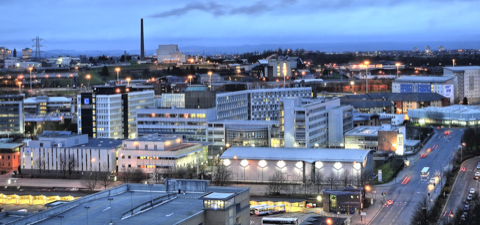
Urban heat stress is intensifying because of climate change, particularly in densely constructed areas where urban morphology significantly affects thermal conditions. This research examines how vegetation and built form influence heat stress in Glasgow by integrating historical geospatial data, Artificial Neural Network (ANN)-based temperature prediction, and ENVI-met microclimate simulations across multiple greening scenarios applied to vacant and derelict land. ANN notably outperformed Generalized Linear Regression in predicting Land Surface Temperature (LST) and Mean Radiant Temperature (MRT), reflecting the greater sensitivity of MRT to fine-scale radiative and geometric processes. Essential predictors included Normalized Difference Vegetation and Built-up Index, Sky View Factor, and Building Surface Fraction. Scenario-based greening simulations showed that 100% vegetation on vacant lands significantly reduces local thermal conditions, with LST decreasing by 8.7 degrees C and the Universal Thermal Climate Index (UTCI) by 3.3 K. In contrast, full conversion to built-up surfaces increases LST by 1.2 degrees C and raises UTCI by up to 6 K. Despite these pronounced local effects, the net cooling impact at the citywide scale remains limited. Results highlight the necessity of site-specific greening strategies and high-resolution environmental data to enhance predictive precision and support the development of resilient, thermally adaptive urban environments.
To understand how intersectional identities of race and gender are associated with Black women's experiences with mental health stigma and the barriers they encounter. This research explores Black women's perceptions of poor mental health and their willingness to seek support. Additionally, this study seeks to understand stigma-related barriers to support-seeking behavior among Black women, with the overall goal of fostering a more supportive environment and improving access to mental health support. Semi-structured interviews were conducted between March and May 2024, with eight Black women living in the United Kingdom. Interviews were analyzed using Thematic Analysis. Four broad themes were identified: the Strong Black Woman trope, perceived stigma, religion and spirituality, and mental health service accessibility. These findings indicate that participants' attitudes toward, and utilization of, mental health services were negatively impacted by the ways in which mental health was experienced. Particularly relevant were the impact of the Strong Black Woman trope, perceived stigma, religious and spiritual considerations, and the preference for culturally sensitive practitioners. Mental health services should promote their presence in areas with predominantly Black women and should prioritize cultural competency within these services to foster engagement and to provide the appropriate and effective support they require.
This paper presents a semi-analytical computational framework for the design and analysis of flexible structures for vibro-acoustic noise control. The study focuses on an axisymmetric configuration consisting of a flexible cylindrical shell with elastic membrane discs located at the interfaces. The structure is excited by axial structure-borne waves traveling along the shell, which couple to a membrane-bounded internal cavity and radiate into an extended outlet region. The governing boundary-value problem comprises the Helmholtz equation in the fluid domain and the Donnell-Mushtari shell equations at the radial boundary, leading to eigenfunctions that are non-orthogonal and linearly dependent. At the interfaces, the membrane discs are modeled via a Galerkin projection onto orthogonal membrane modes. Continuity of normal velocity at the interfaces is imposed to couple the orthogonal membrane modes with the non-orthogonal shell-acoustic modes, yielding a linear algebraic system for the symmetric and antisymmetric modal amplitudes. The convergence of the truncated solution is assessed through reconstruction of the continuity conditions and verification of an intrinsic power-conservation identity. Numerical experiments illustrate how system parameters, such as membrane tension and shell radius, influence the filtering and excitation of higher-order fluid-structure coupled modes.





