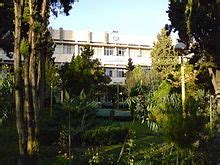
Khajeh Nasir Toosi University of Technology (KNTU) (Persian: دانشگاه صنعتی خواجه نصيرالدين طوسی), also known as K. N. Toosi University of Technology, is a public university in Tehran, Iran, named after medieval Persian scholar Khajeh Nasir Toosi. The university is considered one of the most prestigious, government-sponsored institutions of higher education in Iran. Acceptance to the university is highly competitive and entrance to all undergraduate and graduate programs requires scoring among the top 1% of students in the Iranian University Entrance Exam, also known as "Konkoor", which comes from a simile French word "concours", meaning competition.

Rapid post-disaster safety assessment of building stocks demands computational efficiency and interpretability, especially when sensing resources are limited. This research presents a novel framework for rapid classification of buildings into safety classes based on their states using limited sensing information. In order to construct the database, over 410,000 non-linear response history analyses were performed on 35 HAZUS-based building categories subjected to 222 ground motions. Based on performance metrics including accuracy, efficiency, stability, and interpretability, the most suitable classifier among those tested was the Random Forest algorithm. With the help of earthquake intensity measures, building descriptors, and partial roof response parameters, the developed framework achieved 94.6% overall accuracy and 93.9% recall in predicting severe damage states. The reliability of the proposed model was assessed by performing calibration analysis, feature importance ranking, sensitivity analysis, noise test, and interpreting Partial Dependence Plots. Generalization of the model was further validated using building safety classifications derived from the 2015 Nepal Gorkha earthquake dataset; despite missing roof response data, the reduced-feature Random Forest classifier achieved 92.1% Red-class recall on the internal dataset and 71.5% recall on the independent real-event dataset, illustrating that the framework has the capability for transferability to regional-scale assessments post-earthquake.
Drought, as a recurrent climatic phenomenon driven by prolonged precipitation deficits, has intensified in recent decades, causing widespread impacts on agriculture, water resources, and socio-environmental sustainability. This trend is particularly evident in arid and semi-arid regions such as Iran, highlighting the critical need for continuous monitoring and assessment. This study proposes a novel downscaling framework using Stacked Generalization, which differs from traditional ensemble methods by using base model predictions as inputs to a secondary model. This two-stage approach captures complex dependencies, leading to improved downscaling performance. The refined outputs were then used to analyze drought characteristics based on the best-performing Global Climate Models (GCMs). Then, the next objective is to better determine future drought characteristics by utilizing the more accurate results obtained from the proposed downscaling approach. It further aims to improve the identification of future drought characteristics using the more accurate results obtained from the proposed downscaling approach. The results indicated that the Stacked method consistently outperformed the individual base ones (MLP, SVR, and RF), achieving the highest Nash–Sutcliffe Efficiency (NSE) across all stations and climate models, and exhibiting the lowest Mean Squared Error (MSE) compared to the other methods. Additionally, the Standardized Precipitation Index (SPI) was calculated using a parametric method at 3-, 6-, and 12-month timescales. The findings indicated that, while short-term drought characteristics remain stable, long-term droughts, as represented by SPI-12, are projected to become longer and more severe, particularly in certain regions.
Designing logic circuits involves optimizing Boolean functions to reduce the number of digital gates, integrated circuits, power requirements, and logic delays. Various graphical and non-graphical techniques have been proposed to achieve this goal. This paper presents a novel two-level minimization approach for reducing the number of Boolean operators, combining the benefits of graphical and non-graphical methods while addressing their limitations. Our proposed approach is based on a tree-based breadth-first search iterative algorithm. In the first iteration, the root of the tree is connected to all variables and their complement leaves. During each iteration, the tree leaves are examined to determine whether they cover all or part of the minterms of the input Boolean function. If a leaf satisfies this condition, it is labeled as part of the output, and no further expansion is performed from that leaf or its complement. This process continues until the labeled tree nodes cover all minterms of the input Boolean function. Our proposed algorithm yields the final solution in a single iterative phase, resulting in an acceptable memory complexity. Our proposed method was evaluated using the ESPRESSO and MCNC benchmarks in comparison to the BOOM, ESPRESSO, evolutionary, machine-learning (ML)-based, and Reinforcement Learning (RL)-based techniques. It outperformed other methods by minimizing the number of required Boolean operators. Moreover, as the complexity of the input Boolean function increases, our approach achieves even greater reduction rate, surpassing the optimization powers of BOOM, ESPRESSO, and other methods by up to 50
Though proton therapy offers precise cancer treatment, it also generates secondary high-energy neutrons and photons necessitating effective shielding to ensure radiation safety. This study develops an optimization framework combining a genetic algorithm (GA) with MCNPX Monte Carlo simulations to design multilayer shielding for passive proton therapy treatment rooms. Several candidate materials, including high- and low-Z composites, were evaluated for their neutron and photon attenuation performance. The designed GA optimized layers’ materials and thicknesses within practical constraints to minimize both equivalent radiation dose and overall shield thickness. The optimized shield configuration—consisting of a Fe layer (45 cm), Hormirad (60 cm), and Serpentine (25 cm)—reduced the equivalent dose behind the shield to 52.16 µSv·h⁻1. Consequently, achieving the public dose limit of 1 µSv·h⁻1 required only 170 cm of concrete wall, substantially less than the original 460-cm wall. The results confirm that a GA-based optimization provides an efficient and reliable approach for designing high-performance radiation shielding in proton therapy facilities.
Nitinol (NiTi shape-memory alloy) is an interesting candidate in various medical applications like dental, orthopedic, and cardiovascular devices, owing to its unique mechanical behaviors and proper biocompatibility. The aim of this work is the local controlled delivery of a cardiovascular drug, heparin, loaded onto nitinol treated by electrochemical anodizing and chitosan coating. In this regard, the structure, wettability, drug release kinetics, and cell cytocompatibility of the specimens were analyzed in vitro. The two-stage anodizing process successfully developed a regular nanoporous layer of Ni-Ti-O on nitinol, which considerably decreased the sessile water contact angle and induced hydrophilicity. The application of the chitosan coatings controlled the release of heparin mainly by a diffusional mechanism, where the drug release mechanisms were evaluated by the Higuchi, first-order, zero-order, and Korsmeyer-Pepass models. Human umbilical cord endothelial cells (HUVECs) viability assay also showed the non-cytotoxicity of the samples, so that the best performance was found for the chitosan-coated samples. It is concluded that the designed drug delivery systems are promising for cardiovascular, particularly stent applications.





