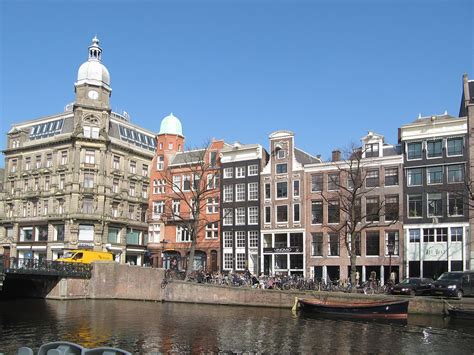
KG was a German consumer electronic manufacturer, Besides Loewe and TechniSat, Metz was the only remaining TV manufacturer which developed and produced their devices in Germany. Its head office is in Zirndorf, Bavaria. The company filed for insolvency in 2014 and backed up by new investors now reformed as two independent companies Metz Consumer Electronics GmbH and Metz mecatech GmbH since 2015.

Autonomous robots must navigate and operate in diverse environments, from terrestrial and aquatic settings to aerial and space domains. While Reinforcement Learning (RL) has shown promise in training policies for specific autonomous robots, existing frameworks and benchmarks are often constrained to unique platforms, limiting generalization and fair comparisons across different mobility systems. In this paper, we present a multi-domain framework for training, evaluating and deploying RL-based navigation policies across diverse robotic platforms and operational environments. Our work presents four key contributions: (1) a scalable and modular framework, facilitating seamless robot-task interchangeability and reproducible training pipelines; (2) sim-to-real transfer demonstrated through real-world experiments with multiple robots, including a satellite robotic simulator, an unmanned surface vessel, and a wheeled ground vehicle; (3) the release of the first open-source API for deploying Isaac Lab-trained policies to real robots, enabling lightweight inference and rapid field validation; and (4) uniform tasks and metrics for cross-medium evaluation, through a unified evaluation testbed to assess performance of navigation tasks in diverse operational conditions (aquatic, terrestrial and space). By ensuring consistency between simulation and real-world deployment, RoboRAN lowers the barrier to developing adaptable RL-based navigation strategies. Its modular design enables straightforward integration of new robots and tasks through predefined templates, fostering reproducibility and extension to diverse domains. To support the community, we release RoboRAN as open-source.
Despite the increasing adoption of Deep Reinforcement Learning (DRL) for Autonomous Surface Vehicles (ASVs), there still remain challenges limiting real-world deployment. In this paper, we first integrate buoyancy and hydrodynamics models into a modern Reinforcement Learning framework to reduce training time. Next, we show how system identification coupled with domain randomization improves the RL agent performance and narrows the sim-to-real gap. Real-world experiments for the task of capturing floating waste show that our approach lowers energy consumption by 13.1% while reducing task completion time by 7.4%. These findings, supported by sharing our open-source implementation, hold the potential to impact the efficiency and versatility of ASVs, contributing to environmental conservation efforts.
Les registres permettent de collecter de grandes quantités d’informations en continu pour améliorer les connaissances. Bien que très développés depuis 1975, il n’existe aucun registre en France en chirurgie de la main. Notre registre analyse l’efficacité des interventions sur des critères relationnels et fonctionnels, renseignés par les patients, à grande échelle. Les données sont saisies exclusivement par les patients avec un score relationnel patient–chirurgien (Q-PASREL) et un score fonctionnel (QuickDASH). Les chirurgiens/secrétariats ne perdent pas une seconde. Les patients ont juste à scanner un QR Code et remplir des formulaires à l’aide de leur téléphone. Les données sont hébergées en conformité avec le règlement général sur la protection des données (RGPD). Les analyses sont visualisées par les chirurgiens. Notre registre a mobilisé 35 chirurgiens dans 7 équipes françaises entre février et juin 2023 et a colligé 405 scores relationnels (Q-PASREL), dont 75 % croisés avec les scores de récupération fonctionnelle (QuickDASH). Le score relationnel moyen est de 81/100. Deux équipes ont des scores significativement différents de la moyenne nationale : 87/100 (p < 0,001) et 77/100 (p < 0,001). Malgré une amélioration depuis 20 ans, il reste difficile pour un chirurgien de savoir quelles sont ses performances. Les étoiles Google donnent un avis relationnel global discutable et ne tiennent pas compte de la récupération fonctionnelle. Notre registre dispose d’une méthodologie standardisée avec instruments calibrés. Les bénéfices de ce registre sont multiples, pour les chirurgiens qui peuvent mesurer l’amélioration de leurs scores dans le temps. Il est bénéfique également pour les patients dont les avis sont pris en compte. Le registre aura également un impact sur amélioration du score des établissements qui sont essentiellement basés maintenant sur les opinions des patients. Le registre est actuellement disponible et fonctionnel. La participation est libre et peut être interrompue à tout moment. Dans beaucoup d’autres secteurs, se comparer permet de progresser. La comparaison des chirurgiens d’une même équipe ou de différents centres ont démontré des dynamiques d’améliorations collectives dans les pays scandinaves qui disposent de tels registres. La politique de diffusion des résultats, exclusivement sous la responsabilité des chirurgiens, nécessitera une large concertation avec les organes représentatifs de la profession. Par son exigence scientifique et l’impartialité de sa gouvernance confiée aux chirurgiens eux-mêmes, notre registre apportera un bénéfice aux chirurgiens, aux patients et aux organismes payeurs. Il représente une valorisation concrète de la chirurgie de la main à travers une communauté de pratique centrée sur les patients.
Several applications of video rely on camera calibration, a key enabler towards the measurement of metric parameters from images. Existing calibration methods have not been adapted for use with cameras that are hard to reach such as security cameras. This paper presents a drone-based camera calibration technique for the calibration of cameras in a broader range of operating environments. The technique is enabled by the use of a drone that is equipped with location sensors. In the proposed approach, the drone is used to sample points in the 3D space and its detection on the images provides the 2D matching points enabling the calibration. To design a flight path that allows for an accurate calibration, the paper proposes a methodology to evaluate the impact of path parameters and drone localization and detection uncertainties on the calibration uncertainty. This methodology is applied to evaluate the performance of different sampling paths for the calibration of a large diversity of cameras for the purpose of recommending reliable path parameters.





