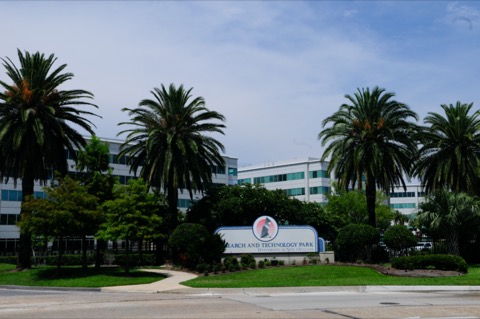
New Orleans University was a historically black college that operated between 1873 and 1934 in New Orleans. It was founded by the Methodist Episcopal Church and affiliated with a number of preparatory schools located in various parts of the state of Louisiana. It merged with Straight College in 1934 to form Dillard University..

As global energy systems transition to clean energy, accurate renewable generation forecasting is imperative for effective grid management. Foundation Models (FMs), which are large-scale, pre-trained neural networks capable of learning adaptable representations from large datasets, possess transformative potential for renewable energy forecasting by effectively analyzing intricate, high-dimensional time-series data and adapting to a variety of downstream tasks. This review examines FMs in renewable energy forecasting, with primary emphasis on wind and solar power generation. We systematically analyze how FMs address diverse forecasting scenarios spanning multiple temporal scales (ultra-short to long-term), spatial resolutions (individual installations to system-wide), data modalities (univariate to multi-modal), and operational contexts (zero-shot to supervised learning). The focus on generation forecasting rather than demand forecasting is motivated by the unique challenges of renewable generation, including weather dependency, spatial-temporal variability, and intermittency, which necessitate specialized multi-modal data integration (satellite imagery, numerical weather prediction, atmospheric modeling) distinct from the socioeconomic and behavioral patterns characterizing load prediction. An overview of FM architectures, pre-training strategies, fine-tuning methods, and data modalities used in renewable energy forecasting is presented. Particular emphasis is placed on large-scale, domain-specific Transformer architectures that capture spatial-temporal correlations, embed domain knowledge, and address the intermittent nature of renewable generation. Recent FM-based advancements in forecast accuracy are assessed, including multi-scale temporal prediction reconciliation and uncertainty quantification methods. Existing challenges and areas for improvement in long-term and multi-variate time series forecasting are reviewed. A distinction between theoretical developments and practical deployment considerations is established throughout the survey. The strengths and weaknesses of FMs are critically assessed, and future research directions in this rapidly emerging area are advanced.
NH3-fueled internal combustion engines are a promising technology in the perspective of decarbonization. However, when NH3 is used as fuel, its high minimum ignition energy and slow flame propagation severely limit operating conditions, making its application in internal combustion engines challenging. The low reactivity of NH3/air mixtures results in high unburned NH3 emissions and low combustion efficiency. In this context, oxygen-assisted combustion is a promising technique for improving both the NH3/O2/N2 mixture reactivity and the performance of internal combustion engines. This study experimentally explores the feasibility of using NH3 in a fully premixed spark ignition single-cylinder engine with a compression ratio of 12:1 at 1000 rpm under both medium and low load conditions. The oxygen (O2) content in the intake gas mixture was varied to achieve stable combustion without any misfires. At medium load, i.e. with an indicated mean effective pressure of 5.8 bar, stable combustion was achieved with 22.4% vol. of O2 (relative to the O2/N2 mixture) and a significant reduction in ignition delay time and combustion duration was observed. 1-D numerical simulations of adiabatic, unstretched, freely propagating flat premixed flame were performed, using Ansys Chemkin-Pro 2024, implementing the chemical kinetic mechanism for NH3 oxidation (31 species and 203 reactions) proposed by Stagni etal. 2023, to investigate the influence of O2 additions on the laminar flame speed of NH3/O2/N2 mixtures under spark timing thermodynamic conditions. The addition of O2 enhances the laminar flame speed by 47% when O2 concentration is 26.8% in the O2/N2 mixture. Its role in the chain-branching reaction, O2 + H <-> O + OH, is crucial for the production of O and OH radicals. Moreover, H-abstraction involving the OH radical (NH3 + OH <-> NH2 + H2O) plays a key role in NH3 oxidation even when O2 is added to the mixture. Finally, to further investigate the role of NH3 combustion in cycle-to-cycle variability, the intake pressure was reduced to reach lower load, resulting in highly unstable combustion in the absence of O2 enrichment. As expected, the O2 enrichment stabilizes the combustion process. However, as the engine load decreases until 4.3 bar, the amount of O2 needed to achieve stable combustion increases significantly, up to 32.5% vol.
The transition to renewable energy is essential in addressing climate change. While natural gas plays a significant role in this transition, it still produces CO2 emissions. Ammonia (NH3) is being investigated as a promising alternative fuel. However, ammonia combustion presents several technical challenges, such as low flame velocity, limited calorific value, difficulties with flame stabilization, and high NOx emissions. This study examines the impact of ammonia addition to methane, equivalence ratio, and swirl number on pollutant emissions (NO, CO, CH4, and CO2), exhaust gas temperature, and flame stability. Experiments are carried out using a swirl burner with a radial fuel injection in a 1-meter high combustion chamber. The burner consists of two concentric tubes, with the inner tube supplying fuel and the outer tube supplying air. The fuel is injected radially through eight holes at the burner exit. The ammonia fraction ranges from 0 to 100 %, the equivalence ratio from 0.8 to 1.0, and the swirl number from 0.8 to 1.4, with a constant flame power of 10 kW. Emissions of NO, CO, CH4, and CO2 are measured in the dry exhaust gases using a multi-gas analyzer, inside chamber temperatures are measured and the flame structure is analyzed via OH* and NH2* chemiluminescence and velocity measurements by LDA technique. The results show that both the swirl number and equivalence ratio significantly alter flame geometry, affecting combustion zones and flame height. Axial velocity measurements indicate that the recirculation zone shrinks with ammonia addition, while a high swirl number increases axial velocity, promoting ammonia combustion and upstream flame propagation. Up to 30 % ammonia, the flame remains stable, but higher ammonia levels lead to fluctuations in stabilization. High ammonia content in the fuel mixture results in reductions of NO, CO, and CO2 emissions, though there is a potential increase in unburned gases. As expected, the inside chamber temperatures decrease as the ammonia fraction increases.
This study investigates the effect of dimethyl ether on the combustion of ammonia in homogeneous charge compression ignition mode to explore the possible improvement at very lean conditions. As dimethyl ether is a highly reactive fuel with a low autoignition temperature, it is an effective combustion promoter for overcoming ammonia's shortcomings. Key parameters, including intake conditions and air/fuel mixture, play a pivotal role in optimizing the operational characteristics of homogeneous charge compression ignition engines. In this study, a 7-10 % volume of dimethyl ether was mixed with ammonia and air in the engine intake plenum under fully premixed conditions to achieve selected equivalence ratios (phi = 0.3, 0.4, 0.5) for the ammonia-dimethyl ether-air mixture at varying intake pressures (Pin). The intake temperature (Tin) was adjusted to facilitate controlled autoignition of the ammonia-dimethyl ether-air mixture. This study was conducted on a single-cylinder engine with a compression ratio of 16.4, operating at 1000 rpm. The high reactivity of dimethyl ether significantly reduces the intake temperature required for stable autoignition, improving both indicated mean effective pressure and indicated thermal efficiency. Results demonstrated stable autoignition across all phi values, with Tin increasing as phi decreased. Key combustion phasing parameters CA10, CA50, and CA90 advanced with decreasing phi due to higher Tin at constant Pin at one DME amount. Both the ringing intensity and the cyclic variation remained within acceptable limits, indicating stable, homogeneous charge compression ignition combustion with minimal dimethyl ether supplementation.
Singular spectrum analysis (SSA) is a nonparametric spectral estimation method that decomposes time series signals into interpretable components. With the rise of big time series, the demand for effective and scalable SSA techniques has become increasingly urgent. In this paper, we propose a novel multiway extension of SSA, called higher-order multivariate SSA (HO-MSSA), specifically designed for multivariate and multichannel time series signal analysis via tensor decomposition. HO-MSSA utilizes time-delay embedding and tensor singular value decomposition to transform multichannel time series signals into trajectory tensors, which are then decomposed into elementary components in the Fourier domain, rather than the time domain as in traditional SSA methods. These components are grouped into disjoint subsets using spectral clustering, enabling the reconstruction of the underlying source signals. Experimental results demonstrate that HO-MSSA outperforms state-of-the-art SSA methods in various biomedical applications, including electromyography (EMG), electrocardiography (ECG), and electroencephalogram (EEG) signals.





