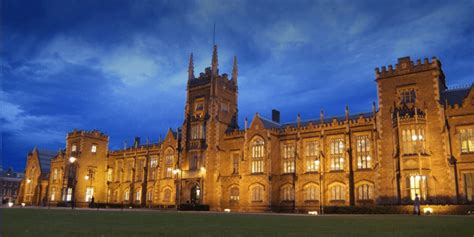
Queen's University at Kingston, commonly known as Queen's University or simply Queen's, is a public research university in Kingston, Ontario, Canada. Queen's holds more than 1,400 hectares (3,500 acres) of land throughout Ontario and owns Herstmonceux Castle in East Sussex, England. Queen's is organized into ten undergraduate, graduate, and professional faculties and schools.The Church of Scotland established Queen's College in October 1841 via a royal charter from Queen Victoria. The first classes, intended to prepare students for the ministry, were held 7 March 1842 with 13 students and two professors. In 1869, Queen's was the first Canadian university west of the Maritime provinces to admit women. In 1883, a women's college for medical education affiliated with Queen's University was established after male staff and students reacted with hostility to the admission of women to the university's medical classes. In 1912, Queen's ended its affiliation with the Presbyterian Church, and adopted its present name. During the mid 20th century, the university established several faculties and schools, and expanded its campus with the construction of new facilities. Queen's is a co-educational university with more than 23,000 students and over 131,000 alumni living worldwide. Notable alumni include government officials, academics, business leaders and 57 Rhodes Scholars.

In 2019, Sivaraman conjectured that every Pk-free graph has cop number at most k−3. In the same year, Liu proved this conjecture for (Pk,claw)-free graphs. Recently Chudnovsky, Norin, Seymour, and Turcotte proved this conjecture for P5-free graphs. For k≥6 the conjecture remains widely open. Let the E graph be the claw with two subdivided edges. We show that all (Pk,E)-free graphs have cop number at most ⌈k−12⌉+3, which improves and generalizes Liu's result for (Pk,claw)-free graphs. We also prove that if G is a graph whose longest path is order p, then G has cop number at most ⌈2p3⌉+3. This improves a bound of Joret, Kamiński, and Theis. Our proof relies on demonstrating that all (Pk,claw,butterfly,C4,C5)-free graphs have cop number at most ⌈k−13⌉+3.
Forced displacement continues to expand globally, heightening the need for sustainable, resource-efficient approaches to the planning and design of refugee settlements. This study applies the United Nations Sustainable Development Goals 7 (Affordable and Clean Energy) and 11 (Sustainable Cities and Communities) as a framework for evaluating and improving settlement design in both existing and greenfield refugee camps. Using policy analysis and international case studies, the research identifies vernacular design strategies, neighbourhood-scale planning principles, and infrastructure considerations which enhance energy access, resilience, safety, and community well-being. Indicators from SDG 7 and 11 are operationalized to assess current conditions and guide the development of adaptable, context-appropriate planning recommendations. The findings contribute a practical planning framework that strengthens sustainability and livability in humanitarian settlements. This study offers planners, policymakers, NGOs, and humanitarian practitioners actionable approaches to improving settlement design while advancing global commitments to sustainable development.
The growing generation of food and agro-industrial waste, coupled with rising pressures from climate change, resource depletion, and carbon emissions, has intensified the demand for sustainable engineering solutions aligned with circular bioeconomy principles. However, the environmental implications of waste-derived functional materials and their underlying production processes remain insufficiently assessed, creating a critical gap in understanding their overall sustainability. In this study, brewers’ spent grain (BSG), a major by-product of the brewing industry, was converted into activated biochar through microwave-assisted phosphoric acid (H3PO4) activation and evaluated as an adsorbent for wastewater treatment, integrating experimental process optimization with a cradle-to-gate life-cycle-based sustainability assessment. The highest adsorption capacities of 46.9 mg/g for CV and 49.5 mg/g for Or-II occurred under the most intensive activation conditions tested, but life cycle assessment (LCA) showed that such conditions were not environmentally optimal: the production phase overwhelmingly dominates environmental impacts, and the associated low biochar yield increased energy and chemical demands, whereas the application phase contributes minimally. In contrast, milder activation conditions substantially reduced life-cycle impacts while maintaining effective adsorption performance (34.3 mg/g for CV and 45.1 mg/g for Or-II). These findings demonstrate that technical and environmental optimality do not necessarily coincide, and highlight the need for life-cycle-informed optimization to balance adsorption performance with resource efficiency and environmental sustainability in waste-derived biochar systems.
Measuring galaxy rotation curves is critical for inferring the properties of dark-matter haloes in the Lambda cold dark matter (Lambda CDM) paradigm. We present HI rotation curves and mass models for 20 galaxies from the MIGHTEE survey. Using extended H I kinematics, we construct resolved mass models that include stellar, gaseous, and dark-matter components. Stellar masses are derived using 3.6 mu m imaging under fixed mass-to-light ratio (Upsilon(*) = M/L) assumptions and are complemented, for the first time for a H I-selected sample, by spatially resolved M/L, obtained from multiwavelength spectral energy distribution fitting. We examine the ratio of baryonic to observed rotation velocity (V-bar/V-obs) at the characteristic radius R-2.2. Adopting a fixed Upsilon(*) = 0.5M((R))/L-(R) yields a clear dependence of V-2.2 /V-obs on galaxy luminosity, while adopting Upsilon(*) = 0.2M((R))/L-(R) substantially weakens this trend. In contrast, the resolved M/L analysis preserves the luminosity dependence while modifying the stellar contribution on a galaxy-by-galaxy basis, providing a more accurate representation of the underlying relation. We model the dark-matter haloes using Navarro-Frenk-White profiles and find that the different assumptions for a fixed a M/L systematically shift galaxies relative to the theoretical stellar-to-halo mass and baryonic-to-halo mass relations, while the spatially varying M/L yields the closest agreement with theoretical benchmarks within Lambda CDM. We therefore demonstrate that future investigations of the dark matter properties of galaxies using rotation curves need to account for varying M/L across individual galaxy profiles and between galaxies in order to obtain accurate measurements of the dark matter, and therefore test Lambda CDM.





