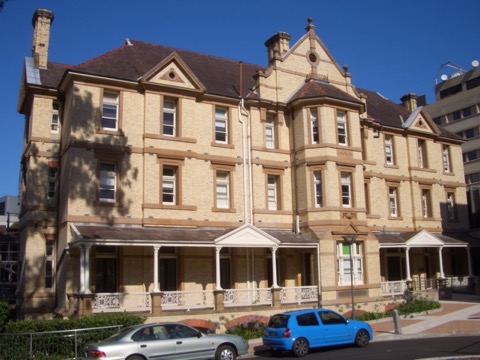
The Royal Prince Alfred Hospital (abbreviated RPAH or RPA) is a major public teaching hospital in Sydney, Australia, located on Missenden Road in Camperdown. It is a teaching hospital of the Central Clinical School of the Sydney Medical School at the University of Sydney and is situated in proximity to the Blackburn Building of the university's main campus. RPAH is the largest hospital in the Sydney Local Health District, with approximately 700 beds (circa 2005). Following a $350 million redevelopment, the perinatal hospital King George V Memorial Hospital has been incorporated into it.An Australian television documentary, RPA, was filmed there from 1995 to 2012, depicting the everyday workings of a major metropolitan hospital.

Background Interstitial lung disease (ILD) is a frequent manifestation of connective tissue diseases (CTDs) and is associated with high morbidity and mortality. Clinical practice guidelines to standardise screening, diagnosis, treatment and follow-up for CTD-ILD are of high importance for optimised patient care. Methods A European Respiratory Society and European Alliance of Associations for Rheumatology task force committee, composed of pulmonologists, rheumatologists, pathologists, radiologists, methodologists and patient representatives, developed recommendations based on PICO (Patients, Intervention, Comparison, Outcomes) questions with grading of the evidence according to the GRADE (Grading of Recommendations, Assessment, Development and Evaluations) methodology and complementary narrative questions agreed on by both societies. For both PICO and narrative questions, the Evidence to Decision framework was used to formulate the recommendations. Results The task force committee concluded with recommendations for 25 PICO and 28 narrative questions, regarding ILD in the context of systemic sclerosis, rheumatoid arthritis (RA), idiopathic inflammatory myopathies, Sj & ouml;gren disease (SjD), systemic lupus erythematosus (SLE) and mixed connective tissue disease (MCTD). In four narrative questions, regarding screening and assessment of risk for ILD progression in MCTD, SjD and SLE and one PICO question regarding pirfenidone in CTD-ILD other than RA-ILD, the task force had insufficient evidence to support recommendations. Screening, diagnostic, monitoring and treatment algorithms were developed based on the recommendations and usual clinical practice. Conclusions We provide practical guidance by evidence-based recommendations to clinicians for each of the CTDs. In many cases there is low certainty or absence of evidence and we encourage further research to fill these gaps.
Novoglan is a device that provides a non-surgical treatment of phimosis. It consists of a balloon placed under the foreskin, which the patient inflates in a controlled manner to stretch the foreskin and promote the generation of new skin cells. The balloon inflation had been originally controlled by an air plunger, which was later replaced by a bulb and a stop cock, while the balloon was changed from latex to medical-grade silicone. We conducted a post-marketing survey to assess patient-reported efficacy, usability, tolerability and safety of the Novoglan treatment and compare two generations of the device. Specifically designed questionnaires were emailed to 9700 Novoglan customers. Complete responses from 811 customers were de-identified and included in the analysis. The use of Novoglan with a bulb and a stop cock instead of an air plunger and a change of the balloon material produced an improvement in patient-reported efficacy from 85.0% to 93.5%. Usability has also improved, with the number of patients reporting difficulty in Novoglan use dropping from 13.8% to 6.7%. Similarly, the number of patients willing to recommend Novoglan treatment to other men increased from 92.2% to 98.1%. Neither group reported side effects that required cessation of the treatment or medical intervention, and 96.3% of all patients were able to tolerate the treatment. Of note, 97.7% reported that phimosis negatively impacts their mental well-being, and 88.8% reported that Novoglan had improved their mental health. The Novoglan post-marketing study revealed improvement in patient-reported efficacy, usability, tolerability and overall satisfaction with the introduction of the bulb and stop cock into the Novoglan device. It demonstrated the exceptional safety of the Novoglan treatment with no significant side effects reported and an improvement in the mental well-being of almost 90% of patients. These findings highlight the role of Novoglan treatment as an effective and safe non-surgical management of phimosis.
BACKGROUND:In CARTITUDE-4, a single infusion of ciltacabtagene autoleucel (cilta-cel) significantly prolonged progression-free survival in patients with lenalidomide-refractory multiple myeloma. We report updated overall survival and longer-term efficacy and safety outcomes. METHODS:CARTITUDE-4 is an open-label, multicentre, randomised, phase 3 trial at 81 hospital sites in the USA, Europe, Asia, and Australia. Eligible patients were adults (aged >18 years) with lenalidomide-refractory multiple myeloma, with one to three previous treatment lines, including a proteasome inhibitor and an immunomodulatory drug, and an Eastern Cooperative Oncology Group performance status of 0 or 1. After the trial started, the threshold defining measurable disease was lowered to 0·5 g/dL from 1·0 g/dL serum monoclonal paraprotein on July 2, 2021, to increase trial access. Patients were randomly assigned (1:1) via a computerised algorithm and balanced with permuted blocks, with stratification by physician's choice of pomalidomide-bortezomib-dexamethasone versus daratumumab-pomalidomide-dexamethasone, International Staging System stage, and number of previous treatment lines. Patients were assigned to cilta-cel (apheresis, bridging therapy [at least one pomalidomide-bortezomib-dexamethasone or daratumumab-pomalidomide-dexamethasone cycle], lymphodepletion, then cilta-cel infusion [0·75 × 106 CAR T cells per kg]) or standard of care (pomalidomide-bortezomib-dexamethasone [21-day cycles: 4 mg/day oral pomalidomide on days 1-14; 1·3 mg/m2 subcutaneous bortezomib twice a week for 2 weeks for eight cycles, then once a week for 2 weeks per cycle; 20 mg or, if aged >75 years, 10 mg oral dexamethasone on days 1, 2, 4, 5, 8, 9, 11, and 12 for eight cycles, then days 1, 2, 8, and 9 per cycle] or daratumumab-pomalidomide-dexamethasone [28-day cycles: 1800 mg subcutaneous daratumumab weekly for 2 cycles, every 2 weeks for four cycles, then every 4 weeks; 4 mg/day oral pomalidomide on days 1-21; 40 mg/week or, if aged >75 years, 20 mg/week oral or intravenous dexamethasone]). The primary endpoint was progression-free survival, previously published. In this Article, we report a prespecified second interim analysis of overall survival and an updated analysis of progression-free survival in the intention-to-treat population. This trial was registered at ClinicalTrials.gov (NCT04181827) and is ongoing. FINDINGS:Patients were randomly assigned between July 10, 2020, and Nov 17, 2021, to receive cilta-cel (n=208) or standard of care (n=211). At a median follow-up of 33·6 months (IQR 20·3-35·0), median progression-free survival was not reached (95% CI 34·5 months-not evaluable) in the cilta-cel group versus 11·8 months (9·7-14·0) in the standard-of-care group (HR 0·29 [95% CI 0·22-0·39]). Median overall survival was not reached (95% CI not evaluable) with cilta-cel versus not reached (37·7 months-not evaluable) with standard of care (HR 0·55 [95% CI 0·39-0·79]; p=0·0009). 30 (14%) of 208 patients in the cilta-cel group and 77 (37%) of 208 in the standard-of-care group had maximum grade 3 treatment-emergent adverse events, most commonly anaemia (72 [35%]) in the cilta-cel group and neutropenia (59 [28%]) in the standard-of-care group. Rates of maximum grade 4 treatment-emergent adverse events were 156 (75%) with cilta-cel and 116 (56%) with standard of care, most commonly neutropenia (152 [73%] with cilta-cel and 112 [54%] with standard of care). Serious treatment-emergent adverse events occurred in 98 (47%) patients in each group. Deaths in the safety population occurred in 50 (24%) in the cilta-cel group and 82 (39%) in the standard-of-care group, including due to treatment-related adverse events in six (3%; four due to infection) in the cilta-cel group and five (2%; all due to infection) in the standard-of-care group. INTERPRETATION:The significantly improved overall survival and patient-reported measures in CARTITUDE-4 reinforce the use of cilta-cel in treating relapsed or refractory multiple myeloma as early as after first relapse. FUNDING:Johnson & Johnson, Legend Biotech USA.
Prehabilitation can decrease postoperative complications and enhance recovery for people with gastrointestinal cancer. Preoperative screening may identify individuals at highest risk of poor postoperative outcomes, enabling targeted and tailored interventions. Despite this, optimal tools for screening patients before surgery remain unclear. This Delphi study sought to achieve international consensus on appropriate screening tools to identify patients at increased risk of postoperative complications before undergoing gastrointestinal cancer surgery. A three-round iterative Delphi survey was distributed to a global multidisciplinary network of prehabilitation experts. Respondents were asked to rate screening tools, identified through a scoping review, on a 5-point Likert scale based on the appropriateness of their use for adult patients undergoing gastrointestinal cancer surgery. The screening tools were categorized as evaluating either physical, nutritional, or psychological domains. A consensus criterion was applied in the second and third rounds, which required ≥ 70
BACKGROUND:Cardiac resynchronisation therapy (CRT) is a key treatment for heart failure (HF) in acquired heart disease, but its benefits in adults with congenital heart disease and a systemic right ventricle (sRV) remain unclear. This study aimed to assess whether CRT improves outcomes in patients with sRV. METHODS:This is an international, retrospective study including patients >18 years from 33 centres with transposition of the great arteries (TGA) following atrial switch operation and congenitally corrected TGA. The primary endpoint included overall survival and survival free from HF. The secondary endpoint was a composite of death, hospitalisation for HF, heart transplant, mechanical support and ventricular tachycardia/implantable cardioverter-defibrillator therapies. RESULTS:We identified 105 out of 1721 patients (3.5%) who underwent CRT. Median follow-up after CRT implant was 4.6 (1.6-8) years. QRS improvement was limited to those with previous pacing (167±35 vs 154±28 ms; p=0.002). Following CRT, there was no significant change in B-type natriuretic peptide values, peak VO2 and tricuspid regurgitation severity by echocardiography. CRT complications occurred in 10 (9.5%), though they were usually minor. Patients with CRT were propensity-matched to controls according to age, sex, anatomy, presence of complex disease, previous HF and sRV dysfunction at baseline. At univariable analysis, CRT (HR 4.39-95%, CI 1.6 to 11.9; p=0.003), older age and moderate-to-severe sRV dysfunction at baseline were predictive of death, while CRT (HR 3-95%, CI 1.3 to 7; p=0.01) and sRV dysfunction were associated with HF admission. By multivariable analysis, CRT (HR 8.8-95%, CI 2.9 to 26.6; p=0.0001) and age (HR 1.1%-95%, CI 1.01 to 1.15; p<0.0001) were independently associated with poorer outcome. CONCLUSION:In this retrospective study in the largest population thus far described with an sRV, CRT implant was not associated with improved survival, even after controlling for key confounders.





