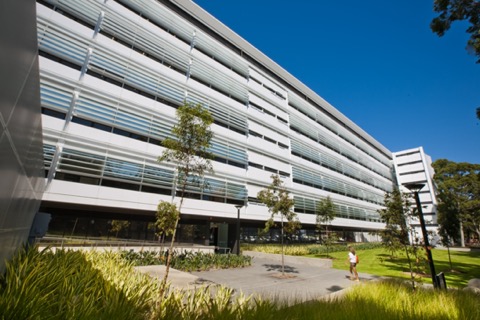
新南威尔士大学(The University of New South Wales),简称UNSW,创立于1949年,主校区坐落于南半球金融、贸易与旅游中心——澳大利亚新南威尔士州首府悉尼,是一所享誉世界的顶尖公立研究型大学 ,为澳大利亚八校联盟、环太平洋大学联盟、国际科技大学联盟、Universitas 21和英联邦大学协会成员。新南威尔士大学现有9个学院,1个大学院,共75个系。其工程学院和商学院享有盛誉,在工程与计算机领域具有极强实力。大学因下设澳大利亚国防学院又被称为“战争学府”。UNSW工程学院是全澳规模较大的工程学院,2015年有22名研究人员和校友入选了全澳年度最具影响力百强工程师榜单 。学院设有量子计算及通信技术实验室和最大的电力电子和驱动研究实验室,曾参与研发世界第一款纯硅量子计算机芯片 、2014年世界最高效率光伏太阳能电池、2017年,空间工程研究中心在此基础上建造了澳大利亚的第一颗EC0卫星。2016年,中国科技部与新南威尔士大学达成合作协议,两国将在校园内共建火炬创新园,推进两国在能源技术、先进材料等高科技领域合作。

Accurate full-lifecycle management and optimal charging control in battery management systems require large-scale time-series datasets covering diverse charging protocols. However, it is infeasible to realize next-generation battery intelligence entirely through costly and time-consuming physical testing experiments. This study proposes a simulation-free conditional generative modeling framework for synthesizing lithium-ion battery charging time-series under mixed charging protocols. Based on charging protocols and battery aging states, the proposed approach integrates flow matching with a diffusion transformer architecture formulated as an ordinary differential equation (ODE)-based generative process. It introduces a dual-stream decoupled self-attention mechanism to separately capture localized transient responses and long-range degradation-dependent dependencies. By continuously incorporating the state of health (SOH) as a conditioning prompt to capture degradation-induced variations in constant-voltage transition behavior, the model enables the generation of protocol-consistent trajectories. The model is validated on a dataset containing 70 batteries across 29 mixed charging protocols, achieving average root-mean-square errors of 0.184 C, 0.010 V, and 0.002 Ah for current, voltage, and capacity, respectively, while maintaining stable generation performance even for severely degraded batteries (SOH < 85%). Furthermore, incremental capacity peak analysis of the generated charging curves highlights the strong physical consistency of the synthesized data. Overall, this framework delivers a scalable battery data generation solution aimed at overcoming the data acquisition bottlenecks inherent in physical experiments, thereby accelerating the implementation of next-generation battery management systems.
This study demonstrates that espresso-strength coffee can be brewed at low temperature in 2-3 min using a patented ultrasonic brewing sonoreactor that couples high-intensity ultrasound directly into a coffee basket during water percolation through a freely packed coffee bed. A novel horn design was developed to excite dominant resonance modes in the coffee basket, creating a resonant ultrasonic reactor with multiple cavitation zones and a more stable ultrasonic generator operation. By tuning grind size, brew ratio, ultrasound power, and extraction time, ultrasound-assisted extraction achieved total dissolved solids (TDS) and extraction yields (EY) within the range associated with traditional espresso, reaching the Speciality Coffee Association (SCA)-defined ideal EY region (18-22 %) at the finest grind tested. Under identical conditions without ultrasound, espresso-strength extraction could not be achieved at low temperature. No statistically significant differences were detected in key physicochemical markers (colour, pH, caffeine, and chlorogenic acid concentrations) between methods (p > 0.05), and headspace volatile profiling showed no significant overall differences in aroma composition under the tested conditions. Consumer sensory testing indicated no significant preference between ultrasound-brewed and conventional espresso across key hedonic attributes (p > 0.05) under the tested conditions, while ultrasound-brewed filter coffee was significantly preferred over conventional pour-over (p < 0.05). Moreover, energy measurements showed that, at matched beverage strength (TDS), the ultrasonic system consumed only 24.3% of the energy required by a conventional espresso machine (approximate to 75% reduction). Overall, ultrasound-assisted percolation enables rapid, low-temperature production of both espresso and filter-style coffees with acceptable hedonic performance, offering a versatile and energy-efficient alternative to traditional brewing technologies.
Autonomous ground vehicles (AGVs) operating in mountainous and off-road environments need to perform complex local navigation while simultaneously handling severe terrain undulation, intricate obstacle distributions, and task-driven observation requirements. Traditional navigation architectures often rely on decoupled planning and control modules, which makes it difficult to rigorously coordinate nominal guidance with terrain related safety and kinematic constraints. To address these challenges, this paper proposes a unified terrain-aware local navigation framework based on dynamical system modulation and control barrier functions (DSM-CBF), where traversal safety, operational agility, and observation quality are jointly considered. A DSM-based nominal guider is developed to generate continuous and smooth motion commands with natural obstacle avoidance behavior by reshaping the local vector field through anisotropic modulation. The resulting nominal control is then refined by a CBF-based safety filter formulated as a slack-variable-augmented hard quadratic program, so that forward invariance of the safety set can be guaranteed under obstacle clearance, terrain traversability, and speed constraints. Task-related observation metrics, including bistatic geometry as well as range and azimuth resolutions, are further incorporated into the optimization objective to preserve favorable sensing quality during bounded-speed terrain-following motion. Comprehensive simulations and real-vehicle experiments verify the effectiveness and practical executability of the proposed framework. The simulation results show that it satisfies the radial-resolution requirement with an achieved value of approximately 1.01 m relative to the 1.13 m design threshold and improves mission efficiency by about 27% under the observation-quality-prioritized setting; compared with the SOTA methods, the proposed method achieves zero terminal error, maintains an admissible obstacle-clearance margin with minΓobs=1.0439, reduces the turn-RMS by 86.1% and 83.6% relative to A* and D* Lite, respectively, and reduces the computational runtime by 97.9% compared with MPC-CBF, while real-vehicle tests further demonstrate safe and smooth traversal on a physical rugged-terrain AGV platform.
As a major direct load control resource, aggregated forecasting of domestic electric water heating (DEWH) energy is essential for network operators and retailers. Transformer-based architectures have shown strong potential for time-series forecasting. However, conventional sequential positional encoding can be inefficient for DEWH loads, especially under dynamic market conditions and varying control strategies. Existing methods also often rely heavily on hyper-parameter tuning, lack generalisability across regions, and demand substantial computational resources for training on location-specific datasets. This paper proposes two transformer-based forecasting methods: one using a fully learnable positional embedding and another introducing a novel grouped positional embedding. A partial transformer adaptation technique is developed to enable rapid sub-network-level forecasting derived from a global model. Extensive grid-search optimisations are conducted on two large-scale case studies covering approximately 20,000 sites with diverse operating strategies. Results show that while benchmarks perform similarly under static conditions, the proposed methods provide superior accuracy under dynamic strategies. They achieve up to 3.01% improvement in R2 and 23.6% reduction in MAPE relative to the next best method. The grouped positional embedding improves the fully learnable embedding by up to 1.5% in R2 and 14.4% in MAPE. The adaptation method generalises effectively with only 10–45 fine-tuning iterations.
Ammonia sprays undergo significant flash boiling due to its high vapour pressure. Towards effective mixture making critical for ammonia combustion in engines, a fundamental understanding of flash-boiling ammonia sprays is required to which optical diagnostic research could provide useful information. The present study implements high-speed shadowgraph imaging in an optical constant-volume pressure chamber firstly for varied superheat indexes in the range of 0.086 – 0.43, which covers expected ambient gas pressure conditions of 100 – 500 kPa inside the cylinder of the engine. Considering ammonia direct injection, a high-pressure liquid pump is used for 5 – 15 MPa injection pressure and two different multi-hole nozzles with 3-hole and 6-hole configurations are investigated. From the results, it was found that increased flash-boiling leads to faster spray area growth and penetration. Also, the mid-point spreading angle decreases as the spray plumes merge and collapse to form a single-plume spray with narrower spreading angle. However, the near-nozzle spreading angle shows a monotonic increase as the flash-boiling occurs immediately after being issued to the ambient gas and thus vapour ammonia contributes to the volume expansion. Flash-boiling ammonia sprays show direct correspondence to increased injection momentum, exhibiting longer penetration, higher spreading angle and larger area. Regarding the nozzle hole configuration, the 6-hole nozzle shows higher penetration, smaller spreading angle and larger spray area due to decreased hole spacing and thus accelerated plume-to-plume interaction of flash-boiling ammonia and resulting spray collapse. These new findings suggest ammonia sprays possess unique characteristics that are different to conventional petrol sprays due to high flash-boiling tendency, and thus dedicated ammonia spray studies are required for injector optimisation.





