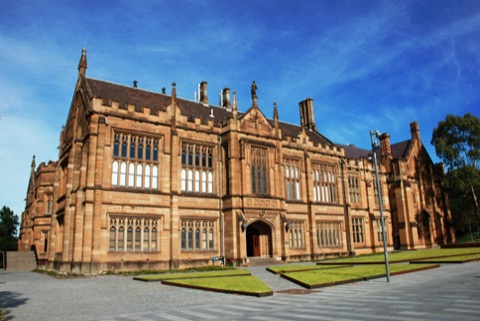
悉尼大学(The University of Sydney),始建于1850年,坐落于澳大利亚新南威尔士州首府悉尼,是研究型大学,是砂岩学府、澳大利亚八校联盟、环太平洋大学联盟、英联邦大学协会、全球高校人工智能学术联盟、新工科教育国际联盟、亚太国际贸易教育暨研究联盟的成员。同时也是AACSB、AMBA和EQUIS认证大学及欧洲全球管理教育联盟CEMS成员(每个国家地区仅一所大学入选)。 悉尼大学注重理论与实践相结合,教育、法学、医学、会计与金融 、政治与国际研究、建筑、音乐、文学、语言学、药学和药理学、护理学 等专业均位列2021QS世界前20。悉尼大学已与全球42个国家和地区的292所 合作大学签署交换生协议。悉尼大学位列2021U.S. News世界大学排名第27位 ,2022QS世界大学排名第38位 ,2021泰晤士高等教育世界大学排名第51位 ,2022QS毕业生就业竞争力排名全澳第1位,世界第4位 ,2021泰晤士高等教育世界大学影响力排名世界第2位 。

We prove that for any knot K, there exists a decomposition of the 3-sphere into tetrahedra such that a representative of K is formed from one vertex and one edge of the decomposition. The proof is constructive, and based on fully augmented links. We use our method to produce a family of simplicial triangulations of the 3-sphere with a loop of four edges representing a t-fold connected sum of the trefoil, whose number of tetrahedra grows linearly in t. This is best possible up to a constant factor.
The fast uptake of distributed energy resources (DERs) presents increasing challenges for managing hosting capacity in distribution networks. Existing solutions include direct load control, operating envelopes, and price-based control through dynamic energy prices. Despite their effectiveness, these methods often rely on assumed prosumer behavioural patterns and overlook prosumers' desire to retain control over their devices. Additionally, current fixed or Time-of-Use (ToU) prices are based on spatial and temporal averages, having limited impact on network conditions and DER operation. To address these limitations, this paper proposes a bilevel optimisation framework that explicitly models prosumer decision-making in the design of dynamic network prices. The upper level represents the distribution system operator (DSO), setting network prices under cost-recovery and network constraints, while the lower level models prosumers optimising DER operation in response. The proposed framework preserves customer prerogative, enhances DER flexibility, and offers actionable insights for network hosting capacity management and the evolution of network tariff structures under high DER penetration.
Mycobacterium tuberculosis remains the leading cause of death from a single infectious pathogen globally despite decades of effective chemotherapy. In 2024, an estimated 10·7 million people developed tuberculosis, including approximately 620 000 people living with HIV (PLHIV), and tuberculosis caused an estimated 1·23 million deaths overall, including approximately 150 000 deaths among PLHIV. Men accounted for more than half of the cases, and children represented a substantial burden, reflecting ongoing transmission and diagnostic gaps. Approximately a quarter of the world's population has been infected with M tuberculosis, with immunological evidence of previous or current infection. This population includes groups at increased risk of progression to tuberculosis disease, particularly those with recent infection, HIV, undernutrition, young age, or other clinical and social vulnerabilities. Following 3 years of COVID-19-related setbacks, global tuberculosis incidence declined modestly (1%) from 2023 to 2024 but remains higher than in 2020 and far off-track to meet the 2025 WHO End TB Strategy milestones. Case detection improved to 8·3 million notifications (78% of estimated incident cases), supported by expanded molecular diagnostics; however, prevalence surveys continue to reveal substantial proportions of bacteriologically confirmed but asymptomatic tuberculosis, highlighting persistent transmission and missed diagnoses. 30 high-burden countries accounted for 87% of cases, led by India, Indonesia, the Philippines, China, Pakistan, Nigeria, the Democratic Republic of the Congo, and Bangladesh. M tuberculosis-HIV co-infection remains a major driver of mortality in sub-Saharan Africa. Drug-resistant tuberculosis threatens progress: of 390 000 estimated multidrug-resistant or rifampicin-resistant tuberculosis cases in 2024, only 42% initiated treatment, although treatment success improved to 71%. Tuberculosis-preventive treatment reached 5·3 million people, including 58% of PLHIV and 25% of eligible household contacts, well below global targets. Persistent undernutrition, poverty, HIV, diabetes, smoking, alcohol use, air pollution, migration, and conflict continue to shape tuberculosis epidemiology. With financing at only 27% of global targets, accelerated prevention, proactive case finding, social protection, and sustained political commitment are essential to eliminate tuberculosis.
This study demonstrates that espresso-strength coffee can be brewed at low temperature in 2-3 min using a patented ultrasonic brewing sonoreactor that couples high-intensity ultrasound directly into a coffee basket during water percolation through a freely packed coffee bed. A novel horn design was developed to excite dominant resonance modes in the coffee basket, creating a resonant ultrasonic reactor with multiple cavitation zones and a more stable ultrasonic generator operation. By tuning grind size, brew ratio, ultrasound power, and extraction time, ultrasound-assisted extraction achieved total dissolved solids (TDS) and extraction yields (EY) within the range associated with traditional espresso, reaching the Speciality Coffee Association (SCA)-defined ideal EY region (18-22 %) at the finest grind tested. Under identical conditions without ultrasound, espresso-strength extraction could not be achieved at low temperature. No statistically significant differences were detected in key physicochemical markers (colour, pH, caffeine, and chlorogenic acid concentrations) between methods (p > 0.05), and headspace volatile profiling showed no significant overall differences in aroma composition under the tested conditions. Consumer sensory testing indicated no significant preference between ultrasound-brewed and conventional espresso across key hedonic attributes (p > 0.05) under the tested conditions, while ultrasound-brewed filter coffee was significantly preferred over conventional pour-over (p < 0.05). Moreover, energy measurements showed that, at matched beverage strength (TDS), the ultrasonic system consumed only 24.3% of the energy required by a conventional espresso machine (approximate to 75% reduction). Overall, ultrasound-assisted percolation enables rapid, low-temperature production of both espresso and filter-style coffees with acceptable hedonic performance, offering a versatile and energy-efficient alternative to traditional brewing technologies.
Distributed parallel machine scheduling has attracted much attention in recent years. Mainstream methods are mainly search-based algorithms. However, they lack a self-organizing strategy to synergize multiple local search operators. This work proposes a cooperative memetic algorithm with deep reinforcement learning, named RLMA. RLMA uses a multi-rule initialization method, a cooperative global search strategy, and several local search operators. A fully connected deep Q-network (DQN) is used to learn the relationship between an encoded schedule and a suitable local search operator. During the search process, the DQN selects a promising operator for each solution. An elite archive is also used to store high-quality nondominated solutions and preserve useful search experience. RLMA is compared with five recent algorithms on 20 test instances. The results show that the DRL module improves operator selection in the memetic algorithm. RLMA also obtains better average results on the tested instances. This study provides a simple way to combine DRL and evolutionary search for shop scheduling problems.