As generative models such as GANs and diffusion models continue to advance rapidly, the realism and diversity of forged images have increased substantially, presenting challenges to the reliability of visual content. Most existing detection methods rely on complex network architectures or large-scale training resources, making it difficult to balance detection performance and deployment efficiency. Moreover, their generalization capability across different generative model remains limited. In this work, we propose a lightweight deepfake detection method that integrates spatial and frequency domain artifact features. In detail, in the spatial domain, a Neighboring Pixel Difference (NPD) module is employed to captures local periodic structures introduced during upsampling. Second, the resulting representation is transformed into the frequency domain, where an Adaptive Frequency Mask (AFM) module performs learnable frequency selection to enhance discriminative features. Then, the processed frequency features are subsequently mapped back to the spatial domain and fed into a compact residual classifier for final discrimination. Experimental are conducted on four datasets involving 17 GAN models and 9 diffusion models. The results show that the proposed method attains an average accuracy of 90.27%. Comparative analyses reveal substantial performance gains over existing methods, while maintaining low computational complexity.
Deep learning has been used in many computer-vision-based applications. However, deep neural networks are vulnerable to adversarial examples that have been crafted specifically to fool a system while being imperceptible to humans. In this paper, we propose a detection defense method based on heterogeneous denoising on foreground and background (HDFB). Since an image region that dominates to the output classification is usually sensitive to adversarial perturbations, HDFB focuses defense on the foreground region rather than the whole image. First, HDFB uses class activation map to segment examples into foreground and background regions. Second, the foreground and background are encoded to square patches. Third, the encoded foreground is zoomed in and out and is denoised in two scales. Subsequently, the encoded background is denoised once using bilateral filtering. After that, the denoised foreground and background patches are decoded. Finally, the decoded foreground and background are stitched together as a denoised sample for classification. If the classifications of the denoised and input images are different, the input image is detected as an adversarial example. The comparison experiments are implemented on CIFAR-10 and MiniImageNet. The average detection rate (DR) against white-box attacks on the test sets of the two datasets is 86.4
Recently, deep learning (DL) technology has been widely used in correspondence matching. The learning-based models are usually trained on benign image pairs with partial overlaps. Since DL model is usually data-dependent, non-overlapping images may be used as poison samples to fool the model and produce false registrations. In this study, we propose an outlier elimination-based assessment method (OEAM) to assess the registrations of learning-based correspondence matching method on partially overlapping and non-overlapping images. OEAM first eliminates outliers based on spatial paradox. Then OEAM implements registration assessment in two streams using the obtained core correspondence set. If the cardinality of the core set is sufficiently small, the input registration is assessed as a low-quality registration. Otherwise, it is assessed to be of high quality, and OEAM improves its registration performance using the core set. OEAM is a post-processing technique imposed on learning-based method. The comparison experiments are implemented on outdoor (YFCC100M) and indoor (SUN3D) datasets using four deep learning-based methods. The experimental results on registrations of partially overlapping images show that OEAM can reliably infer low-quality registrations and improve performance on high-quality registrations. The experiments on registrations of non-overlapping images demonstrate that learning-based methods are vulnerable to poisoning attacks launched by non-overlapping images, and OEAM is robust against poisoning attacks crafted by non-overlapping images.
Exploring reliable correspondences in a given putative set is a fundamental task in two-view geometry estimation. The random sample consensus (RANSAC) method is a widely used estimator. It typically searches inliers within the putative correspondences initialized by the local similarity of the descriptors. However, RANSAC may be inefficient when actual inliers are heavily contaminated by mismatches. In this study, we attempt to identify true inliers from heavily contaminated two-view correspondences and propose a parallel core sample consensus (CSAC) method based on gradient difference. CSAC employs the gradient difference between two images as a global metric to compensate for the locality of the typical initialization. First, a pool of errors is constructed in parallel based on the gradient differences of the pixels between a pair of correspondences. For four keypoints of two correspondences, the gradients of the pixels on the line between two keypoints in each image are calculated. The error of the two correspondences is the average difference between the two resulting gradient serials. Second, a core set is constructed using the correspondences with the top-k smallest errors in the pool. Subsequently, CSAC searches the inliers in the input set via parallel testing of the minimal sets sampled in the core set. Finally, post-processing refines the resulting inliers based on neighborhood preservation. Experiments comparing seven state-of-the-art methods are conducted on eight publicly available datasets. The experimental results indicate that CSAC outperforms the other competing methods in terms of inlier precision and model accuracy. The source code is available at https://github.com/xintaoding/CSAC .
Augmented reality (AR) can convert complex work instructions into virtual–reality fusion contents for assembly guidance. In the past, AR registration and occlusion were usually implemented separately, with low robustness and poor timeliness. This article proposes a novel deep learning scheme, named AR-CenterNet, to integrate AR registration and occlusion handling. The proposed method mainly includes two stages, i.e., the neural network prediction stage and the AR processing stage. In the first stage, AR-CenterNet is designed for keypoint detection and depth map prediction. In the second stage, the pose matrix of the physical camera is solved with the predicted keypoints and the depth map of the virtual scene is compared with the predicted depth map for occlusion handling. The experiments demonstrate that our method is robust against different conditions for assisted assembly. This article can provide a new solution method for AR virtual–reality fusion based on monocular images.
Super-resolution is a widely used technology in many applications, such as video repair. Aiming at the insufficiency of the Fast Super-Resolution Convolutional Neural Networks(FSRCNN) method, an image super-resolution reconstruction method based on multi-scale joint network is proposed. Firstly, based on multi-scale structures, a feature sampling model is proposed to extract the features of Low-Resolution(LR) image. Secondly, the features are enhanced by feature fusion and sub-pixel convolutional layer. Finally, a joint loss function involving Mean Square Error(MSE) loss and Peak Signal to Noise Ratio(PSNR) loss is proposed to improve the optimization of the networks training. Comparison experiments were carried out on the sets of Set5, Set14, and BSD100. The experimental results show that the method has superiority against the state-of-the-art methods. Finally, the proposed method is applied to increase the resolutions of the television dramas “Journey to the West” and “The Dream of Red Mansion”, which achieves good visual effect.
Organoarsenics in soil urgently desired careful remediation. Unfortunately, it did not receive enough attention. Herein, we report a versatile Fe2+/Urea Hydrogen Peroxide (UHP) process for not only organoarsenic remediation but also nitrogen supplement in soil. Insight mechanism was firstly studied in water. Roxarsone (ROX) was efficiently degraded by 99.6% following a kinetics of v= 33.91 x [ROX]x [UHP]1.2175 x [Fe2+]1.8990. Aromatic ring cleavage of ROX was realized, resulting in a satisfying mineralization performance. After degradation processes, 88.5% of total arsenic was removed from the solution at pH 5.0 via adsorption processes by generated Fe(OH)3 particles. The particles showed much higher adsorption capacity to inorganic arsenic species than that to organoarsenic. The degradation of ROX facilitated the immobilization of total arsenic. The remediation was further carried out in soil. Satisfying removal of ROX (95.5%) and immobilization of total arsenic (89.3%) was achieved. More importantly, 94.2%- 94.6% less arsenic was transferred into the lettuce. By the injection of Fe2+/UHP, a sixteen times higher concentration of total nitrogen was achieved. The growth of lettuce was significantly promoted due to the multi-functions including arsenic immobilization and nitrogen supplement. The achievements suggested Fe2+/UHP system potentials in applications for organoarsenic remediation in soil and also soil amelioration.
Deep learning has been used in many computer-vision-based industrial Internet of Things applications. However, deep neural networks are vulnerable to adversarial examples that have been crafted specifically to fool a system while being imperceptible to humans. In this article, we propose a consensus defense (Cons-Def) method to defend against adversarial attacks. Cons-Def implements classification and detection based on the consensus of the classifications of the augmented examples, which are generated based on an individually implemented intensity exchange on the red, green, and blue components of the input image. We train a CNN using augmented examples together with their original examples. For the test image to be assigned to a specific class, the class occurrence of the classifications on its augmented images should be the maximum and reach a defined threshold. Otherwise, it is detected as an adversarial example. The comparison experiments are implemented on MNIST, CIFAR-10, and ImageNet. The average defense success rate (DSR) against white-box attacks on the test sets of the three datasets is 80.3%. The average DSR against black-box attacks on CIFAR-10 is 91.4%. The average classification accuracies of Cons-Def on benign examples of the three datasets are 98.0%, 78.3%, and 66.1%. The experimental results show that Cons-Def shows a high classification performance on benign examples and is robust against white-box and black-box adversarial attacks.
该研究以垃圾填埋场存余垃圾筛分后的腐殖土为研究对象,针对常见的Cu、Zn、Mn含量高的问题,考察了 EDTA、腐殖酸(HA)单一淋洗以及EDTA/HA混合淋洗的淋洗效果,使用响应面法对参数进行优化,采用处理后的腐殖土进行绿化实验.结果显示,在相同条件下,EDTA淋洗对Cu、Zn、Mn的去除率分别为29.63%、36.53%、33.75%,HA淋洗对Cu、Zn、Mn的去除率分别为40.23%、25.46%、21.45%,EDTA/HA混合淋洗体系对3种重金属的去除率分别为43.14%、35.13%和24.32%,EDTA/HA混合淋洗体系提高了 Cu的去除率.对淋洗后重金属的形态进行分析,与单一EDTA淋洗相比,HA的加入提高了可交换态金属的去除率,对可还原态金属的去除效果更为均衡,因此混合淋洗可降低腐殖土中残留重金属毒性和对环境的危害.淋洗剂浓度越高、淋洗时间越长、固液比越小、pH值越小,越有利于重金属的去除.当淋洗后腐殖土质量分数为50%时,测量黑麦草、长春花、千日红体内的重金属含量,发现试验植物体内的重金属含量均小于规范值.
目前,卷积神经网络在语音识别、图像分类、自然语言处理、语义分割等方面都取得了良好的应用成果,是计算机应用研究最广泛的技术之一.但研究人员发现当向输入中加入特定的微小扰动时,卷积神经网络(CNN)模型容易产生错误的预测结果,这类含有微小扰动的图像被称为对抗样本,CNN模型易受对抗样本的攻击.对抗样本的出现可能会对安全敏感的领域带来潜在的应用威胁.已有较多的防御方法被提出,其中许多方法对特定攻击方法具有较好的防御效果,但由于实际应用中无法知晓攻击者采用的攻击方式,因此提出不依赖攻击方法的通用防御策略是一个值得研究的问题.为有效地防御各类对抗攻击,本文提出了基于局部邻域滤波的对抗攻击检测方法.首先,通过像素间的相关性对图像进行 RGB 空间切割.其次将相似的图像块组成立方体.然后,基于立方体中邻域的局部滤波进行去噪,即:通过邻域立方体的3 个块得到邻域数据的3维标准差,用于Wiener滤波.再将滤波后的块组映射回RGB彩色空间.最后,将未知样本和它的滤波样本分别作为输入,对模型的分类进行一致性检验,如果模型对他们的分类不相同,则该未知样本为对抗样本,否则为良性样本.实验表明本文检测方法在不同模型中对多种攻击具备防御效果,识别了对抗样本的输入,且在mini-ImageNet数据集上针对C&W、DFool、PGD、TPGD、FGSM、BIM、RFGSM、MI-FGSM以及FFGSM攻击的最优检测结果分别达到0.938、0.893、0.928、0.922、0.866、0.840、0.879、0.889以及0.871,结果表明本文方法在对抗攻击上具有鲁棒性和有效性.
Background: With the rapid development of Web3D, virtual reality, and digital twins, virtual trajectories and decision data considerably rely on the analysis and understanding of real video data, particularly in emergency evacuation scenarios. Correctly and effectively evacuating crowds in virtual emergency scenarios are becoming increasingly urgent. One good solution is to extract pedestrian trajectories from videos of emergency situations using a multi-target tracking algorithm and use them to define evacuation procedures. Methods: To implement this solution, a trajectory extraction and optimization framework based on multi-target tracking is developed in this study. First, a multi-target tracking algorithm is used to extract and preprocess the trajectory data of the crowd in a video. Then, the trajectory is optimized by combining the trajectory point extraction algorithm and Savitzky–Golay smoothing filtering method. Finally, related experiments are conducted, and the results show that the proposed approach can effectively and accurately extract the trajectories of multiple target objects in real time. Results: In addition, the proposed approach retains the real characteristics of the trajectories as much as possible while improving the trajectory smoothing index, which can provide data support for the analysis of pedestrian trajectory data and formulation of personnel evacuation schemes in emergency scenarios. Conclusions: Further comparisons with methods used in related studies confirm the feasibility and superiority of the proposed framework.
Dynamic functional connectivity (dFC) networks derived from resting-state functional magnetic resonance imaging (rs-fMRI) help us understand fundamental dynamic characteristics of human brains, thereby providing an efficient solution for automated identification of brain diseases, such as Alzheimer's disease (AD) and its prodromal stage. Existing studies have applied deep learning methods to dFC network analysis and achieved good performance compared with traditional machine learning methods. However, they seldom take advantage of sequential information conveyed in dFC networks that could be informative to improve the diagnosis performance. In this paper, we propose a convolutional recurrent neural network (CRNN) for automated brain disease classification with rs-fMRI data. Specifically, we first construct dFC networks from rs-fMRI data using a sliding window strategy. Then, we employ three convolutional layers and long short-term memory (LSTM) layer to extract high-level features of dFC networks and also preserve the sequential information of extracted features, followed by three fully connected layers for brain disease classification. Experimental results on 174 subjects with 563 rs-fMRI scans from the Alzheimer's Disease Neuroimaging Initiative (ADNI) demonstrate the effectiveness of our proposed method in binary and multi-category classification tasks.
Resource-constrained product general assembly lines with complex processes face significant challenges in delivering orders on time. Accurate and efficient resources allocation of assembly lines remain a critical factor for punctual order delivery, full use of resources and associated customer satisfaction in complex production systems. In order to quickly solve the order-based dynamic resource allocation problem, in this paper a metamodel-based, multi-response optimization method is proposed for a complex product assembly line, which has the characteristics of order-based production, long working time of processes, multiple work area re-entry and restricted operator quantity. Considering the complexity of the assembly line and the uncertainty of orders, the correlation between system performance indicators and resource parameters is investigated. Multiple metamodels are constructed by the Response Surface Methodology to predict and optimize the system performance. The adequacy of the constructed metamodels is verified and validated based on the bootstrap resampling method. Under the condition of ensuring the throughput demand of the assembly line, the desirability function is applied to simultaneously optimize the multi-response, and the resource allocation solution is generated. The method in this paper can be used to rapidly adjust the resource configuration of the assembly line when considering the order changes.
Functional connectivity (FC) networks derived from resting-state functional magnetic resonance imaging (rs-fMRI) have been widely used in automated identification of brain disorders, such as Alzheimer's disease (AD) and attention deficit hyperactivity disorder (ADHD). To generate compact representations of FC networks, various thresholding methods have been designed for FC network analysis. However, these studies usually use a pre-defined threshold or connection percentage to threshold whole FC networks, thus ignoring the diversity of temporal correlation (e.g., strong associations) between brain regions in subject groups. In this work, we propose a distribution-guided network thresholding learning (DNTL) method for FC network analysis in brain disorder identification with rs-fMRI. Specifically, for each connection of a pair of brain regions, we propose to determine its specific threshold based on the distribution of connection strength (i.e., temporal correlation) between subject groups (e.g., patients and normal controls). The proposed DNTL can adaptively yield an FC-specific threshold for each connection in an FC network, thus preserving diversity of temporal correlation among different brain regions. Experiment results on 365 subjects from two datasets (i.e., ADNI and ADHD-200) suggest that the DNT method outperforms state-of-the-art methods in brain disorder identification with rs-fMRI data.
Recently, biochar emerged as a promising peroxide activator due to its chemical-saving/facile synthesis processes, high efficiency, tunable physicochemical properties and capacity to endow both radical and non-radical oxidative species. However, serious knowledge gaps and controversies have been raised on the mechanism to modulate reactive sites on its surface and dominated reaction pathways in biochar-involving systems. Insight understanding of the activation processes will remarkably advance its functional synthesis and application in practical wastewater treatment. Therefore, this paper aims to provide an up-to-date review on application and modification of biochar activator to alter their reactive sites and physicochemical properties and design their synthesis processes to achieve a satisfactory performance. Also, formation of reactive oxidative species on various reactive sites was discussed. Lastly, future research directions on evaluation and improving the physicochemical properties of biochar catalysts were proposed as well as their potential applications in real wastewater systems.
原位好氧稳定化技术是老填埋场生态修复和二次污染控制的主流技术.目前对于该技术的计算与设计主要依赖于项目经验.对老填埋场原位好氧稳定化技术中气体循环系统的工艺设计与计算进行了研究和总结.对于注气系统中的理论需氧量、抽/注气管道和风机选型、稳定化周期的计算和相关单体的设计提出了计算方法和设计参考.研究成果将为原位好氧稳定化项目的计算与设计提供理论依据与参考.
Indoor object detection is a very demanding and important task for robot applications. Object knowledge, such as two-dimensional (2D) shape and depth information, may be helpful for detection. In this article, we focus on region-based convolutional neural network (CNN) detector and propose a geometric property-based Faster R-CNN method (GP-Faster) for indoor object detection. GP-Faster incorporates geometric property in Faster R-CNN to improve the detection performance. In detail, we first use mesh grids that are the intersections of direct and inverse proportion functions to generate appropriate anchors for indoor objects. After the anchors are regressed to the regions of interest produced by a region proposal network (RPN-RoIs), we then use 2D geometric constraints to refine the RPN-RoIs, in which the 2D constraint of every classification is a convex hull region enclosing the width and height coordinates of the ground-truth boxes on the training set. Comparison experiments are implemented on two indoor datasets SUN2012 and NYUv2. Since the depth information is available in NYUv2, we involve depth constraints in GP-Faster and propose 3D geometric property-based Faster R-CNN (DGP-Faster) on NYUv2. The experimental results show that both GP-Faster and DGP-Faster increase the performance of the mean average precision.
原位好氧稳定化技术是稳定化程度低的老填埋场生态修复和二次污染控制的主流技术.目前对于该技术的计算与设计主要依赖于项目经验.对老填埋场原位好氧稳定化技术中液体循环系统的工艺设计与计算进行了研究和总结.对于液体系统中的渗滤液导排、抽提与回灌系统提出了计算方法和设计参考.
Functional connectivity networks (FCNs) based on the resting-state functional magnetic imaging (rs-fMRI) can help to enhance our knowledge and understanding of brain function, and have been applied to diagnosis of brain diseases, such as Alzheimer’s disease (AD) and its prodromal stage, i.e., mild cognitive impairment (MCI). Traditional methods usually extract meaningful measures (e.g., local clustering coefficients) from FCNs as (handcrafted) features for training the model. Recently, deep neural networks (DNNs) have been used to learn (embedded) features from FCNs for classification. However, few work explores to integrate both kinds of features (i.e., handcrafted features from traditional methods and embedded features from DNN methods), although these features may convey complementary information for further improving the classification performance. Accordingly, in this paper, we propose a novel learning framework to integrate the handcrafted features from traditional method and embedded features from DNN method for classification of brain disease with rs-fMRI data. Experimental results on 174 subjects with baseline rs-fMRI data from the ADNI demonstrate the superiority of the proposed methods against several existing methods.
Super-resolution is a widely used technology in many applications, such as video repair. Aiming at the insufficiency of the method Fast Super-Resolution Convolutional Neural Networks (FSRCNN), an image super-resolution reconstruction method based on multi-scale syndication network is proposed in this study. Based on multi-scale structures, a feature sampling model is firstly proposed to extract the features of Low-Resolution image (LR); Secondly, the features are enhanced with the help of feature fusion and sub-pixel convolutional layer; Finally, a joint loss function involving MSE loss and PSNR loss is proposed to improve the optimization of the networks training. Comparison experiments are implemented on the sets of Set5, Setl4, and BSD100. The experimental results suggest that the method shows superiority against the state-of- the-art methods. As an application, the proposed method is applied to increase the resolutions of the television dramas "Journey to the West" and "The Dream of Red Mansion". The repair results improved by 4.67dB and 5.37dB respectively.
 Yonglong Luo (罗永龙)合作论文数School of Computer and Information, Anhui Normal University;Anhui Provincial Key Laboratory of Network and Information Security, Anhui Normal University18
 Biao Jie (接标)合作论文数School of Computer and Information, Anhui Normal University16
 Weixin Bian (卞维新)合作论文数9
 Mingxia Liu合作论文数Department of Radiology, School of Medicine, University of North Carolina at Chapel Hill7
 Liping Sun合作论文数Anhui Normal Univ, Sch Comp & Informat, Wuhu, Peoples R China6
 Yongqiang Cheng合作论文数5Qingde Li合作论文数Department of Computer Science, SimVis Research Group5Siqi Wang合作论文数4Xinquan Zhou合作论文数4
 Zhuqi Chen (陈朱琦)合作论文数School of Chemistry and Chemical Engineering, Huazhong University of Science and Technology4
 Guo-Rong Cai合作论文数4Peng Dong合作论文数3
 Qingying Yu (俞庆英)合作论文数3DeQin Xu (徐德琴)合作论文数3
 Songlin Wang (王松林)合作论文数School of Environmental Science & Engineering, Huazhong University of Science and Technology3
 Taochun Wang (王涛春)合作论文数南京航空航天大学3
 Ali H. Jawad合作论文数School of Chemistry and Environment, Faculty of Applied Sciences, Universiti Teknologi MARA2Chunxiang Feng合作论文数2
 Dongfei Xue合作论文数2Wanjun Wang合作论文数2Jiayi Cai合作论文数2
 Zhengdong Wang合作论文数School of Computer and Information, Anhui Normal University2KaiZhong Zuo (左开中)合作论文数2
 Lie Yang (杨列)合作论文数School of Resources and Environmental Engineering, Wuhan University of Technology2
 Jie Tian (田捷)合作论文数School of Medical Science and Engineering, Beihang University2
 Munnoch, R.合作论文数2
 Zhenhua Hu (胡振华)合作论文数School of Artificial Intelligence, University of Chinese Academy of Sciences;Key Laboratory of Molecular Imaging, Institute of Automation, Chinese Academy of Sciences2
 Jia Wang (王佳)合作论文数College of Informatics, Huazhong Agricultural University2
 Zhulei Chen (陈朱蕾)合作论文数School of Environmental Science and Engineering, Huazhong University of Science and Technology2
 Junfeng Wang (王峻峰)合作论文数School of Mechanical Science & Engineering, Huazhong University of Science & Technology2
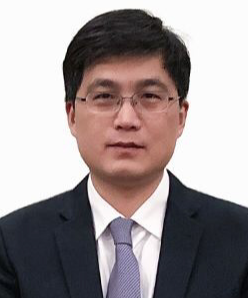 Daoqiang Zhang (张道强)合作论文数Department of Computer Science and Engineering, College of Computer Science and Technology, Nanjing University of Aeronautics and Astronautics2
 Ji Zhang合作论文数School of Mathematics, Physics and Computing, University of Southern Queensland;Centre for Crop Health, University of Southern Queensland;Faculty of Health Engineering and Sciences, University of Southern Queensland2
 Liangmin Guo合作论文数Anhui Normal University2Jiayi CAI (蔡伽怡)合作论文数1Chao Liu合作论文数1Maoding Liu合作论文数1Siyuan Chen合作论文数1Wen Zhou (周文)合作论文数1
 Guiyin Hu合作论文数1Yawei Qu合作论文数1Yunyun Yi合作论文数1
 Shiwen Zhao合作论文数1Wang Li合作论文数1Boquan Li合作论文数1Jinbao Wang合作论文数1Yuxiang Ding (丁玉祥)合作论文数1Qing GONG (龚庆)合作论文数1
 Jun Zhao合作论文数1




